Is Learning Chinese Worth It? An Honest Take from a Mandarin Learner (2026)

Last updated: February 2026
Quick Summary
⏱️ Time to basic conversation: 6-12 months with consistent practice
📊 Difficulty: Hard start, then easier than you think
🗣️ Speakers worldwide: 1.1+ billion native speakers
💼 Career value: High and growing
🧠 Our honest take: Absolutely worth it — if you're willing to commit
Is learning Chinese worth it? Yes — but only if you're willing to invest real time. Mandarin opens doors to the world's largest native-speaking population, gives you genuine access to Chinese culture and thinking, and provides an increasingly valuable professional edge. The initial learning curve is steep, but once you push through the first few months, you'll find it's more logical and less impossible than its reputation suggests. The biggest downside is time — this isn't a language you'll pick up from a casual course.
I never planned to learn Chinese. I speak English, German, used to be fluent in French, and studied Russian and Swedish. Mandarin was never on my radar — until we traveled to China as a family and I realized that not speaking it meant being completely cut off from an enormous, fascinating world that exists parallel to ours.
The moment it clicked for me was in Chengdu's Fangsuo Commune — one of the most beautiful bookstores I've ever seen inside a modern shopping center. I was surrounded by stunning calligraphy sets, thousands of books, and gorgeous art — and I couldn't read a single character. Standing there, I thought: wouldn't it be incredible to actually understand this?
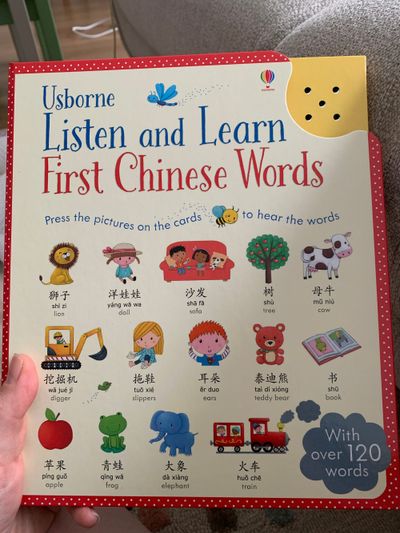
Around the same time, we signed up our daughter for a Mandarin preschool, and I thought it would be meaningful to learn together. That was the beginning. Here's what I've discovered since — the honest case for and against learning Chinese.
Table of Contents
7 Reasons Why Learning Chinese Is Worth It
1. It Unlocks a Completely Separate World
This is the reason that surprised me most, and the one I think matters more than any career argument.
China doesn't just speak a different language — it runs on an entirely separate internet, has its own social media platforms, its own search engines, its own streaming services, its own everything. There's an ocean of knowledge, entertainment, perspectives, and culture that is simply invisible if you don't read Chinese. It's not like traveling in, say, Spain or Germany, where you can get by on English and Google Translate fills in the gaps.
When you travel in China, you realize quickly that Chinese people have a completely different way of thinking and expressing themselves. The language itself shapes this — and learning even the basics gives you a window into how 1.4 billion people see the world. That perspective shift alone is worth the effort.
2. It Transforms How You Travel in China
Even basic Mandarin completely changes your experience traveling in China. Being able to have simple conversations, understanding which meat is in your meal, knowing what's going on around you — it removes the sense of being completely lost that many Western travelers feel.
And here's something that surprised me: speaking even a few sentences in Chinese makes people genuinely more interested in you. In a country where very few foreigners speak the language, any effort is met with warmth and curiosity. Locals open up, share recommendations, and treat you differently — not as a passing tourist, but as someone who cares enough to try.
You can still travel China without speaking Chinese — translation apps and communication strategies go a long way. But speaking it? That's the difference between seeing China and actually experiencing it.
3. China's Economic Importance Is Only Growing
Whether we in the West like it or not, China is an economic powerhouse — and that reality is only intensifying. Chinese firms have already penetrated global markets and are important business partners on the world stage.
China leads in clean energy technologies, high-speed rail (two-thirds of the world's high-speed rail network is in China), personal electronics, AI development, and increasingly in scientific research — China has overtaken the US in the number of quality research papers in natural sciences.
It's not hard to imagine that in the coming decades, some of the top universities, most innovative companies, and highest-paying jobs in science and engineering will be in China rather than exclusively in America or Europe. Mandarin skills won't just be a nice bonus on your CV — they'll be a genuine competitive advantage.
4. It's the World's Most Spoken Native Language
Mandarin Chinese has over 1.1 billion native speakers — by far the most of any language on earth. It's the official language in China, Taiwan, and Singapore, and widely spoken across Southeast Asia.
And here's the practical reality: most Chinese people do not speak English. Not in the way that people in Scandinavia or the Netherlands do. In China, the majority of people — including educated professionals — cannot hold a basic English conversation. If you want to communicate meaningfully with locals, whether for business or friendship, you need to meet them in their language.
5. It Helps You Understand Why Chinese People Think Differently
One of the most fascinating things about learning Mandarin is that it helped me understand why Chinese people often struggle with English — and vice versa. The languages work so fundamentally differently that they shape completely different ways of thinking and expressing ideas.
Chinese is incredibly concise and context-dependent. There are no verb conjugations, no tenses in the European sense, no plurals. Meaning comes from context, word order, and particles rather than grammatical inflection. Once you start to understand this, you gain insight into Chinese communication styles, business culture, and social norms that no guidebook can teach you.
It's genuinely eye-opening, and it makes every subsequent trip to China richer.
6. Learning Together with Your Children Is Incredibly Rewarding
If you have kids — especially young ones — learning Mandarin together creates a shared experience that goes beyond just language. Our daughter attends a Mandarin-immersion preschool, and learning alongside her has been one of the most rewarding parts of parenting.
Children pick up tones and pronunciation with ease that adults can only envy. But as a parent who is also learning, you can reinforce what they learn, practice together at home, and model the value of lifelong learning. Plus, giving your children access to Mandarin early opens doors for them that will only become more valuable as they grow up.
7. It Genuinely Exercises Your Brain
Research has shown that learning Mandarin activates more areas of the brain than learning most other languages. The combination of tonal pronunciation, character recognition, and contextual meaning-making is a genuine cognitive workout.
Writing Chinese characters improves fine motor skills and spatial reasoning. Distinguishing tones sharpens your ear for nuance in all languages. And the sheer difference from European languages means your brain can't fall back on familiar patterns — it has to build entirely new neural pathways.
If you already speak a couple of European languages, adding Chinese is the challenge that will push your brain in completely new directions.
The Honest Downsides
I believe in being straightforward about this, because setting realistic expectations is more helpful than cheerleading.
It Requires Serious Time Commitment
This is the only real downside, but it's a significant one. The US Foreign Service Institute estimates that Mandarin takes approximately 2,200 hours for an English speaker to reach proficiency — about three to four times longer than Spanish, French, or German.
If you think you can take a casual course for a year and emerge speaking Chinese, save your money and energy. You won't get anywhere meaningful. Mandarin requires consistent, sustained effort over years. Daily practice — even just 20-30 minutes — matters more than occasional intensive study.
For me, this time commitment is the only real downside. Everything else about learning Chinese has been rewarding.
Limited Use Outside Chinese-Speaking Regions
Unlike English, French, or Spanish, Mandarin is primarily useful in China, Taiwan, Singapore, and Chinese diaspora communities. If you never plan to interact with Chinese-speaking people or visit these places, the practical return on your investment is lower than a more globally distributed language.
That said, with China's growing global influence and the size of Chinese communities worldwide, "limited use" is increasingly relative.
The Character System Is a Real Barrier
Speaking Mandarin and reading Mandarin are almost like learning two separate skills. You can become conversational relatively quickly, but reading — especially anything beyond basic signage — requires memorizing thousands of characters. There's no alphabet to sound things out with.
This means literacy takes much longer to develop than in alphabet-based languages. It's worth knowing this going in so you can decide whether to focus on speaking first (recommended for travellers) or pursue reading/writing simultaneously.
However, typing Chinese characters using Pinyin system (using Latin alphabet letters) on a keyboard is much easier than writing, so that makes learning characters a bit less overwhelming.
Is Chinese Really As Hard As People Say?
Here's what I wish someone had told me before I started: Chinese is hard to begin, but easier to progress in than you'd expect.
The initial phase is genuinely tough. Tones feel impossible, characters look like random drawings, and you can't even guess at words the way you can with Spanish or German. There's no familiar foothold.
But once you push through that initial wall — usually a few months in — you start to notice something surprising: Chinese grammar is remarkably simple. No conjugations, no gendered nouns, no cases, no complex tense system. Sentence structure is straightforward, and many concepts are expressed with elegant logic.
After I overcame the initial difficulty, I realized it's not as hard as I thought. The tones become natural with practice, and the characters start to reveal patterns and logic that actually help you remember them.
If you already speak multiple languages, you have an advantage — not because any European language is similar to Chinese, but because you've already proven you can learn a new system. That experience and confidence transfer directly.
Who Should (and Shouldn't) Learn Chinese
Learning Mandarin is worth it if you:
- Travel to China regularly or plan to
- Work in industries with Chinese business connections
- Already speak a second language and want a genuinely different challenge
- Have children learning Mandarin and want to support them
- Are fascinated by Chinese culture, history, or philosophy
- Want a language skill that will become more valuable over time, not less
Consider a different language if you:
- Want quick results — Chinese requires years, not months
- Have no specific connection to the Chinese-speaking world
- Are looking for your first foreign language (start with something closer to your native language)
- Can only dedicate a few hours per month — it won't be enough to maintain progress
My personal take: if you already speak English, I'd recommend Mandarin over, say, Spanish as your next language. Chinese is more relevant to the future global landscape, and you already have a language widely spoken in the West. Obviously this depends on your personal circumstances — but in terms of future value, Mandarin wins.
How to Get Started
If this has convinced you, here's a practical starting point:
- Start with tones and pinyin — Don't touch characters yet. Spend your first 2-4 weeks just getting comfortable with the four tones and the pinyin romanization system.
- Get a structured course or tutor — Unlike European languages where you can self-study from day one, Chinese benefits enormously from guided learning in the early stages. A tutor (even online) will correct tone mistakes before they become habits.
- Practice daily, even briefly — 20 minutes every day beats 3 hours once a week. Consistency is everything with Mandarin.
- Focus on listening and speaking first — Unless you need to read Chinese for work, prioritise input and conversation over characters. You'll see practical results much faster.
- Use it in real life as soon as possible — Book a trip to China as motivation. Even basic phrases used in real situations accelerate learning faster than any textbook.
For a deeper dive into the practical side of learning as a grown-up — including the methods, apps, and strategies that actually work — read our companion guide: Learning Mandarin as an Adult.
FAQs
Is it worth learning Chinese just for travel?
Even for travel alone, basic Mandarin significantly improves your experience in China. You'll be able to read menus, have simple conversations, understand signs, and connect with locals in a way that translation apps can't replicate. That said, you can absolutely travel China without speaking Chinese — here's how to get around China without speaking the language.
How long does it take to learn Mandarin?
For basic conversational ability — ordering food, asking directions, having simple exchanges — expect 6-12 months of consistent daily practice. For professional fluency, the FSI estimates around 2,200 hours of study, which translates to roughly 3-4 years of dedicated learning.
Is Mandarin harder than Japanese or Korean?
All three are considered among the hardest languages for English speakers. Mandarin grammar is simpler than both Japanese and Korean, but the tonal system and character-based writing add difficulty. Many learners find Mandarin's grammar easier to grasp but pronunciation harder to master than Korean or Japanese.
Can I learn Chinese as an adult?
Absolutely. Adults actually have advantages over children in understanding grammar patterns and making connections between concepts. The main myth is that adults "can't hear tones" — with practice, most adults develop tone recognition within a few months. Read more: Learning Mandarin as an Adult.
Is Chinese more useful than Spanish?
It depends on your situation. Spanish is more immediately useful if you live in the Americas or travel Latin America. But for long-term career value and accessing the world's fastest-growing major economy, Mandarin is increasingly the stronger choice — especially if you already speak another European language.
Do I need to learn Chinese characters or just speaking?
For travel and basic communication, focus on speaking and listening first. Characters are a separate skill that requires significant additional time. Many learners find that becoming conversational first gives them motivation and context to tackle characters later.
More on Learning Mandarin & Traveling China:
Last updated: February 2026