What to Eat in China with Kids: A Family Food Guide (2026)
Last updated: March 2026
Quick Summary
💰 Family meal cost: ¥50–100 ($7–14) for a family of 4
🌶️ Spice level: Varies by region — Cantonese and Northern food is mild, Sichuan is spicy but mild options always available
⚠️ Watch out for: Whole fish with bones, unlabelled allergens, tap water
💡 Pro tip: Learn 不要辣 (bùyào là) — "no spice" — and you're halfway there
👨👩👧 Tested: Over 6 family trips across 10+ Chinese cities
Feeding kids in China is easier than most parents expect. Chinese cuisine is built on mild, comforting staples — steamed rice, noodles, dumplings, and soft buns — that even the pickiest toddler will eat. Food is so cheap that you can order several dishes without worrying about waste, and the sheer variety means there's always something your child will accept. Add in the novelty of chopsticks and street food stalls, and most kids end up eating better in China than at home.
One of the unanswerable questions when traveling with small children, especially toddlers, is the question of food. You don't have to go as far as China to discover that kids can be quite a handful when it comes to eating in new places. When we went to Lofoten in Norway, Hanna refused to eat almost all foods that we usually buy (except for peppers maybe), so we always ended up buying triple what we needed "just in case."
While going as far as China might seem even more challenging due to different spices and unfamiliar ingredients, it might actually be easier than a remote village in Norway to cater for kids. After 6 trips to China with our two daughters — starting when the youngest was just 4.5 months old — food has never once been a real problem. Here's everything we've learned.
Why China Is Easier Than You Think for Picky Eaters
China is actually one of the more forgiving destinations for families with fussy children, for three main reasons:
- Mild staples are everywhere. Every region has some combination of plain rice, noodles, steamed buns, and dumplings — all foods that most kids will eat without fuss.
- Food is incredibly cheap. It's easy to have a feast for the whole family for $10–15 with plenty of leftovers, so you can order liberally and experiment without stressing about the bill.
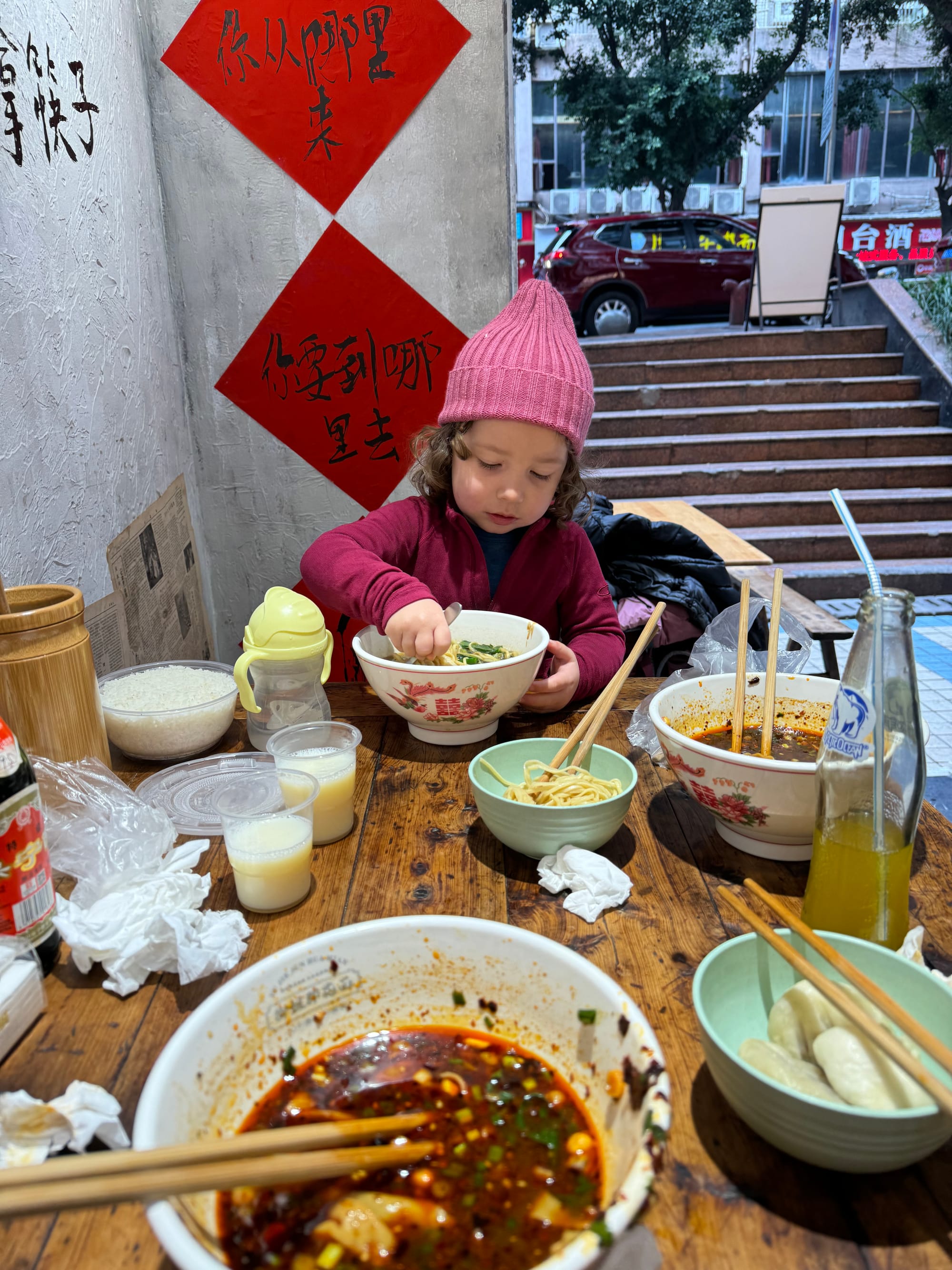
- Chopsticks are a game-changer. Seriously — playing around with chopsticks makes all the difference when it comes to trying new foods. It turns a meal into an activity, and suddenly that reluctant eater is picking up pieces of tofu just to show off.
Safe Staples You Can Always Fall Back On
These basic foods are available across China and work as a reliable backup when your child refuses everything else on the table:
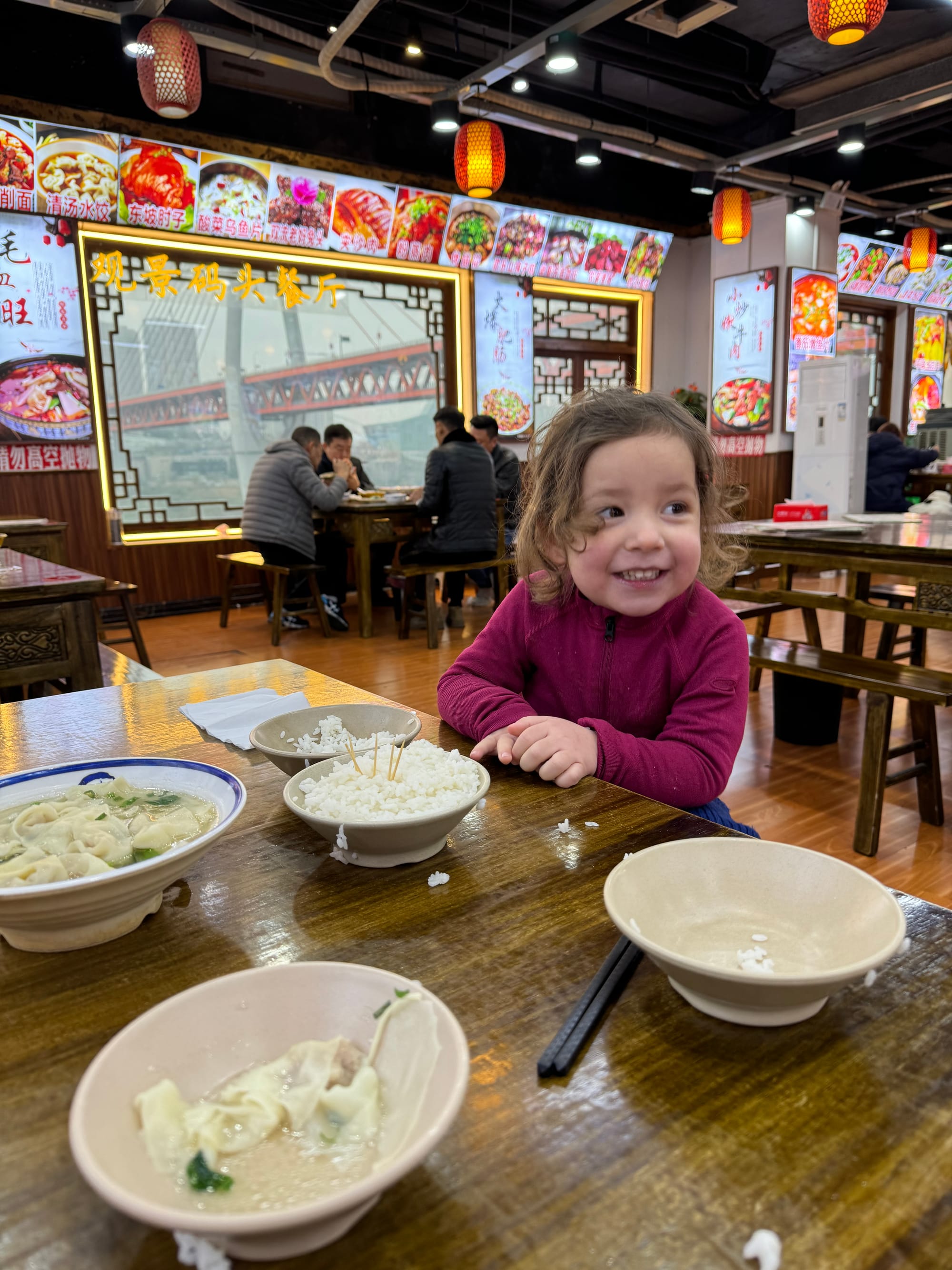
- Steamed rice 米饭 (mǐfàn) — available at every restaurant, usually free or nearly free as a side
- Wheat noodles 面 (miàn) — similar to European pasta, served in soup or stir-fried
- Rice noodles 米粉 (mǐfěn) — softer and milder than wheat noodles, common in southern China
- Steamed buns 包子 (bāozi) — soft, filled with meat or vegetables, easy to eat with hands
- Congee 粥 (zhōu) — rice porridge, often served at breakfast, gentle on little stomachs
- Freshly cut fruit and fresh fruit juices — widely available from street vendors and convenience stores
The staples vary by region — rice dominates in the south while noodles and bread-based foods are more common in the north — but you can be sure that several of these will always be available. Dumplings 饺子 (jiǎozi) deserve a special mention: you'll find some version of them almost everywhere in China, and most kids love them.
Chinese Dishes Our Kids Actually Loved
Beyond the safe staples, here are the dishes that our daughters genuinely enjoyed across our trips — not just tolerated, but asked for again:
- Street BBQ skewers 烧烤 (shāokǎo) — choose mild meat or vegetable skewers; kids love eating food on sticks
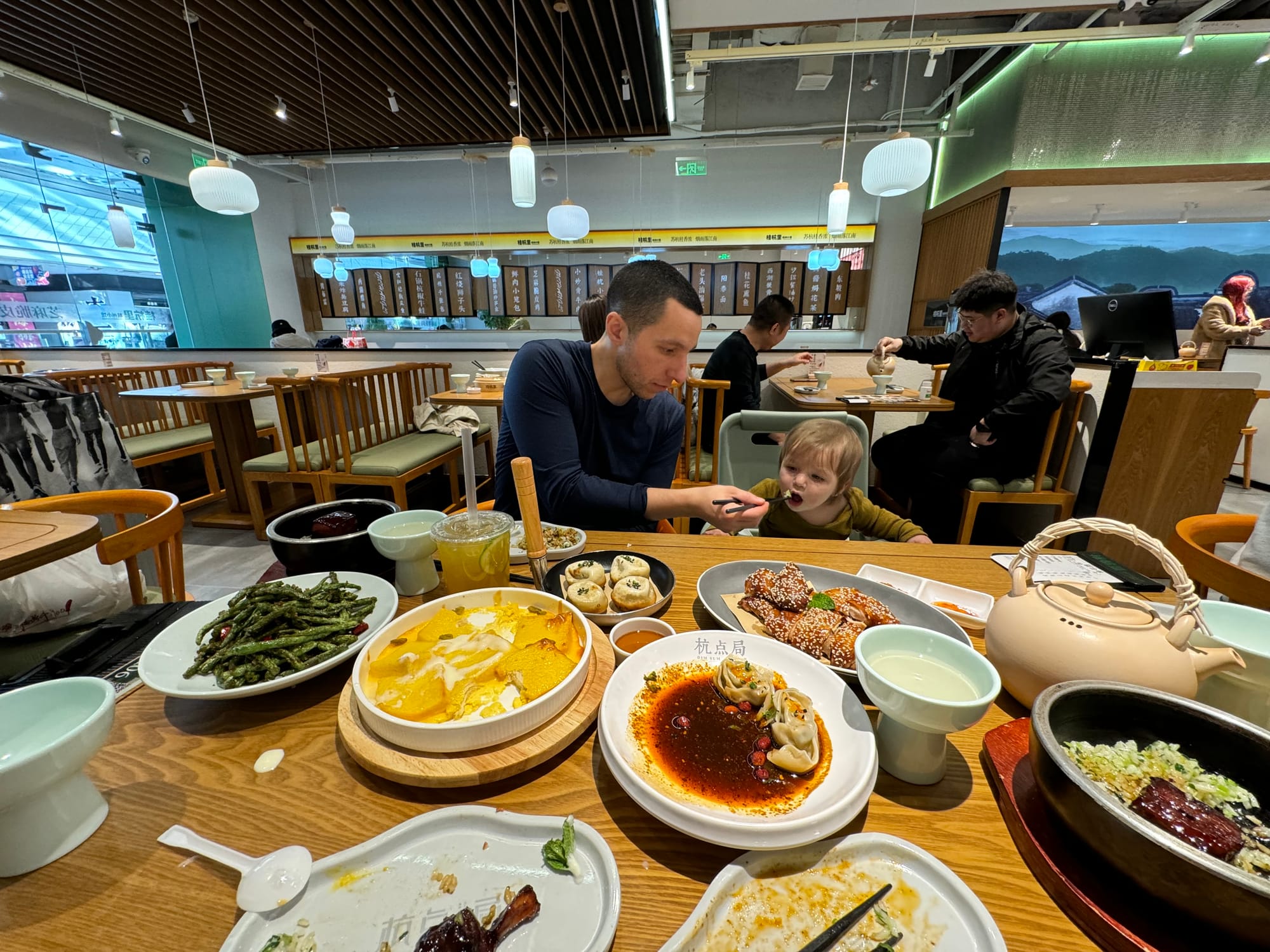
- Shāomài 烧卖 — open-topped steamed dumplings, usually pork-filled, mild and delicious
- Jiānbǐng 煎饼 — crispy savoury crepes from street vendors, customisable fillings, a breakfast favourite
- Egg fried rice 蛋炒饭 (dàn chǎofàn) — simple, filling, and universally available
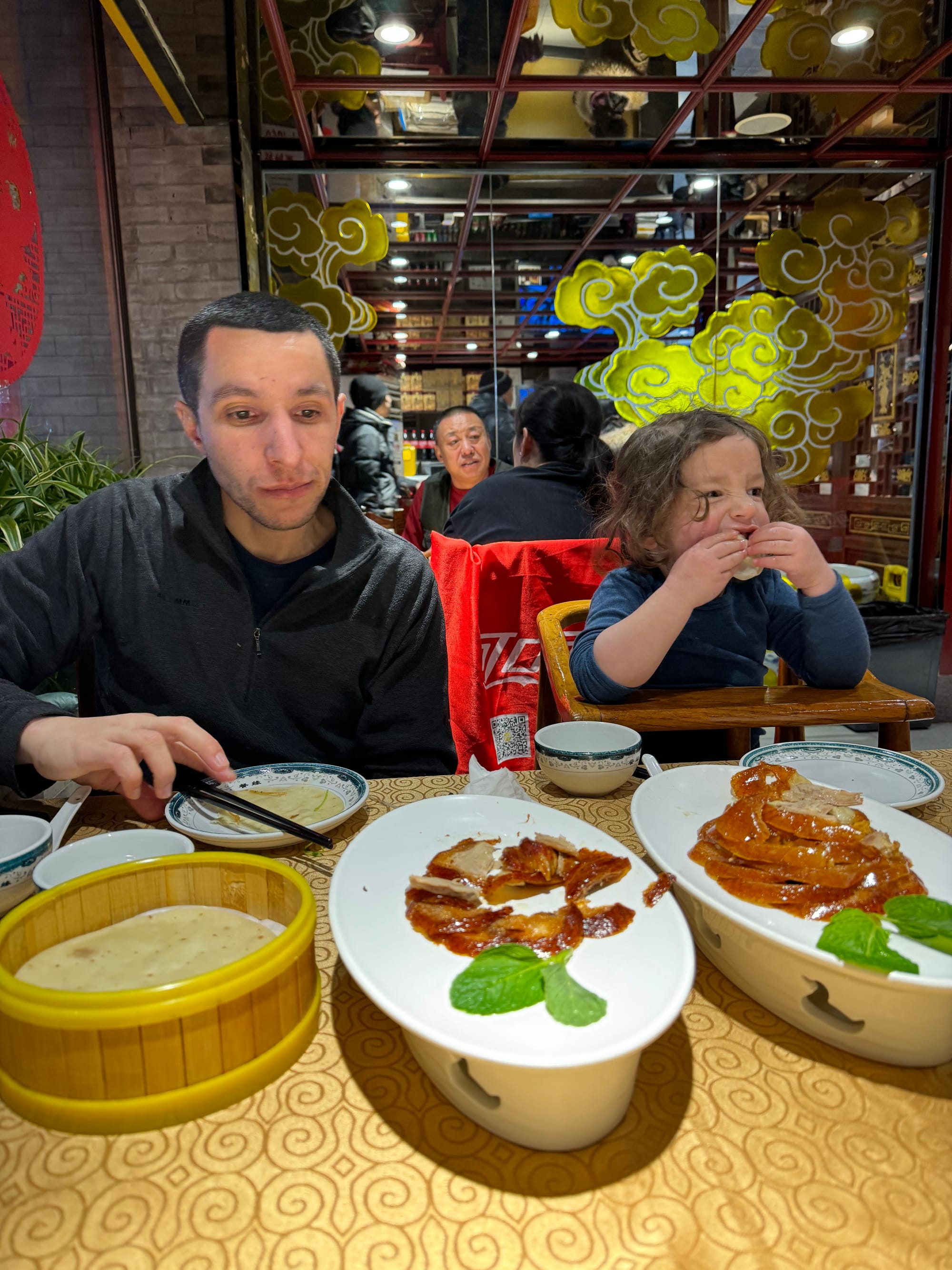
- Peking duck — the pancake-wrapping is fun for kids and the flavour is mild
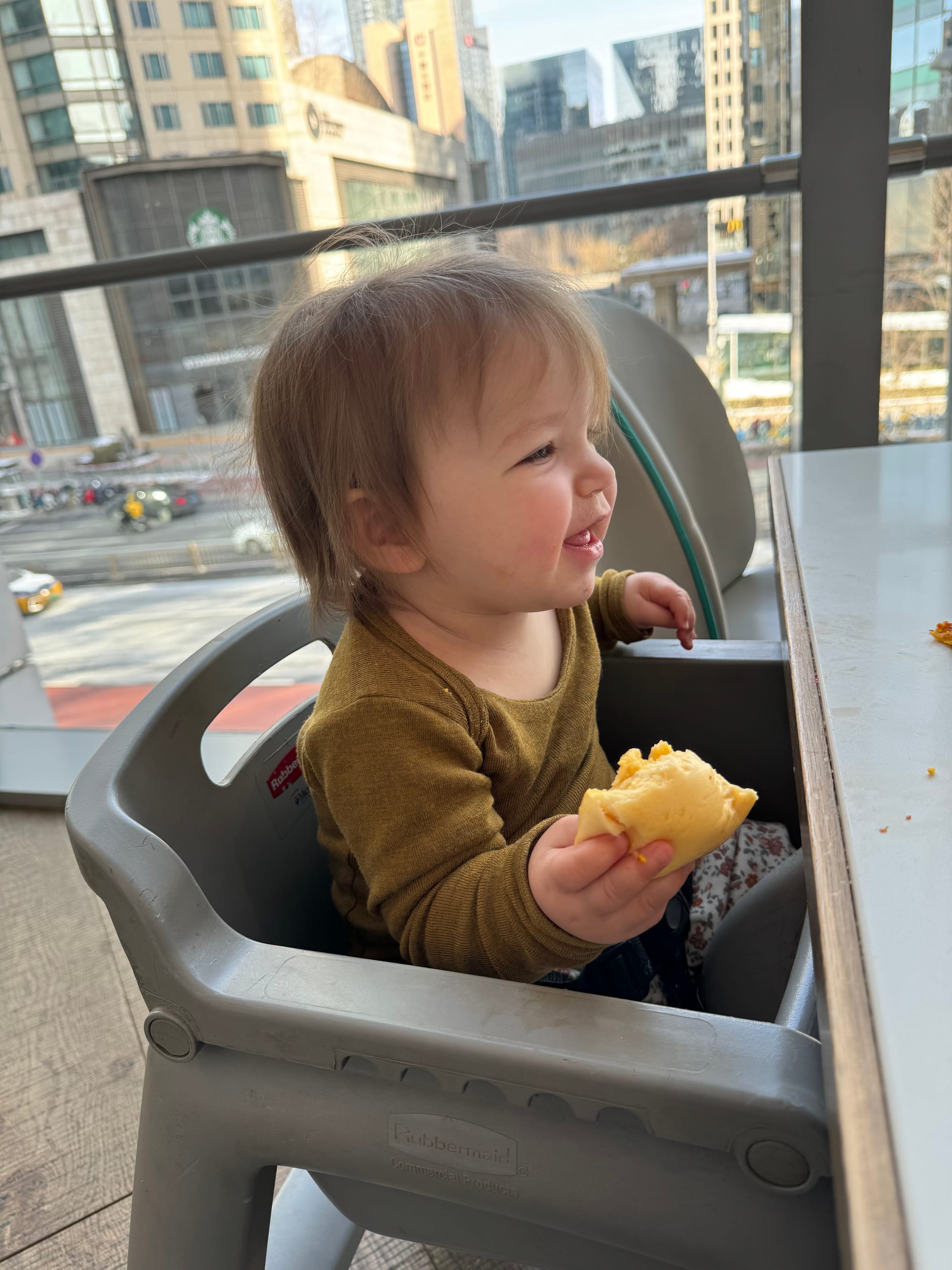
- Beijing yoghurt — sold in distinctive ceramic pots on every corner in Beijing, kids go crazy for it
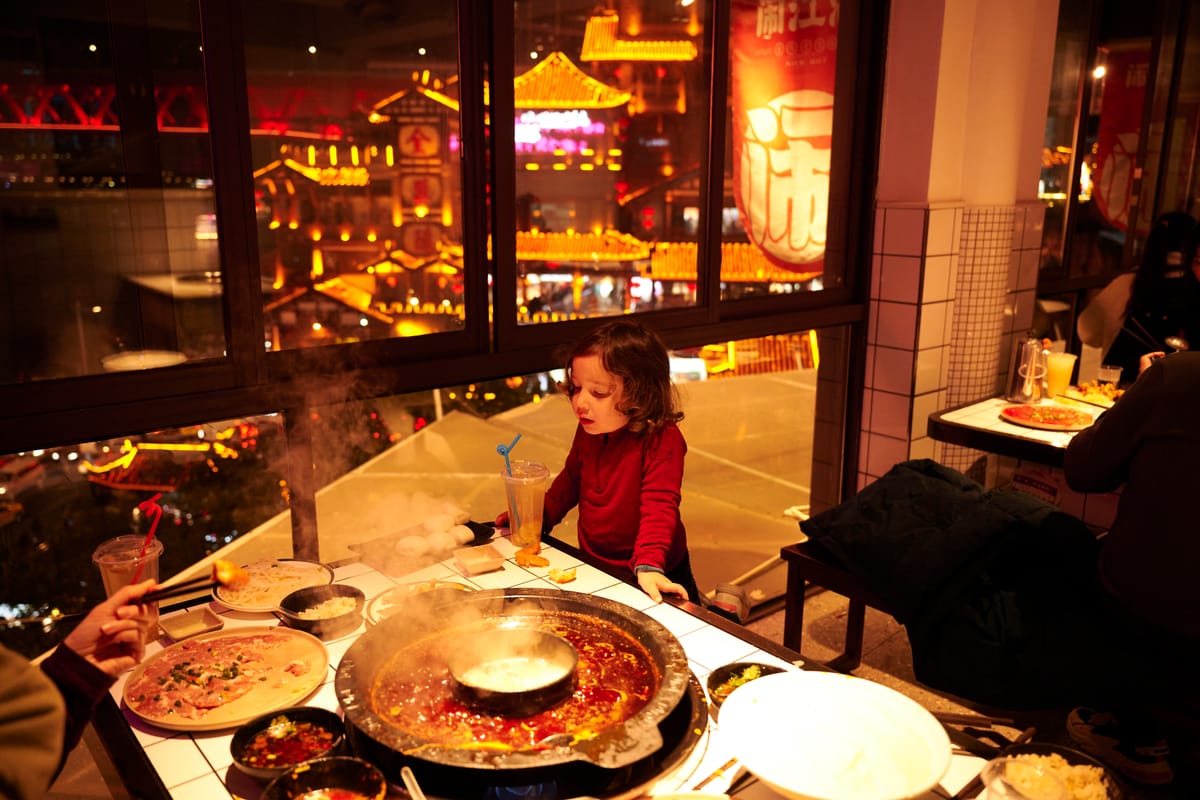
- Chongqing hot pot — yes, even with kids! Order a split pot (鸳鸯锅 yuānyāng guō) with one mild side. I wrote a detailed guide on doing hot pot with kids
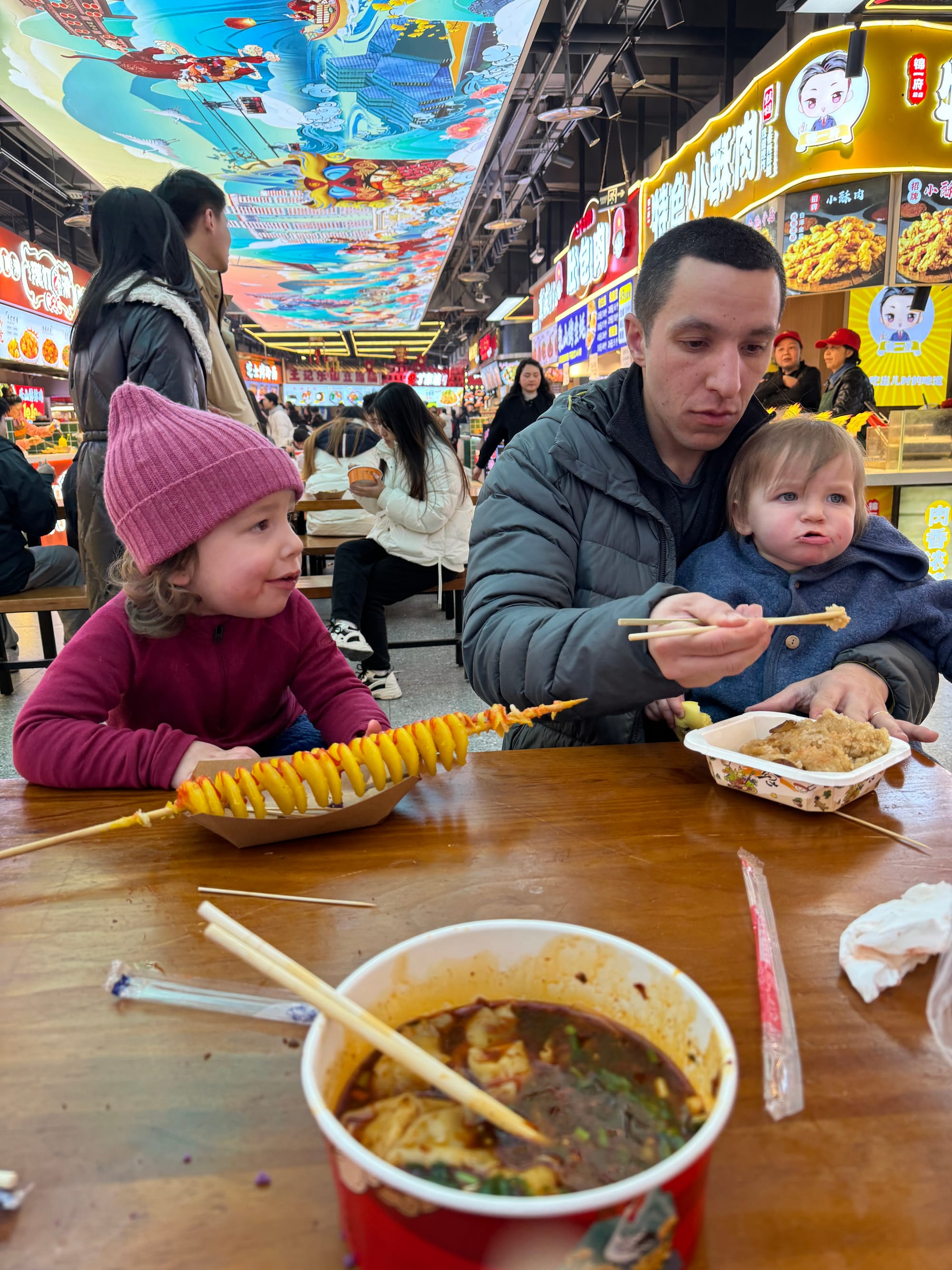
- Crispy spicy potatoes in Chongqing — I don't even know if they have a proper name, but they are irresistible
- Russian sausage in Harbin — a legacy of the city's Russian heritage, mild and kid-approved
- Watermelon juice 西瓜汁 (xīguā zhī) — fresh, cold, and available at most juice stands
How to Order Food for Kids in China
Ordering food when you don't speak the language is one of the biggest anxieties parents have about traveling to China. Here's what actually works, based on our experience — and the fact that I speak Mandarin definitely helped, but you absolutely don't need to.
Use Your Phone
Many restaurants in China now use QR code ordering — you scan a code at your table and the menu appears on your phone. Both WeChat and AliPay have built-in translation features that can help you navigate these menus. For restaurants with paper menus, use your translation app's camera function to scan and translate.
One honest tip: don't rely too heavily on translated dish names. Chinese dish names are notoriously creative — "husband and wife lung slices" is a real thing, and it tells you nothing useful about what you're eating. Picture menus, where available, are far more reliable.
Useful Mandarin Phrases for Ordering
Even if you don't speak a word of Chinese, having these phrases saved on your phone to show to staff will make restaurant visits much smoother:
- 不要辣 (bùyào là) — No spice / not spicy
- 不要花椒 (bùyào huājiāo) — No Sichuan pepper (the numbing kind)
- 有没有儿童菜单? (yǒu méiyǒu értóng càidān?) — Do you have a kids' menu?
- 请给我一碗白米饭 (qǐng gěi wǒ yī wǎn bái mǐfàn) — Please give me a bowl of plain rice
And here's one I specifically prepared with my Chinese teacher for ordering plain noodles, which we struggled with for years — somehow, no matter how we asked, the noodles always arrived in broth:
我要一份面给我的女儿,不要汤,不要别的东西,只要干净的面。
Wǒ yào yī fèn miàn gěi wǒ de nǚ'ér, bùyào tāng, bùyào bié de dōngxī, zhǐyào gānjìng de miàn.
I want a portion of noodles for my daughter — no soup, nothing else, just plain noodles.
I've tested this on a subsequent trip and it worked — though it still took some convincing!
Best Places to Eat with Kids in China
Food Halls and Street Food Courts
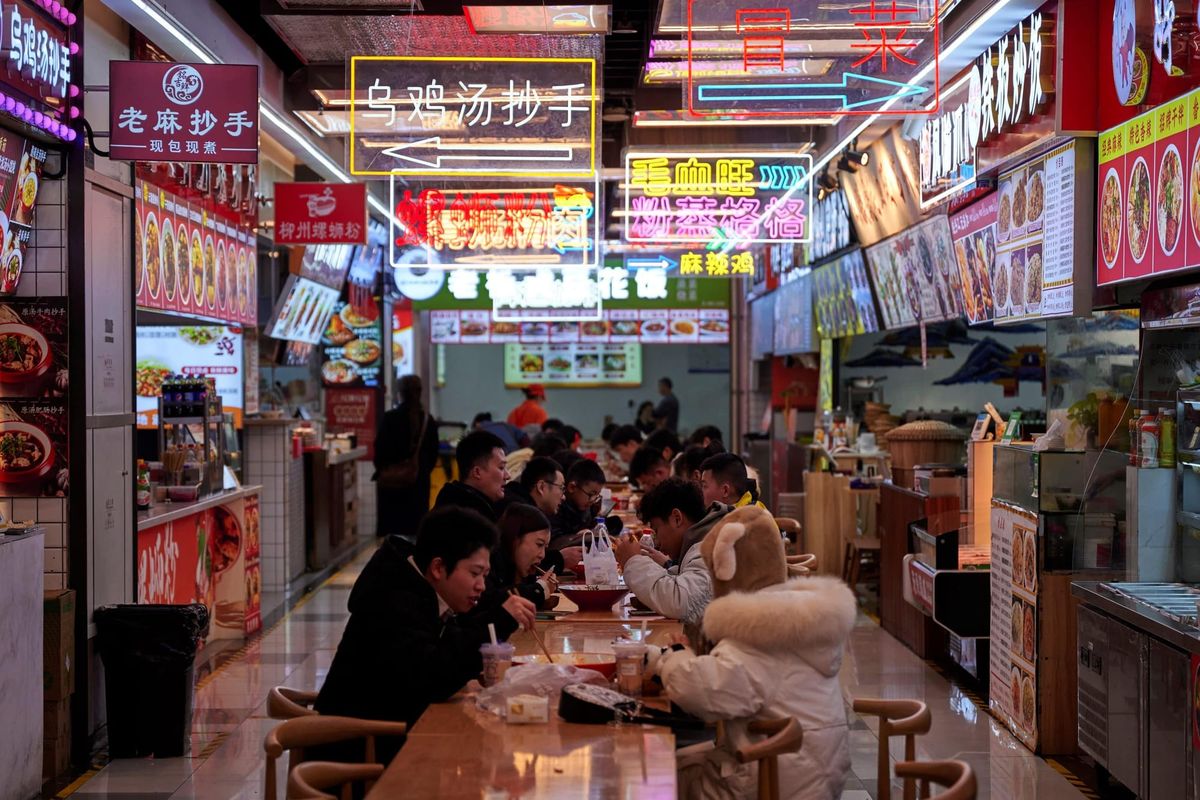
Large indoor food halls 美食城 (měishí chéng) with dozens of stalls and shared seating areas are common in every Chinese city. These are perfect for families because everyone can choose what they want — no compromise needed. The atmosphere is casual, nobody minds if your child makes a mess, and there's usually enough space for strollers. We've found these in shopping malls, near train stations, and in pedestrian shopping streets in every city we've visited.
Street Food
Street food in China is generally safe, especially at busy, well-established stalls where the food turnover is high. Stick to stalls where you can see the food being cooked fresh, and avoid anything that's been sitting out for a long time. Street BBQ, jianbing, and fruit stands are reliably safe and kid-friendly. That said, if your child's stomach is sensitive, stick to restaurants rather than the smallest roadside vendors.
Yoghurt Drink Shops
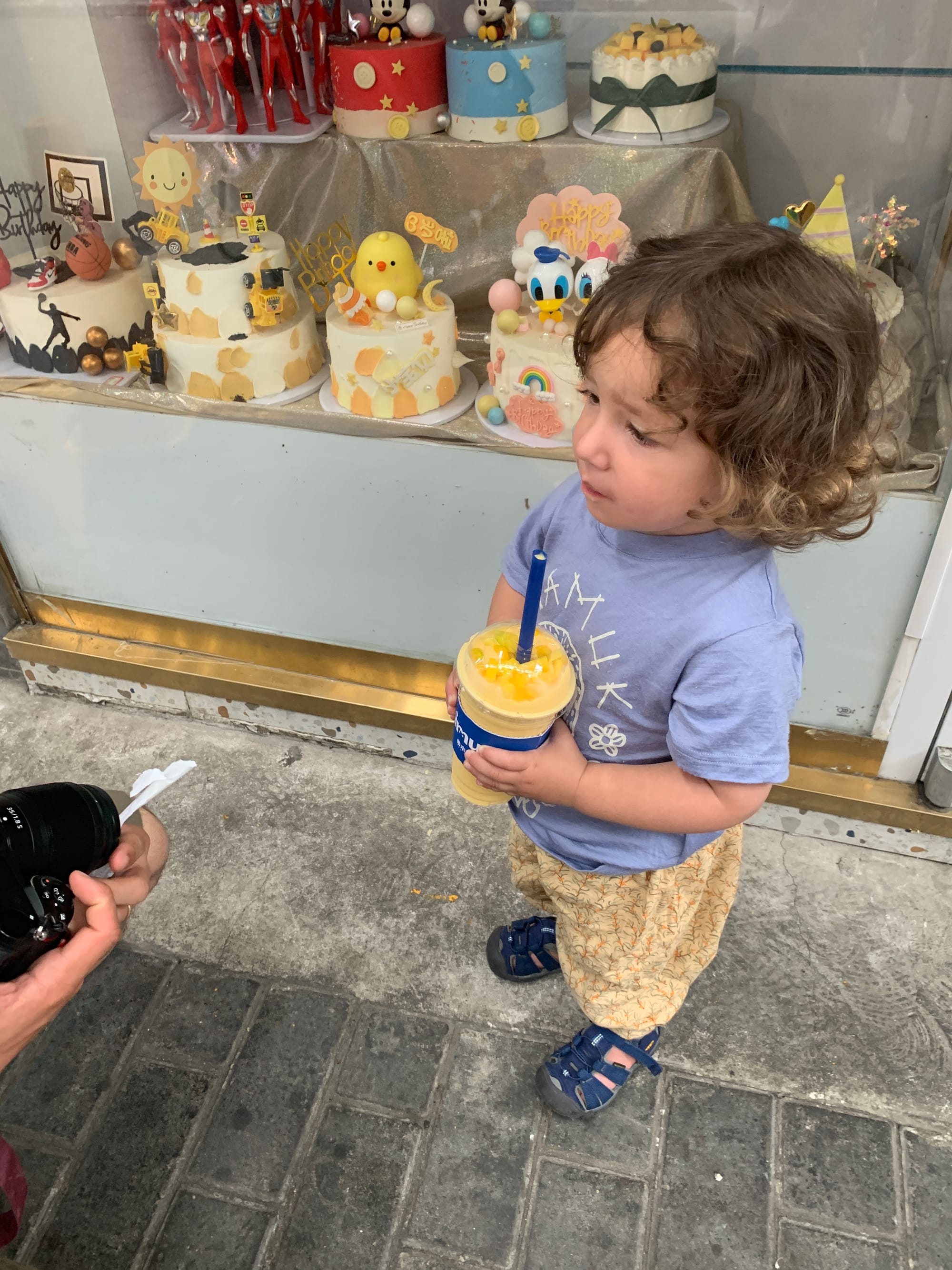
In recent years, yoghurt drink shops have exploded across Chinese cities. Chains like Yoghurt Cow 一只酸奶牛 sell fresh yoghurt blended with fruit — a delicious semi-healthy snack option that kids love. You'll find these shops in every shopping district and near most tourist areas.
What to Avoid for Young Kids
While Chinese food is generally safe and varied, there are a few things to watch out for:
- Whole fish with bones — Chinese restaurants often serve whole fish with bones intact. This is a choking risk for young children. If you want to order fish, ask for boneless options or remove the bones yourself.
- Cold appetiser plates 凉菜 (liángcài) — these are often pickled, spicy, or both. Young kids usually don't enjoy them.
- Tap water — never drink it. Bottled water is available everywhere for around ¥2 ($0.30). Restaurants always serve boiled water or tea.
- Very spicy regional dishes — in Sichuan and Chongqing, the default spice level can be intense even for adults. Always ask for 不要辣 (bùyào là) or order a split pot if doing hot pot.
- Unlabelled allergens — peanuts, sesame, soy, and shellfish are common in Chinese cooking. Allergen labelling is not standard. If your child has serious allergies, carry a written allergy card in Chinese. The phrase is: 对[食物]过敏 (duì [food] guòmǐn) — "allergic to [food]."
If your child gets an upset stomach, pharmacies (药店 yàodiàn) are on every other corner in Chinese cities and staff can usually help with basic remedies. For anything more serious, check out our guide to healthcare in China for tourists.
Regional Food Guide: What to Expect by City
Chinese cuisine varies dramatically by region. Here's a quick guide to what family-friendly foods you'll find in the most popular destinations:
Beijing — Northern food tends to be wheat-based and mild. Peking duck, jianbing, baozi, noodles, Beijing yoghurt, and lamb skewers are all kid-friendly. The hutong street food scene is fantastic for families.
Shanghai — Shanghainese food is slightly sweet, which often appeals to kids. Xiaolongbao (soup dumplings), shengjianbao (pan-fried buns), sweet red braised pork, and scallion oil noodles are all solid choices.
Xi'an — The Muslim Quarter offers an incredible street food experience. Roujiamo (Chinese "burgers"), hand-pulled noodles, lamb skewers, and persimmon cakes are exciting for kids.
Chongqing — Famous for spice, but don't let that put you off. Split-pot hot pot works beautifully for families. See our complete guide to hot pot with kids. Xiaomian (small noodles) can be ordered mild, and the crispy spicy potatoes are addictive even for small children.
Guangzhou — Cantonese food is the mildest in China and closest to what Westerners associate with "Chinese food." Dim sum is a wonderfully interactive family meal. Steamed fish, char siu (BBQ pork), and congee are all great for kids.
Shenzhen — As a young, diverse city, Shenzhen offers food from every Chinese region plus abundant international options. The food court culture is strong here — perfect for indecisive young eaters.
Let Them Play with Chopsticks
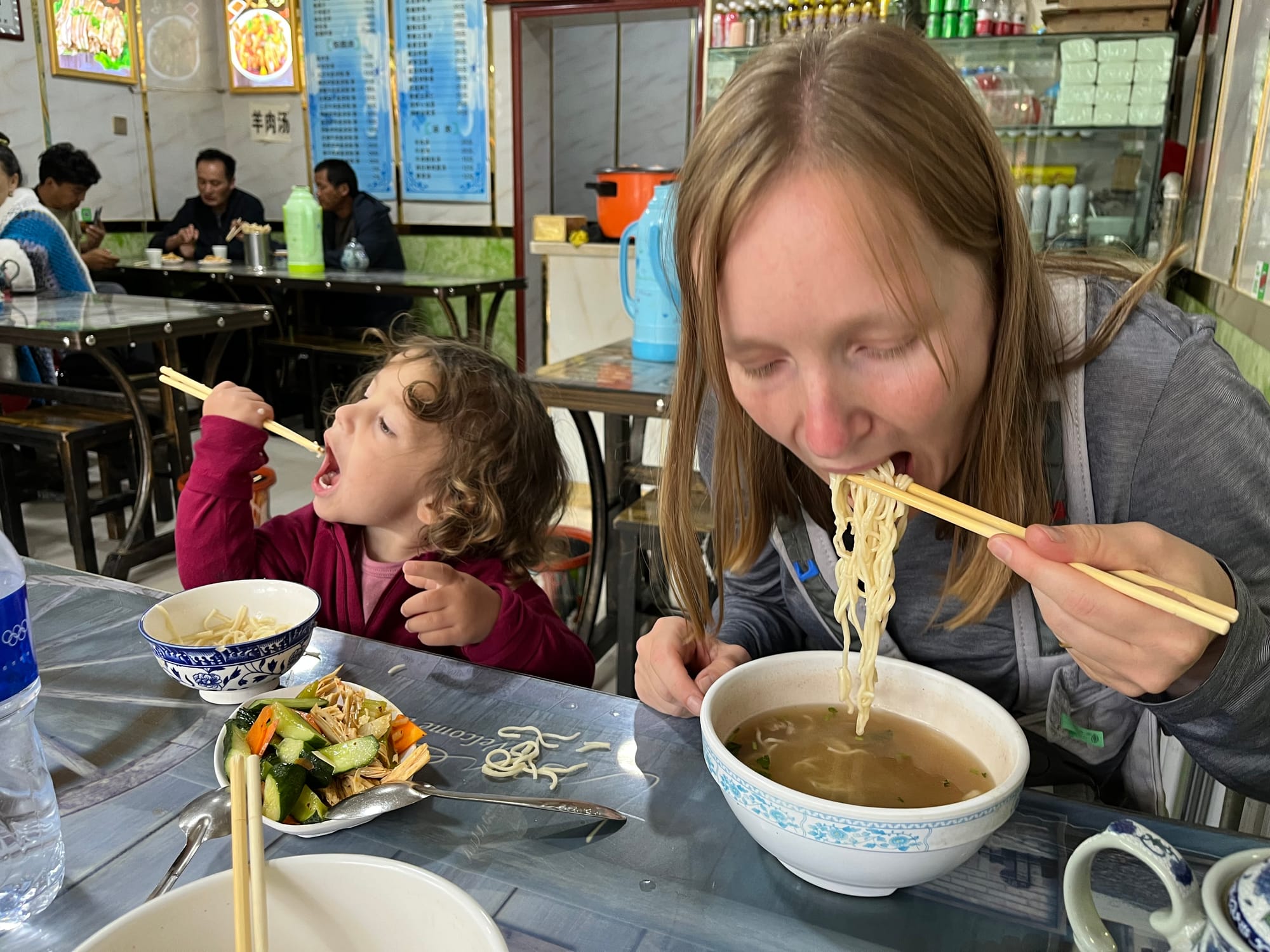
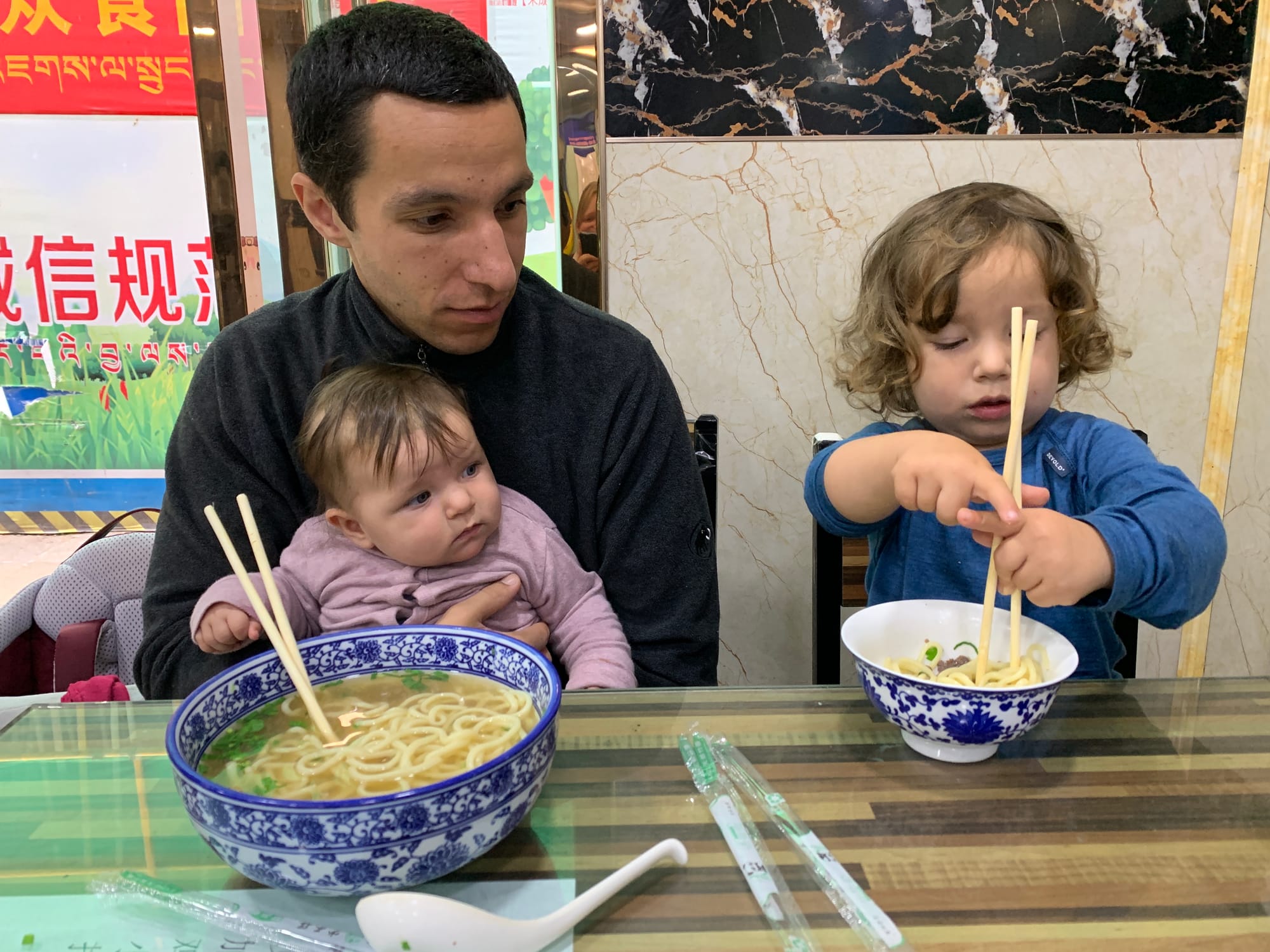
We were surprised how well Hanna did with chopsticks during our first trip to China — she was only 2.5 at the time. She genuinely enjoyed it, and I encourage you to let your kids try eating by themselves, even if it means a total mess. The novelty factor alone makes kids more willing to engage with unfamiliar food.
If your child is not yet handy with regular chopsticks, you can bring a pair of toddler training chopsticks — there are versions with 3-finger and 2-finger support. You can probably find them in China too, but who has time for chopstick-hunting during a holiday.
If You Run Out of Options
If your child is used to fast food at home or you simply feel like a break from Chinese cuisine, don't worry. All larger Chinese cities have McDonald's, KFC, Burger King, Pizza Hut, and Starbucks. International hotels also serve Western food, and in cities like Shanghai, Beijing, and Shenzhen you'll find restaurants from virtually every cuisine.
That said, I'd encourage keeping Western food as a last resort. Let your kids eat plain rice and noodles rather than defaulting to familiar food — they'll be more adventurous for it, and the low food prices in China mean there's no financial pressure to make every order count.
Practical Tips for Eating with Kids in China
- Take advantage of the low prices and experiment. Order 4-5 dishes for the table and let everyone try a bit of everything. Even if half of it goes untouched, you've spent less than a single meal in most European restaurants.
- Carry snacks for emergencies. Fresh fruit from convenience stores, yoghurt drinks, and individually wrapped biscuits are all readily available. Having a backup in your bag prevents meltdowns when the restaurant takes longer than expected.
- Set up WeChat and AliPay before your trip. You'll need them for paying at most restaurants, especially smaller ones that don't take cash easily. We recommend linking a Wise card for the best exchange rates.
- Don't be afraid of street food. Busy, popular stalls are generally safe and offer some of the best food in China. The key is high turnover — if lots of locals are eating there, it's probably fine.
- Ask your hotel for restaurant recommendations. Hotel staff can recommend nearby family-friendly restaurants and even help you order by phone — communication with restaurant staff is much easier when your hotel staff can help bridge the language gap.
Consider a Food Tour
If you want to dive deep into the local food scene with expert guidance, a food tour is a fantastic family activity. A local guide can help navigate menus, explain dishes, and take you to the best spots you'd never find on your own. It's especially valuable in cities with famously complex food scenes like Chongqing, Xi'an, and Guangzhou.
🎯 Browse food tours and experiences on Klook
FAQs
Is Chinese food safe for toddlers?
Yes. Many Chinese staple dishes — steamed rice, plain noodles, steamed buns, dumplings, and congee — are mild, soft, and easy to eat. Stick to clean, busy restaurants, avoid stalls with poor hygiene, and ask for dishes without chilli. The biggest concern is spice levels, not food safety.
What Chinese food do kids like?
Most kids enjoy fried rice 蛋炒饭, dumplings 饺子, steamed buns 包子, plain noodles, spring rolls, and egg dishes. Street BBQ skewers and jianbing (savoury crepes) are also popular. Fresh fruit and yoghurt drinks make excellent snacks between meals.
Is Chinese food too spicy for kids?
It depends on the region. Sichuan and Chongqing cuisine is famously spicy, but even there you'll find mild options. Northern food (Beijing, Xi'an) and Cantonese food (Guangzhou, Shenzhen) tend to be much milder. You can always ask for 不要辣 (bùyào là) — no spice.
How do I order food in China without speaking Chinese?
Use your translation app to scan menus, look for picture menus, or use QR code ordering (increasingly common). Save useful Chinese phrases on your phone to show restaurant staff. Many restaurants in tourist areas have at least basic English menus.
Can I find Western food in China?
Yes — McDonald's, KFC, Pizza Hut, and Starbucks are in every major city. International hotels serve Western food too. But we recommend keeping this as a last resort: most kids will find Chinese dishes they enjoy, and the variety is worth exploring.
Are there food allergies I should worry about?
Peanuts, sesame, soy, and shellfish are common ingredients in Chinese cooking, and allergen labelling is not standard. If your child has serious allergies, prepare a written allergy card in Chinese to show restaurant staff.
What should kids avoid eating in China?
Avoid whole fish with bones for young children (choking risk), very spicy dishes, cold appetiser plates (often pickled and spicy), and tap water. Be cautious with shellfish and raw foods in smaller cities.
How much does food cost in China for a family?
Very affordable. A full meal at a local restaurant runs ¥50–100 ($7–14) for a family of four. Street food snacks cost ¥5–15 per item. Even in Beijing and Shanghai, you can eat well for under $20 per family meal at local restaurants.
Related Guides
 Magda Sawyer
 Magda Sawyer
 Magda Sawyer