Learning Mandarin as an Adult: My Honest Journey from Zero to Conversational (2026)
After 2.5 years of learning Mandarin as an adult, I passed HSK3 at 88%. Here's what actually works — from comprehensible input to flashcards — and my honest advice.
Share this post:
Last updated: February 2026
I'll keep updating this post as my Mandarin journey continues. Next milestone: HSK4. If you're on a similar path, I'd love to hear about your experience — drop a comment below or find me on Instagram.
Quick Summary
📚 Current level: HSK3 / A2-low B1 (passed December 2025 at 88%)
⏱️ Time studying: 2.5 years (2-3 hours/week on average, more in good stretches)
🎯 Method: Comprehensible input + structured study + flashcards
💡 Hardest part: Finding the right method (not the language itself)
🗣️ Can I communicate?: Yes — conversational in everyday situations
📖 Best resources: Anki, DuChinese, conversation practice, a good textbook
Yes, you can absolutely learn Mandarin as an adult. After 2.5 years of studying — sometimes intensely, sometimes just a couple of hours a week — I passed the HSK3 exam at 88% and can hold everyday conversations in Chinese. It's not easy — but it's nowhere near impossible. The key is finding the right approach: a combination of lots of listening, reading at your level, flashcards to build vocabulary, and some structured grammar study to tie it all together.
I started this journey at 35 with a toddler and a baby at home, zero knowledge of any Asian language, and a feeling that I might be too old for this. Two and a half years later, I can order food, chat with taxi drivers, understand the gist of what's going on around me in China, and — most importantly — I can actually read. Here's my honest account of how I got here, what worked, what didn't, and what I'd do differently.
As featured in the Lonely Planet 2025 China guidebook. I speak Mandarin and have spent months exploring China across multiple trips.
Table of Contents
- Why I Started Learning Mandarin
- The Difficult Beginning
- Discovering What Actually Works
- My Progress: From Zero to HSK3
- My Current Study Method
- Resources I Use (and What I've Dropped)
- Why Adults Can Learn Like Children — But Better
- How Mandarin Transforms Your China Travel
- My Honest Advice for Adult Beginners
- FAQS
Why I Started Learning Mandarin
I never planned to learn Mandarin. Until we signed our daughter up for a Mandarin playgroup and visited China as a family for the first time, it was never on my radar — surprising, since I'm a keen language learner. As a native Polish speaker, I'm fluent in English and German, reached B2 in French, and have a basic understanding of Swedish, Spanish and Russian. But a non-European language? When I was growing up in Poland, travelling outside of Europe felt so remote that Chinese, Arabic or any other non-Western language just didn't seem relevant.
Everything changed in a bookstore in Chengdu.
We visited an incredible place called Fangsuo Commune — a cavernous underground bookstore that feels like a cathedral of knowledge. I was flipping through countless books I couldn't understand a single word of, looking at beautiful calligraphy practice paper, and it hit me: here I am, surrounded by millions of pages of knowledge, philosophy and culture, completely clueless. The language spoken by more than a billion people in the world's second-largest economy, in a country so often misrepresented in Western press, and I had no idea what people were actually thinking, saying or writing about.
That was the moment. I wanted to understand — not just tourist-level pleasantries, but what people actually think and talk about. And I wanted to be able to come back to China and have real conversations.
Almost immediately I found a language school walking distance from my home in Zurich — Sprachschule Yang — and signed up for a beginner's course.
The Difficult Beginning
The first few months were humbling. My first lesson happened while I was still in China, so when I showed up for the second class, everyone else had a full lesson's head start. We were practising tones and I couldn't hear the differences. The more I tried to get it right, the more mistakes I made.
That feeling of being lost didn't go away for a while. Progress was painfully slow. The group course moved at a set pace, and with a toddler and a baby at home, finding time for homework was a constant struggle. I started to feel like I couldn't keep up — it was taking more and more time to memorise new vocabulary, and I was forgetting things faster than I could learn them.
Looking back, I think the group course format was part of the problem. Traditional classroom learning — following a textbook, drilling vocabulary lists, memorising grammar rules — is particularly ineffective for a language as different from European languages as Chinese. There's nothing to "cheat" from — no cognates, no familiar grammar patterns, no alphabet. You really are starting from zero.
But I was determined, so I kept going.
Discovering What Actually Works
The breakthrough came from an unexpected place: my daughters' Mandarin singing class.
I was taking my kids to a Mandarin baby music class, mainly for them. But I noticed something interesting — I was picking up melodies and words effortlessly. Colours, body parts, daily routines — they were sticking in my head without any effort, just from the repetition and the musical context. The teacher spoke only Chinese to the kids, and I found myself understanding more and more from context alone.
This experience led me to discover comprehensible input — the idea that we learn languages best not by studying rules, but by being exposed to language we can mostly understand. It's how children learn their first language: through meaningful, context-rich input that's just slightly above their current level.
I shifted my entire approach. Instead of grinding through textbook exercises, I started flooding myself with easy Chinese content: children's shows, graded readers, learner podcasts, YouTube channels designed for beginners. I focused on listening and reading — understanding before producing.
And it worked. Within a few months, I was understanding more than I ever had from the textbook approach. Words I'd heard dozens of times in context started clicking. Patterns emerged naturally. For the full science behind this method and specific resources, I've written a detailed guide to the comprehensible input approach for Chinese learners.
My Progress: From Zero to HSK3 in 2.5 Years
In December 2025, I sat the HSK3 exam — and passed with 88%. The breakdown:
- Reading: 100% ✅
- Listening: over 90% ✅
- Writing: 72% (my weakest area, but still a pass)
HSK3 is roughly equivalent to A2/low B1 level on the European framework. In practical terms, it means I can:
- Hold everyday conversations — ordering food, asking for directions, chatting with people about basic topics
- Understand the gist of what's happening around me in Chinese-speaking environments
- Read simple texts, menus, signs, and messages
- Follow along with Chinese content designed for intermediate learners
I'm not fluent — not even close. But I'm conversational, and that's a milestone I wasn't sure I'd ever reach when I started.
My Current Study Method
After 2.5 years of experimenting, I've landed on an approach that actually works. I'll be honest though — my study time varies a lot. In good stretches, I manage 1-1.5 hours a day. More often, it's 2-3 hours across the whole week. Some weeks, life gets in the way and it's even less. The point is: consistency over time matters more than intensity in any given week.
What I try to fit in weekly
- Listening practice: Podcasts, YouTube, graded audio — always at a level where I understand 80-90%. This is the easiest to fit in (commutes, cooking, walks)
- Anki flashcards (15-20 min per session): Reviewing vocabulary from what I've been reading and hearing
- Reading: Graded readers on DuChinese or The Chairman's Bao — even one article counts
- Textbook study: I follow a spoken Mandarin textbook for structured grammar and new patterns
- Conversation practice: Speaking with a tutor or language partner when I can
- Writing practice: A few sentences about my day in Chinese (my weakest skill, clearly!)
In the good weeks vs. the realistic weeks
When I'm motivated and have the time, I'll do a mix of all the above — maybe an hour a day. But plenty of weeks, it's just 20 minutes of Anki on the tram and one DuChinese article before bed. Both count. The progress doesn't stop — it just slows down.
What changed: why comprehensible input alone isn't enough
For a while, I went all-in on comprehensible input — just listening and reading, no textbook, no grammar study. It worked well up to a point. But when I started preparing for the HSK3 exam, I realised I had gaps that pure input alone wasn't filling.
Here's what I've come to believe: comprehensible input is the foundation, but adults can — and should — supplement it with structured learning. Unlike children, we can leverage our understanding of how language works to speed things up. When a textbook explains a grammar pattern, I can immediately start noticing it in my listening input. That shortcut isn't available to a three-year-old.
The other thing I've realised is that flashcards create a feedback loop that supercharges input. When you learn a word through Anki and then hear it in a podcast the next day, it clicks instantly. Without the flashcard priming, that same word might wash over you dozens of times before you truly acquire it.
My current approach combines the best of both worlds: primarily input-driven (lots of listening and reading), supplemented by a structured textbook focused on spoken Mandarin and spaced repetition flashcards to lock in vocabulary.
Resources I Use (and What I've Dropped)
I've tried a lot of tools over 2.5 years. Here's my honest assessment of what's worth your time:
What I currently use and recommend
| Resource | What it's for | Cost | My verdict |
|---|---|---|---|
| Anki | Spaced repetition flashcards | Free (desktop), ~$25 (iOS) | ⭐ Essential. The single most effective tool for building vocabulary |
| DuChinese | Graded reading | Free / Premium ~$8/mo | ⭐ Excellent for reading practice at your exact level |
| The Chairman's Bao | News-based graded reading | ~$7/mo | Great for intermediate learners, real-world content |
| YouTube (CI channels) | Listening practice | Free | ⭐ Search "comprehensible input Chinese" — tons of great content |
| Spoken Mandarin textbook | Structured grammar | Varies | Important for filling gaps that pure input misses |
| Conversation tutor | Speaking practice | ~$10-20/hour (italki) | Worth it once you have basic vocabulary |
| ChatGPT | Grammar questions, writing correction | Free / Plus | Surprisingly good for checking sentences and explaining patterns |
What I've stopped using
| Resource | Why I dropped it |
|---|---|
| Duolingo | Too translation-focused. Gamification is addictive but progress is slow. Feels like studying without actually learning. |
| Pimsleur | Good at the very beginning for pronunciation, but became repetitive. Hard to focus for 30 minutes. Better options exist. |
| Chineasy | Fun concept for characters but too superficial for real progress. Better to learn characters in context. |
| ChinesePod | Decent content but too much English explanation. Switched to Chinese-only input. |
Why Adults Can Learn Like Children — But Better
There's a common belief that adults can't learn languages as well as children. I used to believe it too. After 2.5 years, I think the truth is more nuanced.
Children have advantages: endless time, zero self-consciousness, constant immersion. But adults have advantages too, and they're significant:
- We understand how language works. When I learn a grammar pattern, I can immediately apply it across dozens of situations. A child needs to encounter each situation individually.
- We can study strategically. Flashcards, spaced repetition, choosing the right difficulty level — these are tools children don't have.
- We can use our existing languages. Understanding concepts like verb tenses, sentence structure, or context clues from other languages gives us frameworks to hang new knowledge on.
- We can be intentional about input. A child watches whatever is on. I can curate my input to be exactly at my level — not too easy, not too hard.
The catching-up part of the children's approach — immersion and lots of input — is what comprehensible input gives us. But we can layer adult learning strategies on top of that. That's the sweet spot.
If you're curious about the research behind this approach and want a more detailed breakdown of the method, check out my post on how to learn Chinese using a science-based approach.
How Mandarin Transforms Your China Travel
One of my biggest motivations for learning was to travel deeper in China — and it has completely delivered on that promise.
Even at my current intermediate level, the difference is enormous. On our most recent trips, I could:
- Navigate restaurants confidently, ask about ingredients, and order off Chinese-only menus
- Chat with locals — taxi drivers, shop owners, parents at playgrounds
- Understand announcements at train stations and airports
- Read signs, menus, and basic information without relying solely on translation apps
- Handle practical situations (checking into hotels, buying tickets) without assistance
You absolutely don't need Mandarin to travel China — there are excellent translation tools and China is remarkably tourist-friendly. But speaking even basic Chinese opens doors that no app can. People light up when a foreigner attempts their language. You get restaurant recommendations, shortcuts, stories — the kind of experiences that make travel meaningful.
If you're considering a trip to China and wondering whether to start learning before you go, I'd say: learn even 50 basic phrases and you'll have a noticeably richer experience. Start with greetings, numbers, food vocabulary and basic directions. You can pick up more during the trip itself.
For more on why learning Chinese is worth the effort, I've written about the practical reasons to learn Mandarin.
My Honest Advice for Adult Beginners
If I could start over knowing what I know now, here's what I'd do differently:
1. Start with listening, not textbooks
Spend your first month just listening to beginner-level Chinese content. Get your ear used to the sounds and tones before trying to produce them. The singing class taught me this — music and repetition are incredibly powerful.
2. Use flashcards from day one
Set up Anki and start building your vocabulary through spaced repetition immediately. Even 10-15 minutes a day makes a massive difference. The feedback loop between flashcards and listening input is what accelerates learning.
3. Don't skip grammar entirely
Pure comprehensible input is a great foundation, but adding a structured textbook — especially one focused on spoken Mandarin rather than written — will fill gaps faster than waiting to absorb patterns naturally.
4. Be patient with tones
I couldn't hear tones at all for the first few months. Now they're second nature. This just takes time and exposure. Don't let it discourage you early on.
5. Find your "why"
On the days when it feels impossible (and there will be many), your reason for learning needs to be strong enough to keep you going. Mine is understanding Chinese culture and traveling deeper — find yours.
6. Be realistic about time — and kind to yourself
It took me 2.5 years to reach conversational level, and I wasn't studying every day — more like 2-3 hours a week on average, with some intense stretches mixed in. Don't believe anyone who promises fluency in 3 months. But equally — even modest, consistent effort adds up over time. If you keep showing up, even imperfectly, you will get there.
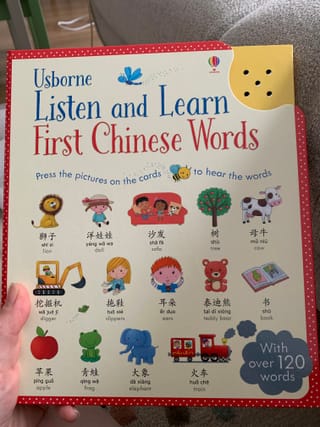
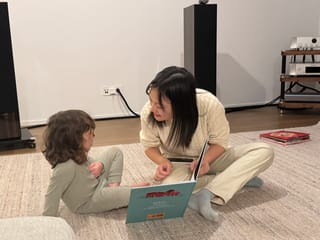
One more thing: if you have kids, learning alongside them is genuinely one of the best motivations. Our daughter sees me studying and it reinforces that learning languages is a lifelong thing, not just something kids do. If you're thinking about getting your children into Mandarin too, I've shared our experience with enrolling a toddler in Mandarin preschool and our broader journey of teaching kids Chinese as non-native speakers.
FAQs
Is it too late to learn Mandarin as an adult?
No. I started at 35 with no background in Asian languages and reached conversational level in about 2.5 years. Research supports that adults can learn languages effectively at any age — we just learn differently than children. The biggest factor isn't age, it's consistency.
How long does it take to learn Mandarin as an adult?
Expect around 2-3 years of regular study to reach a conversational level (HSK3/A2-B1). I reached this level in 2.5 years studying an average of 2-3 hours per week, with more intensive periods mixed in. Full professional fluency takes significantly longer. The key takeaway: consistency matters more than intensity. Even a few hours a week adds up over months and years.
What is the best method for learning Mandarin as an adult?
A combination approach works best: prioritise comprehensible input (listening and reading at your level) as the foundation, supplement with spaced repetition flashcards (Anki) for vocabulary, add structured textbook study for grammar patterns, and include regular conversation practice. Pure input alone leaves gaps; pure textbook study is too slow. The combination is what produces real results.
Is Mandarin really that hard to learn?
It's different-hard, not impossible-hard. The tones and characters are genuinely challenging for European language speakers because there's nothing comparable in Western languages. But Mandarin grammar is surprisingly straightforward — no conjugations, no gendered nouns, no complex tense system. The difficulty is mostly in the unfamiliarity. Once you get past the initial shock (which took me about 3-4 months), it starts to feel more manageable.
Do I need to learn Chinese characters, or can I just learn to speak?
You can start with speaking only, but I'd recommend learning characters alongside. Reading ability unlocks so many more resources — graded readers, apps, menus in China, signs — that it significantly accelerates your overall learning. You don't need to handwrite characters (I rarely do), but being able to read them and type them on a phone keyboard is extremely valuable, both for studying and for traveling in China.
Do I need Mandarin to travel in China?
No — you can travel China without speaking any Mandarin. Translation apps like Google Translate and Baidu work well, and major tourist areas have some English signage. However, even basic Mandarin makes travel significantly more rewarding. Simple phrases help in restaurants, with taxi drivers, and in everyday situations. If you're planning a trip, learning 50-100 basic phrases before you go will make a noticeable difference.
Can I learn Mandarin without a teacher?
Yes, especially in the beginning. With apps like Anki, DuChinese, and comprehensible input content on YouTube, you can make solid progress independently. However, I'd recommend adding a conversation tutor (even once a week) once you have a few hundred words. Speaking is a skill that's hard to develop alone, and a tutor can correct pronunciation issues before they become habits. Online tutors on platforms like italki start from around $10-15/hour.
Planning a Trip to China?
Learning Mandarin and visiting China go hand in hand — nothing motivates your studies like booking a flight. Here are some resources to get started:
📋 How to plan your first China trip
🏨 Where to stay in Beijing | Shanghai | Chengdu
📱 WeChat setup guide — you'll need this app for everything in China
🗣️ Best translation apps for China — for when your Mandarin isn't quite enough yet!