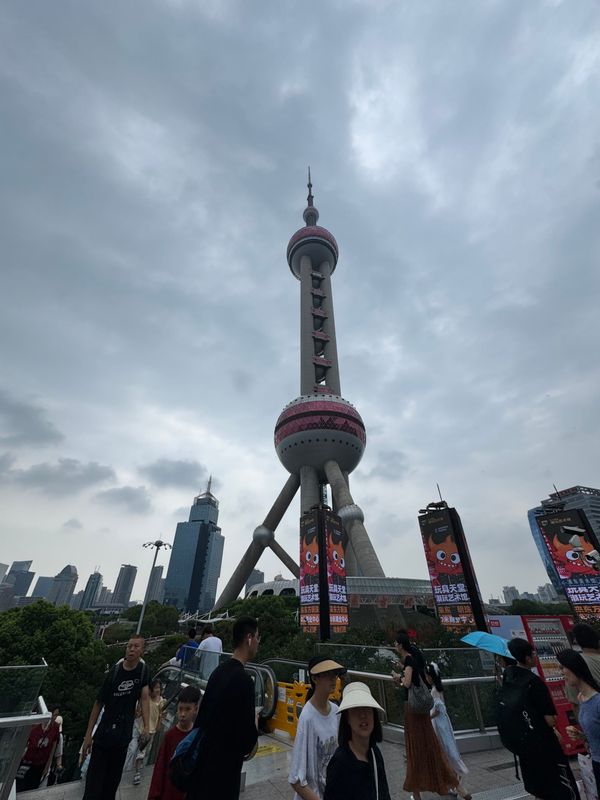
Shanghai Travel Guide: Plan Your Trip to China's Most International City
Everything you need to know — when to visit, where to stay, what to eat & practical tips for independent travellers
Share this post:
Last updated: February 2026
🗺️ Location: Eastern China, Yangtze River Delta
⏱️ Recommended stay: 2–4 days (minimum 2, ideal 3)
💲 Daily budget: $60–180 per person
🌡️ Best time to visit: April–May or September–November
✈️ Getting there: Pudong (PVG) for international, Hongqiao (SHA) for domestic; high-speed trains from all major Chinese cities
🏨 Best area to stay: Nanjing Road for first-timers; Jing'an for a calmer base
🚇 Getting around: Metro (extensive network) + DiDi ride-hailing
🎟️ Book in advance: Restaurants (2–3 days ahead), Astronomy Museum, Disneyland
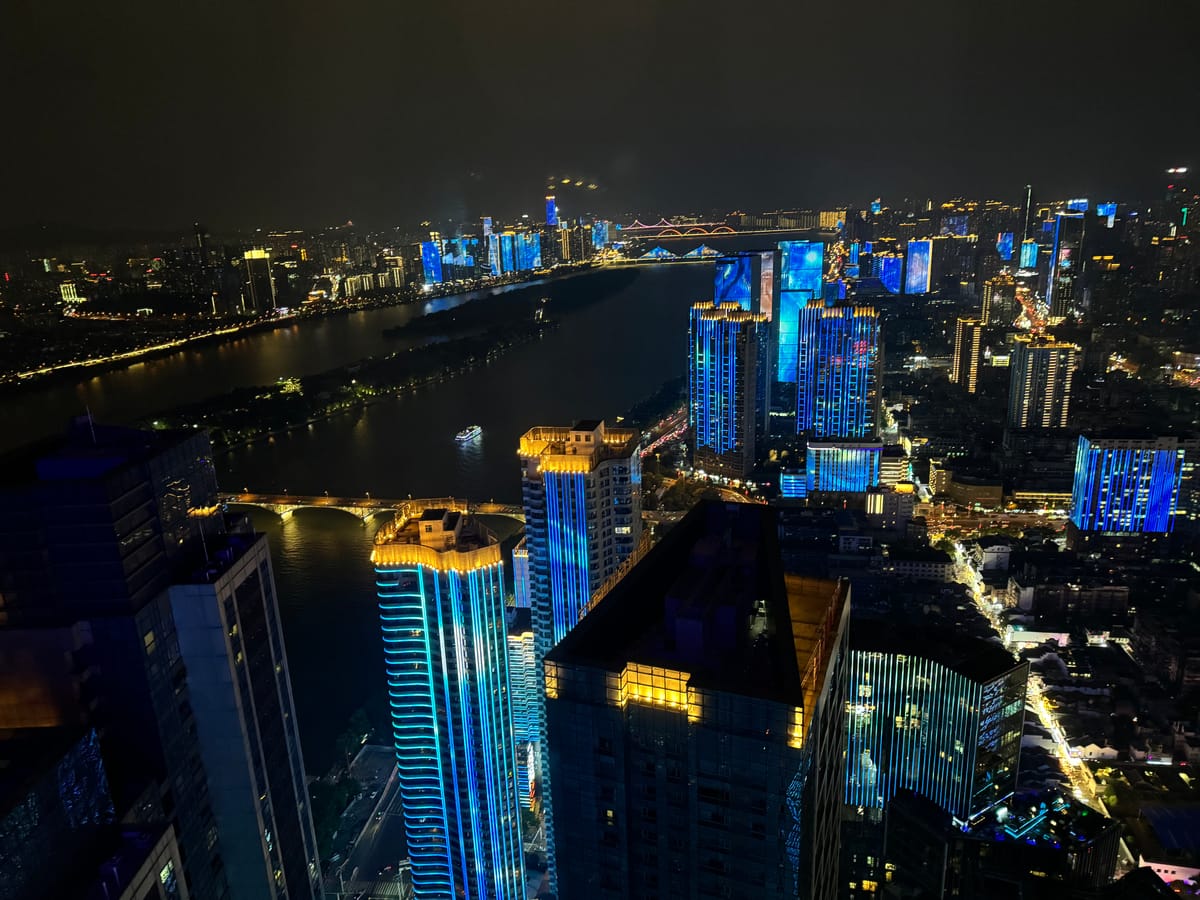
Shanghai is China's largest city and its most international — an interesting mix of colonial architecture, futuristic skyscrapers and a food scene that rivals anywhere in Asia. Plan 2–4 days to see the highlights: The Bund waterfront, the French Concession's tree-lined streets, Yu Garden, and at least one evening in a local park watching the city come alive.
Shanghai requires more advance planning than other Chinese cities — popular restaurants book out days ahead and the best museums need online reservations. You will make the most of your stay if you well research places to go ahead of time. Stay near Nanjing Road for convenience or in Jing'an for a quieter neighbourhood feel.
As featured in the Lonely Planet 2025 China guidebook. I speak Mandarin and have spent months exploring China across multiple trips.
Shanghai is a city that is beloved by Western travellers and many see it as a gateway to China. The Pudong skyline is genuinely unique, the food is diverse, and the French Concession makes for a pleasant walk.
But I'll be honest: of all the Chinese cities we've visited, Shanghai feels the least Chinese. It's cosmopolitan and it‘s busy in a way that reminds us more of London or Singapore than of Beijing or Chongqing. If you're looking for that deep cultural immersion — hutong alleyways, temple incense, street vendors shouting over each other — you'll find more of it elsewhere.
That said, most travellers will want to include Shanghai in their first China itinerary (we only did it fourth time around). The food alone is worth the trip, and underneath the tourist traps there are genuinely local experiences to discover — you just need to know where to look (which we not always did).
This guide covers everything you need to plan your trip.
Why Visit Shanghai
Shanghai might not be our favourite Chinese city, but there are very good reasons millions of travellers visit each year:
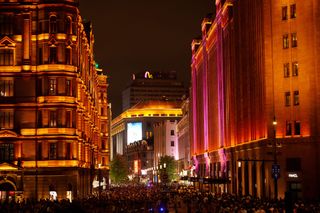
- Spectacular skyline — The Bund and Pudong together create one of the world's most iconic cityscapes
- One of Asia's best food scenes — from ¥5 street dumplings to Michelin-starred restaurants
- The French Concession — some of the best urban walking you'll find anywhere
- Shanghai Disneyland — the main draw for many families
- World-class museums — the Astronomy Museum, Shanghai Museum, and Natural History Museum are all excellent
- Gateway to eastern China — easy train connections to Hangzhou, Suzhou, Nanjing and beyond
👉 See Things to Do in Shanghai for our full guide to attractions and local favourites, and Shanghai with Kids if you're travelling as a family.
Best Time to Visit
We visited Shanghai in July because of the school holiday schedule and honestly wish we'd picked a different month. The heat was intense — 35°C and above — and the humidity made walking around genuinely uncomfortable with small children. And it rained almost every day at some point.
The best months are April–May and September–November. Spring brings pleasant temperatures around 15–25°C and cherry blossoms in the parks. Autumn is equally good — clear skies, comfortable temperatures, and beautiful light for photos on The Bund.
- Spring (April–May): Our top recommendation. Mild, pleasant, parks in bloom. Avoid the first week of May (Labour Day holiday).
- Summer (June–August): Hot, humid, rainy. Typhoon season. Plan around indoor activities.
- Autumn (Sept–Nov): Equally good as spring. Clear skies, golden light. Avoid the first week of October (Golden Week).
- Winter (Dec–Feb): Cold and damp, 0–8°C. Hotels are cheaper, attractions less crowded. Chinese New Year brings festive atmosphere but massive crowds.
🌟 Tip: The Golden Week (Oct 1–7) and Chinese New Year are peak domestic travel periods — expect huge crowds and higher prices everywhere.
🧳 Trip Planning Essentials
🛫 Flights, Trains & Hotels
Book everything in one place on Trip.com.
🎟 Tours & Tickets
Skip lines with GetYourGuide or Klook.
💰 Payments
AliPay and WeChat are a must — use it with Wise card to save on fees and get better conversion rates!
📱 Stay Connected
For cheaper data access without VPN use Saily eSIM.
🚖 Airport Transfers
Traveling with luggage? Pre-book a private car pickup for a smooth arrival.
👉 See more China travel essentials
How to Get to Shanghai
- ✈️ By air: Shanghai Pudong (PVG) handles most international flights. Shanghai Hongqiao (SHA) is the domestic hub, conveniently attached to the main high-speed rail station.
- 🚄 By train: High-speed trains connect Shanghai to Beijing (4.5 hrs), Hangzhou (1 hr), Suzhou (30 min), Nanjing (1.5 hrs) and most other major cities. Trains arrive at either Hongqiao or Shanghai Railway Station.
- 🚕 Airport to city: The Maglev train from Pudong takes 8 minutes to Longyang Road station (¥50), then transfer to the metro. A taxi to central Shanghai costs around ¥150–200 and takes 40–60 minutes depending on traffic. For families with luggage, a pre-booked transfer is the smoothest option.
💡 Tip: If you're arriving at Hongqiao, you're already connected to the metro and high-speed rail — it's by far the more convenient airport.
Browse flights and trains on Trip.com
 Magda Sawyer
 Magda Sawyer
Getting Around Shanghai
Shanghai's metro is extensive, clean and cheap — it'll get you to almost anywhere you need to go. Use AliPay's transport function to scan QR codes at the gates, no need to queue for tickets.
- Metro: Fast, efficient, air-conditioned. Most stations have lifts. Key lines: Line 2 (both airports + Nanjing Road + Zhongshan Park), Line 10 (French Concession), Line 11 (Disneyland).
- DiDi: China's Uber — works via a mini program in WeChat with English interface. Essential for rainy days or when you're tired of walking.
- Walking: Shanghai is flat and walkable in good weather. The French Concession and Bund area are best explored on foot.
- Ferries: The Huangpu River ferry crosses between The Bund and Pudong for just ¥2 — a local secret that beats the expensive tourist cruises.
💡 Tip: Distances between attractions can be larger than they look on a map. Combine metro with walking rather than trying to walk everywhere.
 Magda Sawyer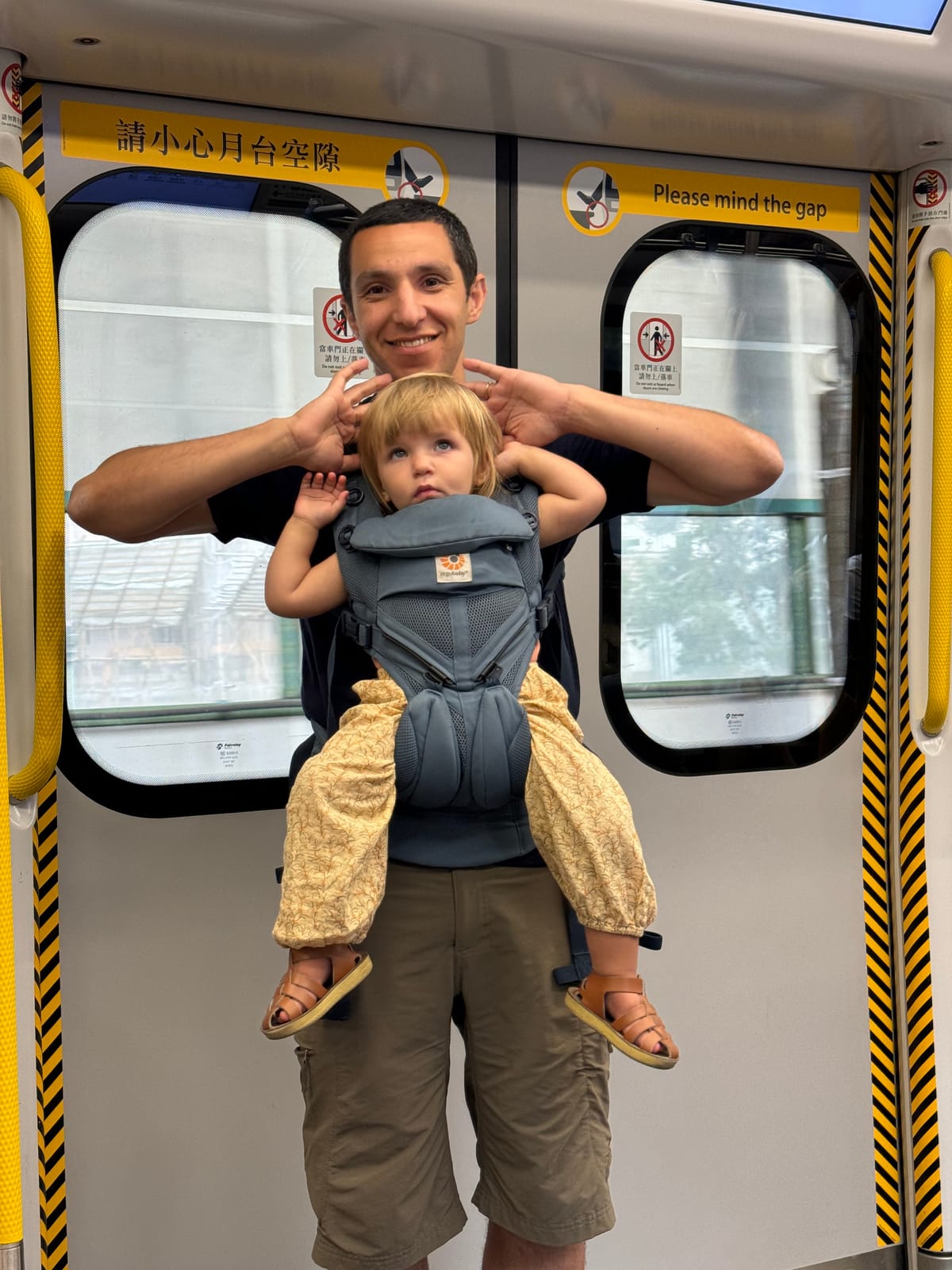
 Magda Sawyer
Where to Stay in Shanghai
Different areas suit different travel styles:
- Nanjing Road area: Central, walking distance to The Bund and Yu Garden. Lively but can be loud. Best for first-timers on short stays.
- Jing'an District: Calmer neighbourhood feel, good metro connections, near the Natural History Museum. Our recommendation for families and longer stays.
- French Concession: Tree-lined streets, cafes, boutiques. Best atmosphere but more spread out from major sights.
- Pudong / Lingang: Only if visiting the Astronomy Museum or Haichang Ocean Park — worth booking a night nearby to avoid the 2-hour commute from central Shanghai.
Unlike most countries, Trip.com is the most popular site for hotel bookings in China with the widest selection and best prices.
We stayed at the Radisson Collection Hyland Shanghai on Nanjing Road — good value, studio room with separate bedroom, incredibly central. But the area is loud in the evenings. If we went back, we'd choose Jing'an.
👉 Full hotel guide → Where to Stay in Shanghai
 Magda Sawyer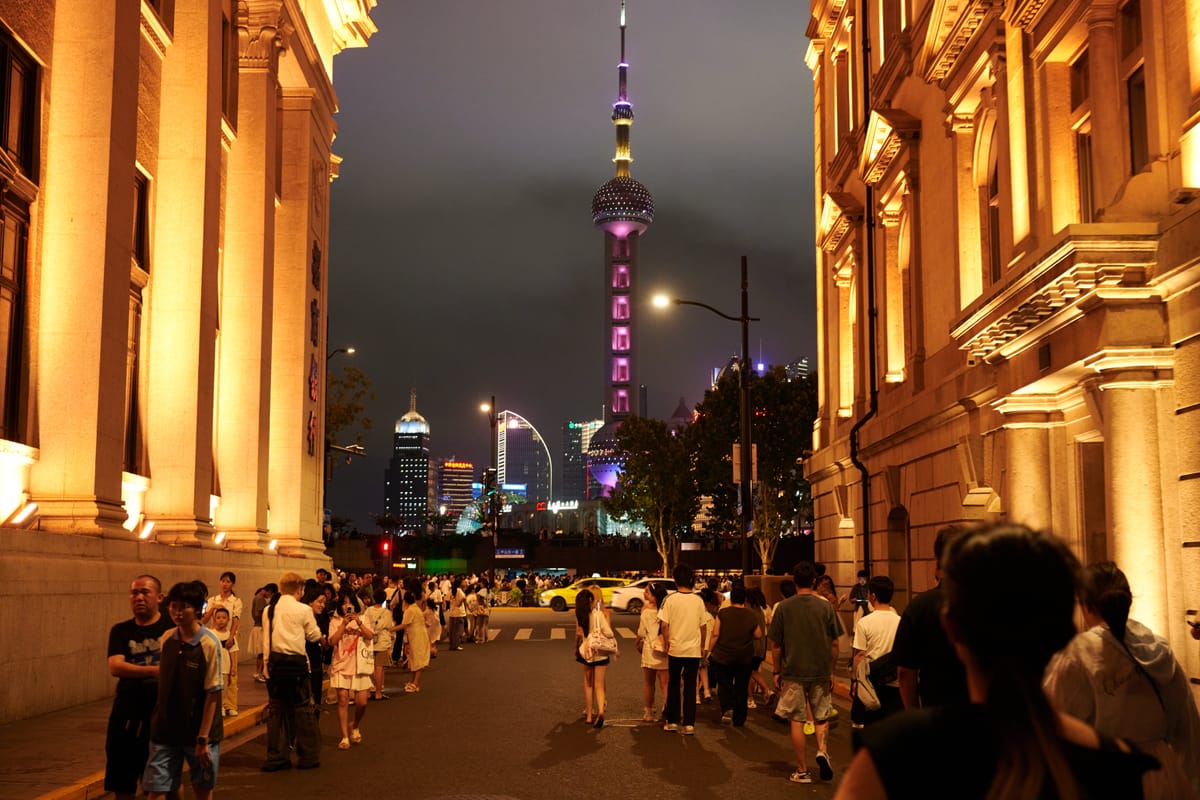
 Magda Sawyer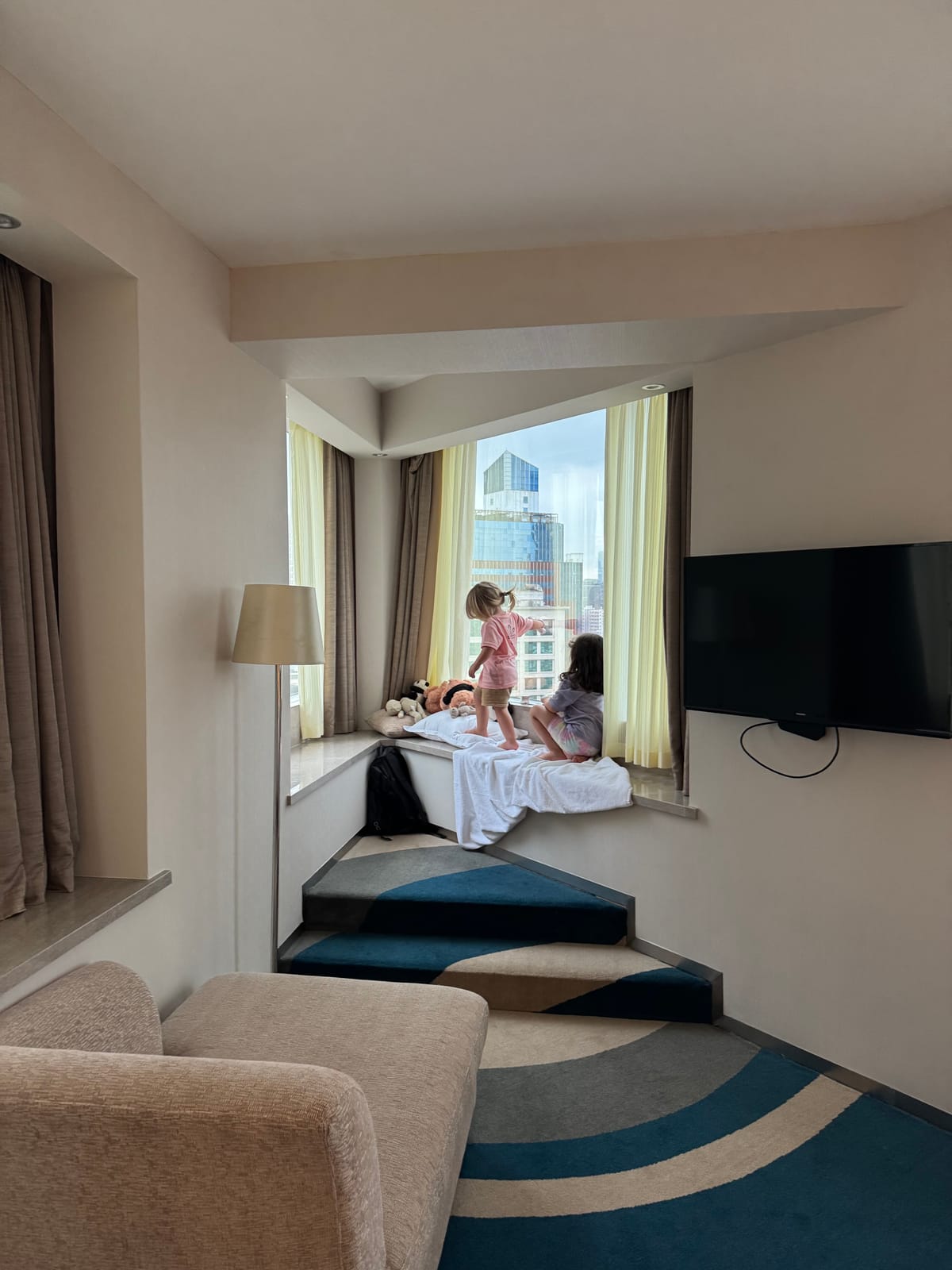
What to Eat in Shanghai
Shanghai's food scene is one of the city's genuine highlights — and Shanghainese cuisine is milder than Sichuan or Hunan food, which makes it a good starting point if you're new to Chinese food.
Our favourite Shanghai foods:
- Xiaolongbao (小笼包): Shanghai's signature soup dumplings. Delicate, filled with pork and hot broth. Din Tai Fung for reliability, or hunt for local spots on Dianping.
- Shengjian bao (生煎包): Pan-fried dumplings with crispy bottoms. Yang's Fry Dumpling (杨's Fried Dumpling) is legendary — eight dumplings for a few yuan.
- Crab noodle soup (蟹面): Rich, savoury, comforting. Available at noodle shops across the city.
- Scallion oil noodles (葱油拌面): Simple, flavourful and cheap. Springy noodles with caramelised scallion oil.
⚠️ Important: Shanghai is the one Chinese city where you must book restaurants in advance. We wanted to eat at Jesse Restaurant (吉士酒家) in the French Concession and it was fully booked for our entire stay. Use Dianping (大众点评) and book popular spots 2–3 days ahead. A week for weekends.
Top Experiences in Shanghai
Shanghai is a big city with something for every taste — from world-famous landmarks to hidden local neighbourhoods.
Things you shouldn't miss:
- The Bund at sunset (or North Bund for fewer crowds)
- French Concession walk — Xintiandi → Fuxing Park → Tianzifang → Wukang Road
- An evening in Zhongshan Park watching locals dance
- Xiaolongbao at a proper restaurant
- Yu Garden and the surrounding bazaar
Main tourist attractions include:
- The Bund & Pudong skyline
- Yu Garden
- French Concession
- Shanghai Disneyland
- Observation decks (Shanghai Tower, World Financial Center)
- Shanghai Astronomy Museum
- Shanghai Museum
- Zhujiajiao water town (day trip)
📍 Full guide → Things to Do in Shanghai
 Magda Sawyer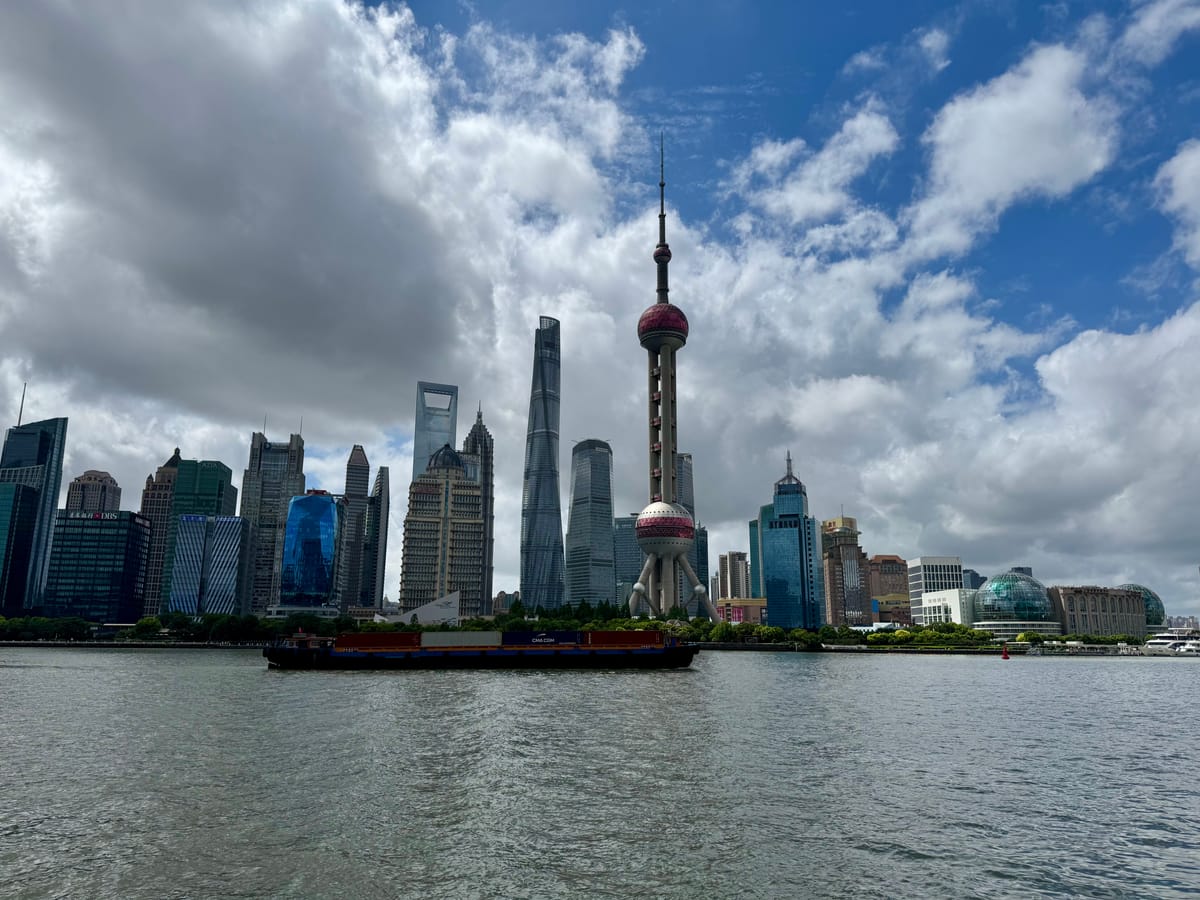
Shanghai Itinerary Ideas
How long you spend in Shanghai depends on your pace — even 2 days can give you a great taste of the city.
- 1–2 Days: Focus on The Bund, Yu Garden, a French Concession walk and one evening at Zhongshan Park. This covers the essentials and works well as a stopover on a longer China trip.
- 3 Days: Add Pudong museums (Ocean Aquarium, Natural History Museum or Science and Technology Museum), the observation decks, and deeper French Concession exploration including Fuxing Park and Jing'an Temple.
- 4 Days: Include Shanghai Disneyland (full day) or a day trip to Zhujiajiao water town.
- 5+ Days: Add the Astronomy Museum (book a night in Lingang), Suzhou or Hangzhou day trips, and time to simply wander and eat.
👉 Detailed day-by-day itinerary coming soon.
Family Travel Tips
Shanghai is a good family destination, though it requires more planning than Beijing or Chengdu.
Some things worth highlighting:
- Indoor playgrounds are incredible in China — there is a NeoBio right by the Yu Garden
- The metro is stroller-friendly with lifts at most stations, though we always recommend a carrier over a stroller in Chinese cities
- Shanghai is the most expensive Chinese city — budget 20–30% more for food, attractions and transport
- Book Disneyland and the Astronomy Museum well in advance — they sell out
- Locals are very welcoming to families with children — expect lots of positive attention and selfie requests
 Magda Sawyer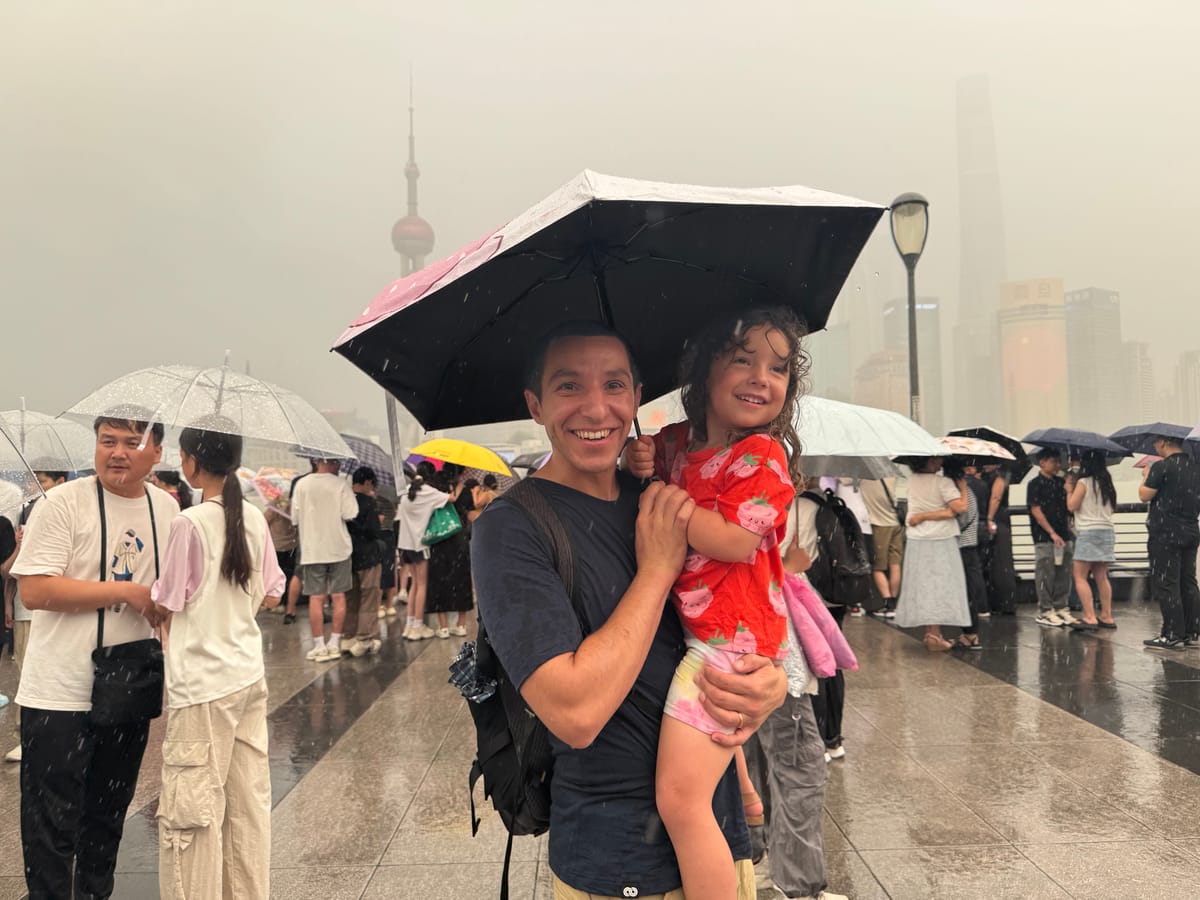
Practical Information
- Visa: Many nationalities can visit China visa-free for up to 30 days. Shanghai also offers 144-hour visa-free transit. Check the latest requirements for your nationality.
- Money: Cash is rarely needed. Set up AliPay or WeChat Pay with an international card or Wise card before you arrive.
- Internet: Google, WhatsApp and Instagram are blocked on Chinese WiFi. Use data roaming on your home SIM (everything works), get an eSIM, or use a VPN if you need a local phone number.
- Apps: WeChat (everything), AliPay (payments + metro), DiDi (taxis), Amap or Baidu Maps (navigation), Dianping (restaurant bookings).
- Language: More English spoken here than any other Chinese city, but don't rely on it. Download a translation app and have your hotel address written in Chinese characters.
 Magda Sawyer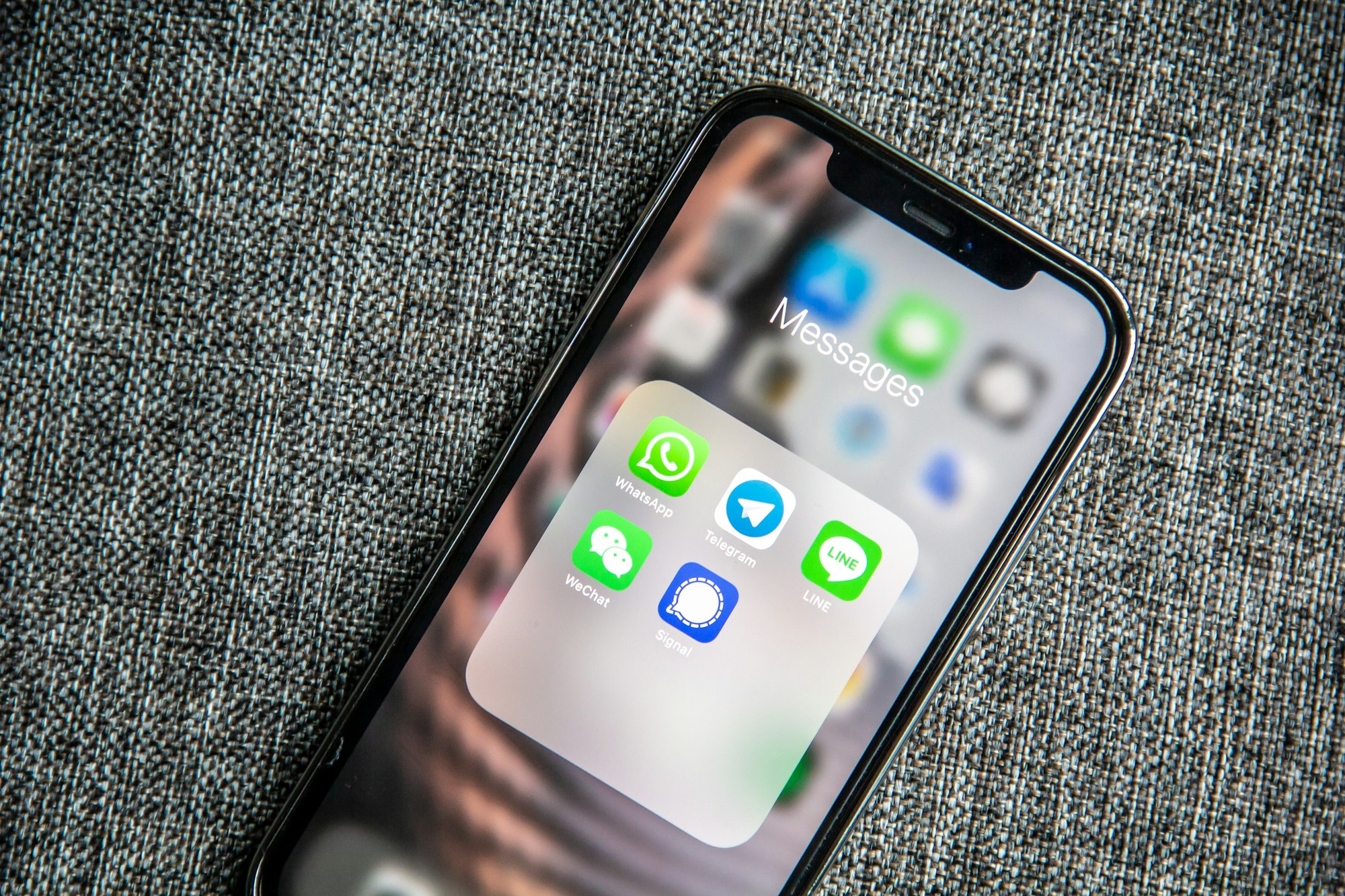
 Magda Sawyer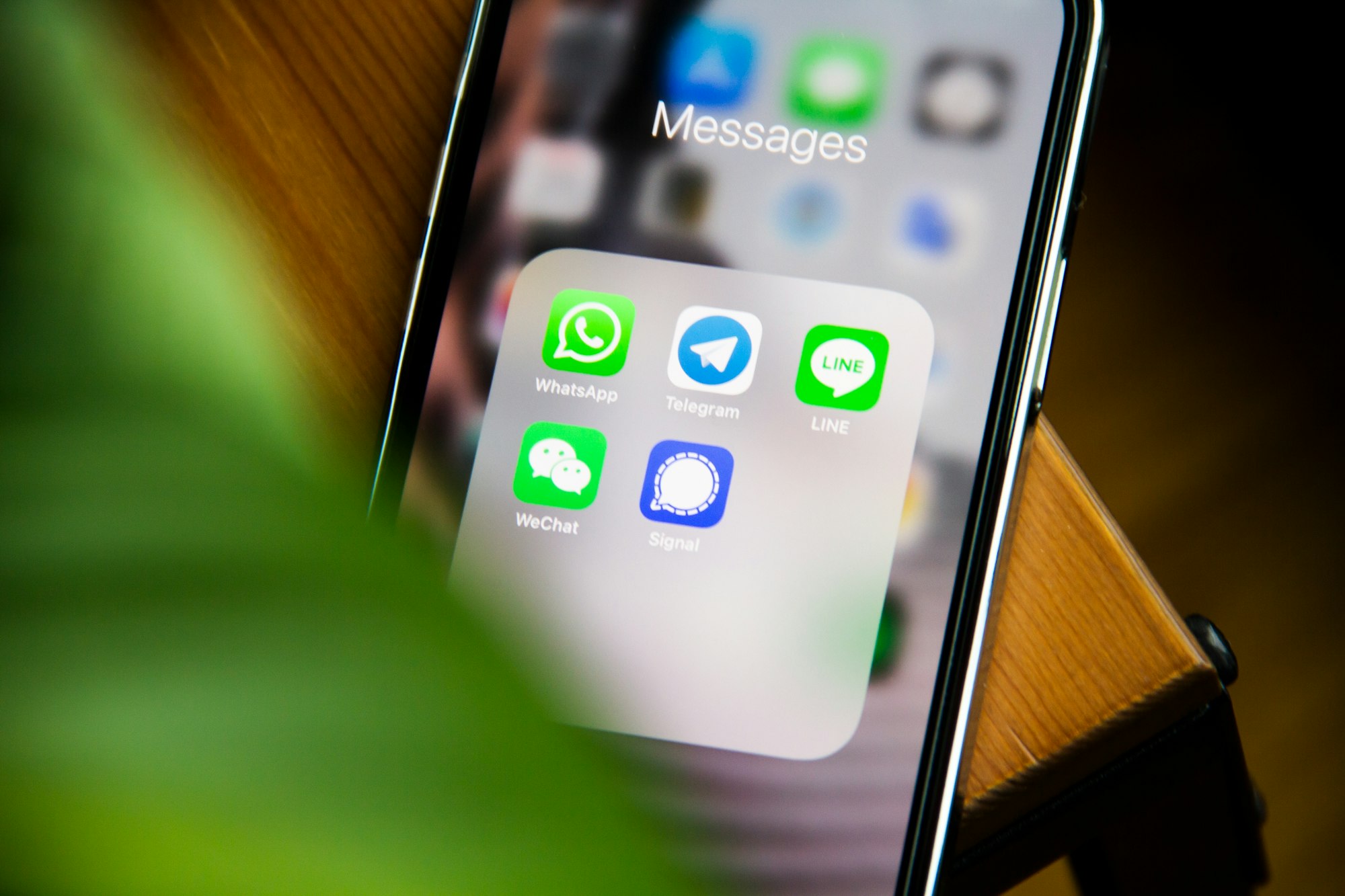
FAQs
Q: Is Shanghai worth visiting?
A: Yes — the food, architecture and energy are unique. But manage expectations: Shanghai feels more international than deeply Chinese. If you want traditional culture and history, start with Beijing. If you want a modern, cosmopolitan city with world-class food and a spectacular skyline, Shanghai delivers.
Q: How many days do you need in Shanghai?
A: 2–3 days for the main highlights. Add a day for Disneyland, and another for the Astronomy Museum or a water town day trip. We had 3 nights and felt that was about right. Shanghai also works well as a 2-night stopover on a bigger China trip.
Q: Is Shanghai safe for tourists?
A: Very safe. We've never felt unsafe anywhere in China. Normal big-city precautions apply — keep an eye on your belongings in crowded areas like Nanjing Road. People are generally friendly and helpful, especially to families with children.
Q: Is Shanghai expensive?
A: It's the most expensive city in China, but still very affordable by European or American standards. A good mid-range hotel costs $80–150/night, a restaurant meal $5–15 per person, and metro rides ¥3–7. Street food and local noodle shops are extremely cheap.
Q: Should I visit Shanghai or Beijing?
A: Both are worth visiting. Beijing offers deeper Chinese culture, more manageable crowds and better value. Shanghai wins for modern architecture, food scene and Disneyland. Most visitors with 2+ weeks can and should do both — the bullet train takes just 4.5 hours. Read our Beijing vs Shanghai comparison for a detailed breakdown.
Q: Do I need a visa to visit Shanghai?
A: Many nationalities can visit visa-free for up to 30 days under China's expanded visa-free policy. Shanghai also offers 144-hour visa-free transit for travellers continuing to a third country. Check the latest requirements for your nationality in our visa-free travel guide.
Q: What food should I try in Shanghai? A: Don't leave without trying xiaolongbao (soup dumplings), shengjian bao (pan-fried dumplings from Yang's Fry Dumpling), crab noodle soup (蟹面), and scallion oil noodles (葱油拌面). Book popular restaurants via Dianping 2–3 days in advance — Shanghai is the one Chinese city where good restaurants regularly sell out.
Q: What's the best area to stay in Shanghai? A: Nanjing Road for first-timers wanting maximum convenience. Jing'an for families or anyone wanting a calmer base. The French Concession for atmosphere and cafes. See our full hotel guide for neighbourhood comparisons and specific recommendations.
Where to Go Next from Shanghai
Shanghai connects easily to other destinations by high-speed train, making it a natural hub for exploring eastern China.
🚄 Hangzhou — 1 hour West Lake, tea plantations and one of China's most beautiful cities. Perfect weekend escape or day trip.
🚄 Suzhou — 30 minutes Classical Chinese gardens (UNESCO-listed), canals and the stunning Suzhou Museum by I.M. Pei. Easy day trip.
🚄 Nanjing — 1.5 hours Ming Dynasty history, tree-lined boulevards and excellent food. Worth a night or two.
🚄 Beijing — 4.5 hours If you haven't been yet, don't miss it. In our opinion, Beijing delivers a much deeper Chinese experience than Shanghai. → Beijing Travel Guide | Beijing Things to Do
🚄 Huangshan — 2.5 hours Dramatic mountain scenery, sea of clouds and ancient Anhui villages.
Related Posts:
 Magda Sawyer
 Magda Sawyer