Train Travel in China: The Essentials
If there is one country in the world, where you have literally no excuses to take a plane over a train, it is China.
With their comprehensive train network reaching every corner of the country, it is the most convenient way to move around as a traveller.
Chinese trains are not only fast, but also punctual, predictable and relatively cheap.
For that reason we have yet to take a domestic flight in China, and in this post I will explore everything you need to know about train travel in China to make your trip easy.
Table of Contents
What to Expect on Travel Day
Navigating Chinese train stations requires some preparation, especially with family. I know that we were quite nervous before our first trip — but it is super-smooth once you get a grip of how the process looks like
Here's a step-by-step breakdown of what to expect:
Before You Arrive
- Train stations in major cities are massive and typically located in the outskirts
- Plan extra time for traffic if arriving by taxi (Apple Maps is reliable for time estimates)
- Check metro travel times if using public transport
- Aim to arrive at least one hour before departure (boarding starts 20-30 minutes before train leaves)
Entering the Station
- You cannot enter without a valid ticket
- First checkpoint: Ticket control/passport verification (e-tickets are linked to your passport)
- Important for foreigners: Look for manual gates - automated gates don't work with foreign passports
Security Check
- Similar to airports but less strict
- Luggage will be scanned
- No need to remove electronics or liquids
Inside the Station
- Check information boards to locate your departure gate
- Find manual gates early before crowds form
- All stations have convenience stores for snacks and drinks
- Larger stations offer restaurants and cafés
Boarding Process
- When boarding begins, proceed to the manual gate
- Your passport will be checked again
- Follow directions to your assigned platform
- Boarding is efficient but organized
Knowing these steps in advance makes the experience much smoother, especially when juggling children and luggage through these busy transportation hubs.
How to Buy Train Tickets
I recommend purchasing your train tickets online well in advance to secure your preferred travel dates and seating class.
There are two reliable booking methods I recommend:
Option 1: Official Chinese Railway Website/App (12306.cn)
- Pros: Cheapest option with no booking fees
- Cons: Cannot pre-book before tickets are released (currently 15 days before travel)
- Best for: Budget travelers with flexible dates and Chinese language skills
Option 2: Trip.com (Our Personal Choice)
- Pros:
- Allows ticket reservation before official release
- Sets up backup options (alternative connections or seating classes)
- Automatically attempts to purchase tickets until your travel date
- No need to constantly check for ticket availability yourself
- English interface and international payment options
- Cons: Small service fee per ticket
- Best for: Family travelers during busy periods and holidays
For my family, the convenience of Trip.com has been worth the small extra fee, especially during peak travel seasons when tickets sell out quickly. The peace of mind knowing our transportation is secured allows us to focus on other aspects of trip planning.
I have written a separate detailed article about how to buy train tickets in China:
 Magda Sawyer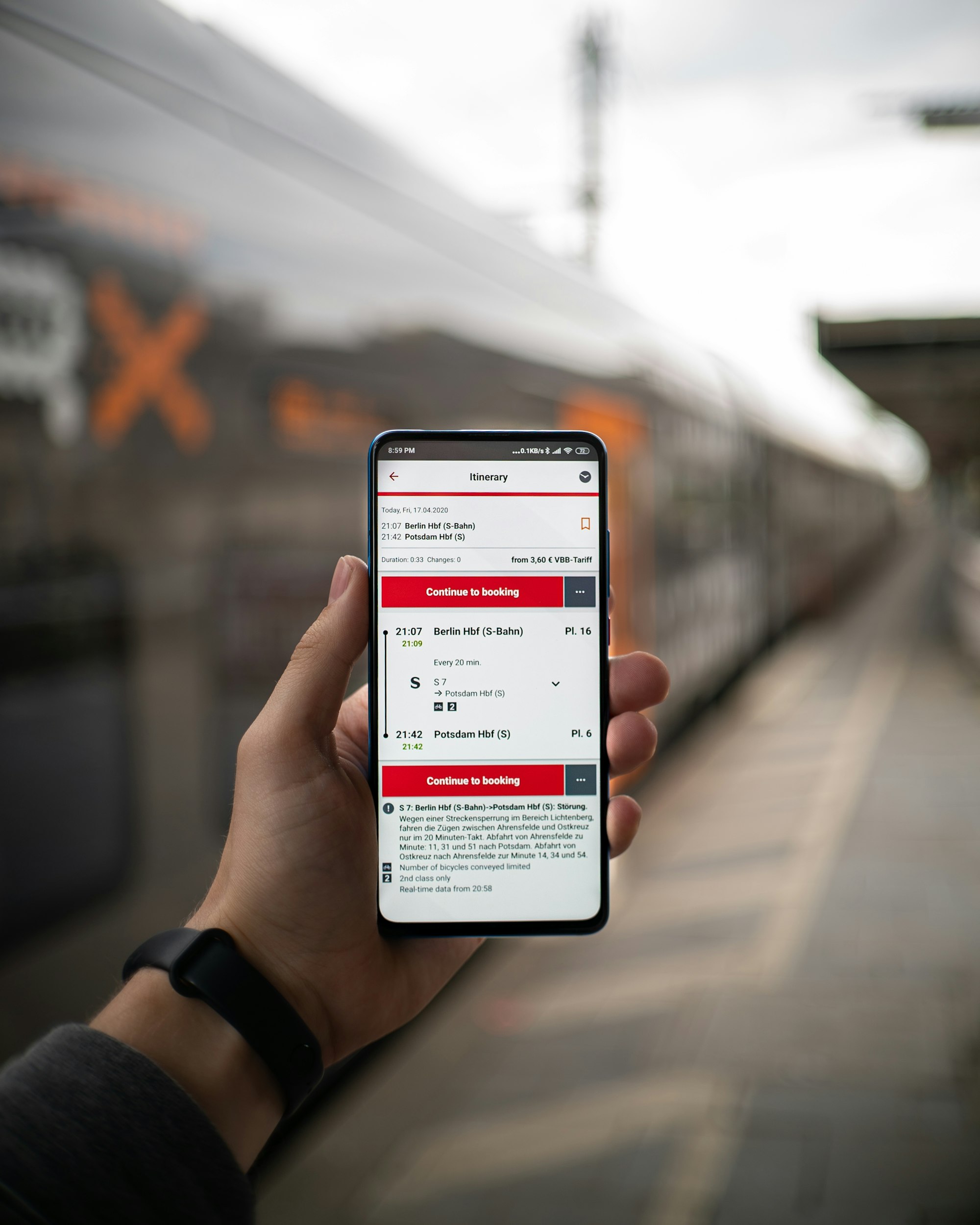
Train Types in China
China's extensive rail network offers several train categories, each denoted by a letter prefix on their train numbers:
High-Speed Trains
- G-trains (高铁 Gāotiě): Premier bullet trains reaching 350 km/h
- D-trains (动车 Dòngchē): Slightly slower high-speed trains (200-250 km/h)
- C-trains (城际 Chéngjì): Intercity high-speed trains for shorter routes
Regular Trains
- Z-trains (直达 Zhídá): Direct express trains with fewer stops
- T-trains (特快 Tèkuài): Fast trains with more stops than Z-trains
- K-trains (快速 Kuàisù): Fast but affordable regular trains
- Regular trains (no letter): Slowest and cheapest option
The difference between these train types goes beyond speed – they also vary significantly in comfort, cleanliness, and facilities available onboard — and also the quality of train stations.
In the high-speed trains, there are both squat and Western-style toilets available on board, as well as a disabled toilet with baby-changing in the carriage 5 in the middle of the train.
For tourists I highly recommend sticking to high-speed trains or night trains — not only because of the facilities, but mainly to minimise the time of travel.
China is a vast country and high speed trains are not just a little bit faster than regular trains — on high-speed rail you will reach your destination 2-3x faster than on a slower train.
High-speed trains vs. Sleeper trains
I think that both high-speed trains and night trains are a great option for tourists. They allow you to reach your destination quickly and comfortably, so the option chosen is mainly a matter of preference.
Train Seating Classes
Chinese trains offer various seating and sleeping options to suit different budgets and comfort preferences:
High-Speed Trains (G/D/C)
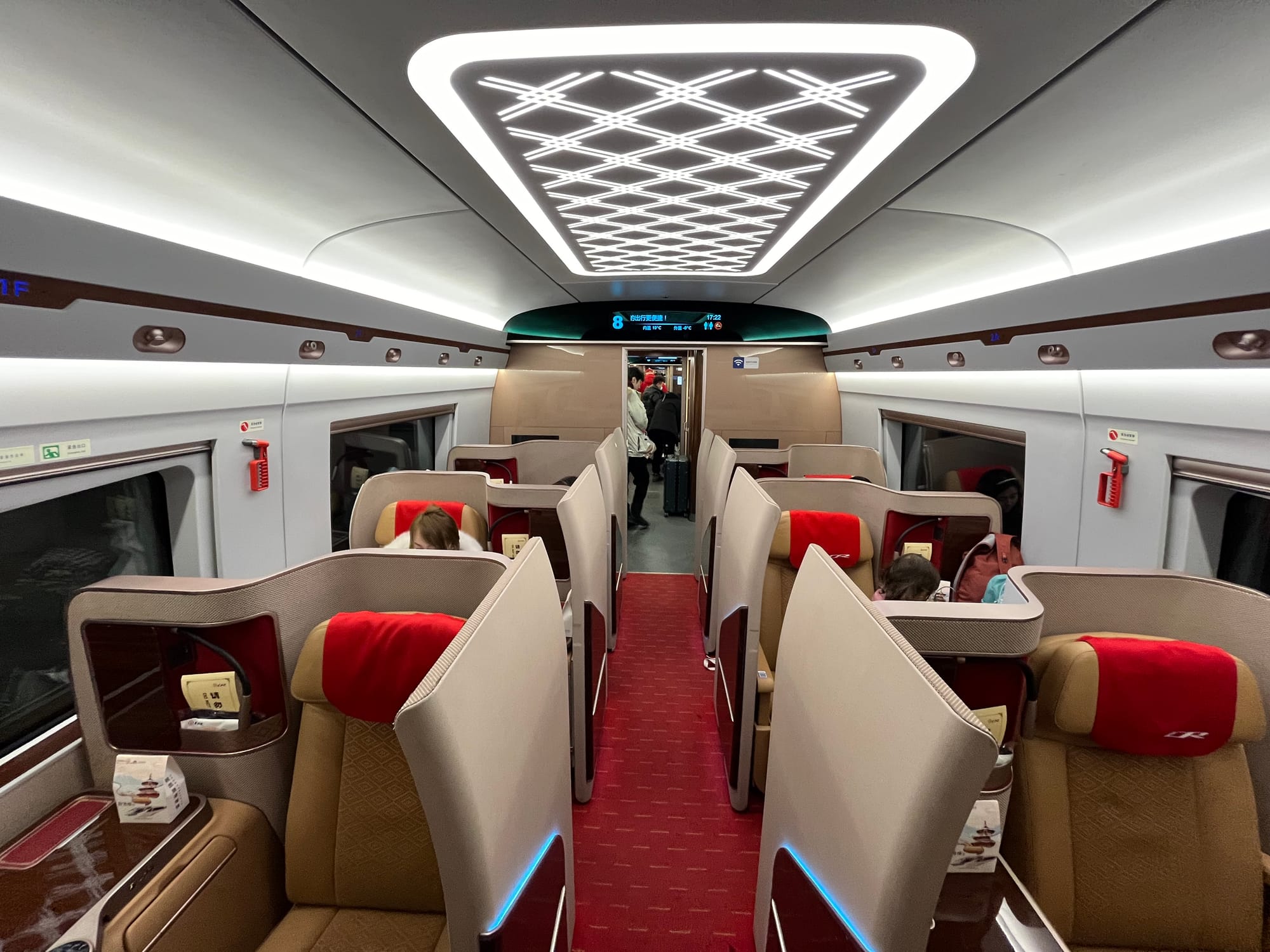
- Business Class (商务座 Shāngwù Zuò): Spacious fully reclining seats with the most legroom, personal tables, and premium service
- First Class (一等座 Yīděng Zuò): Comfortable 2+2 seating arrangement with more space than Second Class, with an unmovable arm rest between seats
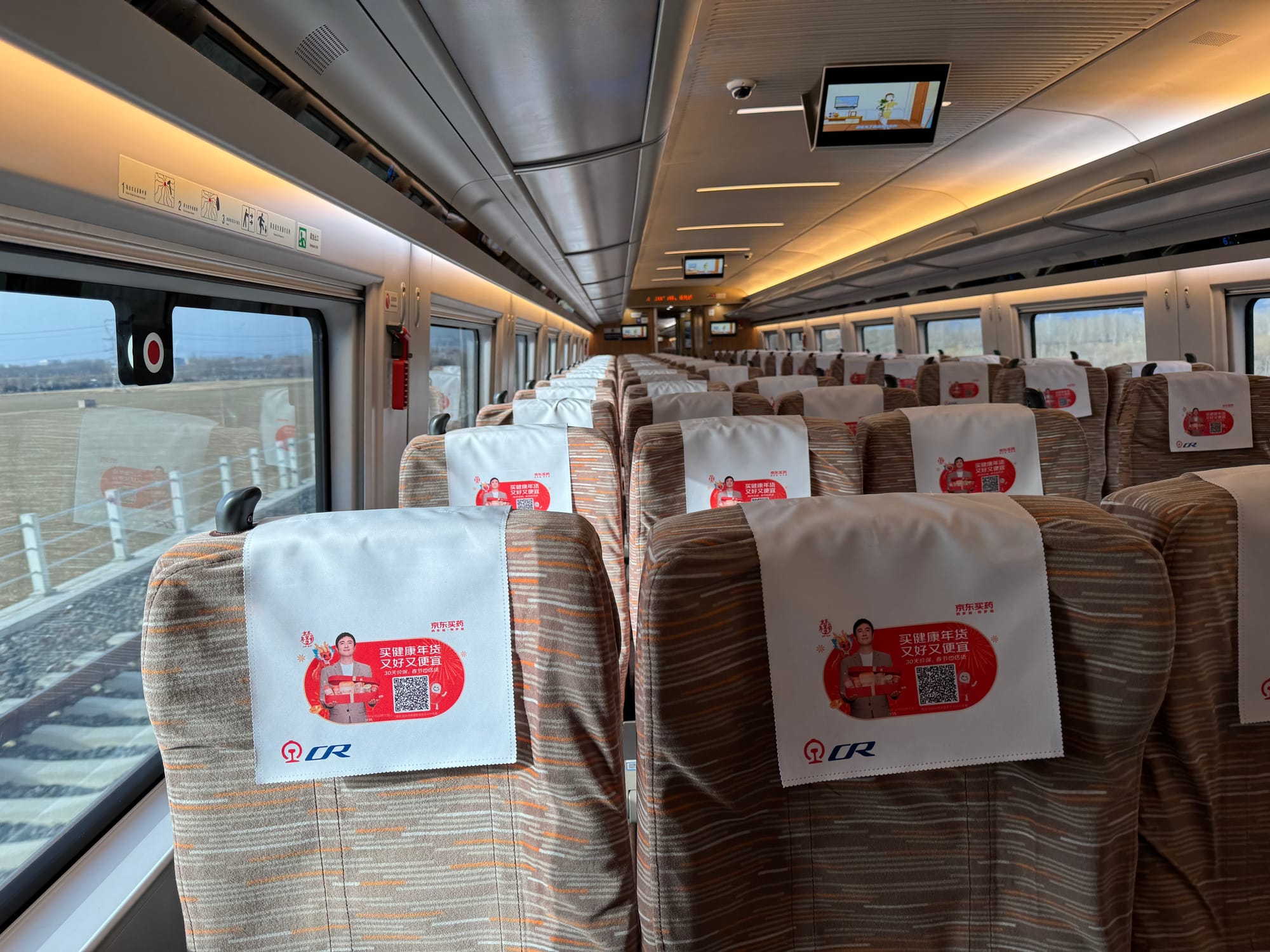
- Second Class (二等座 Èrděng Zuò): Standard 3+2 seating, still comfortable but with less legroom and a bit of a recline
Regular Trains (Z/T/K)
- Soft Sleeper (软卧 Ruǎn Wò): 4-berth private compartments with comfortable bedding and door
- Hard Sleeper (硬卧 Yìng Wò): Open-plan 6-berth compartments, stacked in three levels
- Hard Seat (硬座 Yìng Zuò): Basic seating, most economical option
- No Seat (无座 Wú Zuò): Standing-only ticket that allows you to board when seats are sold out; you'll stand or sit in public areas between carriages
When traveling with family, I recommend at least Second Class on high-speed — while First Class seats might seem more comfortable, there is an arm rest between the seats that doesn‘t move, so if your kid wants to take a nap on your lap, it won‘t be very comfortable.
For overnight journeys, Soft Sleeper provides the privacy and comfort needed for a good night's rest, especially with children.
Avoid No Seat tickets with children if possible, as standing for long journeys can be extremely challenging with little ones. Hard Seat tickets I would also advice against for long journeys as the train tends to get really packed along the way.
Train Stations
Chinese train stations, unlike European ones, are built with the passenger‘s needs in mind, so you will find there all things you need before your train journey.
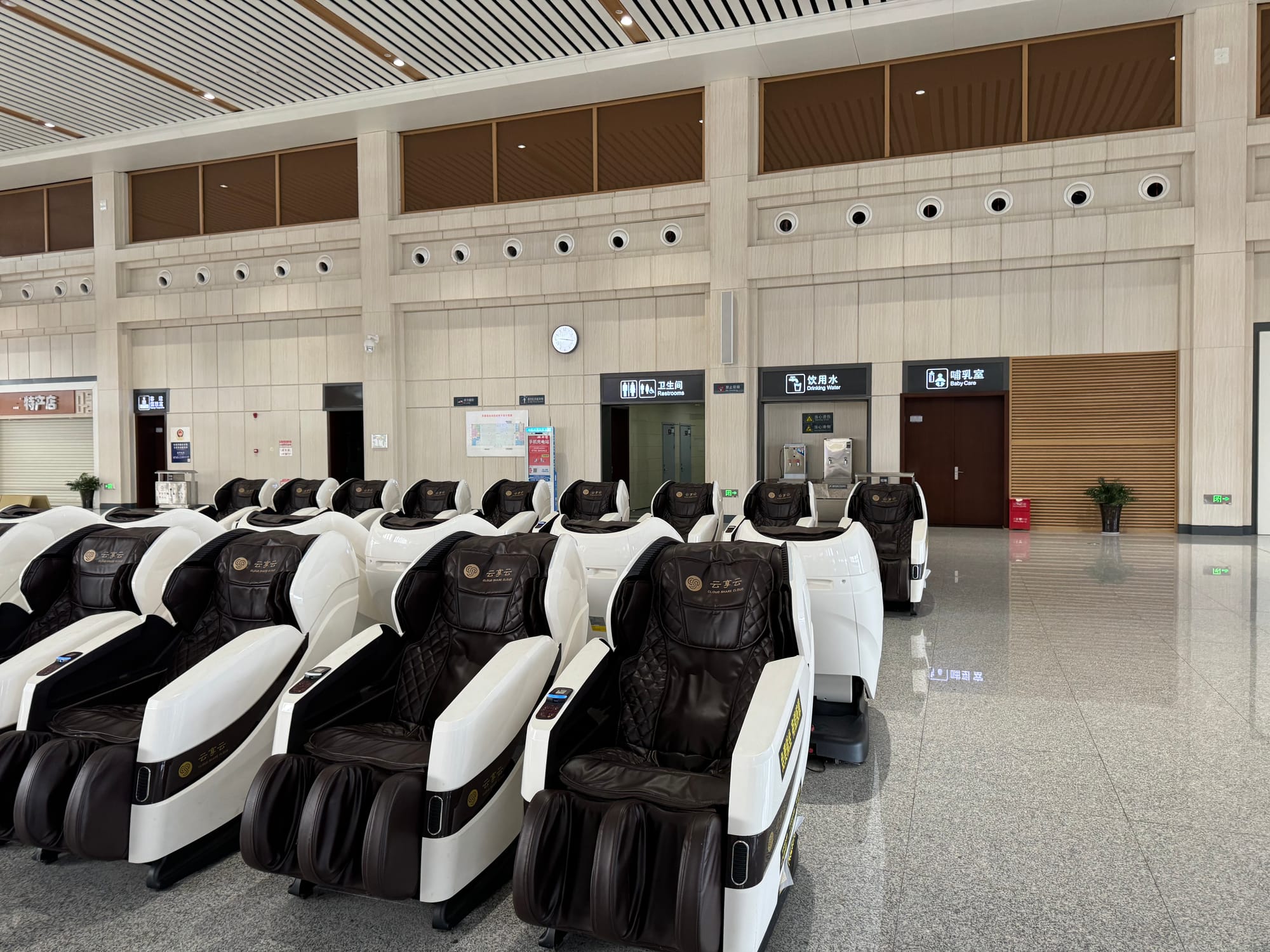
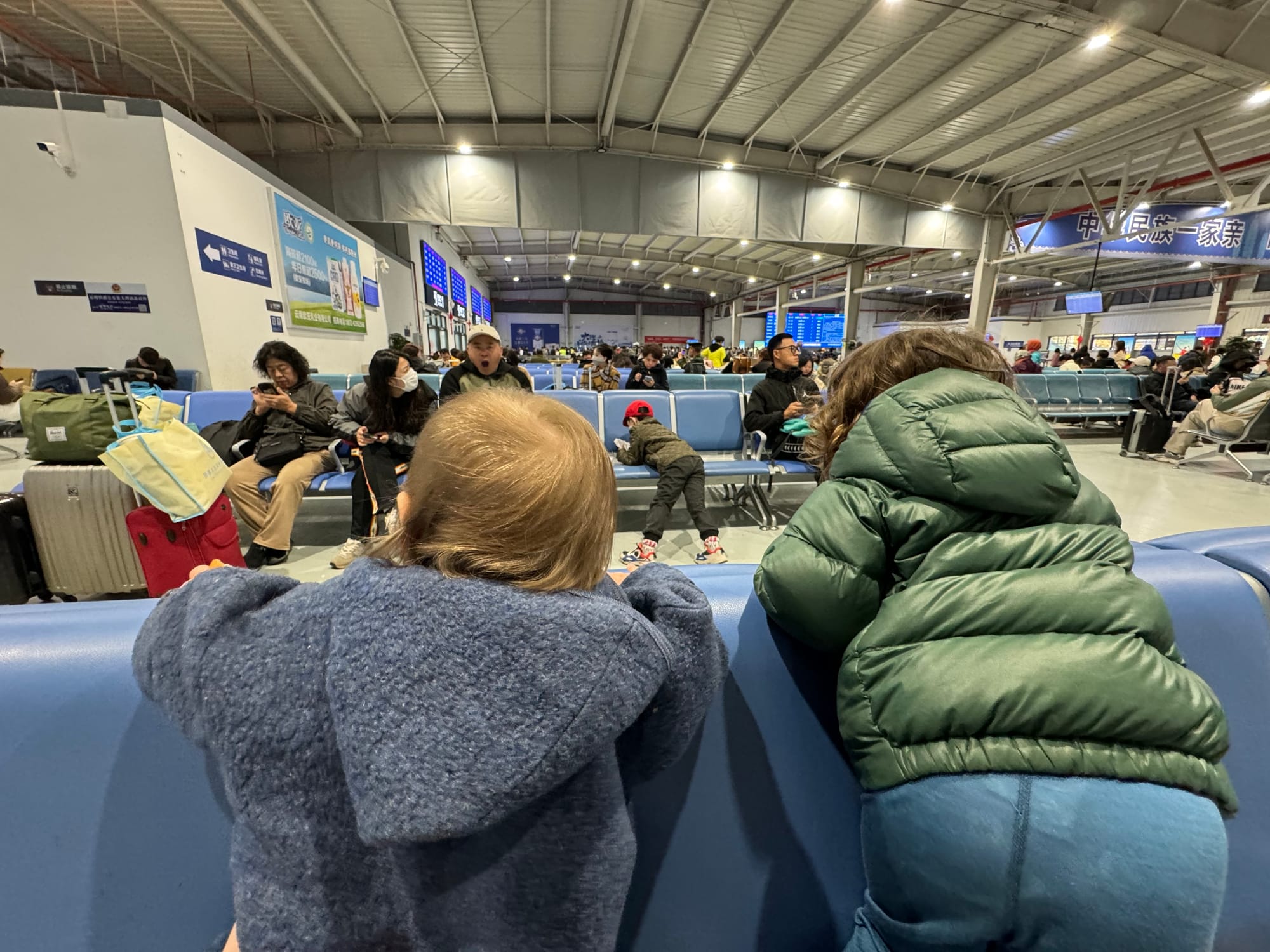
There is an extensive seating area, and often few rows of comfortable massage seats are available.
There are convenience stores with easy on-the-go snacks, as well as cafes and eateries in bigger train stations.
Small high-speed train stations in tourist destinations (Zhangjiajie, Furong, Lijiang etc) have limited food options (usually just a tiny convenience store).
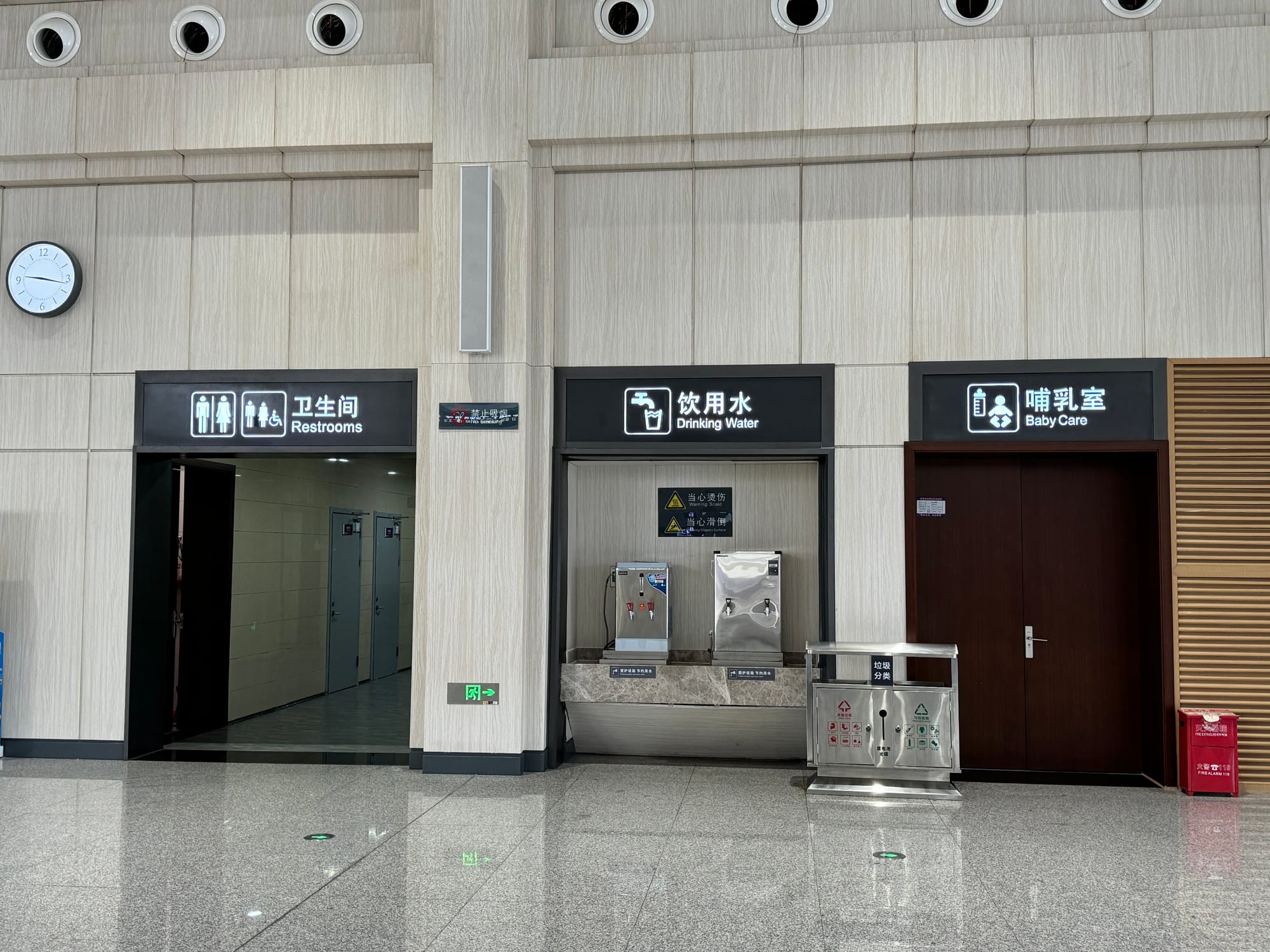
There are mostly squat toilets, but an accessible toilet is also available.
There are baby changing facilities and breast-feeding spaces available — even as a separate room in bigger train stations.
There is hot water available for free — which you can use for your tea or instant meals.
For Business Class travellers there is a separate business lounge with complementary snacks, and the staff will escort you to the gates directly from there.
Food on the Train
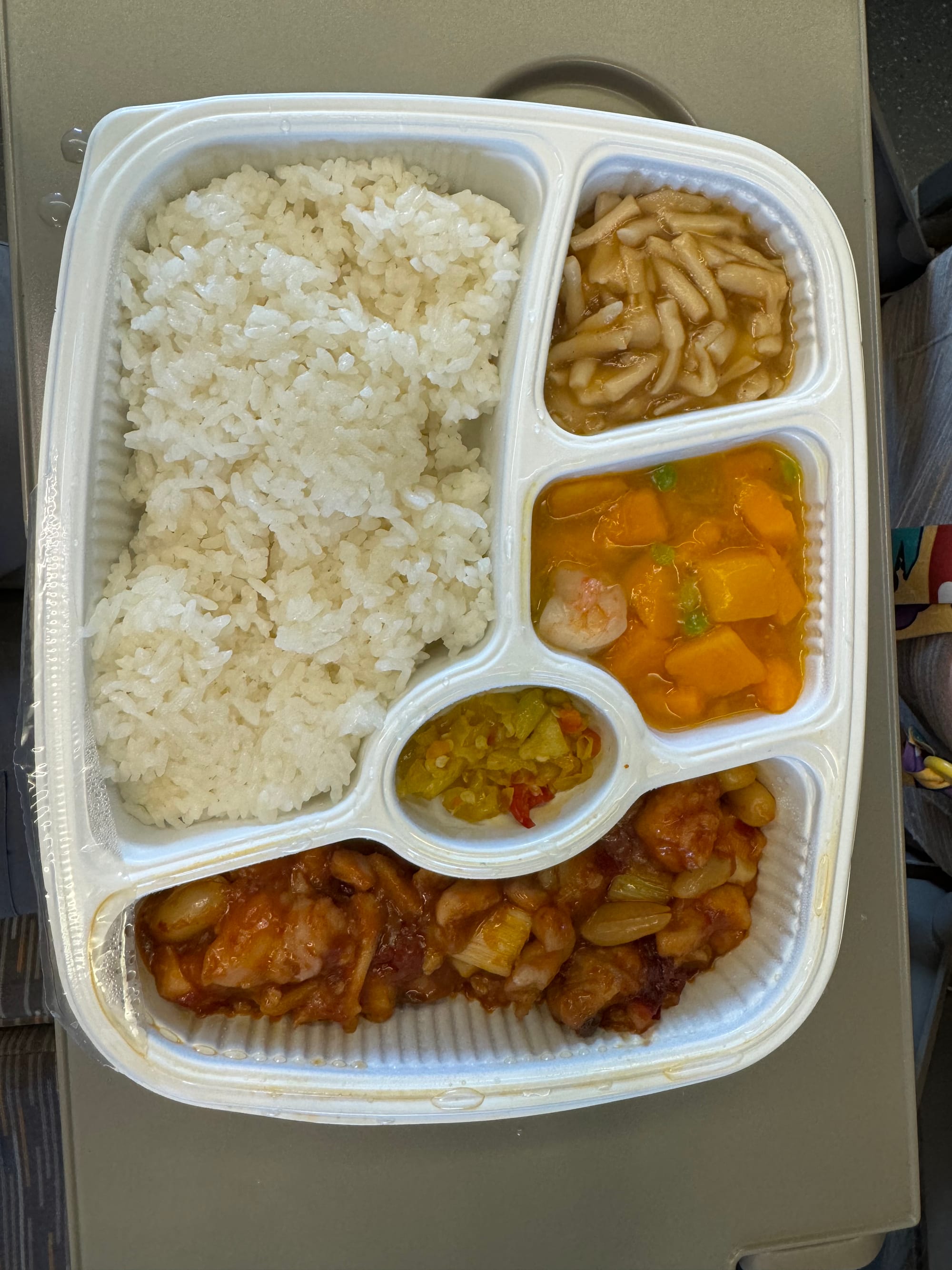
In high-speed trains there is a restaurant carriage located in the middle of the train — however there is no seating there, only take-away meals.
The meals can also be ordered directly to your seat using an app (but we have not been successful with it, it was always easier to just go to the restaurant carriage).
The restaurant microwaved meal costs around 13$.
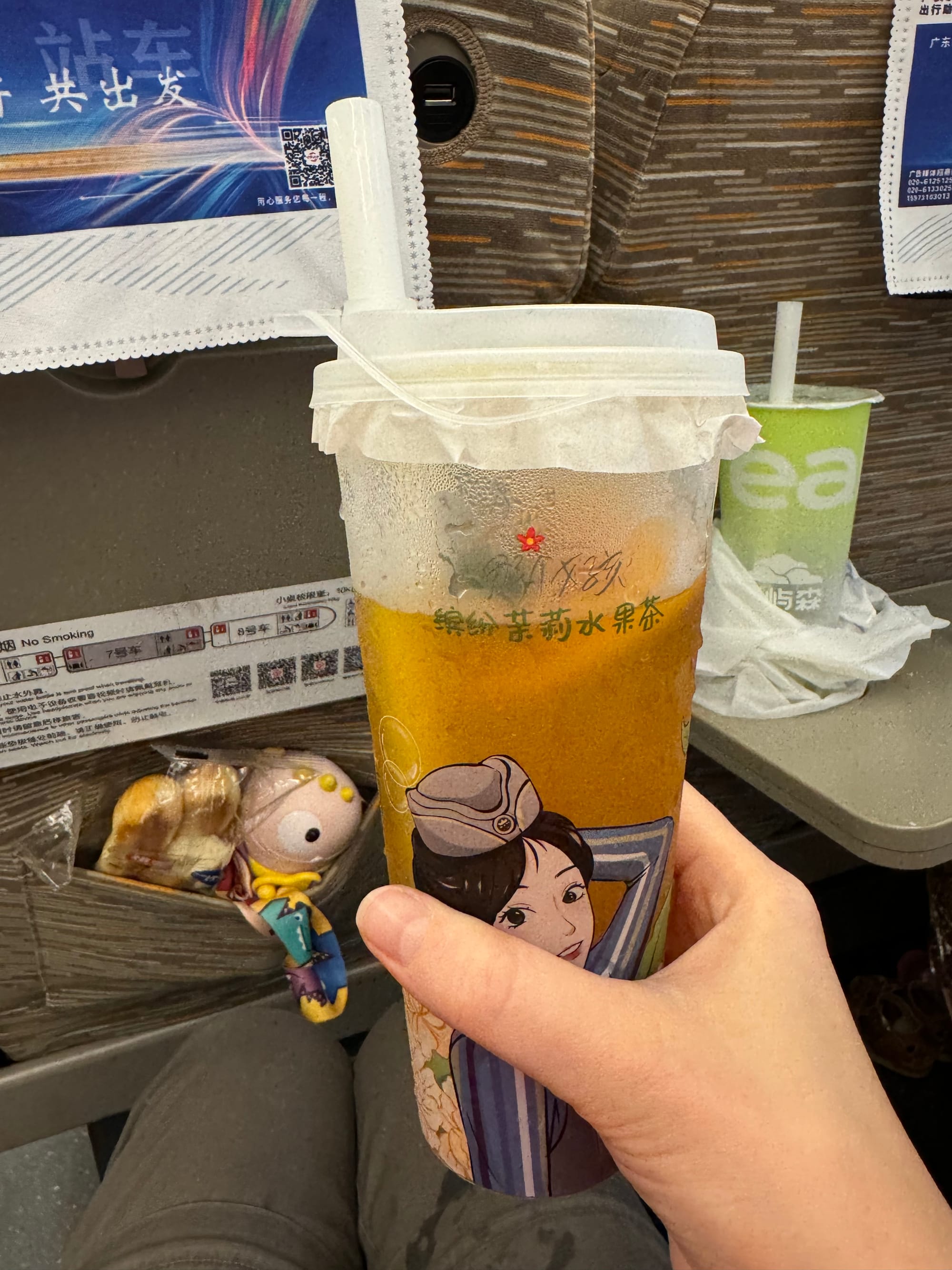
The offers vary on different trains but food is usually good. Sometimes you can even buy refreshing freshly made ice tea, which is amazing in the summer heat.
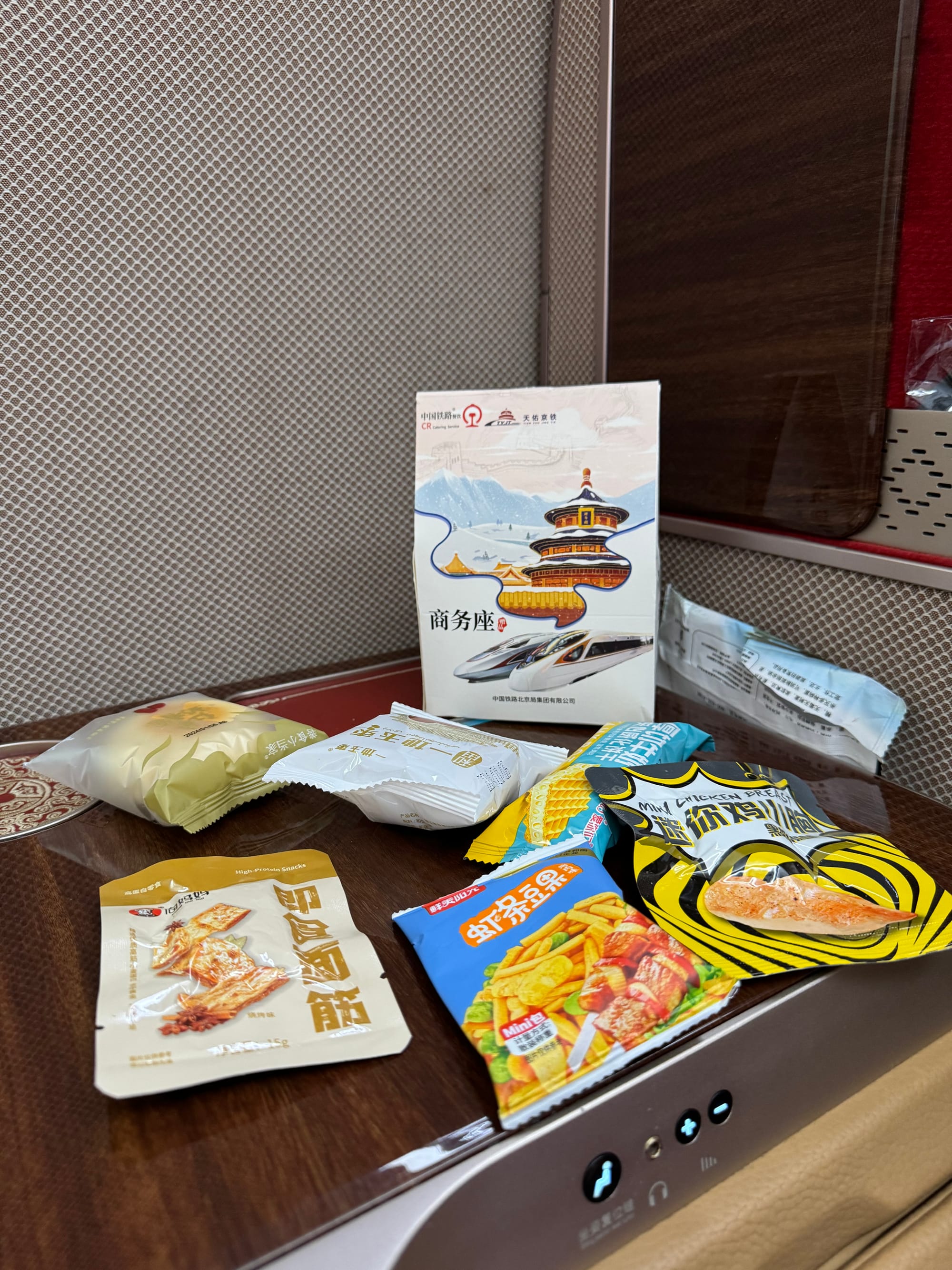
There is also a person selling snacks off a trolley walking up and down the train.
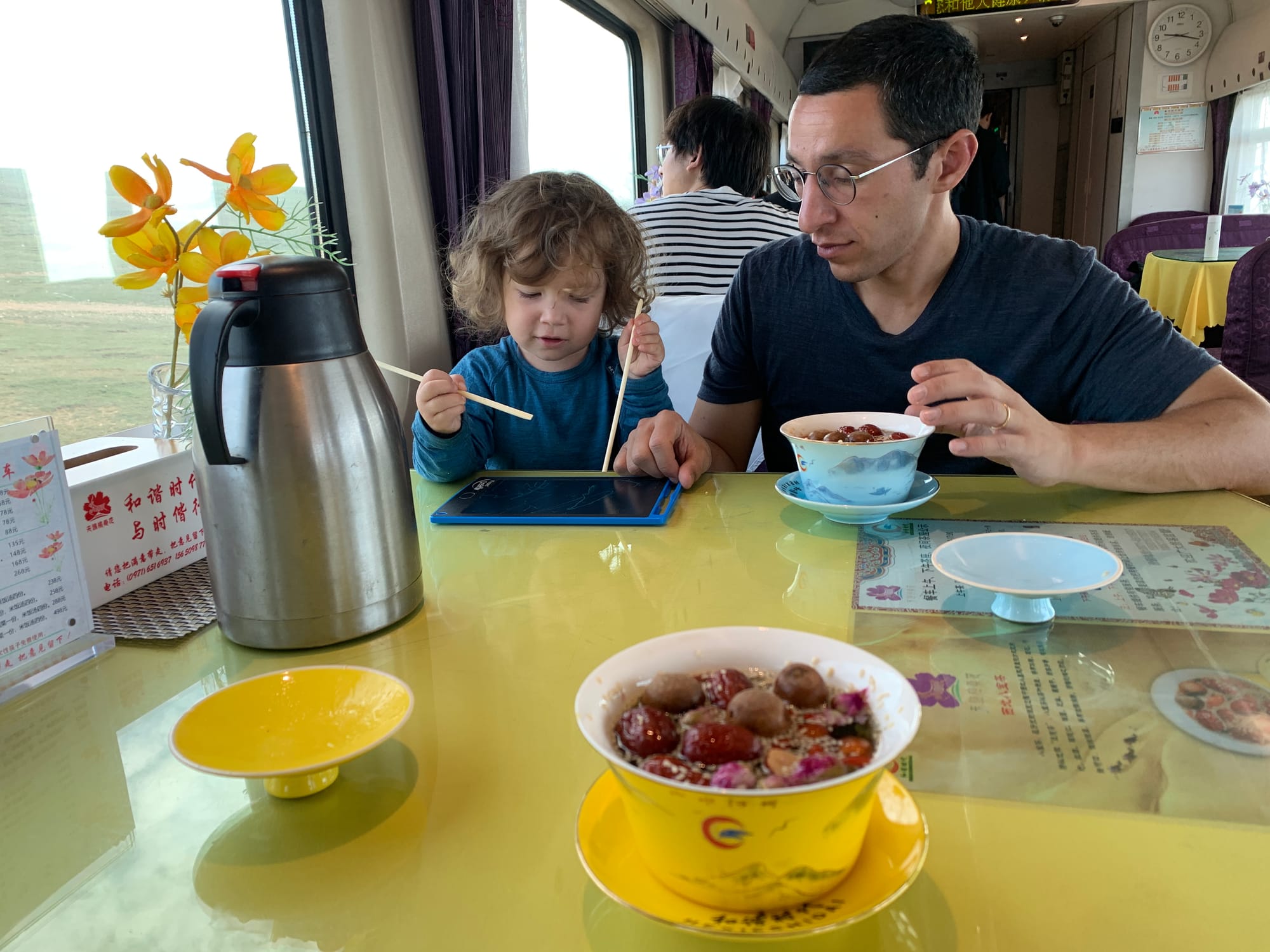
On sleeper trains, there is a proper restaurant carriage with seating, which offers a nice break from seating on beds — it is usually not busy as local travellers prefer to bring their own cheaper food.
There is hot water available for free on the train — so you are free to use it for your own tea or instant meals. A great option for budget travellers!
Train Travel with Kids
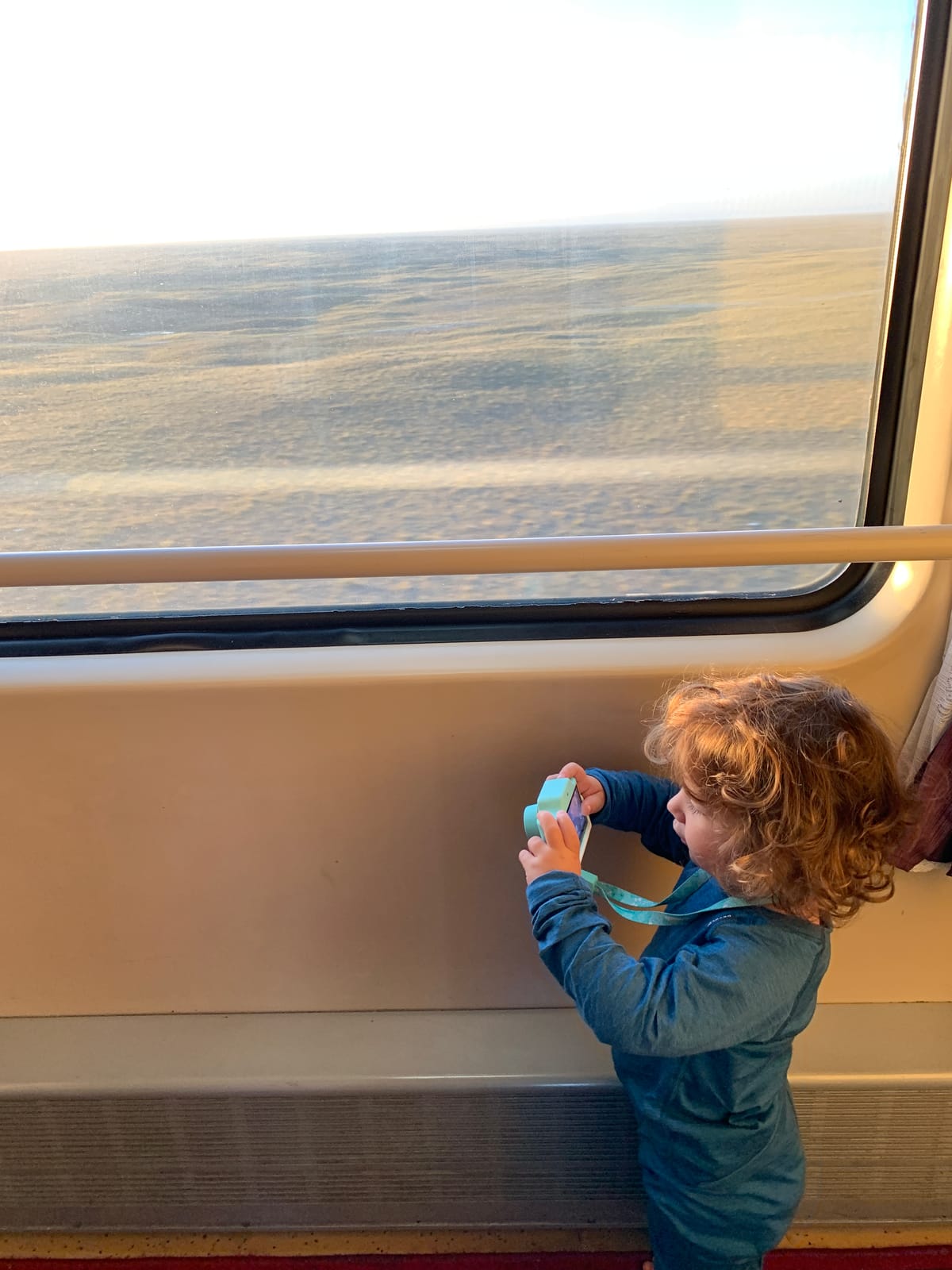
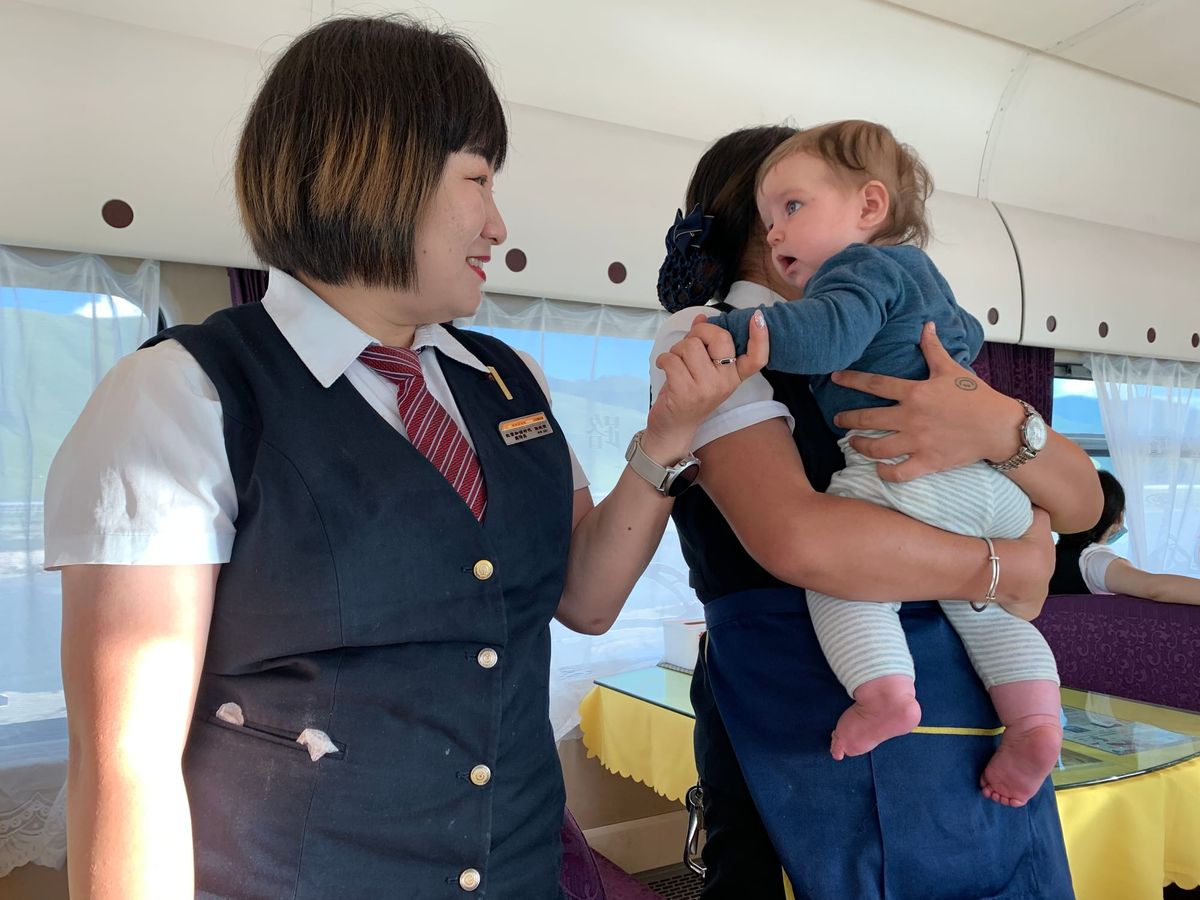
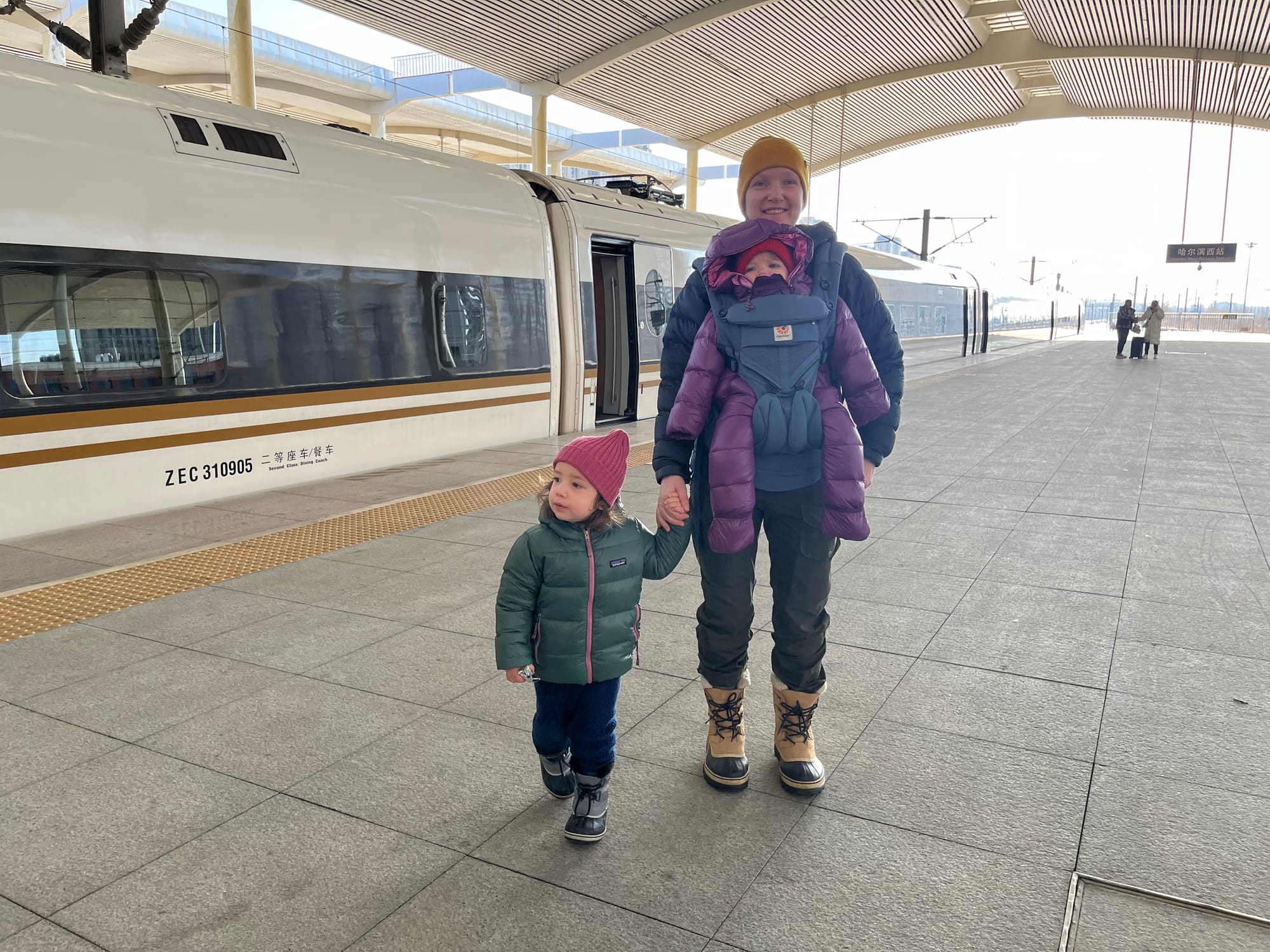
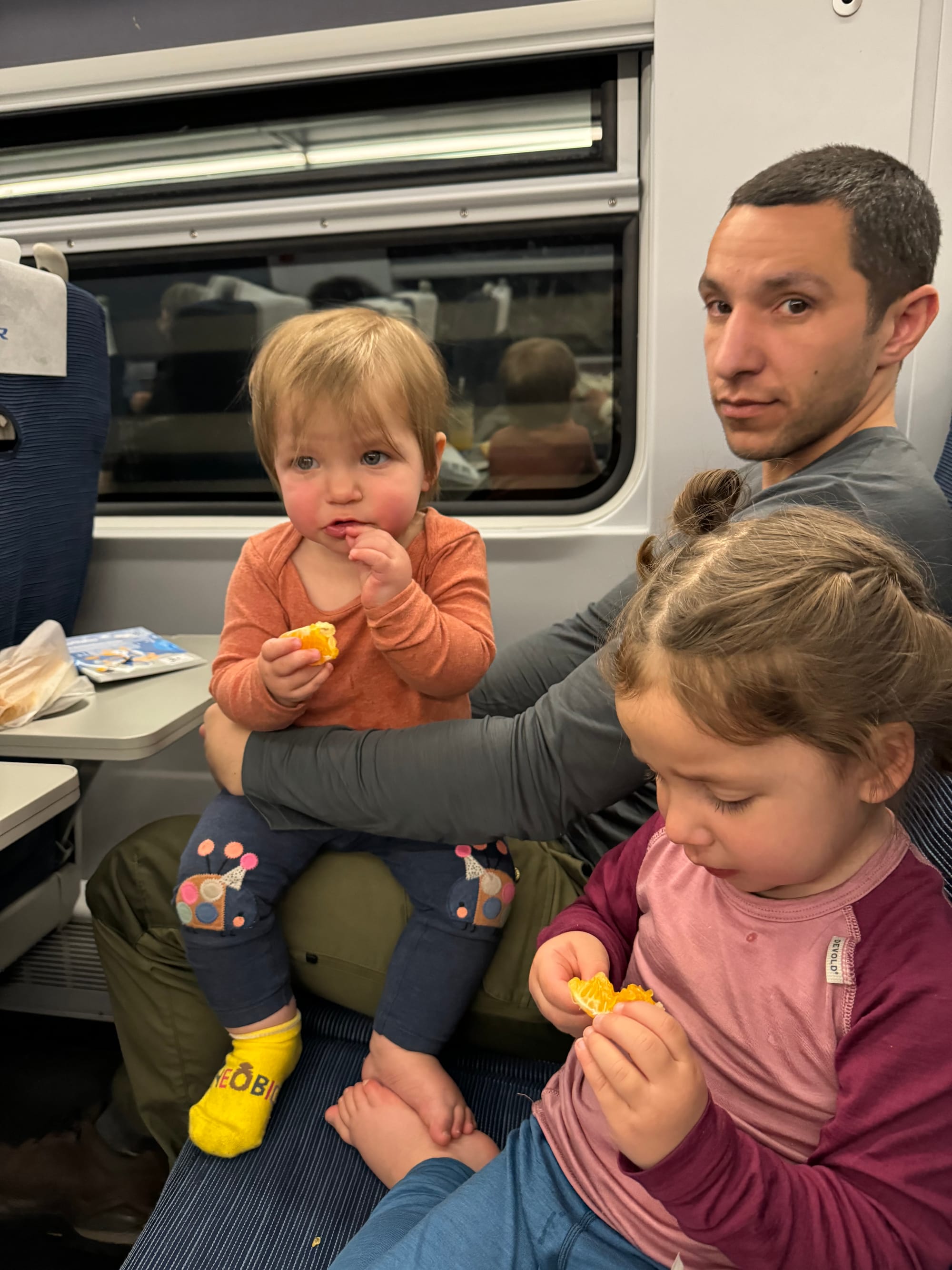
We obviously highly recommend train travel with kids — it is more entertaining and gives kids more freedom.
Quick note on tickets: children under 6 travel free without their own seat (add them to the booking), kids aged 6–13 pay a child fare, and from 14 it is full fare — the old 120 cm height rule no longer applies on trains.
Sleeper trains are a lot of fun and our kids enjoy it a lot, but high-speed trains are also a great, fast option!
We usually get some snacks at the train station (a lot of them!) — and a meal on the train. This way the journey goes really fast!
 Magda Sawyer
 Magda Sawyer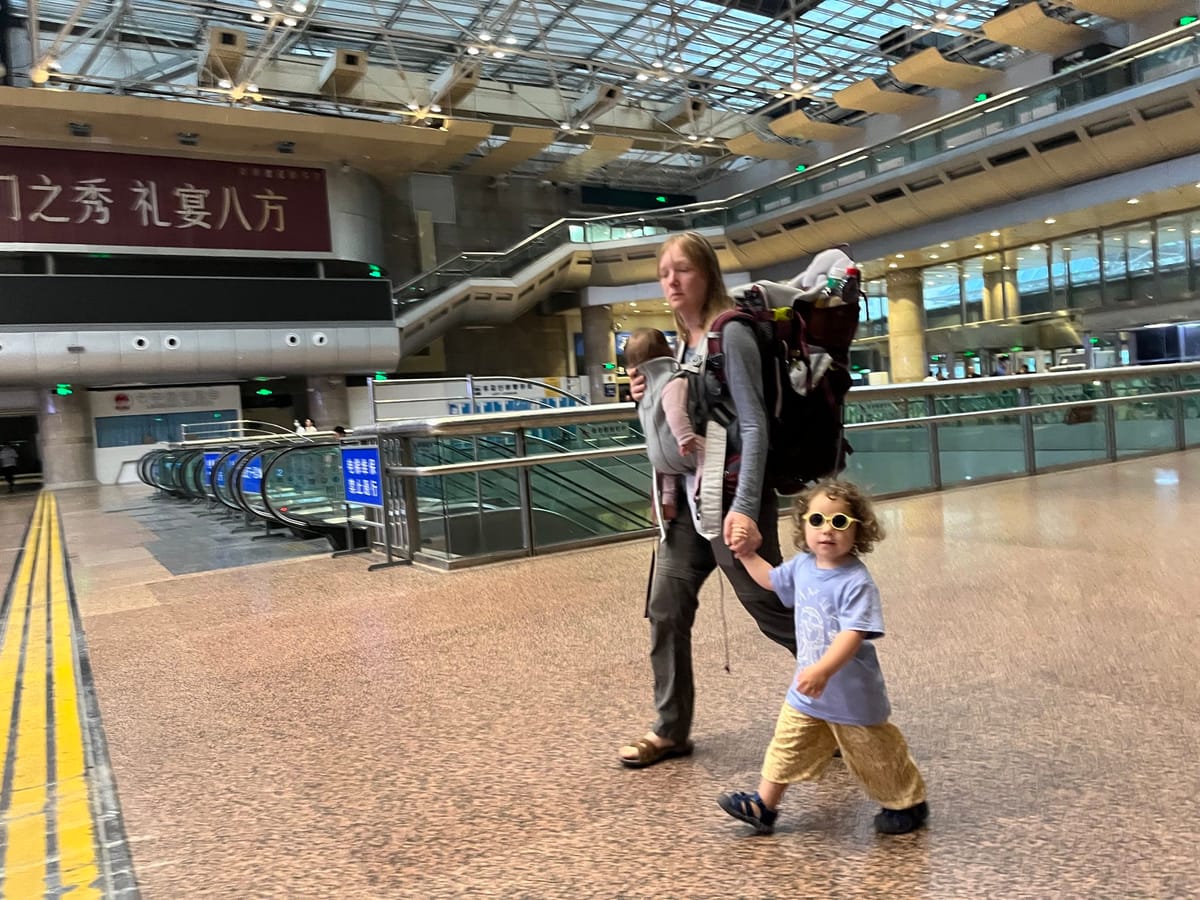
Related articles
 Magda Sawyer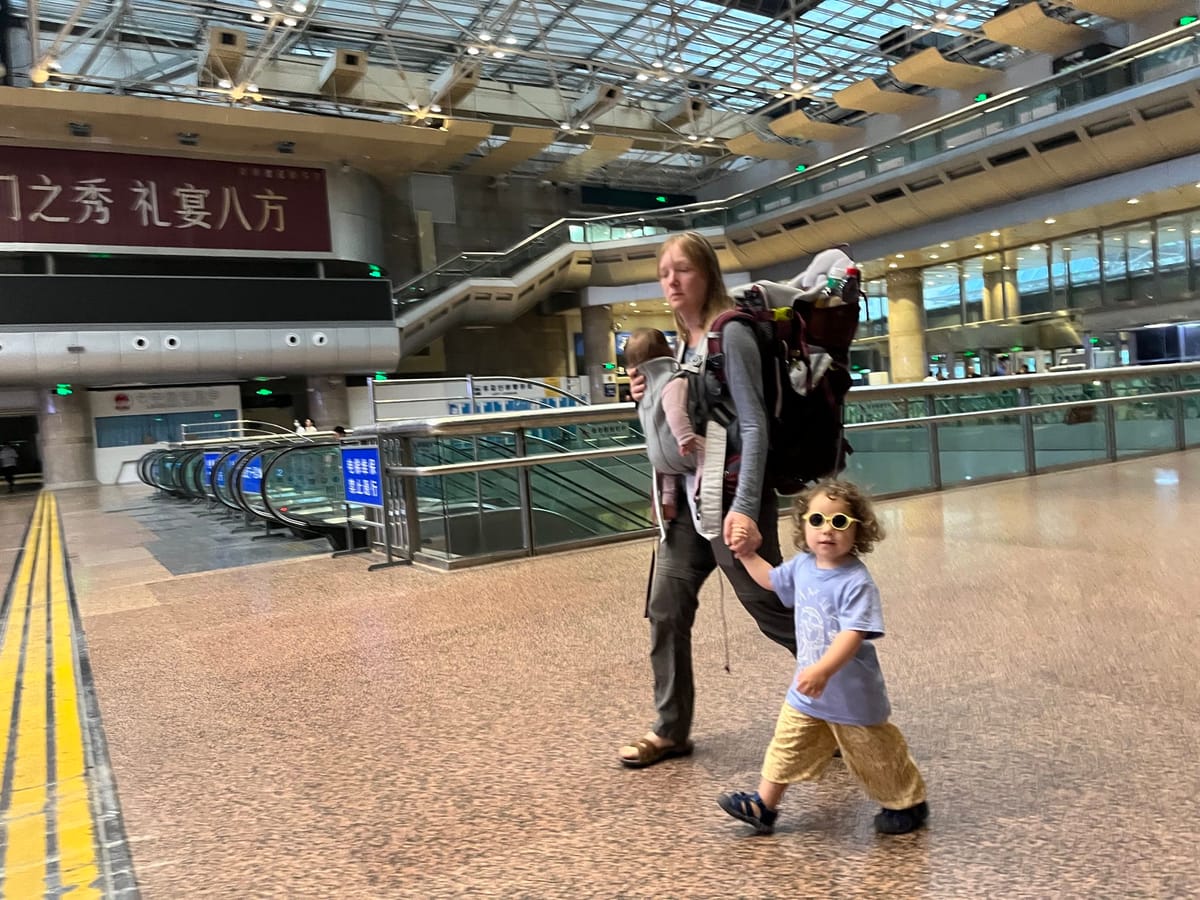
 Magda Sawyer
 Magda Sawyer