Zhangjiajie Travel Guide: Plan a Trip to the Avatar Mountains (2026)
Plan a Zhangjiajie trip the smart way — how to split your days between the Avatar Mountains, Tianmen and the glass bridge, where to stay, and what to avoid.
Share this post:
Last updated: June 2026
Quick Summary:
🗺️ Where: Western Hunan, central China
⏱️ How long: 4+ days (more is better)
💲 Daily budget: 60-100$ per person
🌡️ Best time: October - April
🚪 The park: Zhangjiajie National Forest Park, inside the wider Wulingyuan Scenic Area
🚆 Get there: high-speed train via Changsha, or fly into Zhangjiajie (DYG)
👨👩👧 Family-friendly: yes, with a slower pace
🎫 Park Pass: from 20$ (4-day pass) - you can buy it online here
TL;DR: Zhangjiajie is not one place — it's a region with several big sights spread 30+ km apart, so the single most important thing is to understand the geography before you go and to give yourself at least four days. Base yourself in Wulingyuan for the "Avatar mountains", then move to Zhangjiajie City for Tianmen Mountain. Don't arrive and head straight for a park gate — pick your gate first, settle in, and start fresh the next morning.
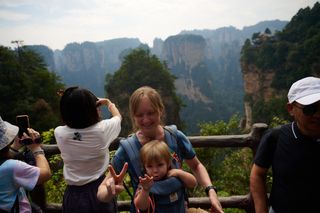
I'll be honest about how I learned this. Our first family trip here didn't go to plan: our older daughter got sick on the way, we packed the days too tightly (we had only 3 days to do the detour from Changsha!), and we arrived without really understanding how the location and what our expectations should be – when you do research online you mostly see the highlights of people's trips, not real logistics. We didn't enjoy it as much as we should have, and we didn't see half of what we'd planned. Since then my husband and I have each been back, and this guide is the version I wish we'd had the first time.
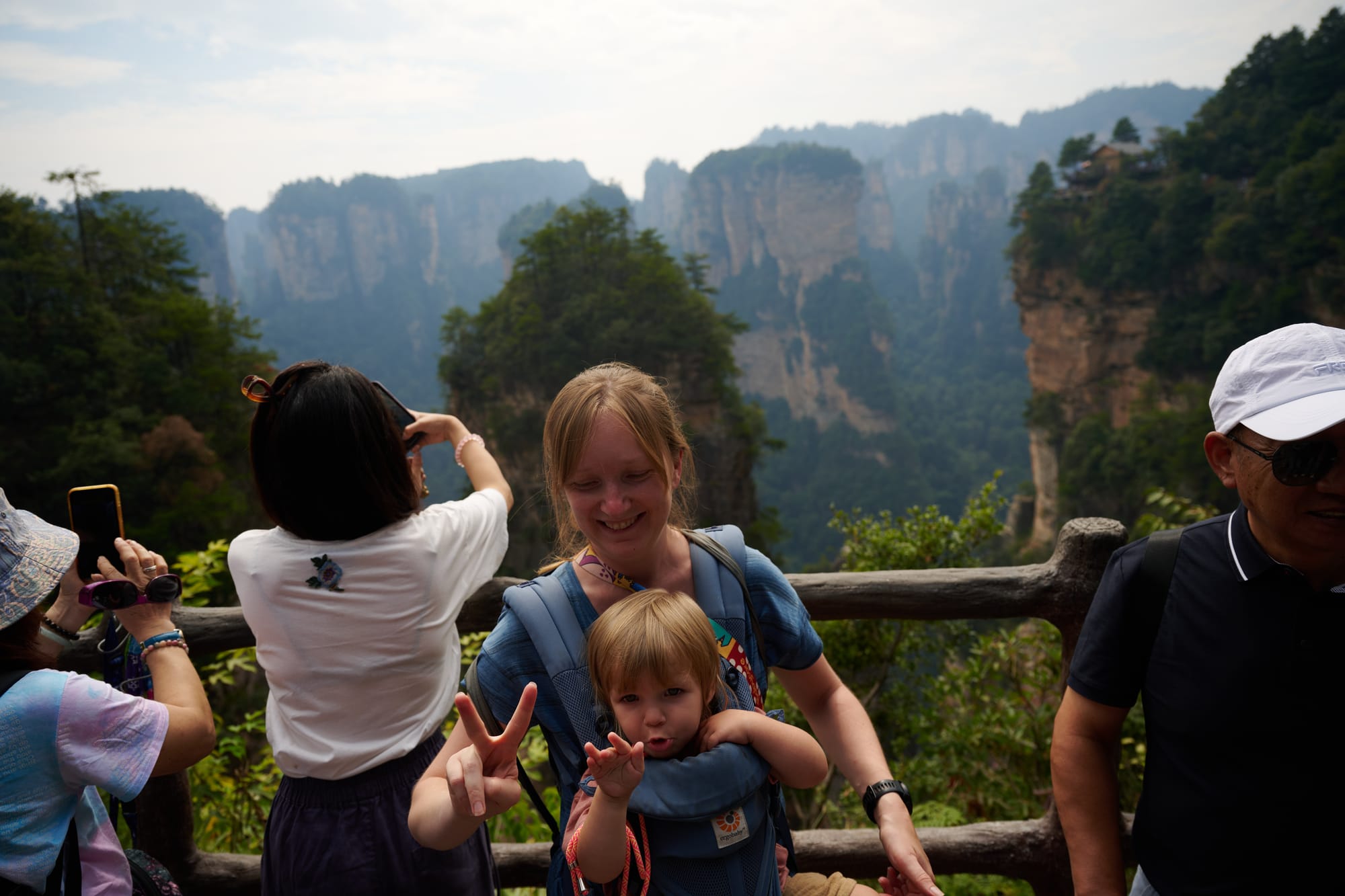
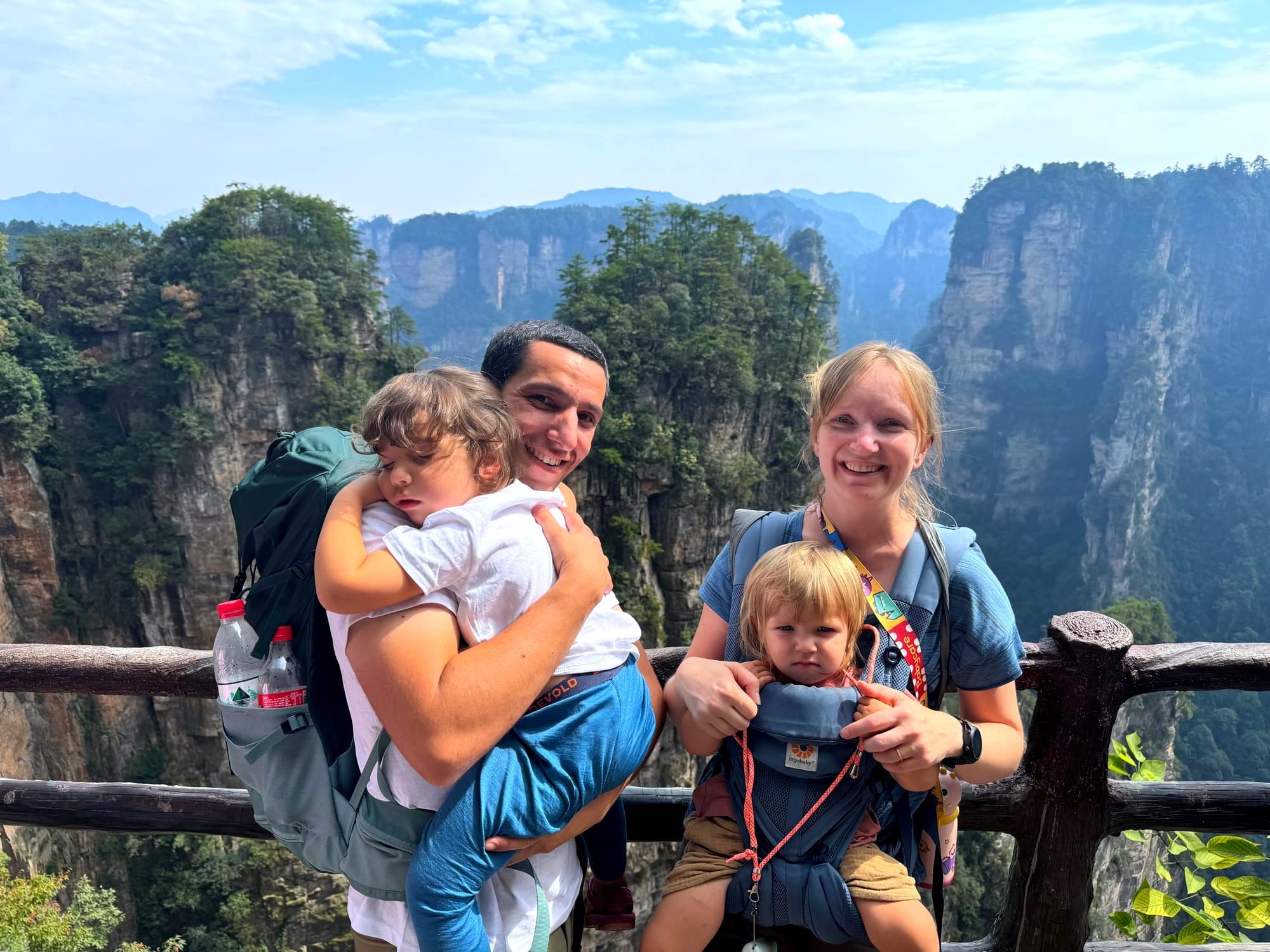
Table of Contents
Zhangjiajie is 3 places, not one
This is the thing that trips up almost everyone, so get it straight first:
- Zhangjiajie City — the transport hub, where the train station and airport are. It's also the base for Tianmen Mountain (the cable car starts right in the city) and the evening Fox Fairy show.
- Zhangjiajie National Forest Park / Wulingyuan — the "Avatar" mountains, about 30 km from the city. This is the main event, and it's huge. The town of Wulingyuan sits at the park's east gate and is where most people stay to visit it.
- The standalone sights — the Glass Bridge and Grand Canyon and the Huanglong Caves are each their own ticketed area, separate from the park and from each other.
Once you picture it as a city + a giant park + a couple of separate add-ons, everything else makes sense.
The park gates — and the mistake we made
When we arrived in Zhangjiajie (around 9:30 in the morning), it took us a while to figure out to which gate of the park we have to go – we took a public bus toward the park's east gate without really being sure if this is where we wanted to go and we arrived at the gate around 11 when it was hot, so tired from the travel that we stopped in Luckin Coffee before even going inside. I don't recommend it. We are usually better prepared than this.
The park has five gates, they're not interchangeable, and the shuttle routes inside don't overlap — so turning up at the wrong one, jet-lagged and unsure, makes a confusing place even harder.
A short version (full detail in our where to stay guide):
- East Gate (Wulingyuan) — the convenient main entrance, most hotels and quickest to the Avatar peaks via the Bailong Elevator.
- South East Gate (Zimugang Ticket Station or Central/Middle Gate)
- South Gate (Forest Park) — the entrance closest to Zhangjiajie City, best for hikers starting at Golden Whip Stream.
- North Gate (Tianzi Mountain) — far out, but a free shuttle takes you straight up top.
- West Gate (Yangjiajie) and the central Shuiraosimen gate round out the five.
Lesson: decide which gate matches where you're staying before you go, and don't try to "just start" at the park the moment you arrive in town. FYI – most tourists start at the East Gate and stay nearby.
DIY vs Tour – is it worth booking a tour to Zhangjiaje?
Here's my take on Zhangjiajie: almost everything that's easy to reach is quite touristy. The national forest park is world-famous (for good reasons), and the main old towns — Furong and Fenghuang — are beautiful but busy and well on the tourist trail. You can see all of it independently, and most people do.
But if you want to get beyond the famous sights — the quieter Xiangxi villages, the nature and culture that most visitors never see — then you might consider booking a tour.
Eastogo, a small travel agent from Chengdu, has just launched tours in the Zhangjiajie region. I recommend them because they travel the way we do — small, custom trips built around real places rather than checklists — and they are very flexible on itinerary.

How to get there
Via Changsha (recommended). The Hunan capital is the natural gateway, and most international visitors skip it — which I think is a mistake (more on that below). From Changsha it's a high-speed train of around 2 hours to Zhangjiajie. We left our main luggage in Changsha and travelled light into the mountains, which made the buses, gates and stairs far easier.
By air. Zhangjiajie has its own airport (DYG) with domestic connections, which is how a lot of people arrive — often flying in directly or taking the train down from Beijing.
From Beijing / Shanghai. Long-distance high-speed trains and flights both work; check times against your itinerary.
🌟 Tip: Travel into the mountains with a small bag and leave the big suitcase at your Changsha or city hotel. You'll be on shuttle buses, cable cars and a lot of steps — you do not want to be wheeling a large case around the park.
How many days do you need?
At least four, and more if you can. The park alone is worth two to three days, Tianmen is half a day to a day, and the standalone sights and nearby old towns each add a day. Our first trip failed partly because we tried to compress all of this — don't repeat that. Build in a buffer day, especially with kids.
See our full Zhangjiajie itinerary for how to sequence it.
Top things to do
The big draws, in the order most people prioritise them:
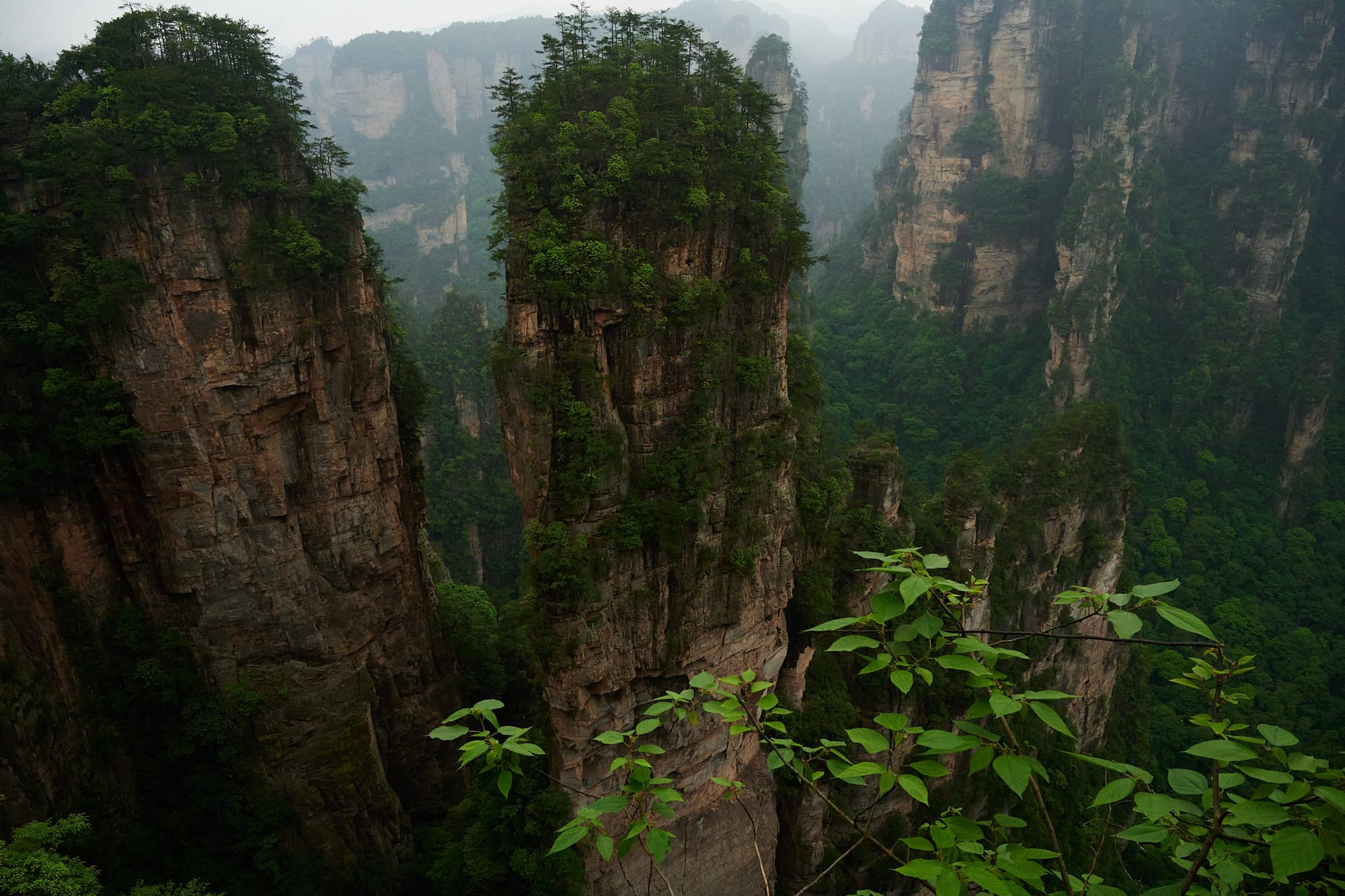
- The Avatar mountains (Yuanjiajie) — the floating sandstone peaks inside the National Forest Park, reached via the Bailong Elevator. The reason most people come.
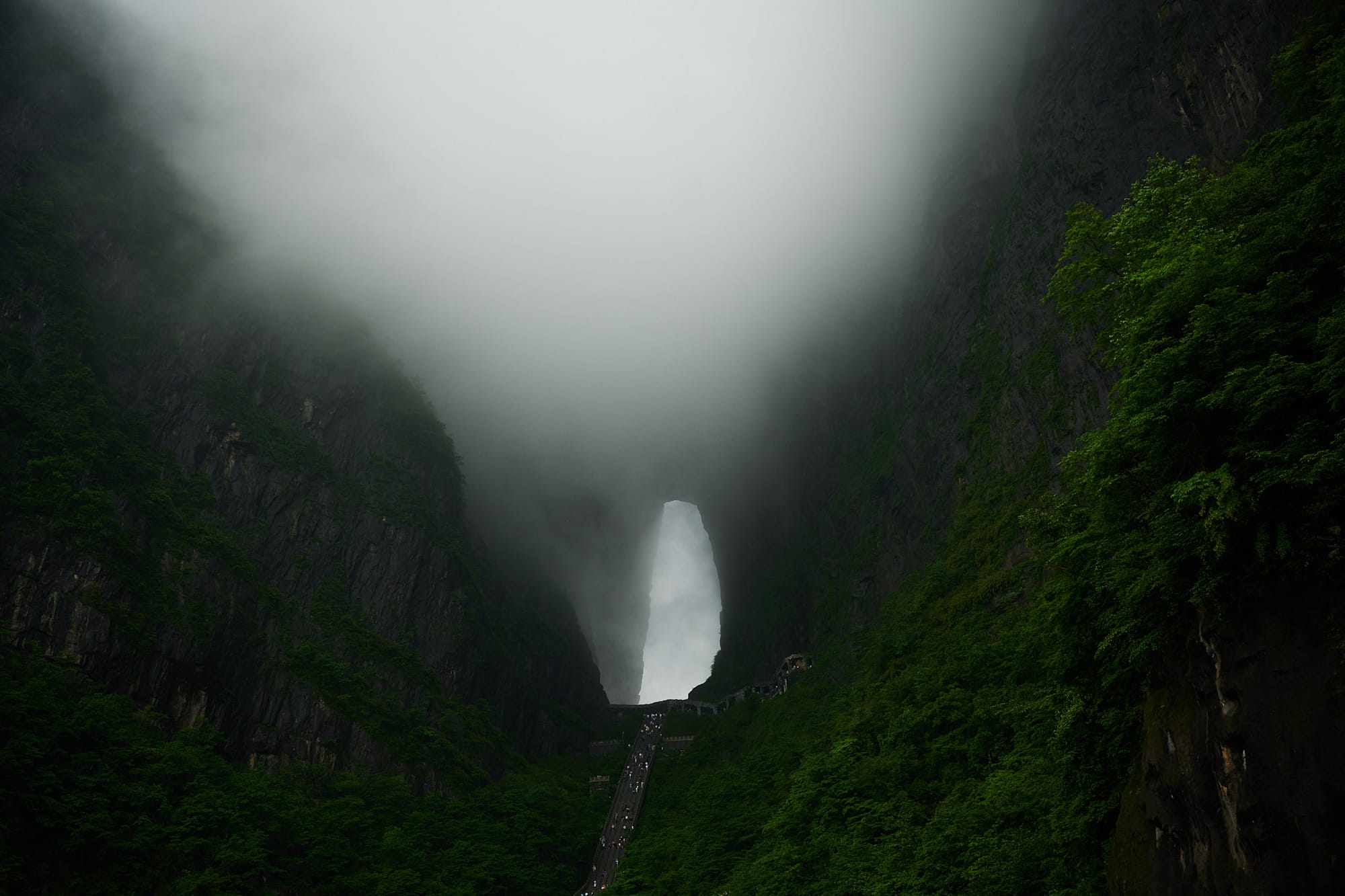
- Tianmen Mountain — the cable car straight from Zhangjiajie City, the cliff-edge walkways and the "Heaven's Gate" arch. A separate ticket and a separate day.
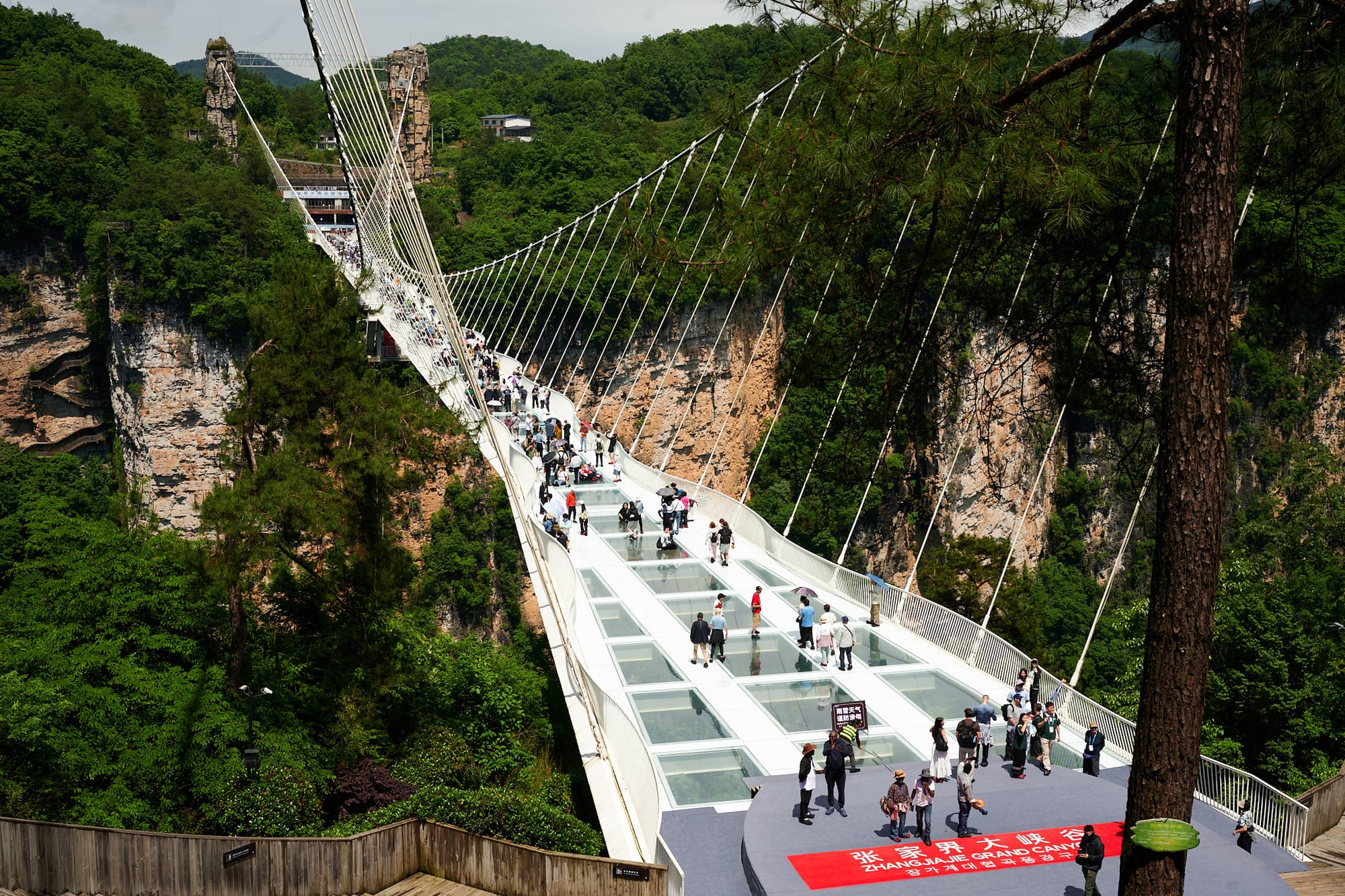
- The Glass Bridge & Grand Canyon — the world's longest glass bridge, over a genuinely dramatic canyon. Its own ticketed area.
- The Fox Fairy show — the open-air evening show at the foot of Tianmen, well worth it (doesn't run in deep winter).
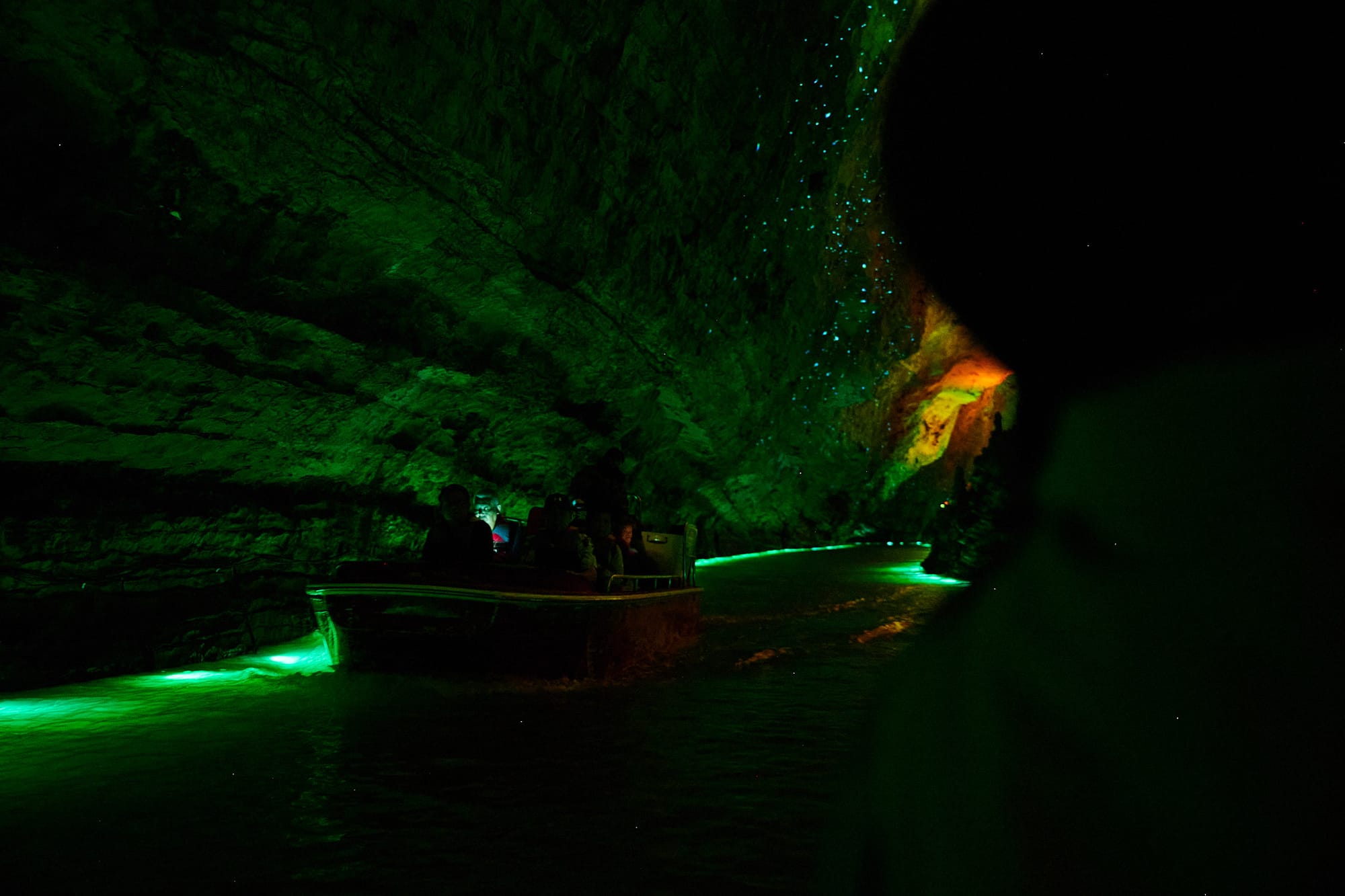
- Huanglong Caves — a huge cave system, an easy add-on if you have a spare half-day.
👉 For opening hours, prices, how long to budget and our honest take on each, see the full guide: Best Things to Do in Zhangjiajie.
Best Time to Visit
Our verdict: the most beautiful time to visit Zhangjiajie is winter, when snow settles on the sandstone peaks — think January (I came in mid December and snow fell few days after we left). It's genuinely nice in the winter, but the cold is serious and Tianmen Mountain in particular gets bitter up top, so you have to be prepared for it.
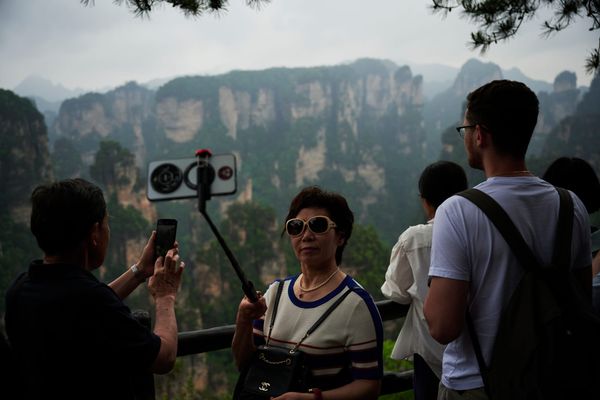
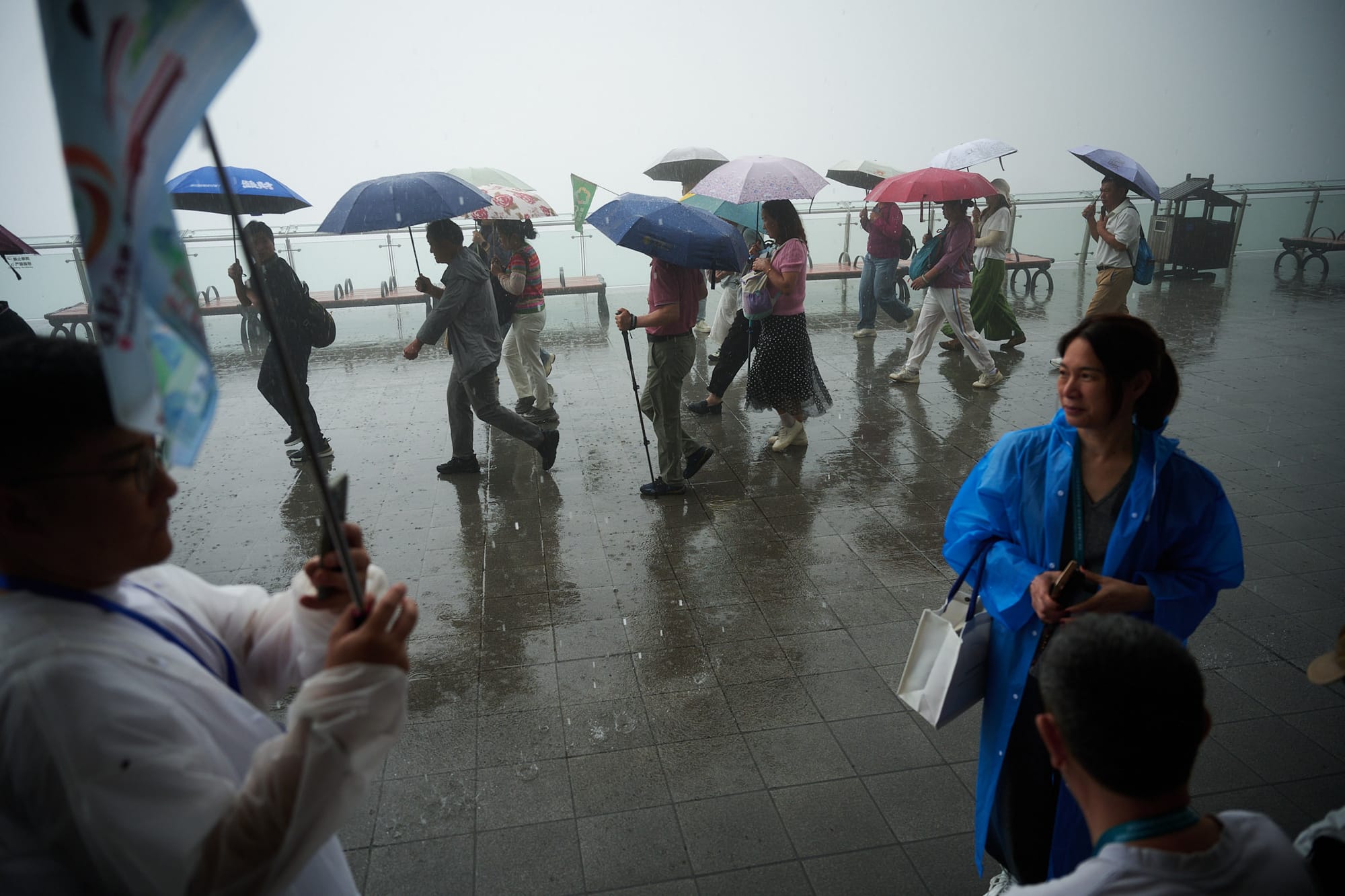
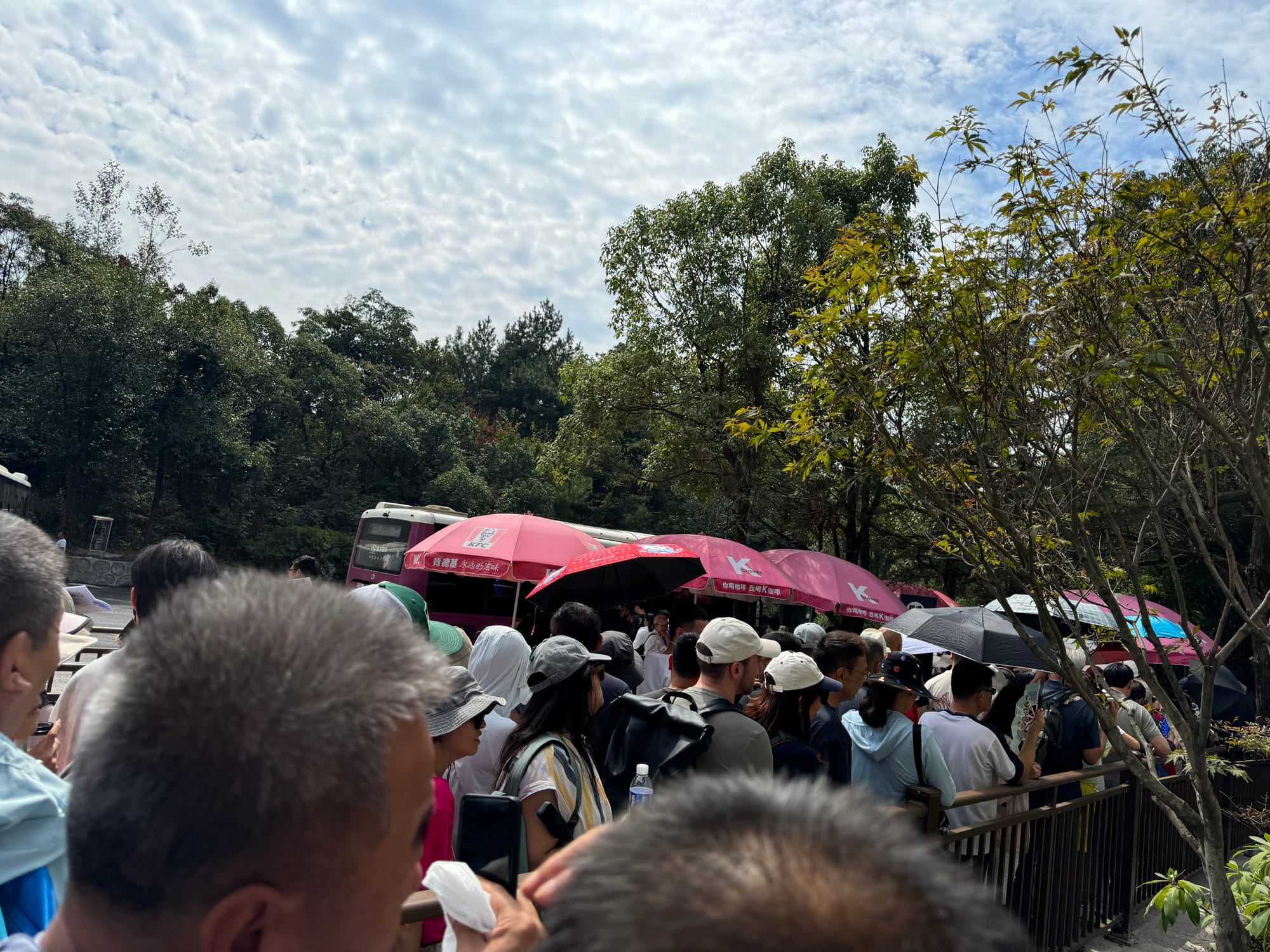
If you'd rather have comfortable weather, autumn is the easy pick (but avoid Golden Week!) — warm enough, clearer skies, and the colour in the valleys. The one season we'd steer you away from is high summer: the heat is draining and, in peak season, the crowds turn the park into a slog. We visited in late September and the bus stops were still full of people — without the kids getting us waved to the front, the queue out would have been an hour.
One reassurance whenever you go: mist here is part of the scenery, not a wash-out. Some of the best moments come when cloud drifts between the pillars and reveals them in layers, and visibility often clears in pulses — so if a viewpoint clouds over, wait ten minutes rather than rushing off.
Season by season
- Spring (March–May) — 15–25°C. Spring blooms, comfortable hiking, and fewer people than summer. Expect rain showers and mist. Good for photography and easy walking.
- Summer (June–August) — 25–35°C. Hot, humid, and the busiest time of year, with afternoon thunderstorms and long queues everywhere. Doable, but really only enjoyable for early-morning exploration before the crowds and heat build.
- Autumn (September–October) — 15–25°C. The clearest skies and best all-round hiking weather, with lovely colour. Our recommended season — just be aware Golden Week (Oct 1–7) brings a domestic-tourism surge, so avoid those exact dates if you can.
- Winter (November–February) — 5–15°C, colder at altitude. The quietest and cheapest season, with rare snow scenes and no queues. The trade-offs: some facilities run reduced hours, the summits are properly cold, and the Fox Fairy show doesn't run in the depths of winter. Worth it if you'll brave the cold for snow on the peaks and an relatively empty park.
Tickets and costs
Ticket prices I find quite confusing, there seem to be many options and combinations, so also think ahead what you will actually use and need. You can either buy a combo upfront, or buy only park entrance and add everything else on top.
- Forest Park multi-day pass — the park entry is valid several days. The best-value option is the combo that bundles park entry, unlimited internal shuttles and the cable cars + Bailong Elevator, however you can buy the cable car and elevator tickets separately.
- Tianmen Mountain — separate ticket or in a bundle
- Glass Bridge & Grand Canyon — separate ticket or in a bundle
- Huanglong Caves — separate ticket
Getting around
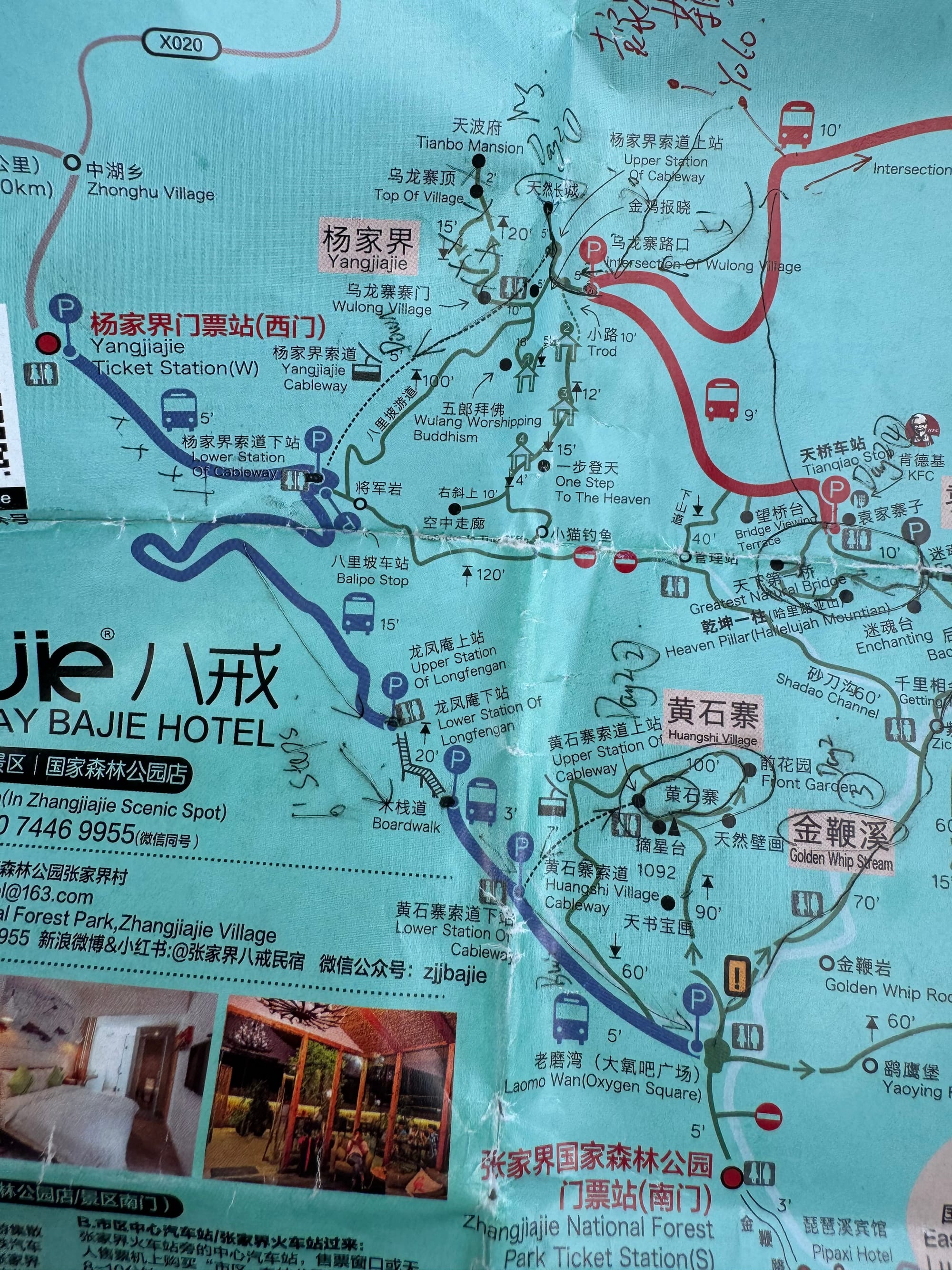
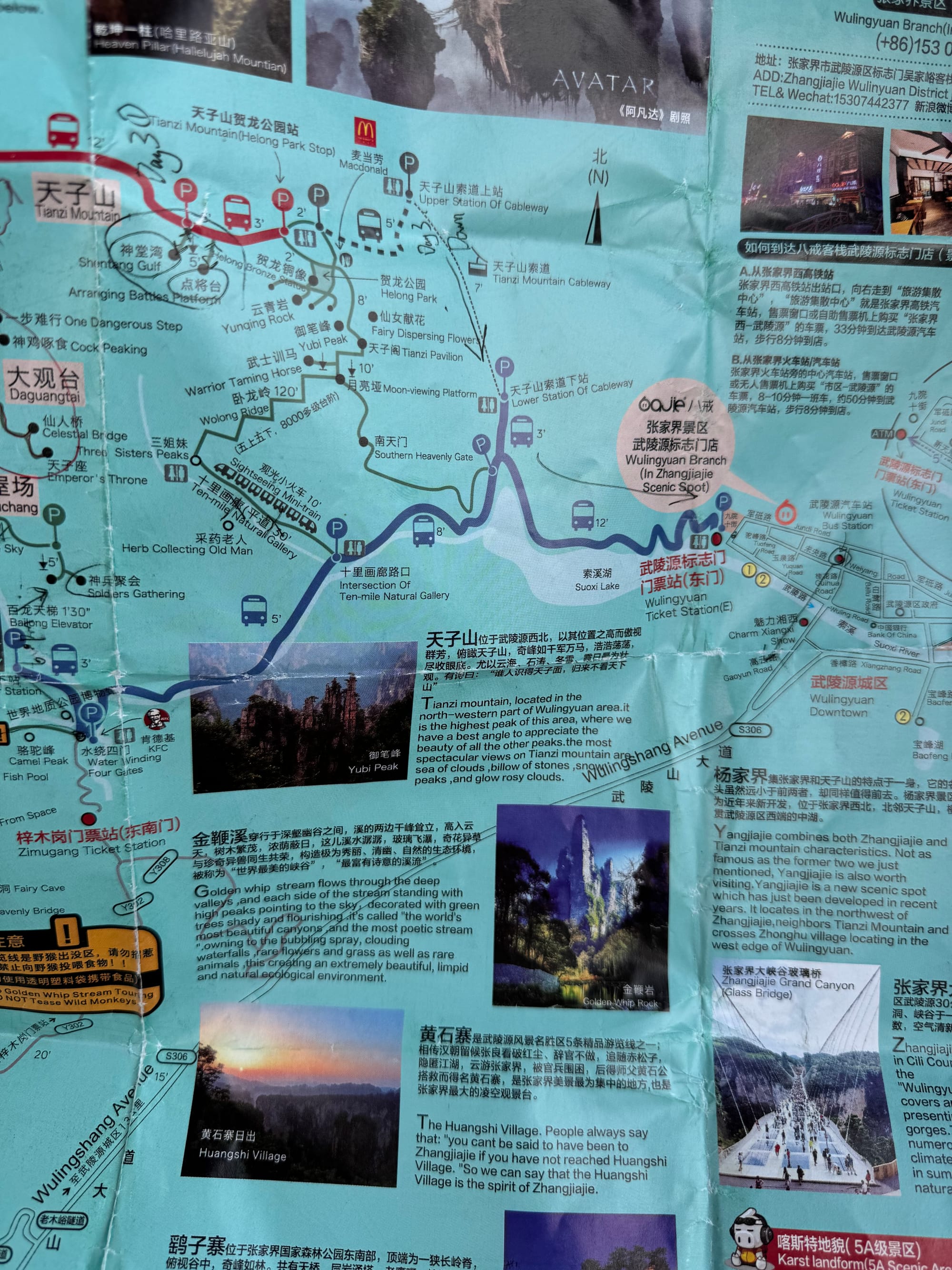
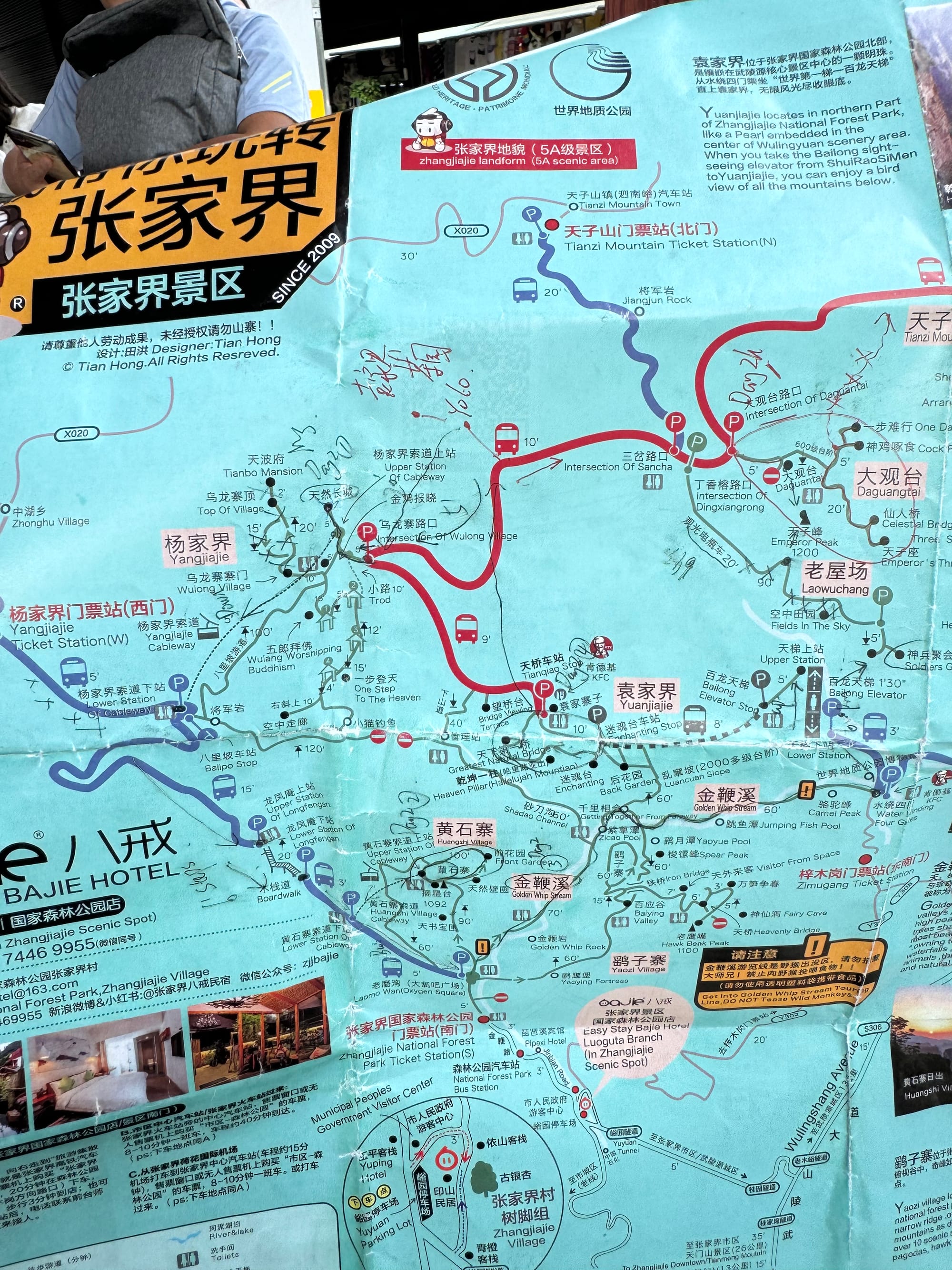
Inside the park, free shuttle buses connect the scenic areas, and cable cars and the Bailong Elevator move you between levels. The honest truth: the park is enormous and hard to navigate. On our first visit we took a long bus to the elevator, rode up (impressive), wandered the top with a mix of walking and buses, then took a gondola down and a bus out — and we were really confused. We only sorted ourselves out because another foreign tourist showed us a map they'd picked up at their hotel.
So: grab or screenshot a park map before you go in, note which gate you entered, and remember you can exit from a different gate than you came in. There are places to eat and buses throughout — the hard part isn't facilities, it's knowing where you are.
Outside the park, taxis and DiDi are easy. For getting between the city, Wulingyuan and the old towns, see the itinerary.
Travelling with kids
Zhangjiajie is doable with children, but it's tiring — long bus rides, big elevators and cable cars, not that much of walking (which I guess for kids is a plus). Pace it gently and keep a flexible day in reserve. Full detail in our Zhangjiajie with kids guide.
Where to stay
Short version: base in Wulingyuan for the park, then move to Zhangjiajie City for Tianmen. The hotels right by the park entrance aren't the area's best — it can be worth staying a short taxi ride out for better views and a pool. Full breakdown in where to stay in Zhangjiajie.
🌟 Pro Tip: I would recommend splitting your stay between 2 locations. Start in Wulingyuan for easy park access, and move to Zhangjiajie to see the Tianmen Shan (requires separate ticket) and an evening show of Fox Fairy that takes every night directly at the bottom of Tianmen Shan.
Don't skip Changsha
One more thing we learned: Changsha is worth a stop, and almost nobody treats it that way. Zhangjiajie is hugely popular with Western tourists; Changsha, the provincial capital, is not — most people fly straight into Zhangjiajie or train down from Beijing and pass Changsha by. We loved its energy — the old streets, the new developments, the feel of a lively second-tier city that mass tourism hasn't reached. Build in a day or two. See our Changsha guide.
Essential Things to Know
Navigation Challenges
Unlike many new Chinese tourist attractions, this park is not easy to navigate. Signage is confusing, and getting lost risks you long hike and hours lost. It is not only our experience, we met other tourists reporting preciely that.
We haven‘t gotten lost, but we heavily underestimated the amount of time needed to get around, so we weren‘t able to do all we had planned in the very short time frame.
Queue Times (Peak Season)
In the peak season, queues can be insane. The park is popular with tourists all year round. We visited in the end of September, and bus stops were very busy - luckily we had kids and we were let in front of the queue - otherwise on the way out it would have been an hour wait!
Food options and infrastructure
Even though it is a National Park, it is not a secluded mountain! If your experience with national parks is mainly in Europe and America, you will be surprised to say the least.
There are roads both on the bottom and on the top of the mountain, so there is not much walking required.
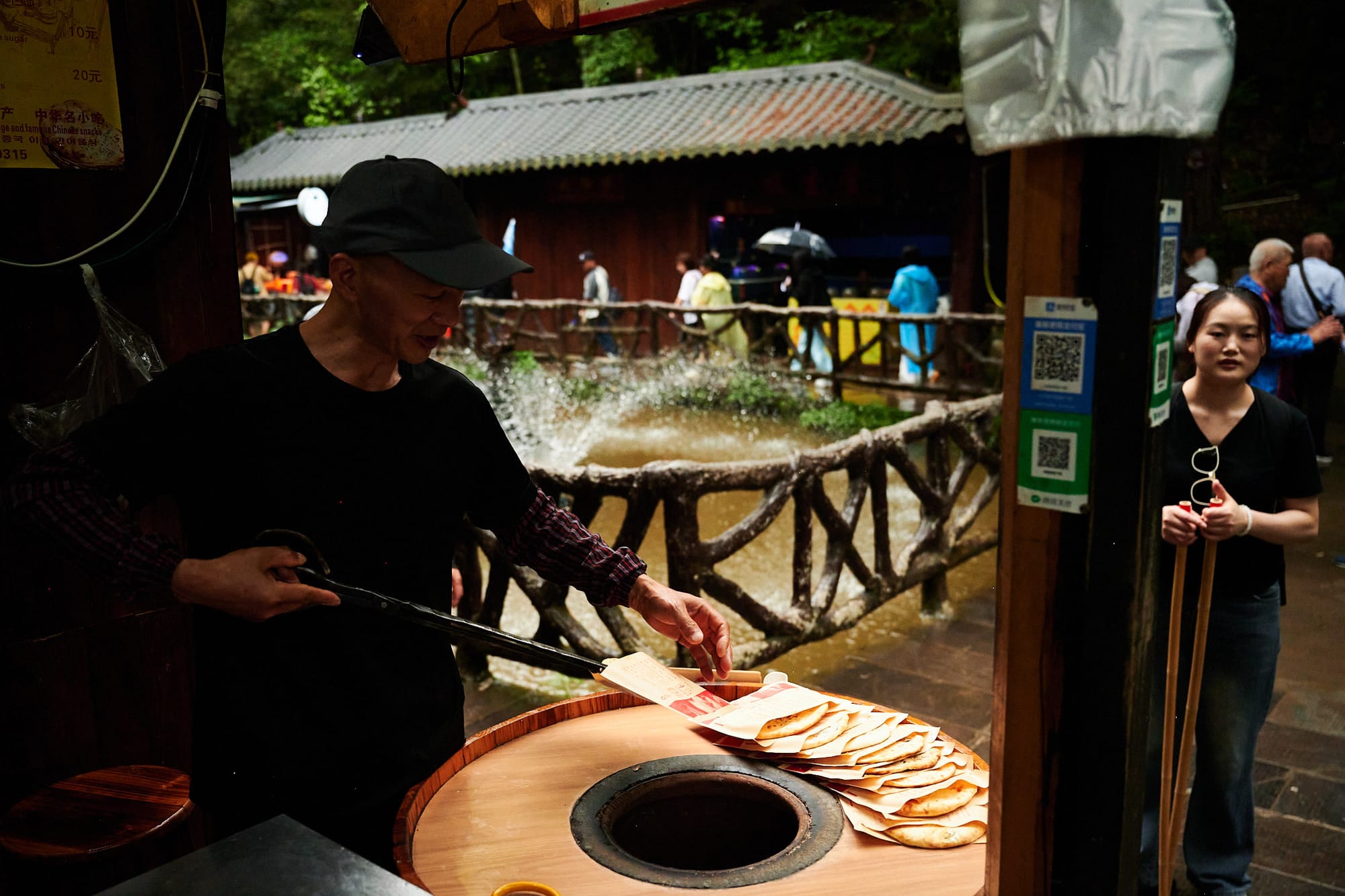
There are also many food vendors all along the hiking route to the viewing points. No need to be overprepared with snacks. It might be slightly more expensive there, but you save yourself carrying all the food.
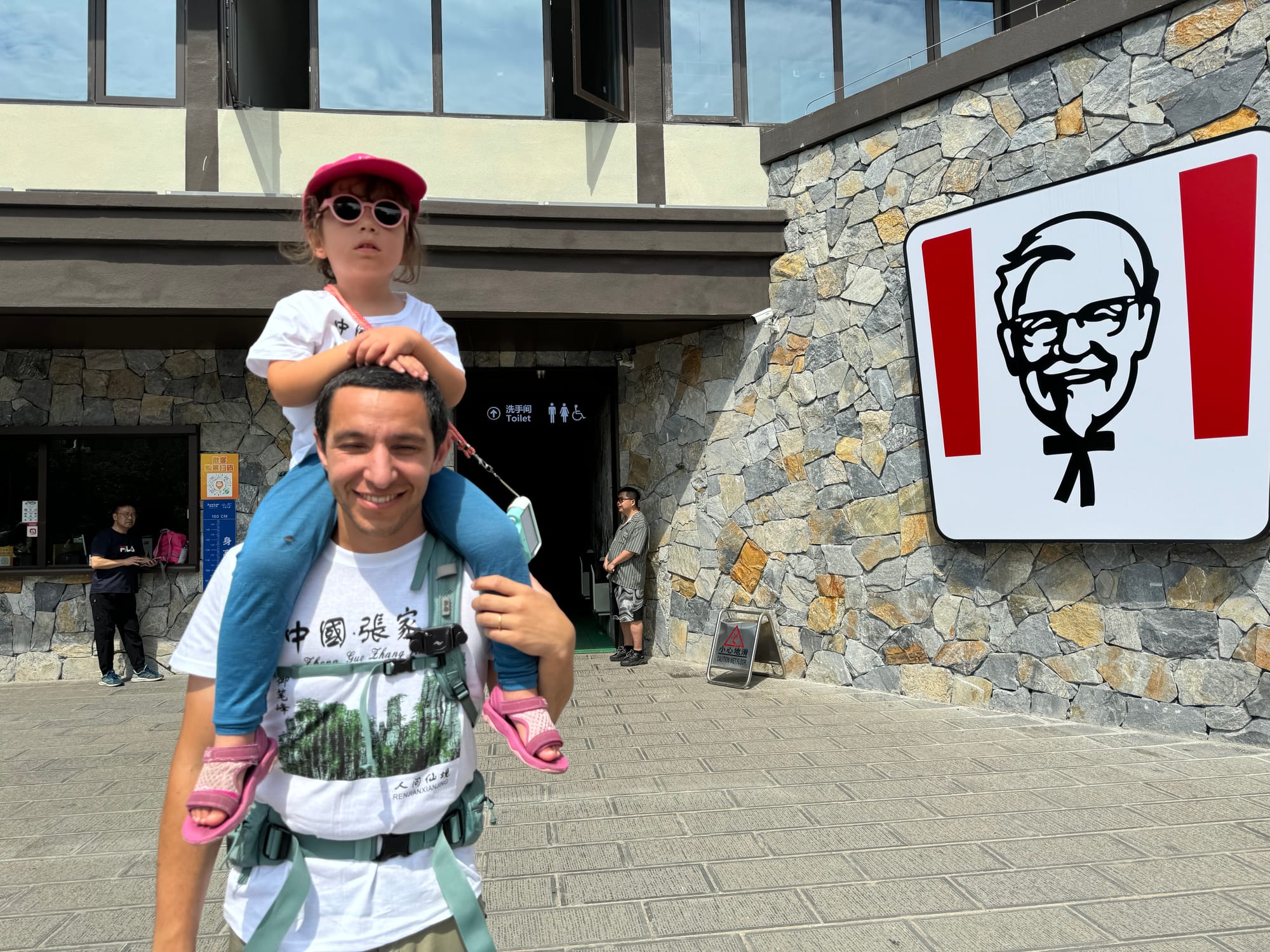
To my surprise (and to be honest, disappointment) there is a KFC next to the Bailong elevator!
Important Facts
- Different attractions require separate tickets
- Major sites are FAR apart
- Glass Bridge and National Park can't be done on the same day
- Viewpoints don‘t require much walking, but are very busy
- Weather can change suddenly
🌟 Pro Tip: If you are able, get a physical map before coming to the park. We didn‘t have one, and was only able to plan our way to exit after someone showed us a map. Don‘t know where he had it from, but your life will be muh easier if you get one.
What to Pack
Pack for a lot of walking and changeable mountain weather. Comfortable, broken-in walking shoes are a must, and a light rain jacket is a good idea even on a clear day — the cloud rolls in fast up here. Bring a warm layer or two for the summits in autumn and winter (it can be noticeably colder at the top than in town), water.
If you're travelling with kids, throw in motion-sickness tablets for the bus rides, and download an offline map before you go in – better yet, find a physical map like the one I added in this post. It is hard to understand what is on the bottom and what on top of the mountain.
FAQs
How many days do you need in Zhangjiajie?
At least four, ideally five or more. The Forest Park alone deserves two to three days, with Tianmen Mountain, the standalone sights and the nearby old towns each adding time.
Is Zhangjiajie the same as the Avatar mountains?
The "Avatar" floating peaks are in the Yuanjiajie area of Zhangjiajie National Forest Park, which sits inside the larger Wulingyuan Scenic Area, about 30 km from Zhangjiajie City. So they're part of Zhangjiajie, but not the whole of it.
Do you fly or take the train to Zhangjiajie?
Both work. Many people fly into Zhangjiajie airport (DYG) or take a long-distance train from Beijing, but coming via Changsha by high-speed train lets you add an underrated city to your trip.
Is Zhangjiajie good for families?
Yes, with a slower pace. It's tiring — lots of buses, cable cars and steps — so keep the days light and build in a buffer.
Ready to Plan Your Trip to Zhangjiajie?
✈️ Book your flights
🏨 Find hotels
🚂 Reserve train tickets
🎫 Book activities
🚌 Book a tour
This post contains affiliate links. For more information, click my disclosures here.