Qinghai-Tibet Railway: Complete Guide & Our Family Experience (2026)
Last updated: March 2026
Quick Guide
⏱️ Duration: ~21 hours from Xining
💲 Ticket price: ¥224 (hard seat) / ¥495 (hard sleeper) / ¥781 (soft sleeper) from Xining
🏔️ Highest point: 5,072m at Tanggula Pass
🌡️ Best time: May–October (book 30 days in advance)
🎟️ Tickets: Book via Trip.com or a licensed Tibet travel agency
👨👩👧 Family-friendly?: Yes — oxygen-supplied cabins, restaurant car, and sleeping berths make it manageable with young kids
📋 Permit required: Yes — foreigners need a Tibet Travel Permit arranged through a travel agency
The Qinghai-Tibet Railway is the world's highest railway and one of the most spectacular train journeys you can take anywhere on earth. Running 1,956 km from Xining to Lhasa across the Tibetan Plateau, the train climbs above 5,000 metres, passes through permafrost, and offers views of snow-capped mountains, vast grasslands, and turquoise lakes that are difficult to put into words. It is also one of only two ways to reach Lhasa overland (the other being by road), making it an essential experience for anyone planning a trip to Tibet.
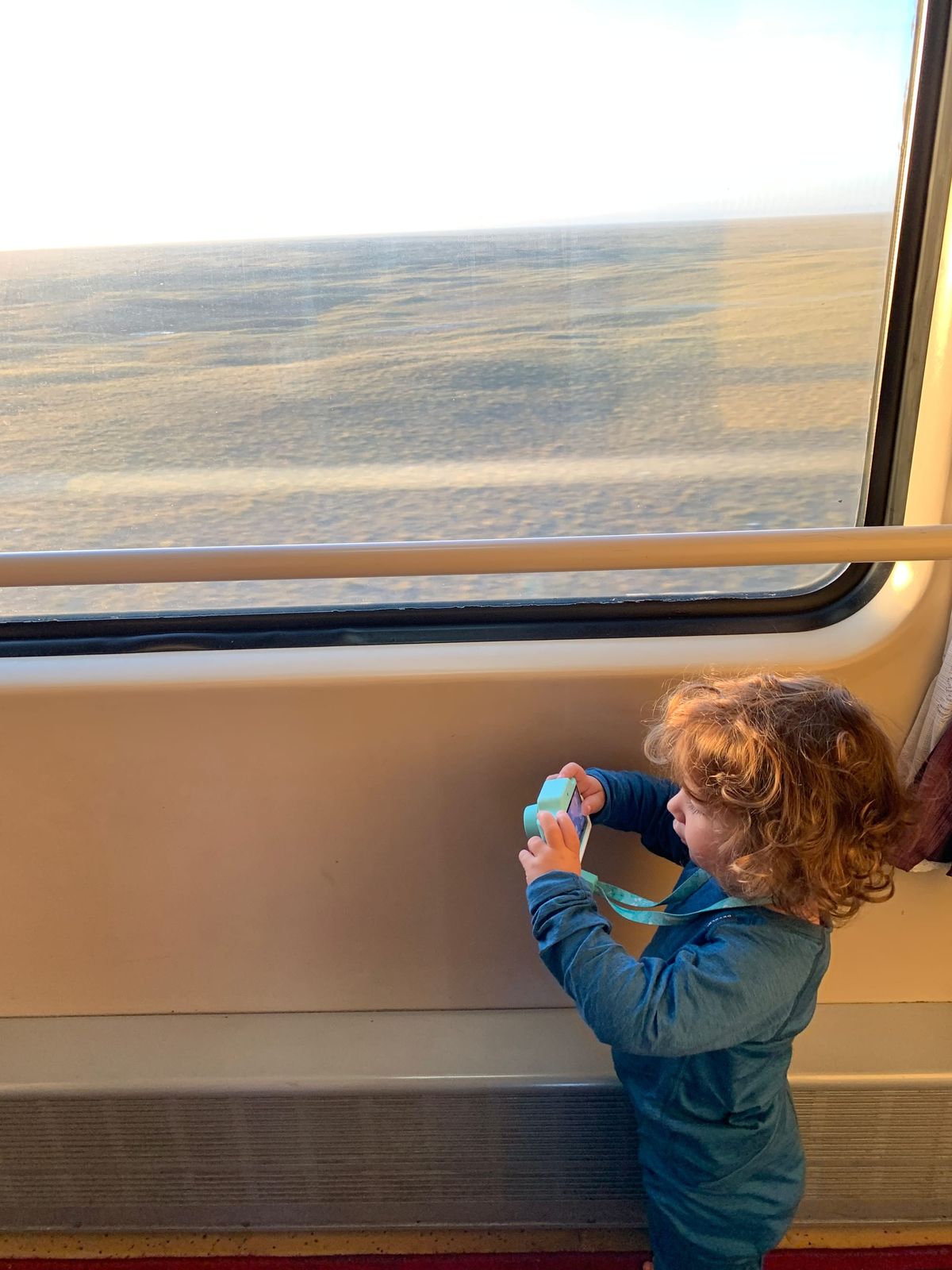
We took this train with our daughters who were 2.5 years and 5 months at the time — and it was one of the highlights of our entire China trip. In this guide, I'll share everything you need to know to plan your own journey: how to book tickets, what the train is like inside, what to expect with kids, and what you'll see along the way.
As featured in the Lonely Planet 2025 China guidebook.
In This Guide
- What Is the Qinghai-Tibet Railway?
- Ticket Classes Compared
- How to Book Tickets
- The Route & Scenic Highlights
- Life on the Train
- Our Family Experience
- Altitude Sickness & Oxygen
- What to Pack
- Practical Tips
- Where to Go Next
- FAQs
What Is the Qinghai-Tibet Railway?
The Qinghai-Tibet Railway (青藏铁路, Qīngzàng Tiělù) is the only railway connecting mainland China to Lhasa, the capital of the Tibet Autonomous Region. Completed in 2006, it is an engineering marvel — not only does it reach over 5,000 metres at its highest point (the Tanggula Pass at 5,072m), but large stretches are built on pillars above permafrost, soil that stays frozen year-round. The train carriages themselves are pressurised and equipped with oxygen supply systems, similar to an aircraft.
The railway runs from Xining in Qinghai Province to Lhasa, covering 1,956 km in approximately 21 hours. However, trains also depart from Beijing (40 hours), Shanghai (47 hours), Chengdu (36 hours), Guangzhou (53 hours), and several other cities — all of which join the Qinghai-Tibet line at Xining before continuing to Lhasa.
My recommendation: Start your journey from Xining rather than Beijing or Shanghai. The shorter ride means you arrive better rested, and spending 2-3 days in Xining first helps your body acclimatise to altitude before the train climbs even higher. I wrote about this in my Xining guide.
Ticket Classes Compared
There are three classes of tickets on the Qinghai-Tibet Railway. Here's how they compare for the Xining to Lhasa route:
| Class | Price (Xining–Lhasa) | Setup | Best For |
|---|---|---|---|
| Soft Sleeper | ~¥781 ($110) | 4 beds per compartment, lockable door, most spacious | Families, couples, anyone wanting privacy and comfort |
| Hard Sleeper | ~¥495 ($70) | 6 beds in open bays (3 tiers), no door | Budget travellers, solo travellers who want social interaction |
| Hard Seat | ~¥224 ($32) | Upright seats, 5 per row, can be very crowded | Short sections only — not recommended for the full journey |
My recommendation: Book a soft sleeper if you are traveling with kids or want a comfortable overnight experience. The compartment has a lockable door and enough space for bags and little ones. We managed to get soft sleeper tickets in one direction and hard sleeper on the return — and while the hard sleeper was more fun for interacting with other passengers, the soft sleeper was significantly better for sleeping with children.
🎟️ Check train ticket availability on Trip.com
How to Book Tickets
Booking Qinghai-Tibet Railway tickets is trickier than regular Chinese train tickets for two reasons: foreigners need a Tibet Travel Permit to board the train, and soft sleeper berths sell out fast (there are only 64 soft sleeper berths per train).
Here are your options:
Option 1: Through your Tibet travel agency (recommended for foreigners)
Since you need a licensed travel agency to get your Tibet Travel Permit anyway, most agencies will book your train ticket as part of the package. This is the easiest route. We used Tibet Vista and they handled everything — I reviewed them in detail in my Tibet Vista review.
Option 2: Via Trip.com
Trip.com is the most foreigner-friendly platform for booking Chinese train tickets. You can search schedules, compare prices, and book with an international credit card. However, you'll still need your Tibet Travel Permit separately. For a full walkthrough of the booking process, see my guide on how to buy train tickets in China.
When to book: Train tickets are released 30 days before departure. During peak season (June–August), soft sleeper tickets sell out within hours. Book the day tickets become available, or have your travel agency do it.
Tip: Your best chance of getting tickets is on trains that start in Xining, since those seats are allocated first. Trains originating in Beijing or Shanghai have fewer seats available by the time they reach Xining.
The Route & Scenic Highlights
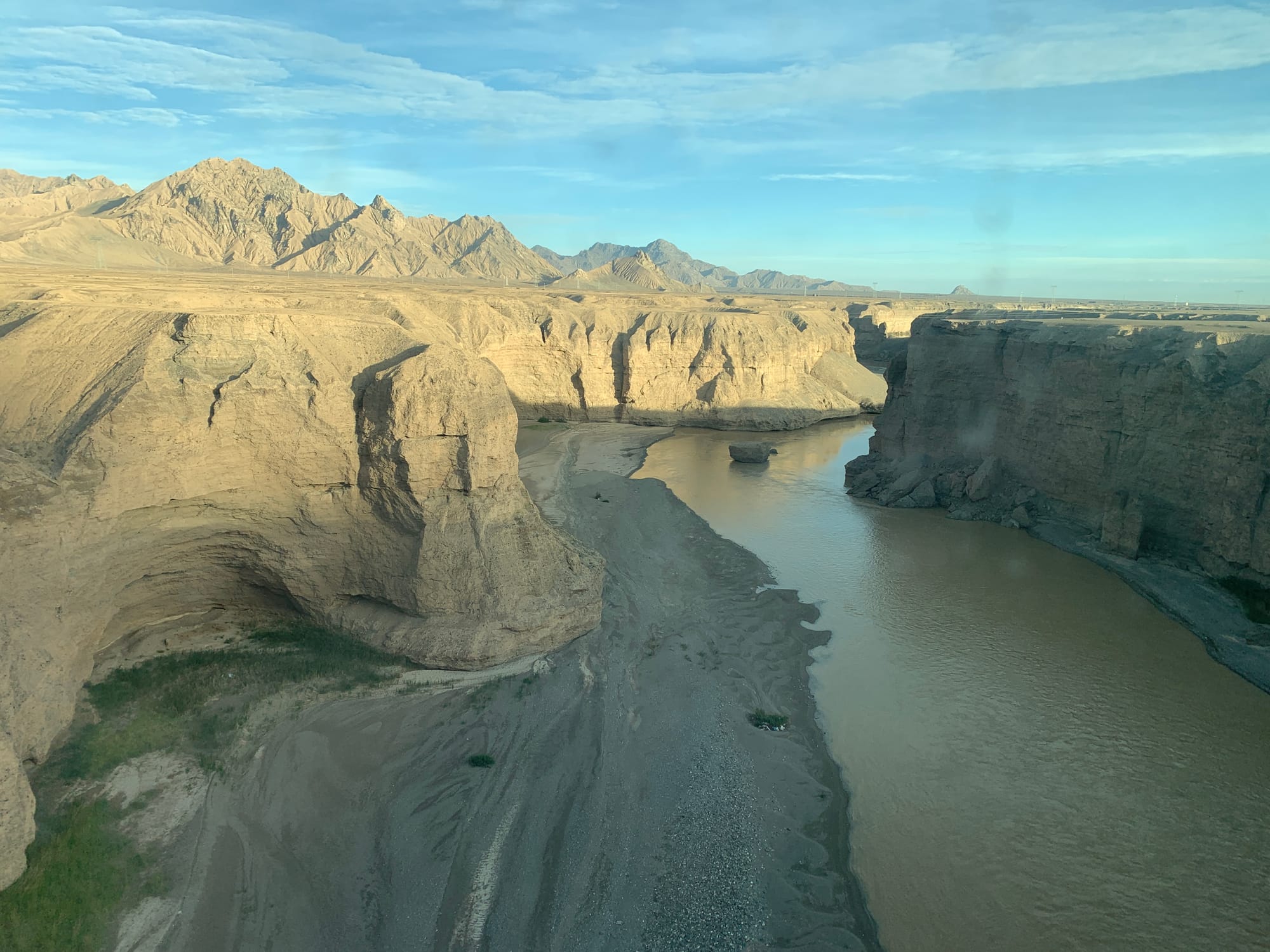
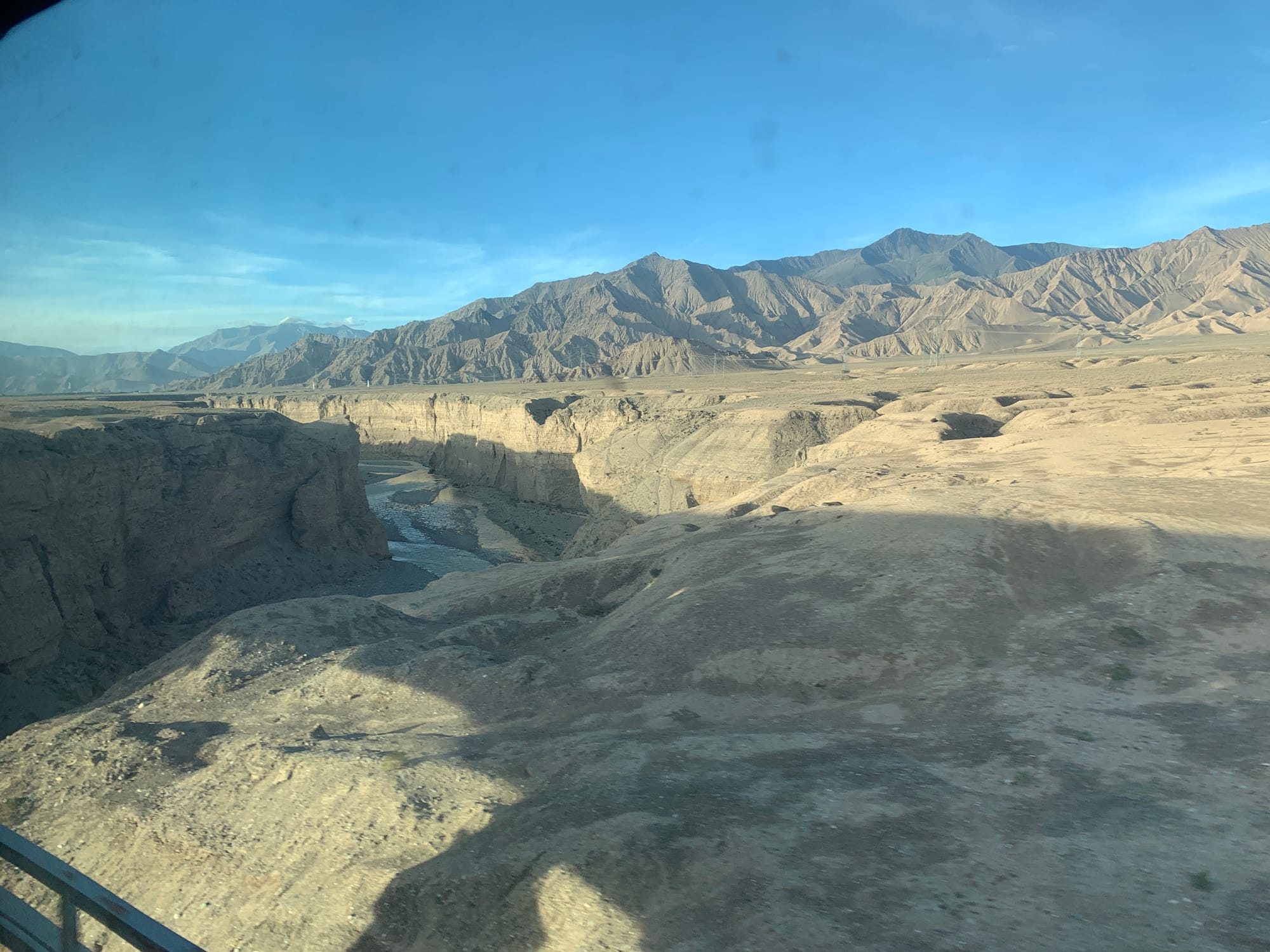
The journey from Xining to Lhasa takes approximately 21 hours. The most spectacular scenery is concentrated in the second half of the journey, after the train passes Golmud and begins climbing onto the Tibetan Plateau.
Here are the highlights to watch for:
Qinghai Lake — About 2 hours from Xining. China's largest lake appears as an endless blue expanse. If you take train Z223 (departing Xining in the evening), you'll pass it in daylight.
Golmud to Kunlun Mountains — The train begins its dramatic ascent. You'll see the landscape shift from desert basin to snow-capped peaks.
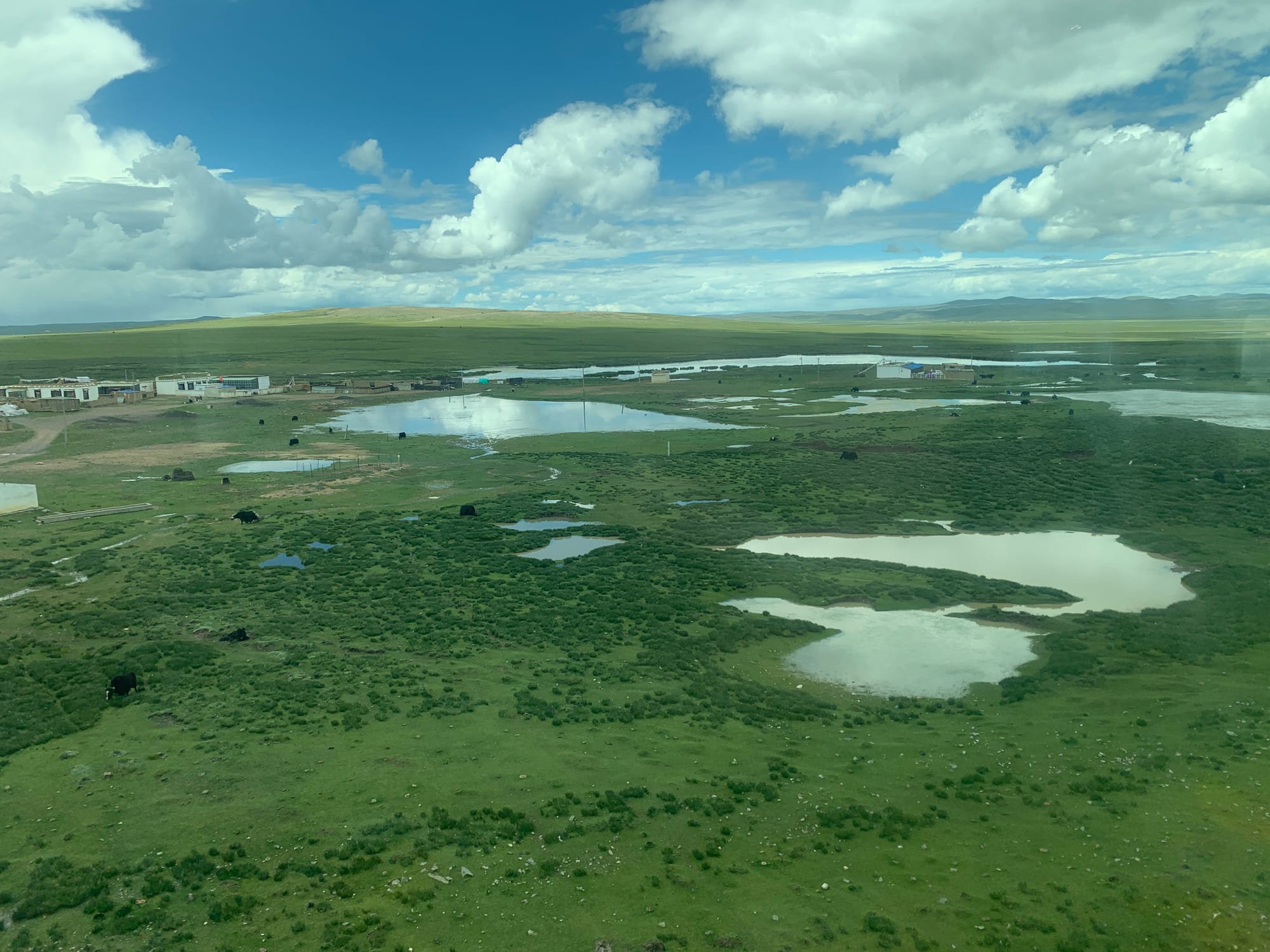
Hoh Xil (Kekexili) Nature Reserve — One of China's most remote and pristine wildernesses. Look out for Tibetan antelopes, wild yaks, and herds of Tibetan gazelles. Special wildlife corridors have been built under the railway for animal migration.
Tanggula Pass (5,072m) — The highest point of the journey and the world's highest railway pass. The train slows here, and you can feel the altitude even inside the pressurised cabin. Snow-covered peaks surround you on all sides.
Cuo'na Lake — A stunning turquoise lake visible from the train as you descend towards Lhasa. This is one of the most photographed spots of the journey.
Arrival into Lhasa — The final stretch follows the Lhasa River valley, with the Potala Palace eventually appearing in the distance. It's an emotional moment.
Life on the Train
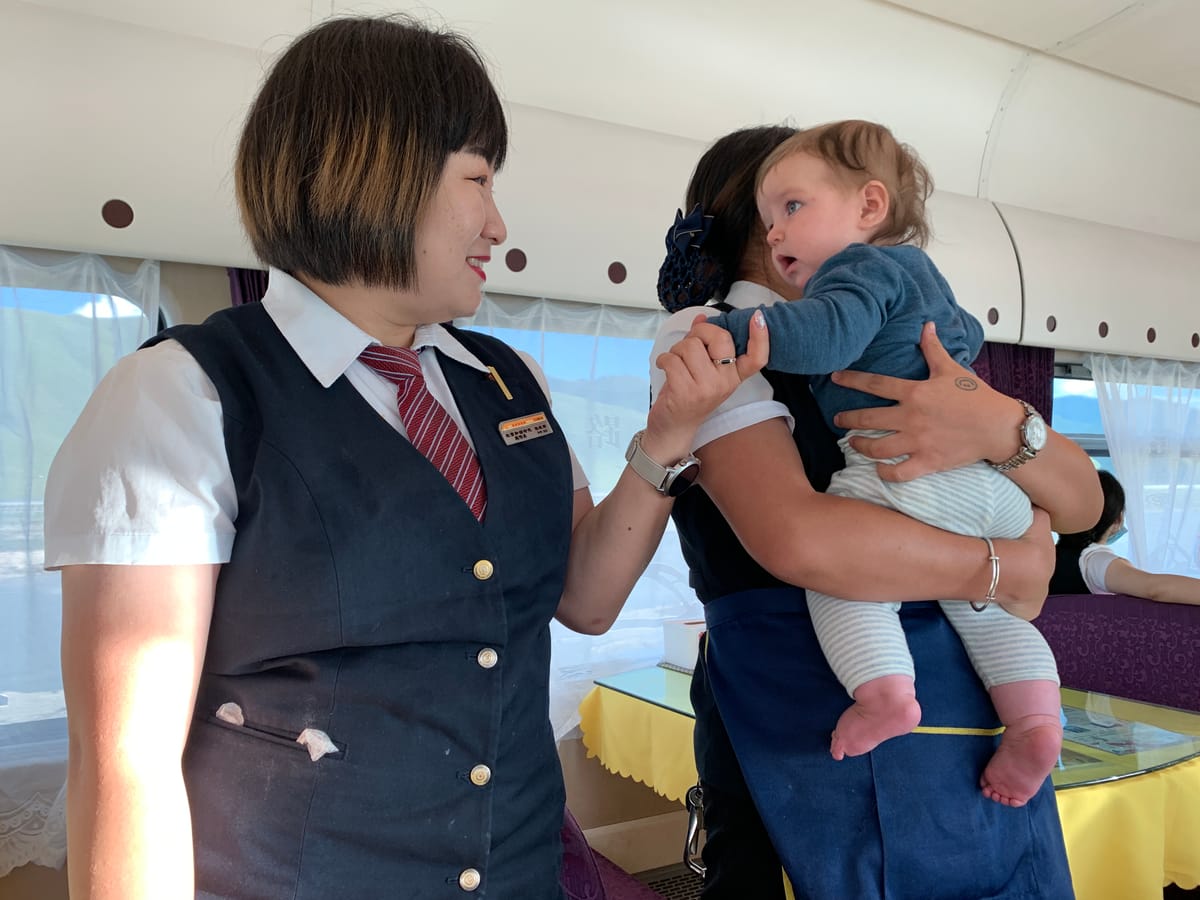
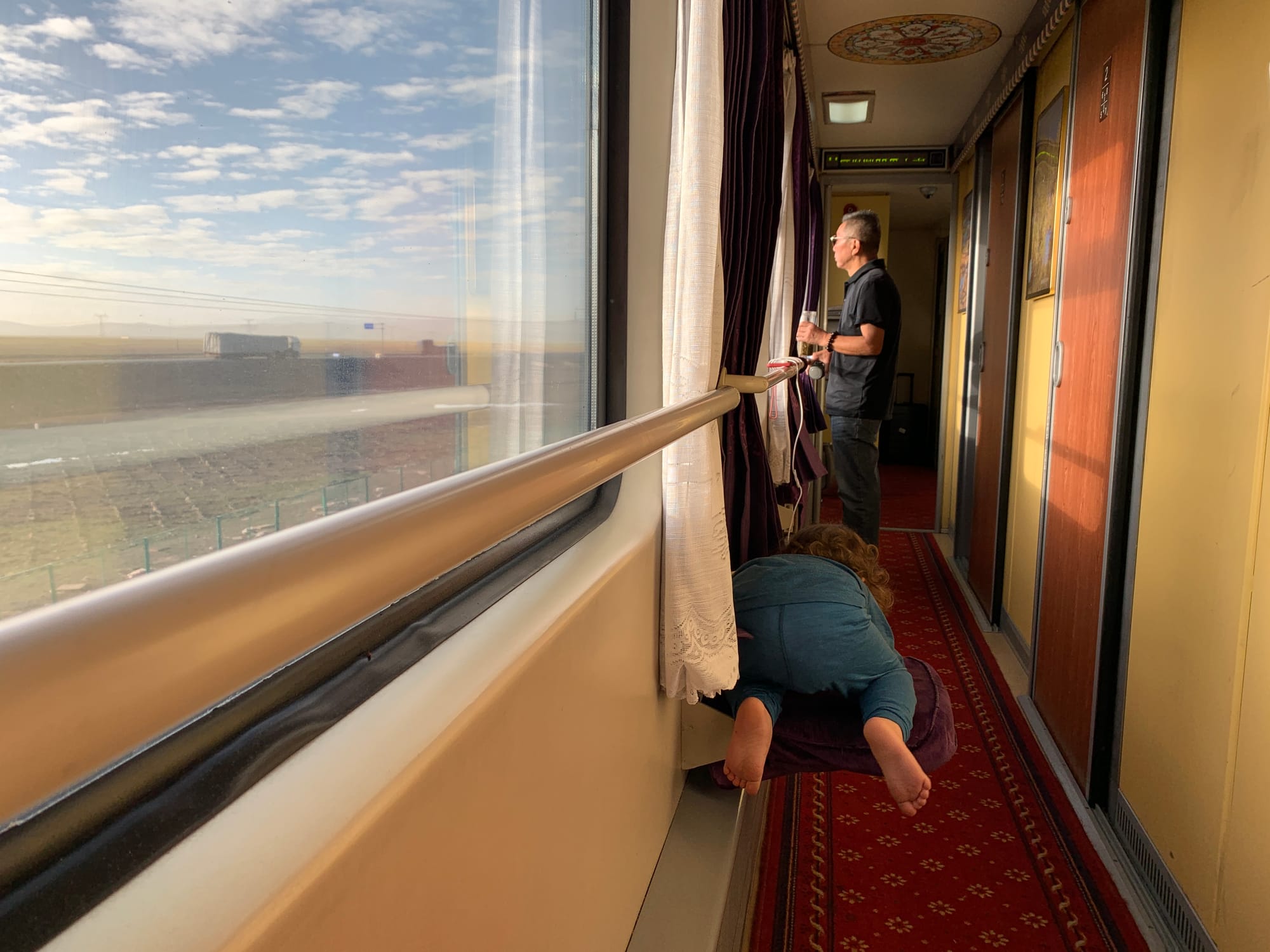
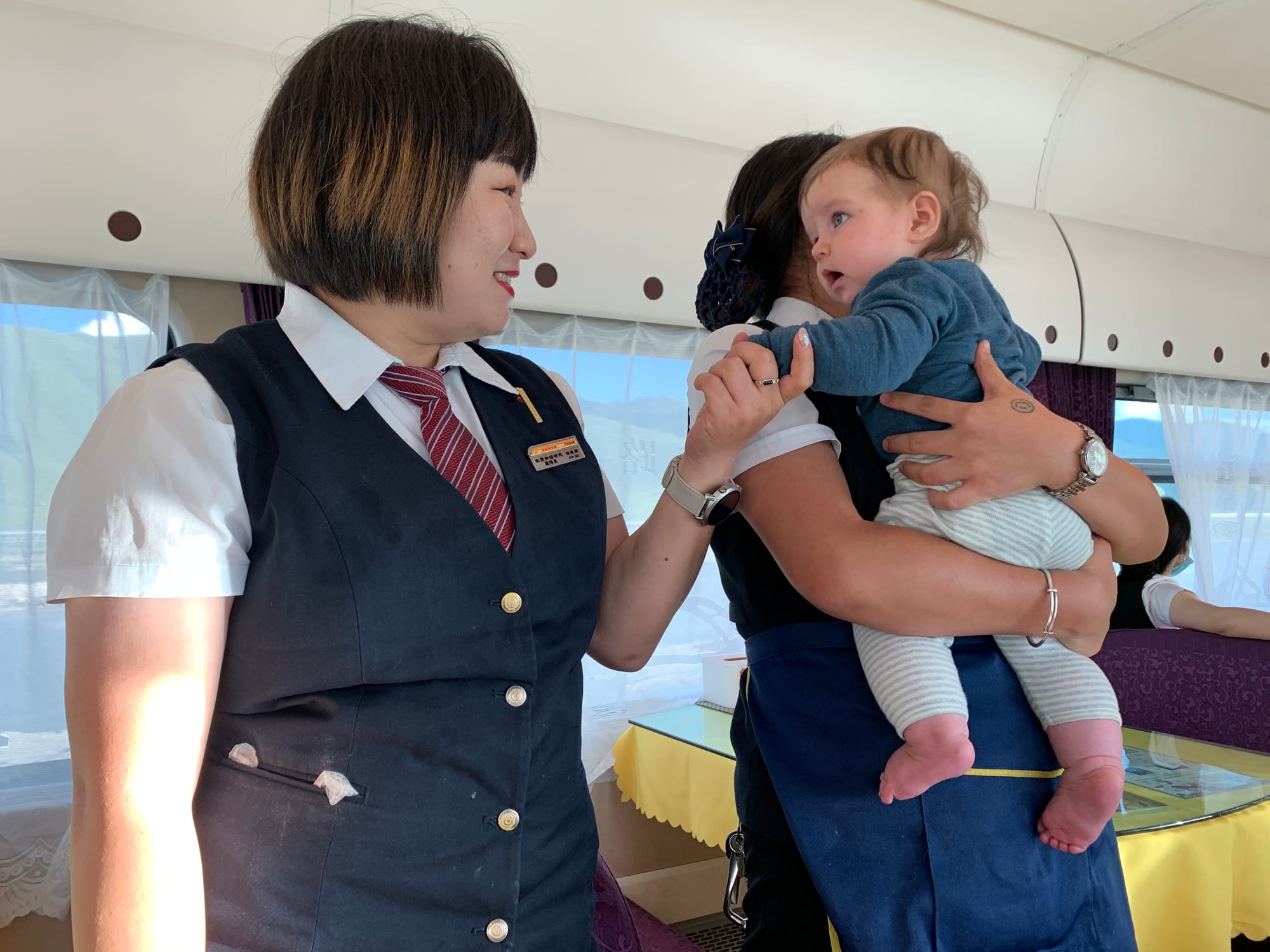
The Qinghai-Tibet train is comfortable and well-maintained. Each carriage has hot water dispensers (bring your own flask or cup), Western and squat toilets, and an electronic display showing the current altitude, temperature, and speed in Tibetan, Chinese, and English.
The restaurant car is surprisingly pleasant — and not nearly as crowded as you'd expect. Most Chinese passengers bring their own food: instant noodles, snacks, and thermos flasks for tea. Hot meals are served three times a day in the dining car (expect Chinese dishes like rice with vegetables and meat, around ¥40-60 per meal). Drinks, snacks, and pre-packaged meals are also available from a cart that passes through the carriages.
Oxygen supply: The carriages are pressurised with a distributed oxygen system. There are also individual oxygen outlets at each berth for anyone feeling unwell. In practice, most healthy adults feel fine — perhaps a slight headache or mild fatigue at the highest points.
Connectivity: Mobile phone signal is intermittent along the route. WiFi is not available on the train. This is actually a blessing — it means you spend the journey gazing out of the window, reading, or chatting with fellow passengers. Pack entertainment for kids just in case (see what to pack below).
Our Family Experience
We love night trains, so unlike some people we met later on the train, we were quite excited about our 20-hour journey ahead. For us that wasn't even a very long trip — in our kids-free past life we embarked on a month-long overland journey through Siberia, and our record was 5 days straight on the train.
We picked an evening departure from Xining — or rather, we let our travel agency pick the train for us. Summer is the busiest season, and even with all their efforts, they only managed to get us soft sleeper tickets in one direction. On the way back we had hard sleeper tickets — beds in the open corridor with three-tier bunk beds.
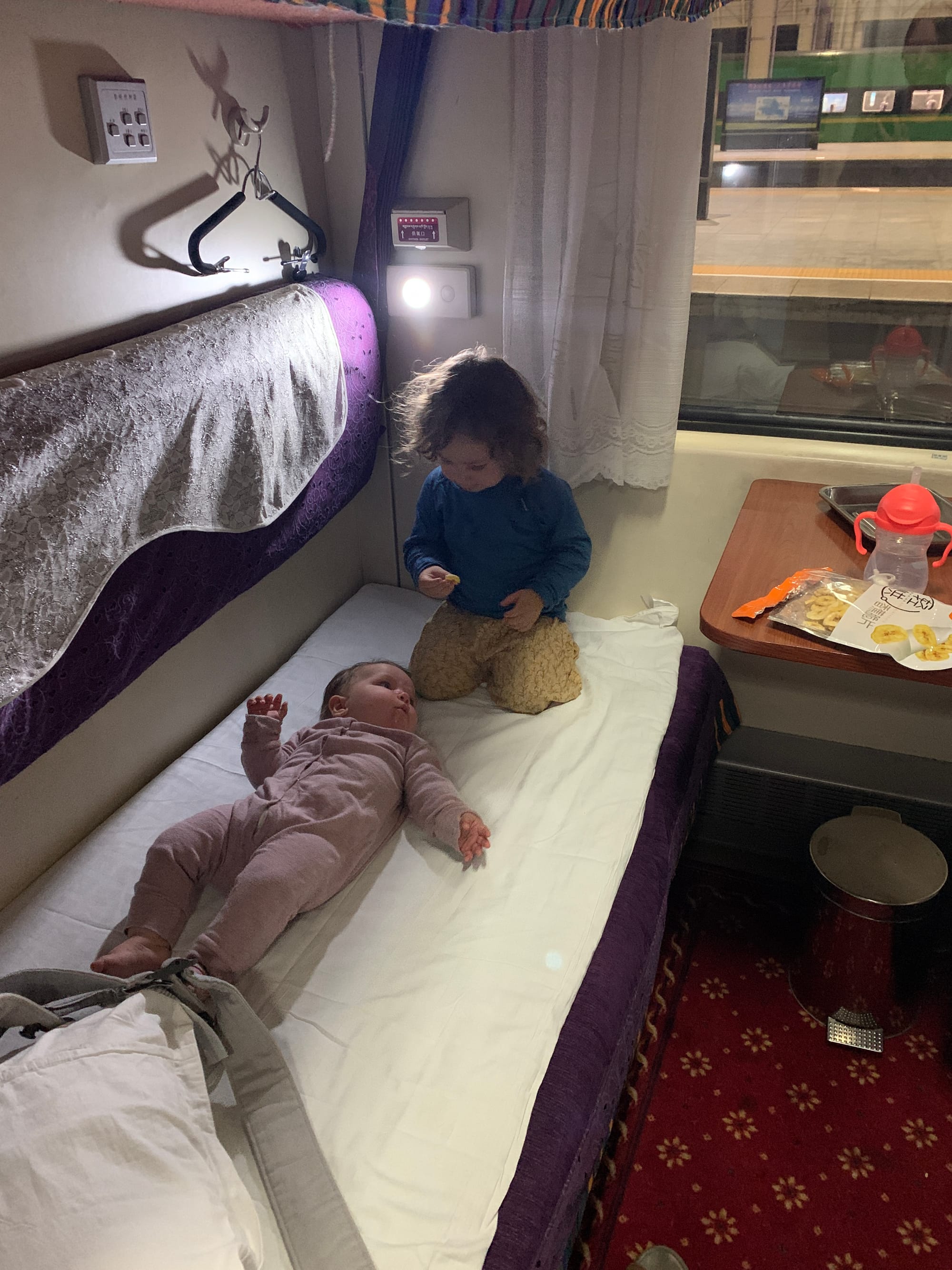
The soft sleeper compartment was perfect for our family — enough space for two adults, a toddler, and a baby, with a lockable door for privacy during naps and bedtime. The hard sleeper on the return was actually more fun. You get much more natural interaction with fellow passengers. On the way back we had to walk past the hard seat section of the train, and we were really glad we didn't have those — it was extremely crowded, so much so that they locked the door between the hard seats and sleeper carriages to prevent people without seats from moving to the sleeper area.
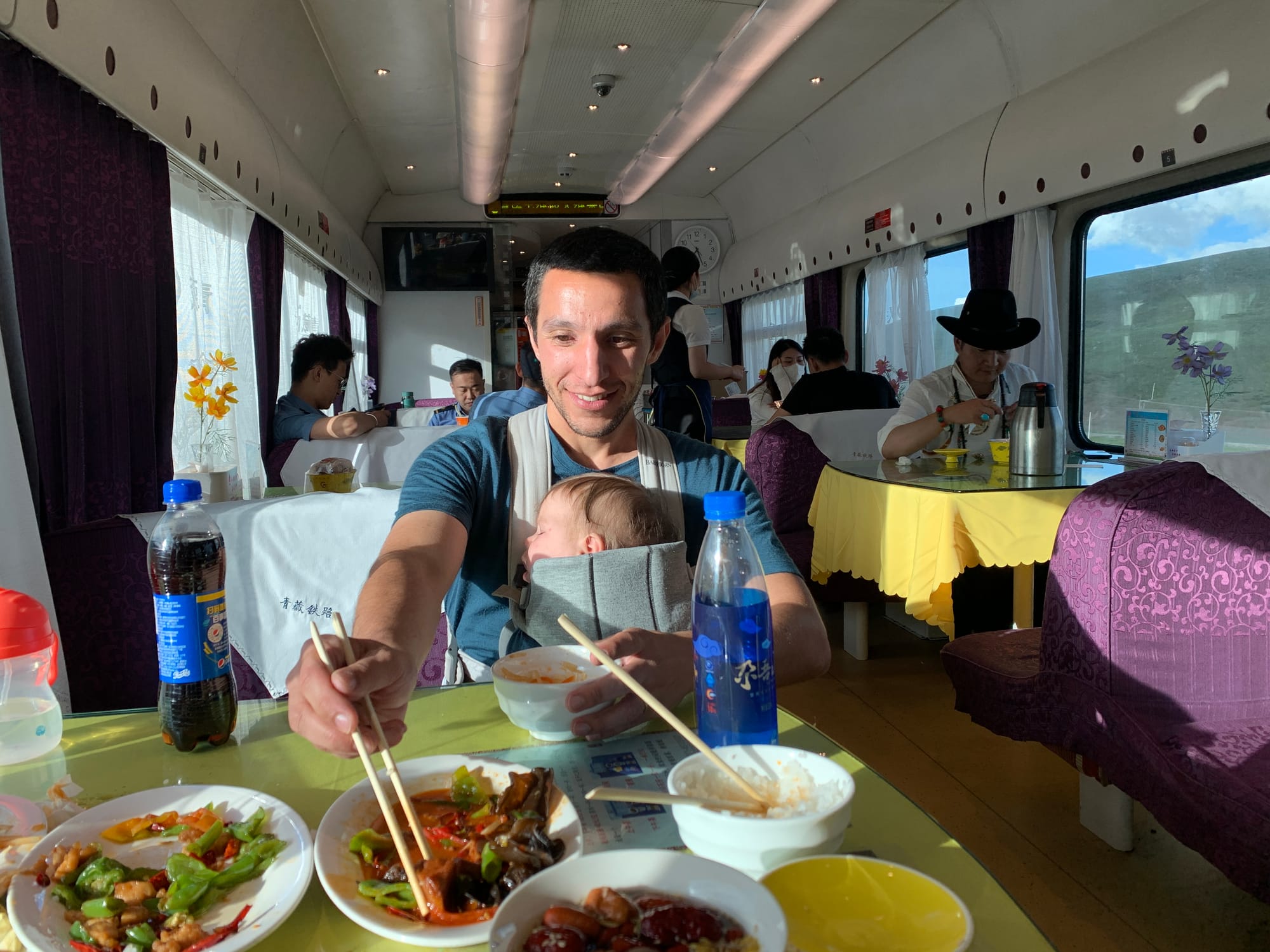
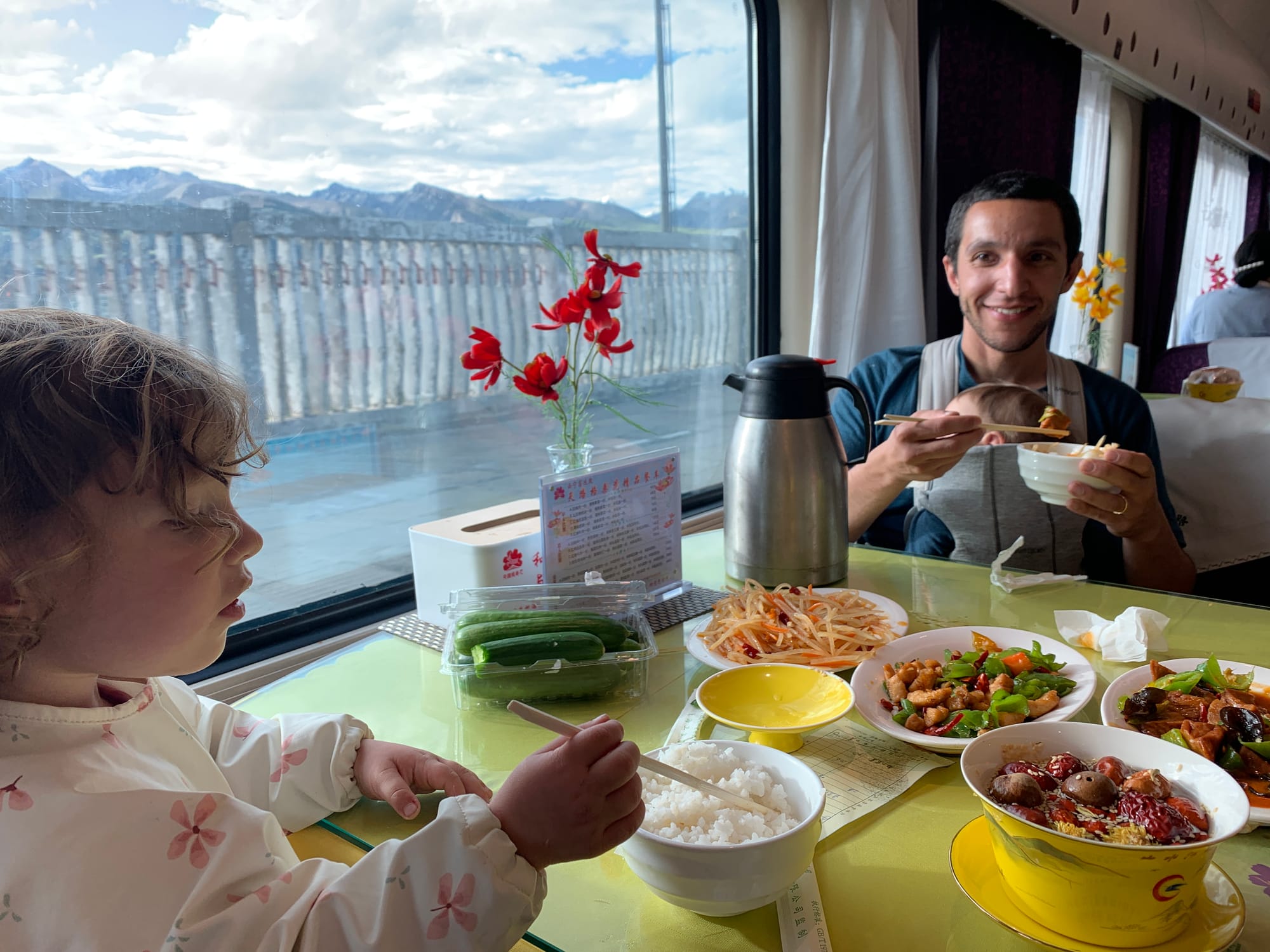
The restaurant carriage was a highlight. From our experience traveling in Europe, we expected all people without seat reservations to be occupying the restaurant seats, but meals in the dining car are relatively pricey by Chinese standards. With hot water available in every carriage, most passengers are happy with their own teas and pots of instant noodles. We had those too, but it was genuinely pleasant to sit in the restaurant carriage for a change of scenery. And the food was delicious — a real feast, definitely not the kind of food you get on European trains.
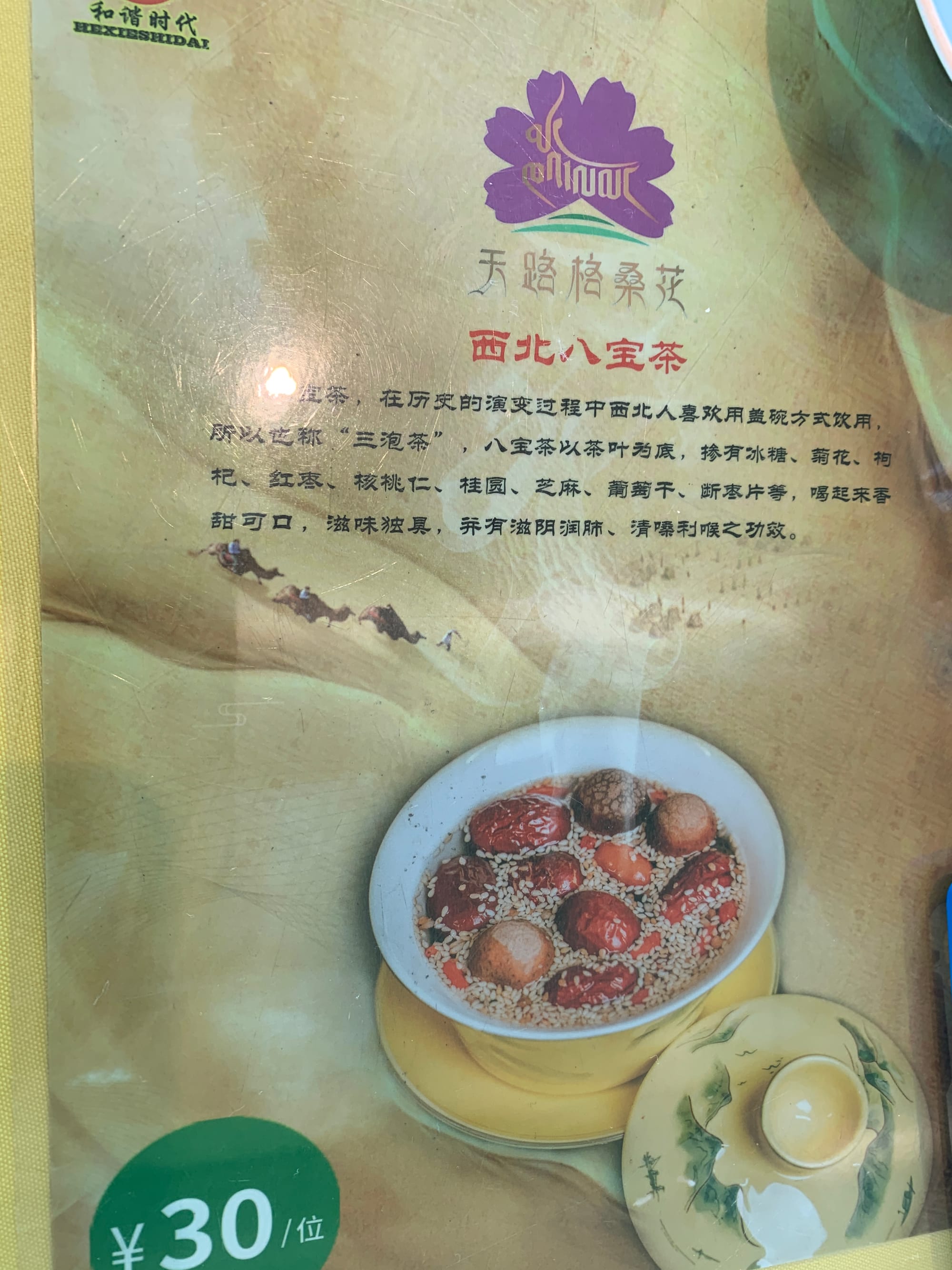
I particularly enjoyed a special "eight treasure tea" (八宝茶, bā bǎo chá) — a mix of tea with rock sugar, chrysanthemum, wolfberry, red dates, walnut kernels, sesame, and raisins. You can drink it for hours as you top up the water and the sugar slowly dissolves. Delicious!
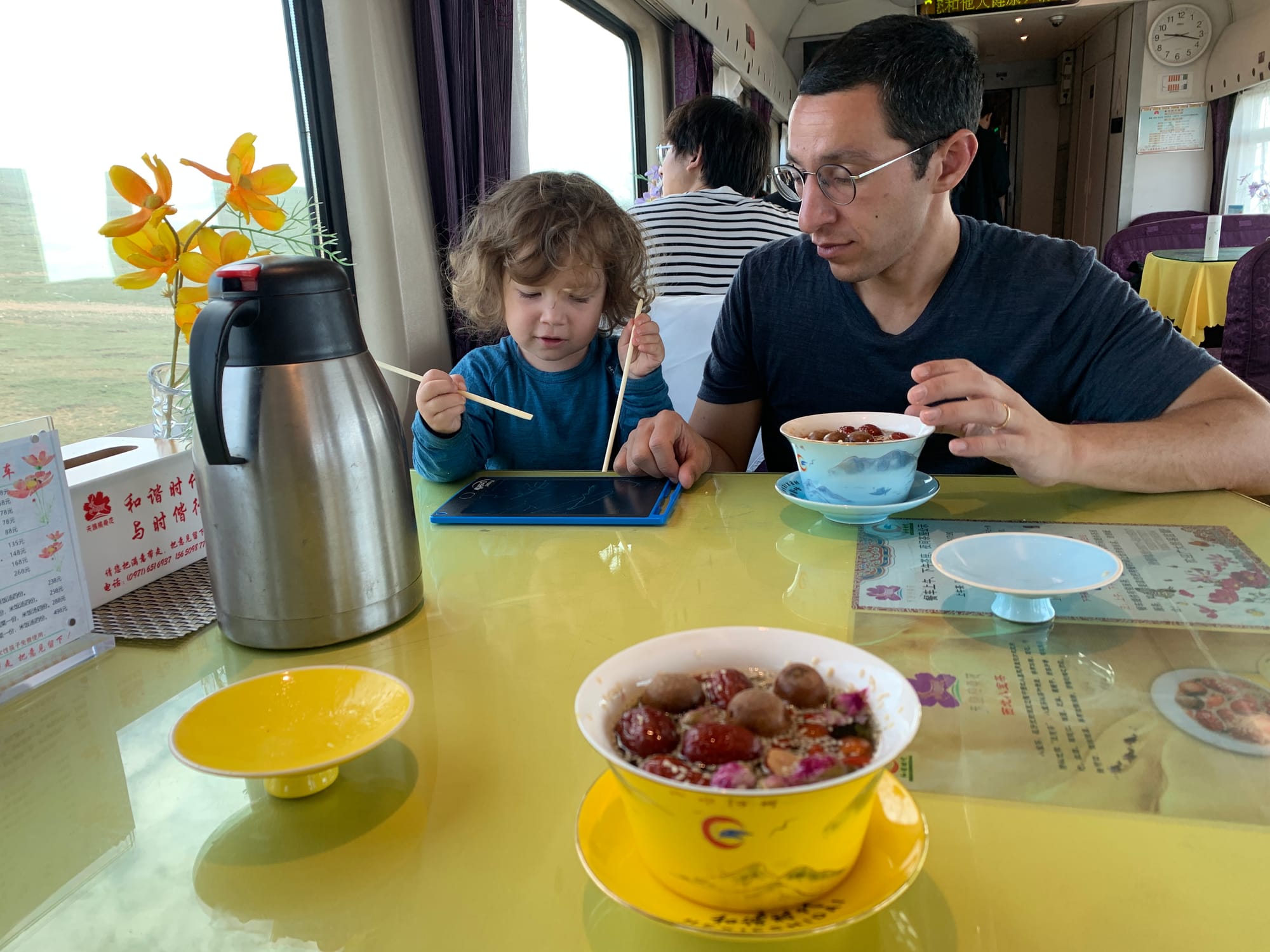
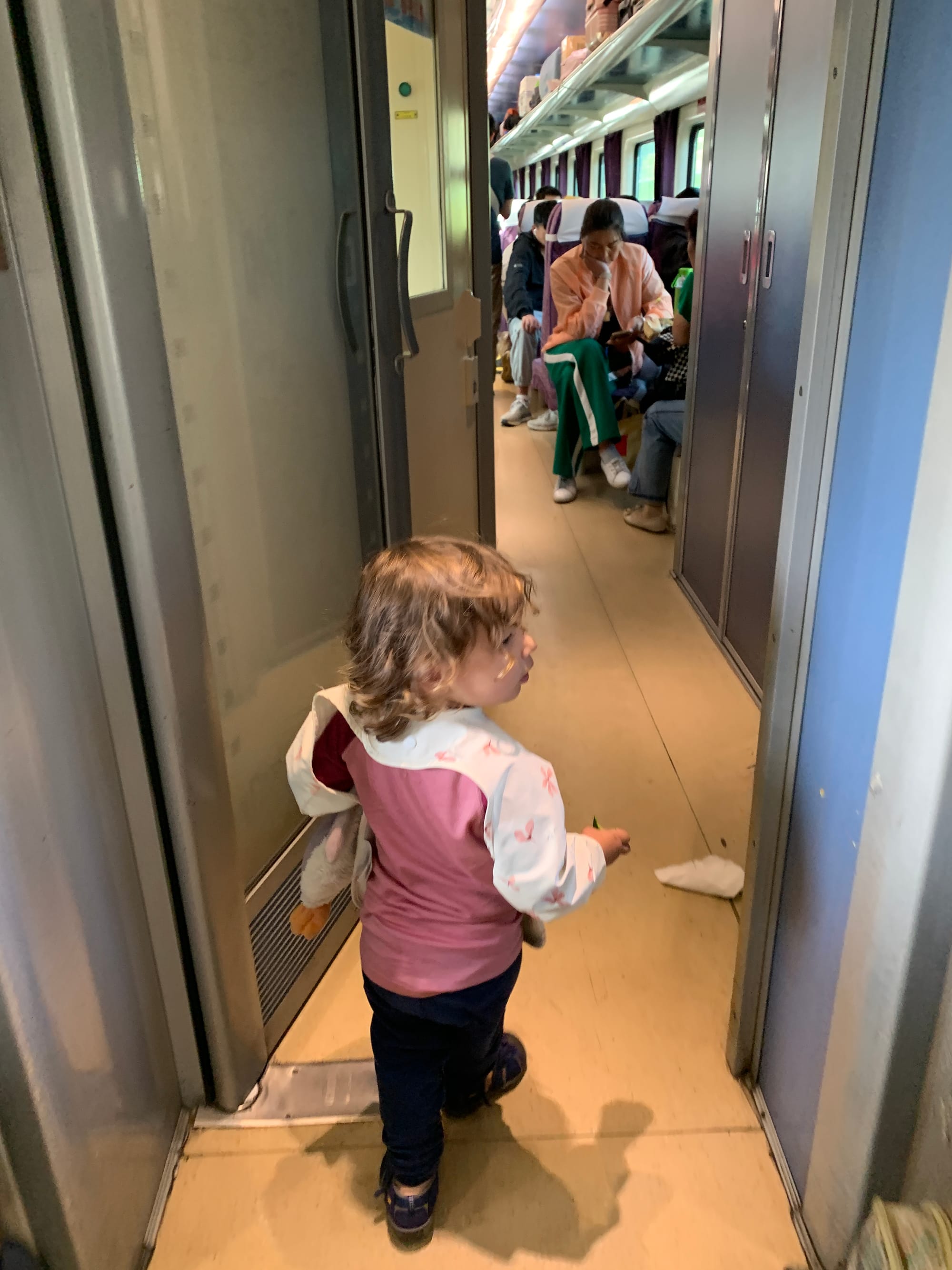
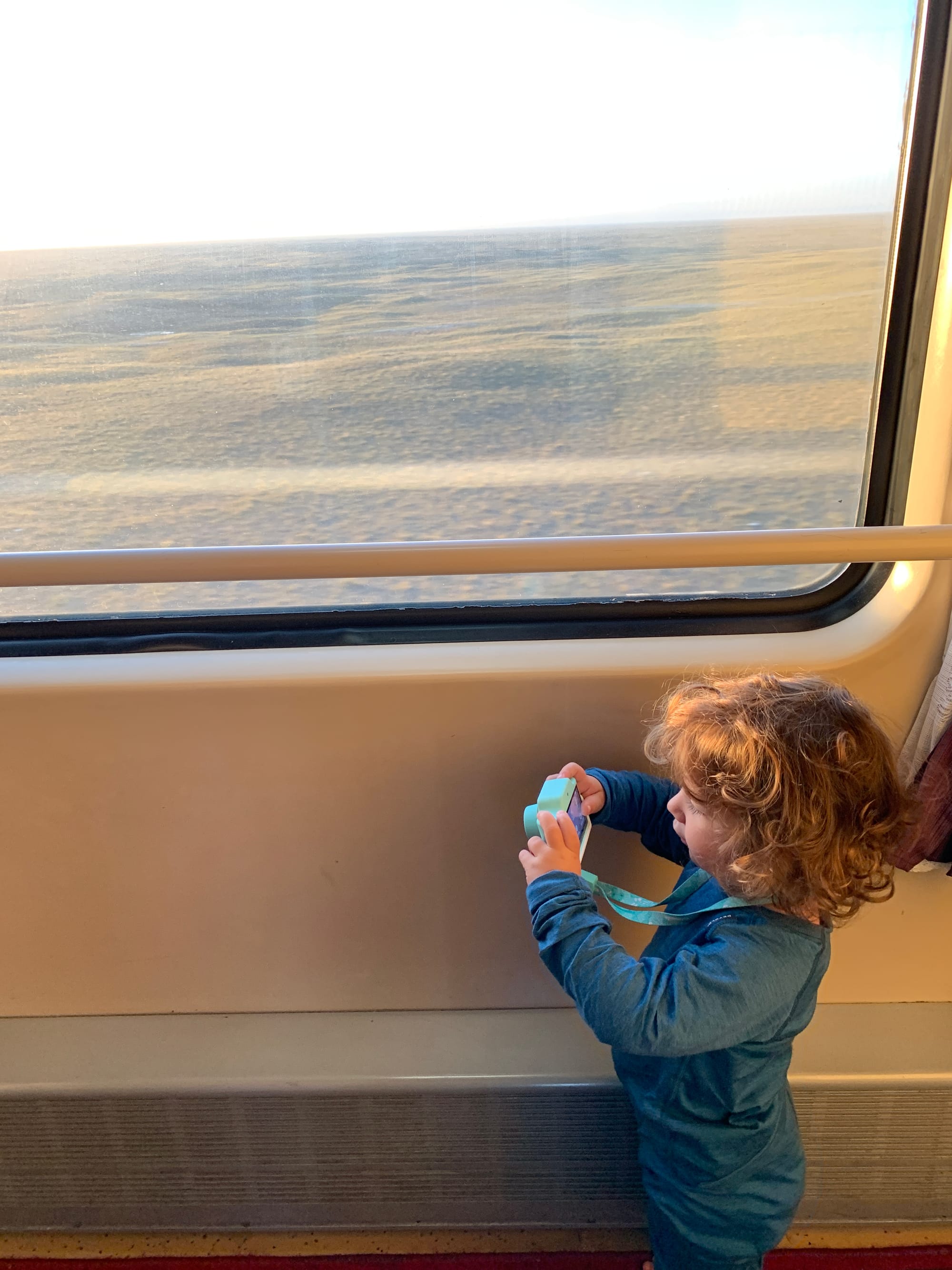
What actually surprised me the most about the views was that the landscape wasn't completely empty. Sure, the Tibetan Plateau is vast and remote, but there was a road running parallel to the tracks for much of the way. There were yaks roaming everywhere and occasional villages suddenly appearing in the middle of nowhere. And the views were absolutely spectacular — the kind that make you put your phone down and just stare.
If you're considering this trip with children, don't hesitate. Read my full guide to Tibet with kids and taking your baby to high altitude for detailed advice. For general tips on long train rides with little ones, check out my stress-free train travel with kids guide.
Altitude Sickness & Oxygen
This is the number one concern for most travellers — and rightly so. The train climbs to 5,072 metres, which is higher than Everest Base Camp. Here's what you need to know:
The train helps: All Qinghai-Tibet Railway carriages are pressurised and supplied with supplemental oxygen. Individual oxygen outlets are available at each berth. The train also carries medical staff and emergency equipment. In practice, the oxygen system means most passengers experience only mild discomfort (slight headache, fatigue) if anything.
Acclimatise in Xining first: Xining sits at 2,200 metres — high enough to begin gentle acclimatisation, but low enough that you won't feel any effects. Spending 2-3 days here before boarding the train significantly reduces your risk of altitude sickness. This is especially important if you're travelling with children.
Stay hydrated: Drink plenty of water before and during the journey. Avoid alcohol and heavy meals before the highest sections. Some travellers take Diamox (acetazolamide) as a preventative — consult your doctor before your trip.
For families: Our kids (a toddler and baby) had no altitude problems on the train. The pressurised carriage and oxygen supply make a big difference. Lhasa itself (3,650m) was more challenging — see my guide to taking babies to high altitude for the full story.
What to Pack for the Journey
The train provides bedding (sheets, blanket, pillow) for sleeper berths, but here's what to bring yourself:
Essentials: Your passport and Tibet Travel Permit (you'll need both to board), snacks and instant noodles, a refillable water bottle or thermos (for the hot water dispensers), wet wipes and hand sanitiser, phone charger and power bank (there are power outlets, but they can be unreliable), warm layers (the train is heated but it can get chilly at night), entertainment for kids (tablets, books, colouring supplies).
Nice to have: Earplugs and an eye mask (hard sleeper can be noisy), slippers for walking around the carriage, your own tea or coffee, plastic bags for rubbish, camera with a clean lens for window photography.
For a complete family packing approach, see my guide to packing light for family travel.
Practical Tips
Tibet Travel Permit: All foreigners need a Tibet Travel Permit to enter Tibet, including to board the train. This can only be arranged through a licensed Tibet travel agency — you cannot get it yourself. The agency will also need to arrange a local guide and vehicle for your time in Tibet. Plan at least 2-3 weeks ahead. See my guide to choosing a Tibet travel agent.
Best direction: If you can only take the train one way (and fly the other), take the train TO Lhasa and fly back. The gradual ascent by train helps with acclimatisation, and you'll have daylight for the most scenic sections.
Best seats for views: The scenery is spectacular on both sides. In summer, the left side (heading to Lhasa) offers good views of Qinghai Lake in the early part of the journey.
Payments on the train: The restaurant car and snack cart accept mobile payments (WeChat Pay and AliPay) and cash. Set up your mobile payment apps before boarding — here's my guide to essential apps for China.
Children's tickets: Children under 1.2m in height travel free without a seat/berth. Between 1.2m-1.5m, a half-price ticket is required. See my detailed guide on train tickets for children in China.
Internet access: Mobile signal is patchy. Google, WhatsApp, and Instagram won't work on Chinese networks without a VPN or data roaming. See my guide on how to access Google in China.
Where to Go Next
The Qinghai-Tibet Railway is part of a bigger journey. Here's how it connects:
🏔️ Lhasa & Tibet — Most travellers spend 5-7 days in Tibet after arriving, visiting the Potala Palace, Jokhang Temple, Namtso Lake, and possibly Everest Base Camp. Your travel agency will arrange the itinerary. → Tibet with kids guide | Our Tibetan homestay experience
🏙️ Xining — If you haven't already, spend 2-3 days here before or after the train. Visit Kumbum Monastery (Ta'er Si), explore the Muslim Quarter, and try the excellent local food. → Xining: gateway to Tibet
🚄 Onward to other Chinese cities — From Xining, you can easily reach Xi'an (3 hours by high-speed train), Lanzhou (1 hour), or connect to Beijing/Shanghai. This makes the Qinghai-Tibet Railway a natural part of a longer China itinerary. → China 3-week itinerary | Planning your first China trip
FAQs
How long is the Qinghai-Tibet Railway journey?
From Xining to Lhasa, the journey takes approximately 21 hours. From Beijing it's around 40 hours, from Shanghai about 47 hours, and from Chengdu about 36 hours. All trains join the Qinghai-Tibet line at Xining before continuing to Lhasa.
How much do Qinghai-Tibet Railway tickets cost?
From Xining to Lhasa: approximately ¥781 ($110) for a soft sleeper, ¥495 ($70) for a hard sleeper, and ¥224 ($32) for a hard seat. Prices from Beijing, Shanghai, and other cities are higher due to the longer distance. Children under 1.2m travel free.
Can foreigners ride the Qinghai-Tibet Railway?
Yes, but foreigners need a Tibet Travel Permit to board the train. This must be arranged through a licensed travel agency. You also need an organised tour with a guide and vehicle for your time in Tibet. The permit takes about 2-3 weeks to process.
Is altitude sickness a risk on the train?
The train is pressurised and oxygen-supplied, so most passengers experience only mild symptoms, if any. Spending 2-3 days acclimatising in Xining (2,200m) before the journey significantly reduces risk. Staying hydrated and avoiding alcohol helps.
Can I take the Qinghai-Tibet Railway with kids?
Yes — we did it with a toddler and a baby. The soft sleeper compartment is ideal for families, with a lockable door and enough space for little ones. Children are always warmly welcomed by Chinese passengers. Bring snacks, entertainment, and be prepared for the altitude — see our Tibet with kids guide.
Which class should I book?
Soft sleeper is the best choice for families and anyone wanting comfort and privacy. Hard sleeper is a good budget option and more social. Avoid hard seat for the full journey — 21+ hours in an upright seat at high altitude is not comfortable.
What is the best time of year for this train journey?
May to October offers the best weather and visibility. June to August is peak season with the highest demand for tickets. May, September, and October have fewer crowds and pleasant conditions. The train runs year-round, but winter journeys can be very cold and some views are obscured by snow.
Do I need a visa and a Tibet Travel Permit?
You need a valid China visa (unless you qualify for visa-free entry) AND a separate Tibet Travel Permit. The permit is only available through a licensed travel agency and takes 2-3 weeks to process. You need both documents to board the train.
Book Your Qinghai-Tibet Railway Journey
🚂 Book train tickets on Trip.com
🏨 Find hotels in Xining — stay 2-3 nights to acclimatise
🏔️ Find hotels in Lhasa
🎫 Read our Tibet travel agency review — they arrange your permit and tickets
🎒 Browse Tibet tours on Klook
Related Guides:
 Magda Sawyer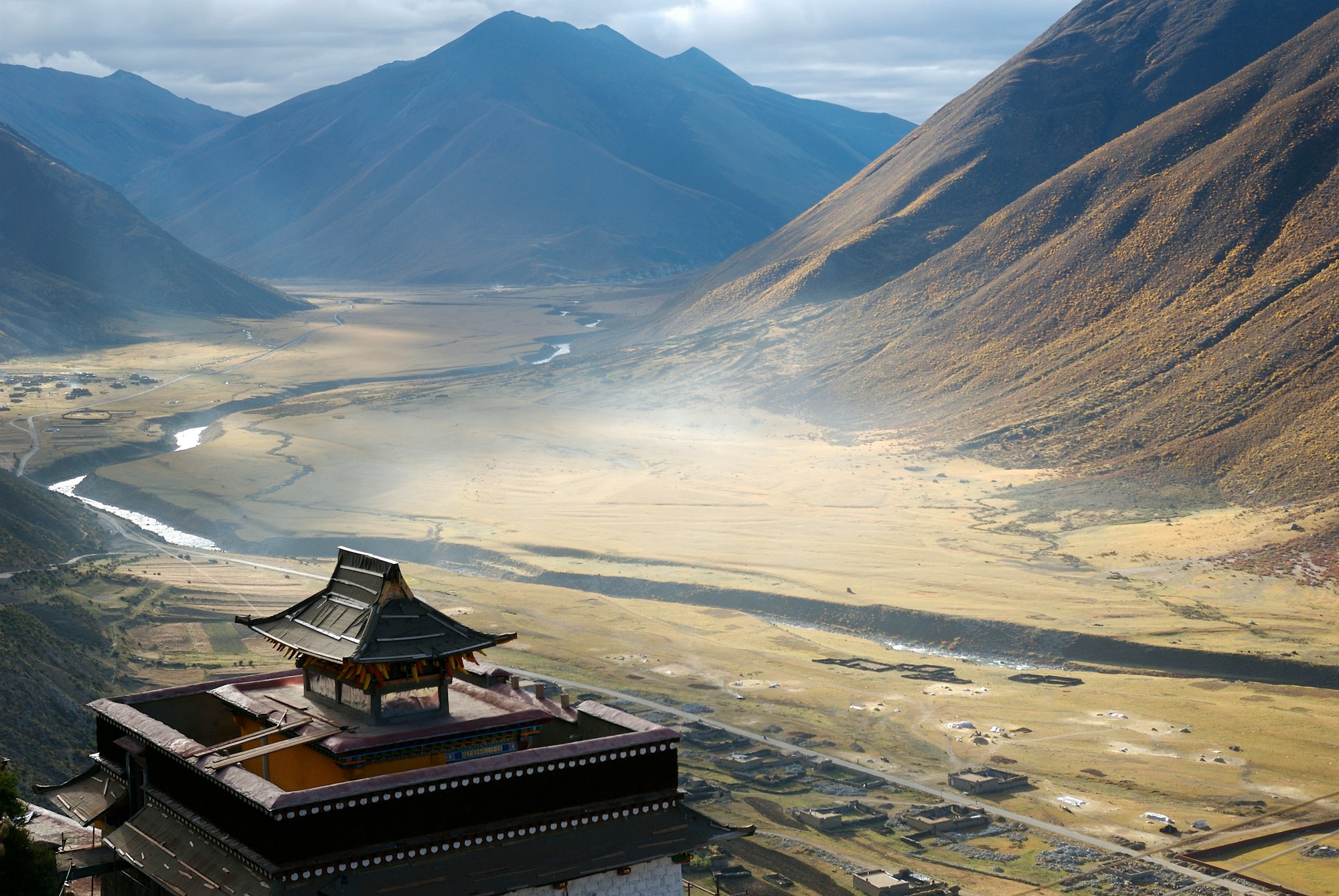
 Magda Sawyer
 Magda Sawyer
 Magda Sawyer