Best Things to Do in Shanghai — Must-See Sights & Local Favourites
Get to know Shanghai beyond The Bund — our guide to the city's best attractions, hidden gems and neighbourhood walks
Share this post:
Last updated: February 2026
🏆 #1 must-do: Walk The Bund at sunset (or better — North Bund for fewer crowds)
🎟️ Book in advance: Book restaurants and main attractions ahead of time
⏱️ Full day needed for: Disneyland, Astronomy Museum, Zhujiajiao water town
🆓 Best free activity: Zhongshan Park in the evening — watching locals dance
📸 Best photo spot: North Bund looking back at the Pudong skyline🍜 Best food experience: Xiaolongbao at a local spot, not a chain
The best things to do in Shanghai include walking The Bund at sunset, exploring the Ming Dynasty gardens at Yu Garden, getting lost in the French Concession's tree-lined streets, and simply spending an evening in Zhongshan Park watching local life unfold. Beyond the landmarks, Shanghai rewards those who slow down and explore its neighbourhoods — the old lanes behind Nanjing Road, the art deco buildings along Wukang Road, and the night markets where locals actually eat. Book the Astronomy Museum and any popular restaurants in advance — Shanghai requires more planning than other Chinese cities.
As featured in the Lonely Planet 2025 China guidebook. I speak Mandarin and have spent months exploring China across multiple trips.
There are plenty of websites listing the top 10 attractions in Shanghai, and I'm not going to pretend we've ticked them all off. We haven't even been to Disneyland yet (the kids are too young) and we skipped several famous spots because, honestly, we'd rather spend an afternoon in a park watching grandmothers dance than queue for two hours at an observation deck.
That's our approach to travel in general — we prefer to live and breathe a city rather than rush between attractions. We've found that the things you remember years later aren't usually the big-ticket sights. It's the random cafe you stumbled into, the street food stall where someone helped you order, the park bench where you watched the world go by.
Shanghai, more than most Chinese cities, is a place where this approach really pays off. The neighbourhoods are incredibly diverse — each one feels like a different city. And beneath the flashy skyline, there's a deeply layered local culture that most tourists miss entirely.
And it is worth pointing out that while other Chinese cities don‘t seem as packed with tourists as you might imagine, in Shanghai at peak tourist season you can barely walk at The Bund or Nanjing Road.
That said, some of the classics are classics for a reason. So here's our honest take on what's worth your time in Shanghai — the famous stuff and the places the guidebooks tend to skip.
Planning your whole Shanghai trip? Read our complete guides:
 Magda Sawyer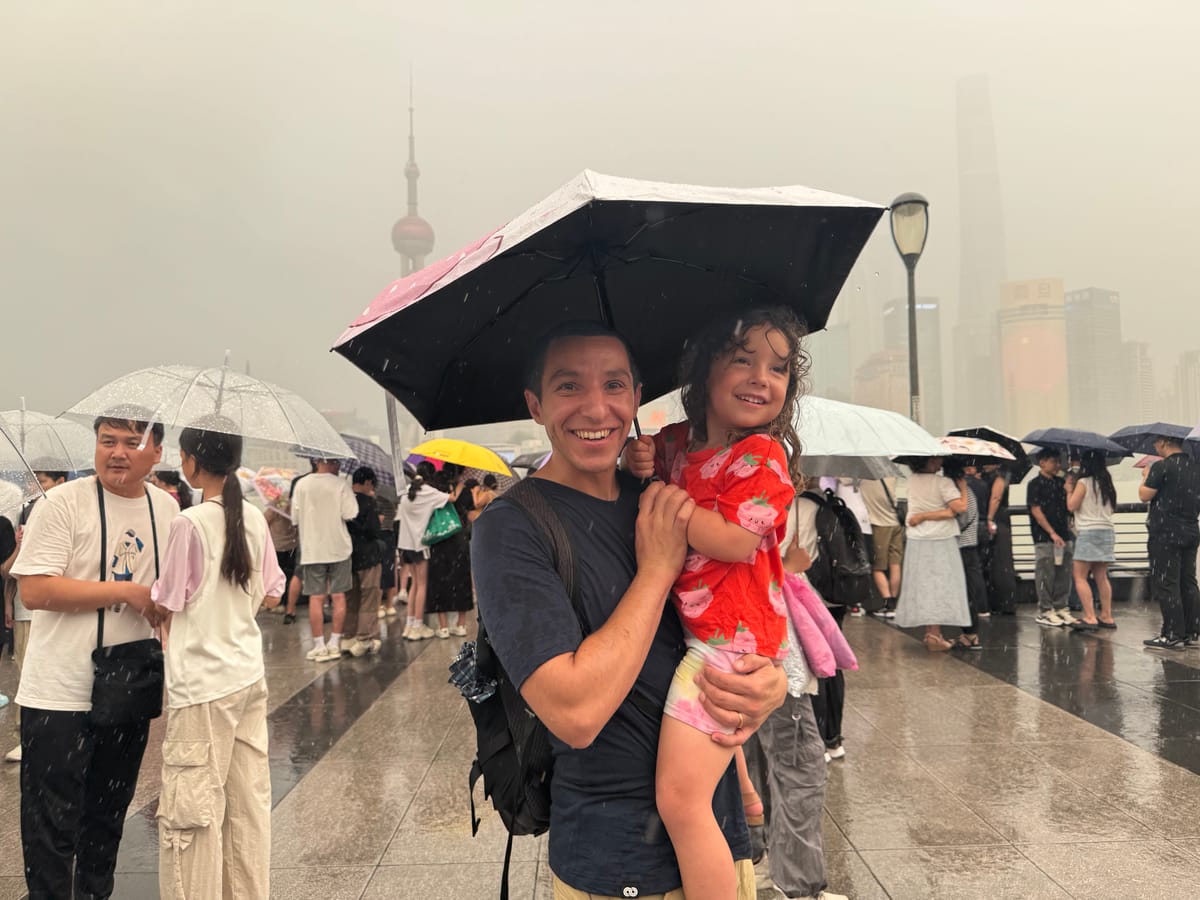
 Magda Sawyer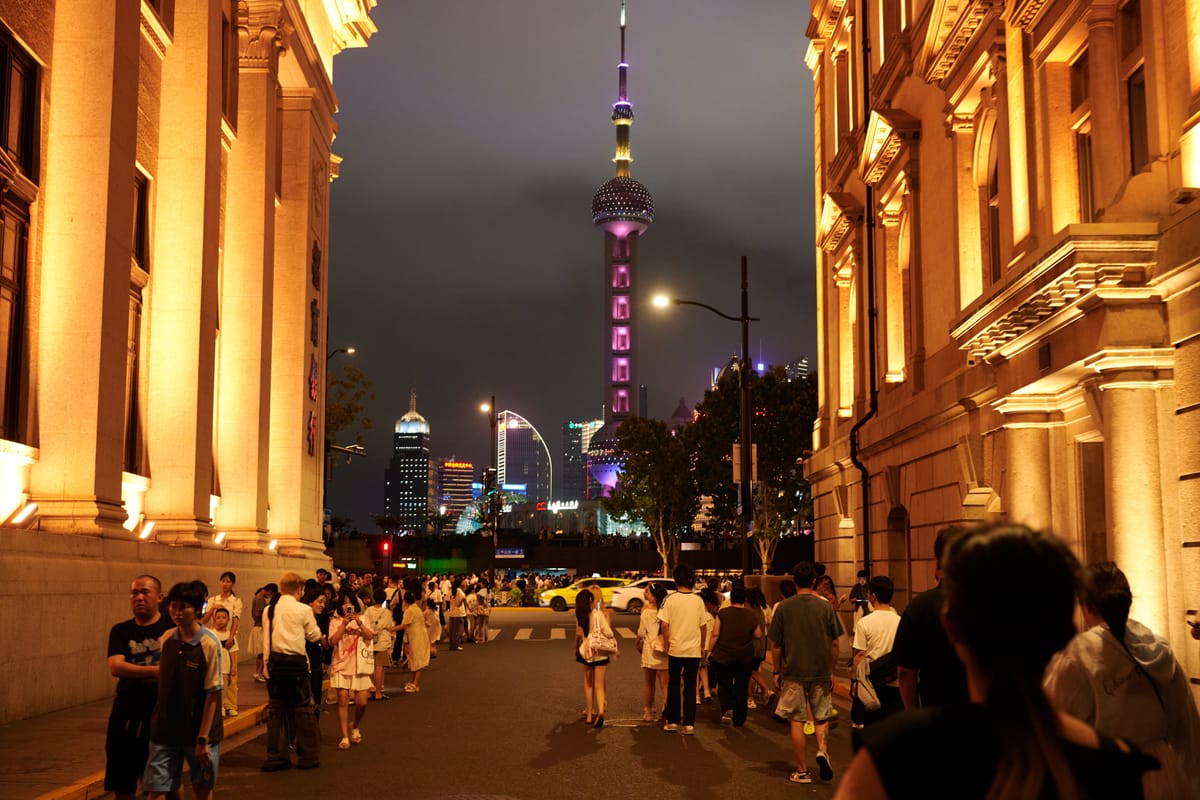
The Classics
These are the attractions most visitors come to Shanghai for. Some of them are genuinely worth the hype. Others… well, I'll be honest about those too.
The Bund (外滩)
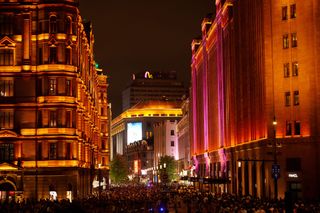
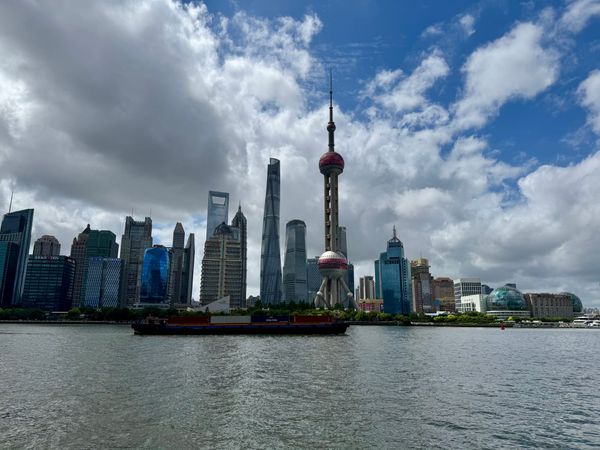
The Bund is Shanghai's signature — a kilometre-long waterfront promenade along the Huangpu River with colonial-era buildings on one side and the futuristic Pudong skyline on the other. It's the view you've seen on every postcard and Instagram reel about Shanghai, and I have to say: it really does look impressive.
The best time to visit is at sunset or just after dark, when the Pudong towers light up and the whole scene becomes genuinely spectacular. We visited during a rainstorm, which was actually a blessing in discuise — the crowds thinned out and the moody atmosphere made for some of our favourite photos from the trip. Plus, we managed to find a cute local eatery on the way to Yu Garden.
The main promenade gets absolutely packed on weekends and holidays. If you want the same views without the crush, head to North Bund (北外滩) instead. There is a Manner Coffee on the north side of the river with stunning views of both the colonial buildings and Pudong — at a fraction of the crowds. This was one of our best discoveries in Shanghai and I'd recommend it to anyone.
The Bund is also a great starting point for a walk south towards the Old City and Yu Garden, or a short ferry ride across the river to Lujiazui.
Yu Garden (豫园)
A classical Ming Dynasty garden right in the heart of Shanghai, built in 1559 for a government official who wanted to please his elderly parents — the name literally means "Garden of Happiness." We didn‘t go inside because it closes relatively early, but it might be worth a trip if you are there at the right time.
That said, it can get extremely crowded, especially on weekends and holidays. If the queues are long, don't despair — the surrounding Yu Garden Bazaar is free to explore and is also quite atmospheric. It's a maze of traditional buildings housing tea shops, dumpling restaurants and souvenir stalls. The
🌟 Pro Tip: Visit first thing in the morning for a much calmer experience. The garden opens at 8:30 AM and the first hour or so is noticeably quieter.
 Magda Sawyer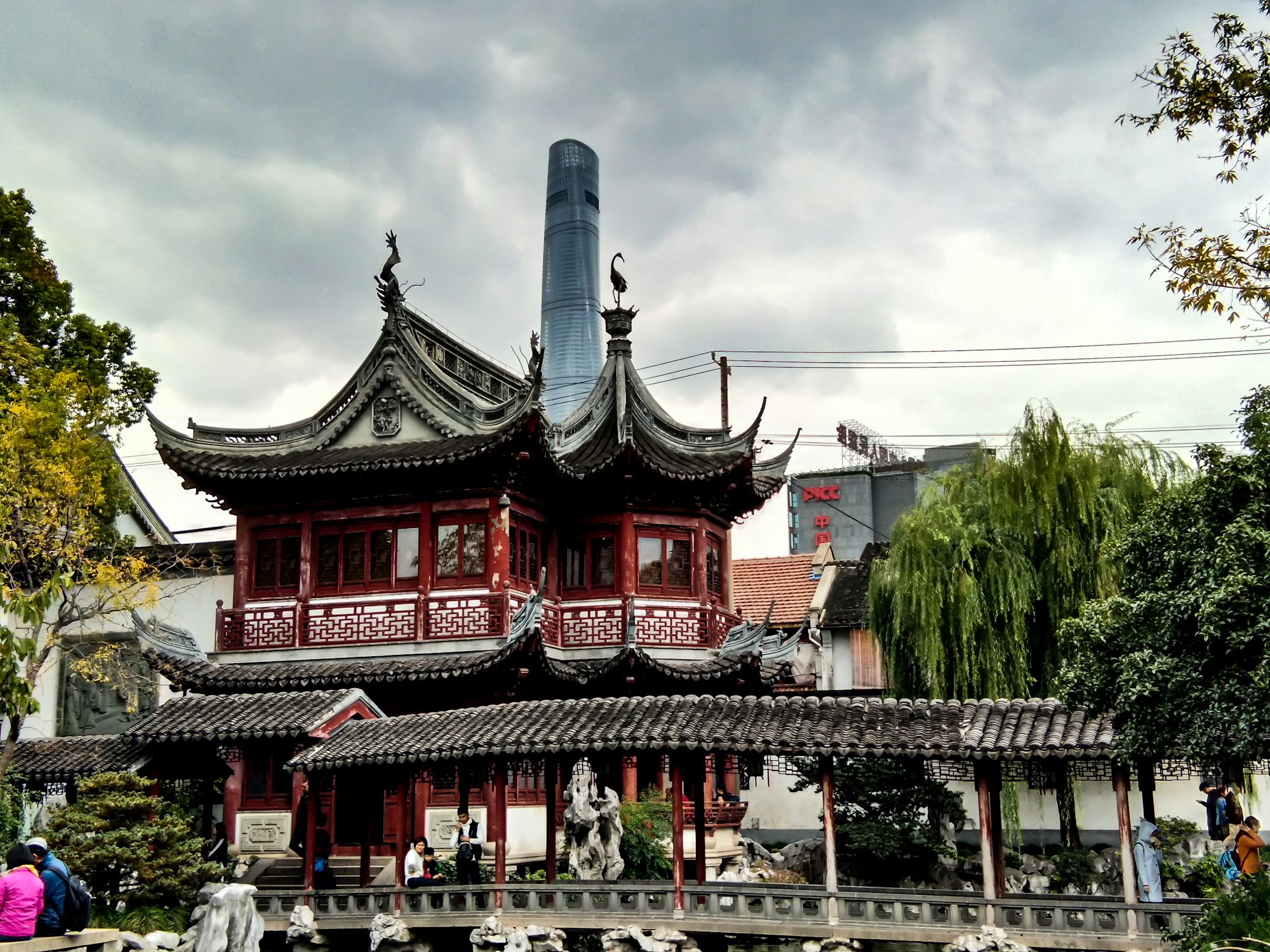
The French Concession (法租界)
Technically no longer an official name — it's now part of Xuhui and Huangpu districts — but everyone still calls it the French Concession, and walking through its tree-lined avenues you'll immediately understand why.
This is one of Shanghai's most pleasant areas to explore on foot. The architecture is a mix of art deco, European colonial and traditional shikumen (石库门) lane houses. Plane trees line the streets, independent cafes and boutiques fill the ground floors, and the overall atmosphere is somewhere between Paris and old Shanghai.
There's no single must-see attraction here — the whole area is the attraction. We spent a full morning just walking around, walking into cafes and admiring the buildings. Our route:
Start at Xintiandi (新天地) — a pedestrianised area of restored shikumen buildings, now filled with restaurants and bars. Good for a coffee and people-watching. Walk south to Fuxing Park (复兴公园) — one of the liveliest parks in Shanghai, with locals dancing, playing music and doing tai chi. Continue to Tianzifang (田子坊) — a warren of narrow alleyways packed with art studios, cafes and quirky shops. It's touristy, but atmospheric and fun. Then head to the Wukang Building (武康大楼) area — the wedge-shaped 1924 apartment building is one of Shanghai's most photographed landmarks, and the surrounding streets along Wukang Road are full of beautiful art deco buildings and trendy cafes.
We wanted to eat at Jesse Restaurant (吉士酒家) in this area — widely considered one of the best Shanghainese restaurants — but it was completely booked out for our entire stay. Lesson learned: in Shanghai, book popular restaurants 2–3 days ahead minimum.
Pudong Skyline & Observation Decks
Pudong is Shanghai's modern business district — the one with all the skyscrapers you see from The Bund. Up close, it's a forest of glass and steel that's genuinely impressive in scale.
The main towers you can visit:
Shanghai Tower (上海中心大厦) — The tallest building in China at 632 metres. The observation deck on the 118th floor offers the highest views in the city, though on smoggy days you might not see much.
Shanghai World Financial Center — The "bottle opener" building. The observation deck at 474 metres has a glass-bottom walkway that's great fun. Be warned though: the exit queue can be very long and slow. We spent more time queuing to leave than actually enjoying the views. Bring snacks and patience.
Oriental Pearl Tower — The retro-futuristic pink tower that's been Shanghai's icon since the 1990s. A bit dated compared to the newer towers, but the glass floor is popular and the Shanghai History Museum in the base is surprisingly good and free.
Honestly? Pick one. You don't need to go up all three. The views are all similar and the ticket prices add up.
🎫 Book observation deck tickets on Klook
Shanghai Disneyland
We haven't been ourselves yet (the kids were too young during our visit), but Shanghai Disneyland is the main reason many visitors include Shanghai on their China itinerary. It features the world's largest Disney castle and several rides unique to this park, including the TRON Lightcycle Power Run.
It's located in Pudong, about 1 hour from central Shanghai by metro (Line 11). Weekdays are significantly less crowded than weekends. Book tickets in advance — the park sells out during holidays.
🎫 Check Shanghai Disneyland tickets on Klook
Beyond the Guidebook
These are the places that made us actually enjoy Shanghai or that were on our list but we didn‘t manage to get there but feel worth going — where the city felt less like an international business hub and more like a real, living Chinese city.
Zhongshan Park (中山公园) — Our Favourite Spot in Shanghai
If you only have time for one thing that's not on the standard tourist trail, make it this.
Zhongshan Park is where Shanghai's two worlds meet. On one side of the park, you'll see young families and friends having picnics on the grass. On the other, groups of old people perfecting their dance moves, playing cards, and practicing tai chi under the trees. There's a small amusement park with rides in the northwest corner, joggers circling the paths, and a general atmosphere of warmth and community that you simply don't find at the tourist sites.
We brought some snacks and games and honestly could have spent the whole day here. I recommend visiting in the late afternoon or evening, when the park comes alive — the dancing especially is mesmerising to watch, and people are genuinely happy to see visitors enjoying the scene.
This was the most authentically Chinese experience we had in Shanghai, and it's completely free.
 Magda Sawyer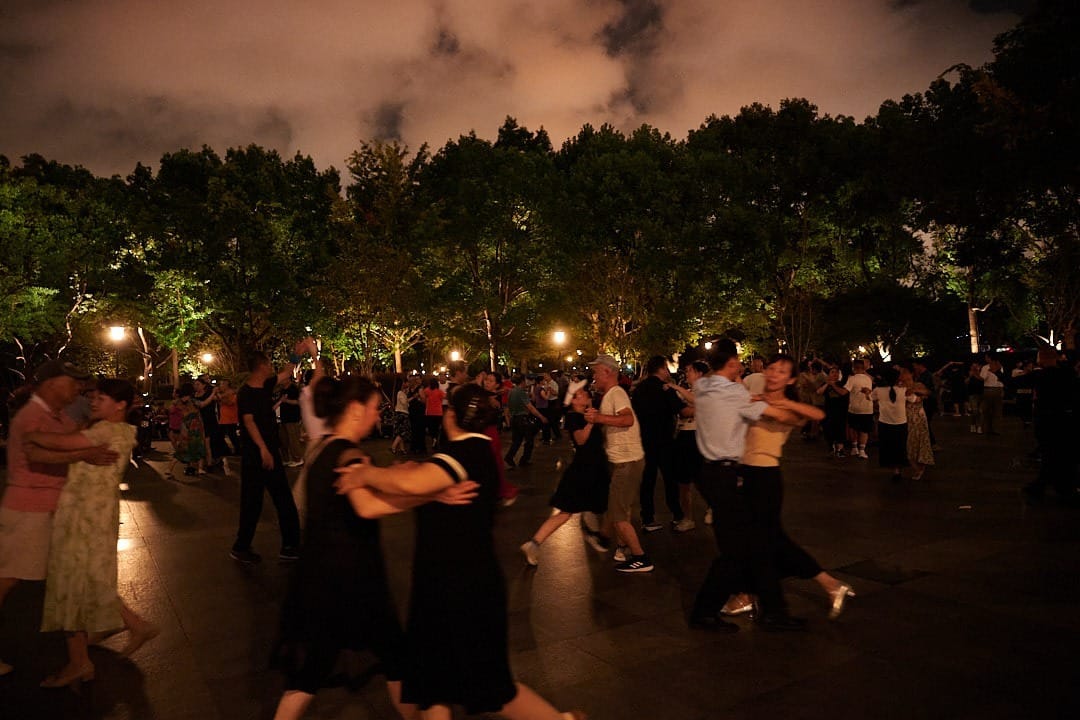
Fuxing Park (复兴公园)
Smaller and more central than Zhongshan Park, Fuxing Park is right in the heart of the French Concession and it's another place where local life takes centre stage. In the mornings, groups practice ballroom dancing and tai chi. There's a small funfair area and shaded benches perfect for taking a break from walking.
What makes Fuxing Park special is its setting — surrounded by French Concession architecture and tree-lined streets, it feels like a little oasis of real Shanghai culture amid the cafes and boutiques. We stumbled into it during our French Concession walk and ended up staying much longer than planned.
Jing'an Temple (静安寺)
A working Buddhist temple right in the middle of one of Shanghai's busiest commercial areas. The contrast is striking — golden roofs and incense smoke surrounded by glass skyscrapers and luxury shops. The temple dates back to 247 AD (though the current building is much newer) and it's still an active place of worship.
It's worth a visit even if temples aren't usually your thing, simply for the visual contrast with the surrounding city. The interior is beautiful — lots of gold, intricate woodwork and a large jade Buddha statue. Entry is ¥50.
Tianzifang (田子坊)
I mentioned Tianzifang in the French Concession section, but it deserves a few more words because it's the kind of place that divides opinion. It's undeniably touristy — narrow alleyways packed with souvenir shops, cafes and art galleries. Some people love the atmosphere, others find it too commercial.
Our take: it's worth an hour, especially if you approach it as a cultural experience rather than a shopping trip. The lanes themselves are original shikumen architecture, and there are some genuinely interesting independent galleries and workshops tucked between the more commercial shops. Go on a weekday morning for the best experience.
Shanghai Propaganda Poster Art Centre
A hidden gem that most tourists miss — a small private collection of original Chinese propaganda posters from the 1950s to 1990s, housed in the basement of a residential building. It's fascinating, a little surreal, and completely unlike anything else in Shanghai. The collection is well-curated and the context provided makes it genuinely educational.
Open daily 10 AM–5 PM, entry around ¥30. It's in the French Concession, so easy to combine with a neighbourhood walk.
Night Markets and Street Food
Shanghai has excellent street food, though it's becoming harder to find as the city modernises. The best street food areas:
Shouning Road — Known for crayfish and late-night snacking. Very lively in summer evenings.
Sipailou Road near Yu Garden — A mix of local and tourist-oriented food stalls. Good for trying different things in one go.
Wujiang Road (near Nanjing West Road) — A mix of street food vendors and small restaurants. Less touristy than the main areas.
For a more structured food experience, consider a food tour — it's one of the best ways to navigate Chinese menus and discover dishes you'd never find on your own.
🎫 Browse Shanghai food tours on GetYourGuide
Huangpu River Ferry
You'll see expensive river cruise packages advertised everywhere, but here's a local secret: the regular Huangpu River ferry crosses between The Bund and Pudong for just ¥2. It takes about 10 minutes, gives you stunning views of both sides, and costs literally a hundredth of the tourist cruise price. You can use your AliPay transport QR code to board.
Pick the Dongchang Road ferry terminal on the Pudong side — it drops you right near the Oriental Pearl Tower and aquarium.
Day Trips from Shanghai
Zhujiajiao Ancient Water Town (朱家角)
About 1 hour west of Shanghai, Zhujiajiao is a charming ancient water town with stone bridges from the Ming Dynasty, traditional canal-side houses, and plenty of street food. It's often called the "Venice of Shanghai," though it feels much more authentically Chinese than that comparison suggests.
It's a wonderful contrast to the city — slower, quieter, and full of atmosphere. The boat rides through the canals are fun, and the food is excellent (try the zongzi — sticky rice parcels wrapped in bamboo leaves).
You can get there independently by bus from Shanghai Stadium or Pudong bus station, but the easiest option for a relaxed day is booking an organised tour that handles transport.
🎫 Book a Zhujiajiao day trip with transport on Klook
Suzhou
Just 30 minutes by high-speed train, Suzhou is famous for its classical Chinese gardens (several are UNESCO World Heritage sites), its canals, and its silk industry. It's easy to do as a day trip but honestly deserves a night or two if you have the time.
The Humble Administrator's Garden (拙政园) and Lingering Garden (留园) are the most famous, but the old town's canals and narrow lanes are just as beautiful. Suzhou also has the excellent Suzhou Museum designed by I.M. Pei — worth visiting for the architecture alone.
Hangzhou
About 1 hour by high-speed train, Hangzhou is one of China's most beautiful cities. West Lake is the main attraction — a vast lake surrounded by willow trees, pagodas and tea plantations. It's the kind of place where you rent a bike and just ride around for hours.
Hangzhou also has the famous Longjing (Dragon Well) tea village, where you can visit tea plantations and sample some of the best green tea in China.
 Magda Sawyer
Museums Worth Your Time
Shanghai has some genuinely world-class museums. Here are the ones we'd recommend:
Shanghai Astronomy Museum (上海天文馆) — The world's largest planetarium, with incredible interactive exhibits and architecture that's a work of art in itself. The catch: it's in Lingang, 1.5–2 hours from central Shanghai. Book tickets online in advance via the WeChat account (上海科技馆) — they sell out quickly. If you're serious about visiting, book a night nearby rather than trying to do it as a day trip.
Shanghai Museum (near People's Square) — An excellent collection of Chinese art, calligraphy, ceramics and bronzes. Free entry, well-curated and manageable in size. One of the best introductions to Chinese art and culture.
Shanghai Natural History Museum (in Jing'an Sculpture Park) — Fantastic for families but enjoyable for anyone. The dinosaur exhibits are impressive, the building is beautiful, and the live breeding area is surprisingly engaging.
Shanghai Science and Technology Museum — Huge and interactive, covering everything from space to robotics. Great for rainy days.
Shanghai Ocean Aquarium (next to Oriental Pearl Tower in Pudong) — The world's longest underwater tunnel and a solid option, especially in hot weather.
 Magda Sawyer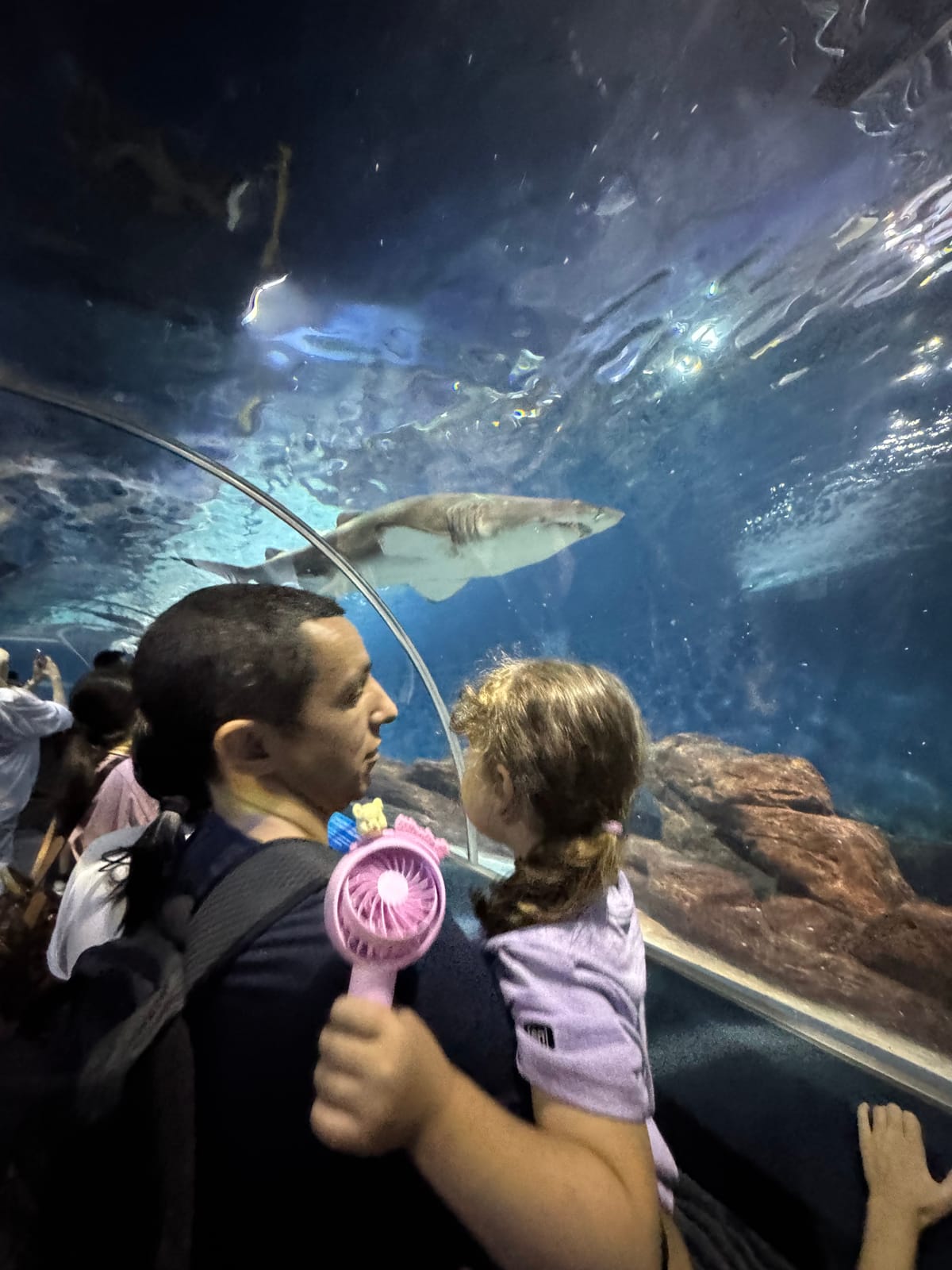
Walking Routes
One of the best ways to experience Shanghai is on foot. Here are three walks we'd recommend:
Walk 1: Bund to Yu Garden (1.5–2 hours)
Start at the Waibaidu Bridge at the northern end of The Bund. Walk south along the promenade, taking in the colonial architecture and Pudong views. At the southern end, cut inland towards the Old City — the streets narrow and the atmosphere changes completely. Wind your way to Yu Garden and the surrounding bazaar. End with xiaolongbao.
Walk 2: French Concession Loop (2–3 hours)
Start at Xintiandi. Walk to Fuxing Park for people-watching. Continue west along Fuxing Lu and its shaded side streets. Turn north on Wukang Road — photograph the Wukang Building, browse the cafes. End at Jing'an Temple for the contrast of gold roofs against glass towers.
Walk 3: Nanjing Road to Zhongshan Park (1.5 hours)
Start at East Nanjing Road (the pedestrian section) and walk west. The road changes character as you go — from neon-lit tourist strip to local shopping street to tree-lined residential area. End at Zhongshan Park for the evening atmosphere.
Practical Tips
Book restaurants in advance. This is the single most important tip for Shanghai. Unlike other Chinese cities where you can walk into most restaurants, popular spots in Shanghai are booked out days ahead. Use Dianping (大众点评, China's Yelp) and book at least 2–3 days in advance. A week for weekends.
Get an eSIM or use data roaming. Google, WhatsApp and Instagram are blocked on Chinese WiFi. If you use your home SIM with data roaming, everything works fine. For a cheaper option, get an eSIM from Saily before you leave.
Set up AliPay or WeChat Pay before you arrive. Cash is almost never used in Shanghai. Link an international credit card or a Wise card for the best exchange rates. Read our AliPay setup guide.
The metro is your best friend. Clean, cheap, efficient. Use AliPay's transport function to scan QR codes at the gates — no need to queue for tickets.
Don't try to see everything. Shanghai is huge. Pick a neighbourhood and explore it properly rather than rushing between attractions across the city. You'll enjoy it far more.
Shanghai is the most expensive Chinese city. Budget 20–30% more than Beijing, Chengdu or Chongqing for food, attractions and accommodation.
→ Must-Have Apps for China Travel → Using Public Transport in China
Where to Go Next
Shanghai connects to other great destinations by high-speed train:
🚄 Hangzhou — 1 hour. West Lake, tea plantations, cycling. Perfect weekend escape.
🚄 Suzhou — 30 minutes. Classical gardens, canals and silk. Easy day trip.
🚄 Nanjing — 1.5 hours. Ming Dynasty history, tree-lined boulevards and great food.
🚄 Beijing — 4.5 hours. If you haven't been yet, don't miss it. In our opinion, Beijing delivers a much deeper Chinese experience than Shanghai. → Beijing Travel Guide | Beijing Things to Do
🚄 Huangshan — 2.5 hours. Dramatic mountain scenery, sea of clouds and ancient villages.
 Magda Sawyer
 Magda Sawyer
FAQs
Q: What is the number one thing to do in Shanghai? A: Walking The Bund at sunset or just after dark is the quintessential Shanghai experience. The skyline views are spectacular and it's free. For fewer crowds with the same views, try North Bund instead.
Q: How many days do you need in Shanghai? A: 2–3 days for the main highlights. Add a day for Disneyland and another for the Astronomy Museum or a water town day trip. We had 3 nights and that felt about right.
Q: Is Shanghai worth visiting? A: Yes, but manage your expectations. Shanghai is impressive and cosmopolitan, but it feels more international than authentically Chinese. If you want the deep Chinese culture experience, start with Beijing or Chengdu. Shanghai shines for its food scene, architecture and modern energy.
Q: What should I not miss in Shanghai? A: The Bund at sunset, a French Concession walk, xiaolongbao at a local restaurant, and an evening in a local park watching the dancing (Zhongshan Park or Fuxing Park). These four things together will give you the best sense of the city.
Q: Is Shanghai safe for tourists? A: Very safe. We've never felt unsafe anywhere in China. Normal big-city precautions apply — watch your belongings in crowded areas — but violent crime is extremely rare.
Q: Do I need to book attractions in advance? A: For most attractions in Shanghai, no — you can buy tickets at the door or online the same day. The exceptions are Shanghai Disneyland (book ahead, especially weekends), the Astronomy Museum (must be booked online in advance via WeChat — they sell out), and popular restaurants.
Q: What's the best area to stay in Shanghai? A: For first-time visitors, Nanjing Road area is most convenient. For a calmer neighbourhood feel, Jing'an. For nightlife and cafes, the French Concession. Read our full where to stay guide.