Best Things to Do in Chengdu — Top Attractions & Our Favorites
Share this post:
Quick Summary
🗺️ Location: Sichuan Province, southwest China
⏱️ Ideal Duration: 3–5 days
💲 Budget: $40–$100 per day
🌡️ Best Time: March–May or September–November
🏠 Where to Stay: Chunxi Road / Taikoo Li area
🐼 Known For: Giant pandas, Sichuan cuisine, tea house culture
🎭 Don't Miss: Sichuan Opera face-changing performance
The best things to do in Chengdu include visiting the pandas at the Research Base or Dujiangyan Panda Valley, spending a slow morning in People's Park tea houses watching Sichuan Opera, eating your way through some of the best food in China, and discovering the city's surprisingly vibrant modern side — from the Twin Towers light show to the world's largest building at Global Center. Chengdu is a city that rewards slowing down. Plan at least 3 days, and don't try to rush it — the best experiences here happen when you stop ticking boxes and just let the city pull you in.
Chengdu is for me the first city in China where I truly understood that we have been thinking wrong about planning our trip. The first time we came during our first China trip in 2023, we did so just to see the pandas, and didn‘t even realise that there are different panda bases you can go to, and we stayed only for 2 nights because why bother with the cities.
It turned out that, at least for us, the cities are what keeps on luring us to come back again and again. In the summer of 2025 we returned once again, this time for 4 nights and 5 days, and finally had a chance to explore more of what we enjoyed — and still feel like it is not enough and we could have done much more.
So in this post, I will try to give you ideas for what you can do to make most of your stay there — including most famous attractions as well as things that we enjoyed more and the ideas how you can spend your days.
Going to Chengdu? Find best hotels:
 Magda Sawyer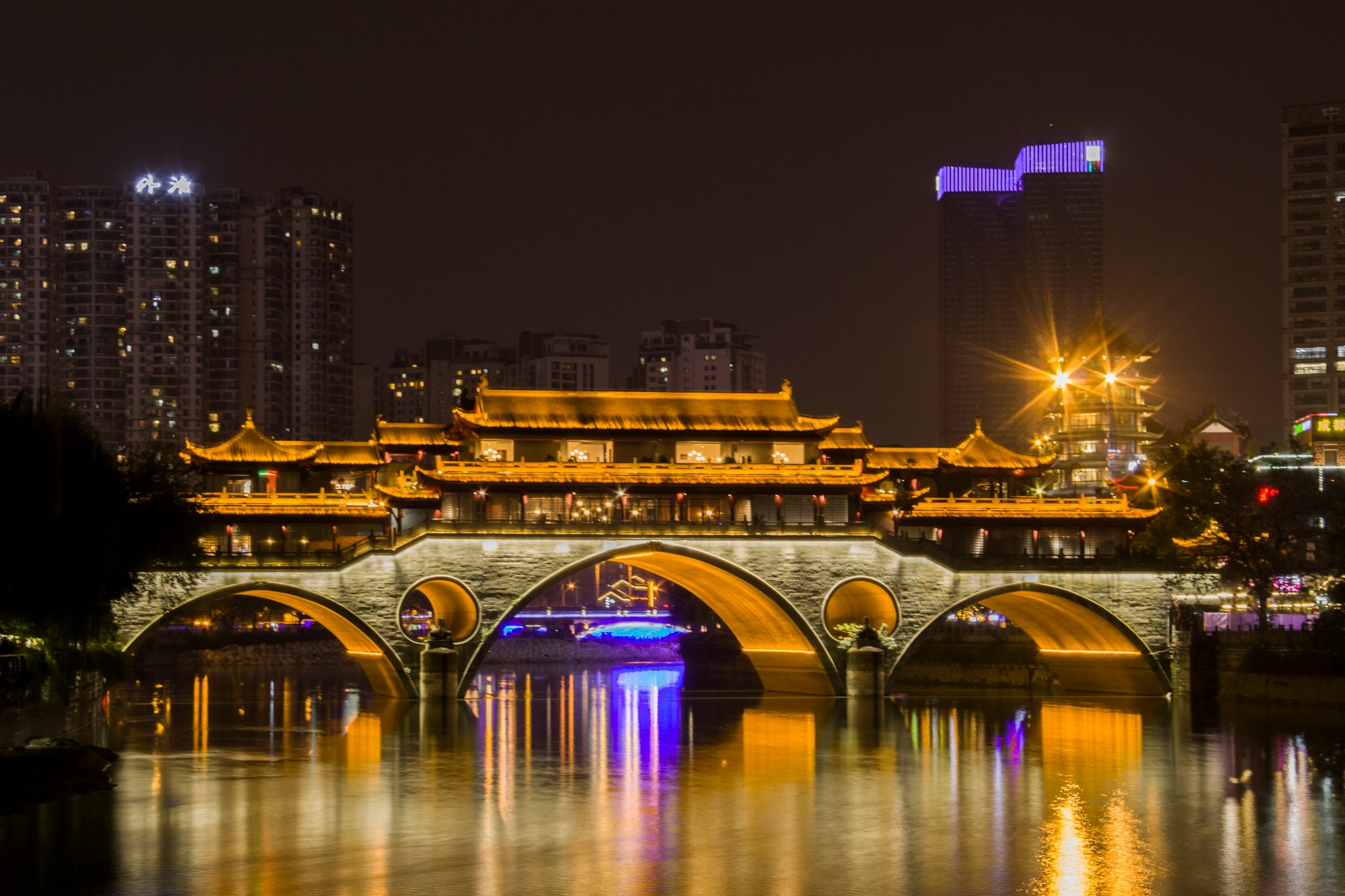
Chengdu's Must-See Classics
I say must-see but our philosophy is that nothing is really must-see (some of them we also didn‘t see, yet). It is much more fun to just explore the city and discover it for yourself.
That being said, those are main tourist attractions of the city — and they are attractions for a reason.
Pandas
When in Chengdu, you simply have to see the pandas — you will see them as decoration and souvenirs anywhere and everywhere, but you probably came to see the real deal.
There are 2 places to consider for your panda visit — the Chengdu Research Base of Giant Panda Breeding and Dujiangyan Panda Valley.
We visited the Research Base, which is accessible by metro + shuttle bus from Chengdu center, but it is the more touristy and crowded alternative.
If you want to see the pandas "in the wild," opt for the Panda Valley, which is also relatively easy to get to with the high-speed rail and DiDi.
 Magda Sawyer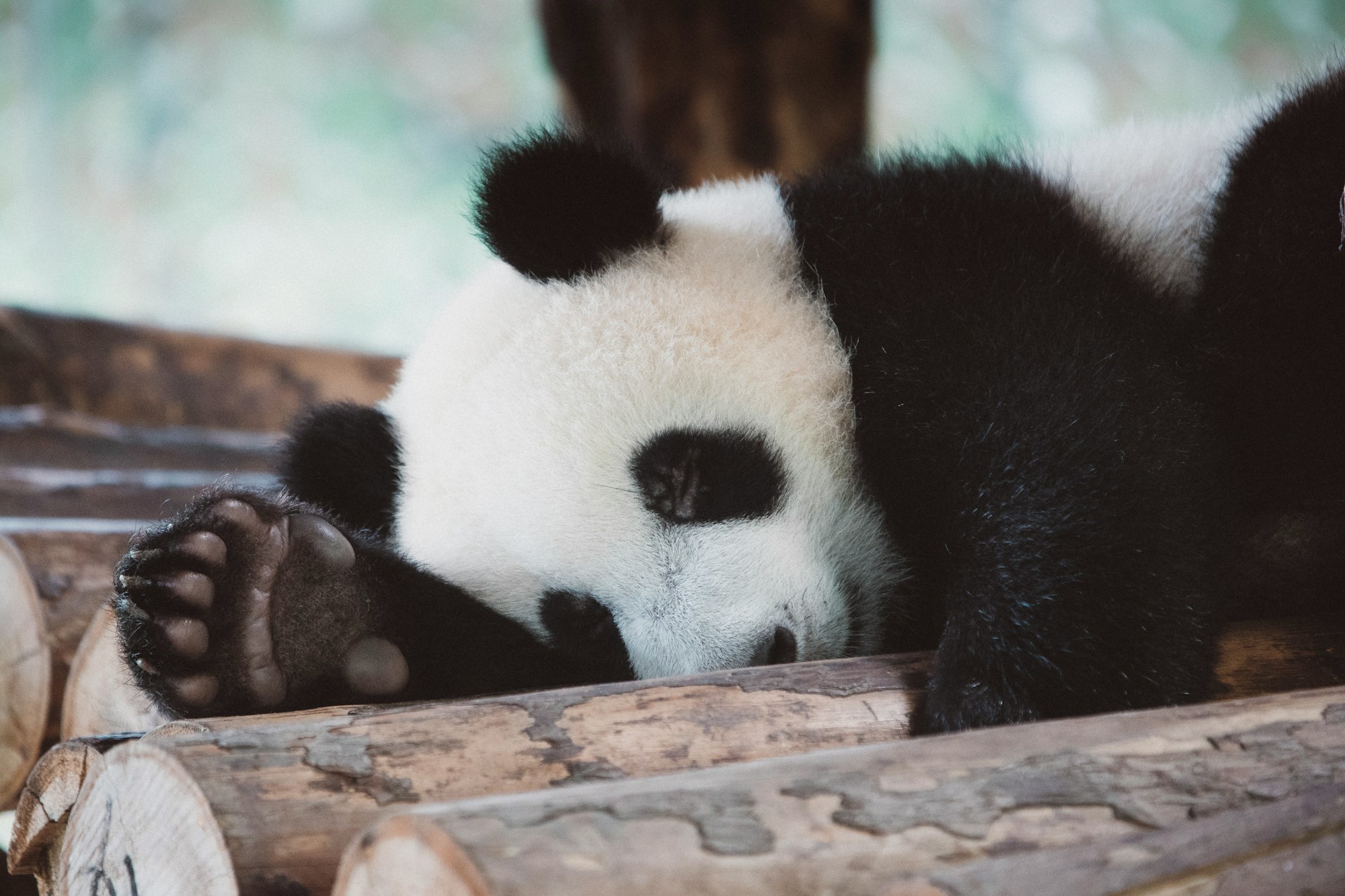
People's Park
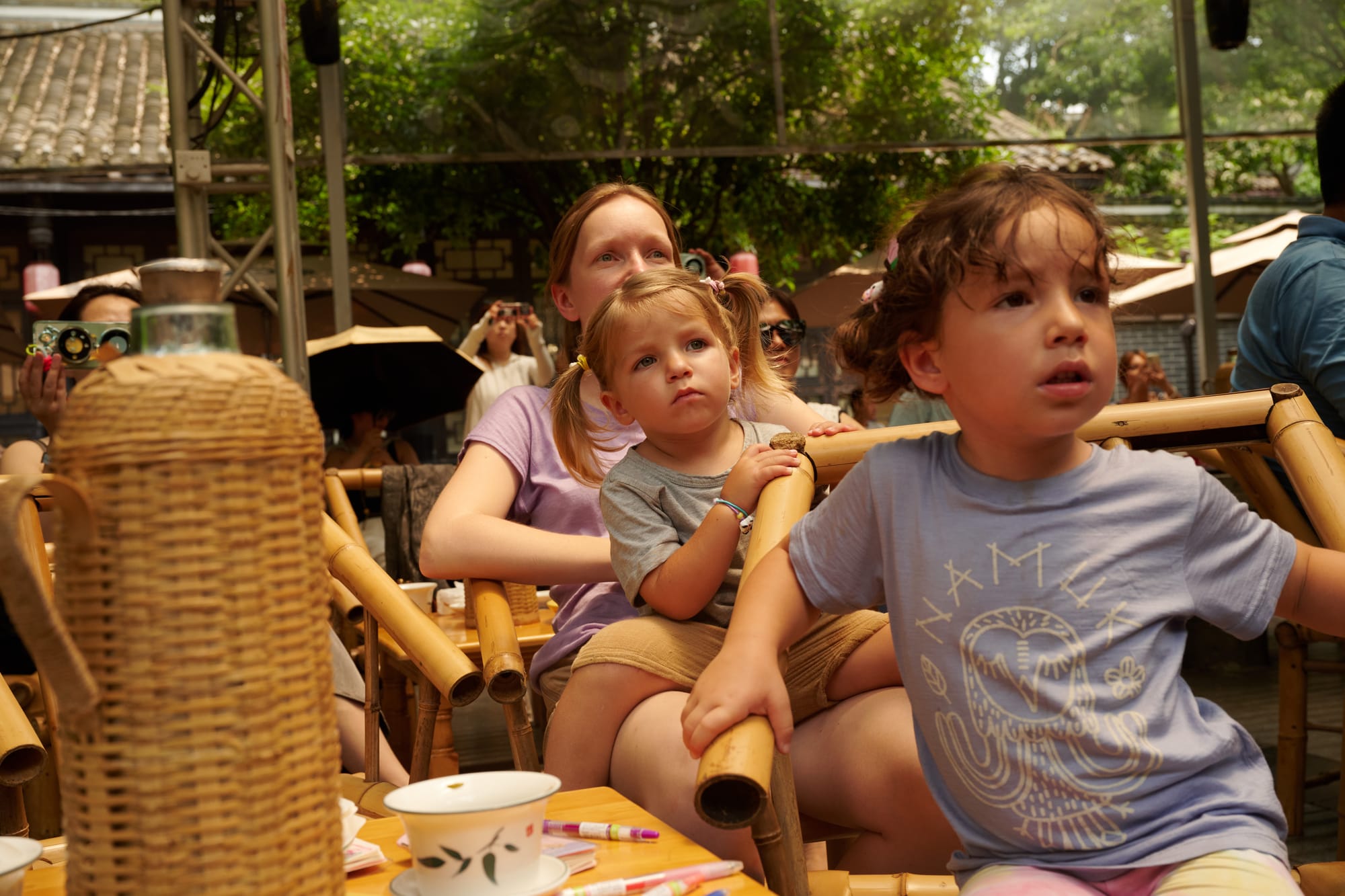
Parks are our favourite thing in China, and People's Park is at the top of our list. Chengdu has a rich tea house culture and People's Park is home to a few of the most famous ones.
In Heming Tea House you can take a longer stop to enjoy tea and watch a Sichuan Opera performance.
 Magda Sawyer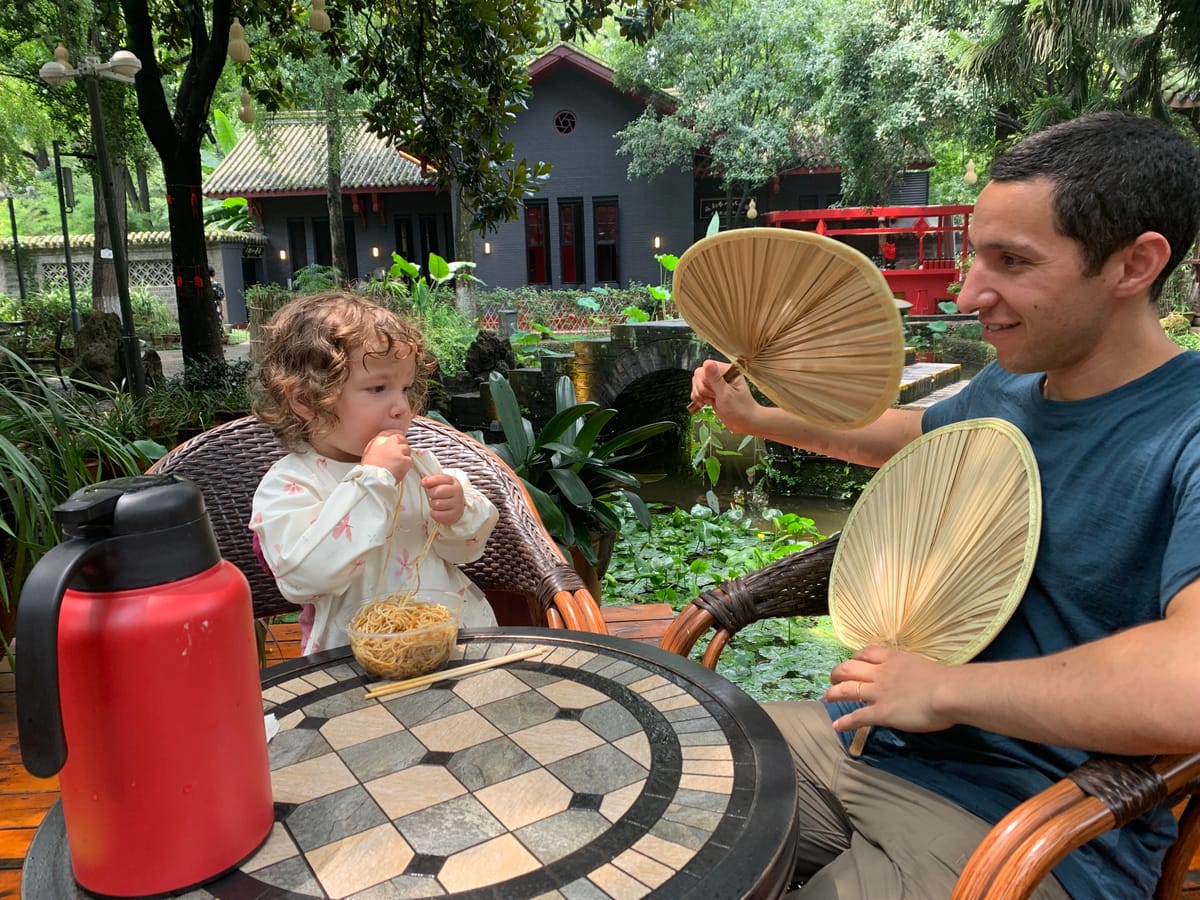
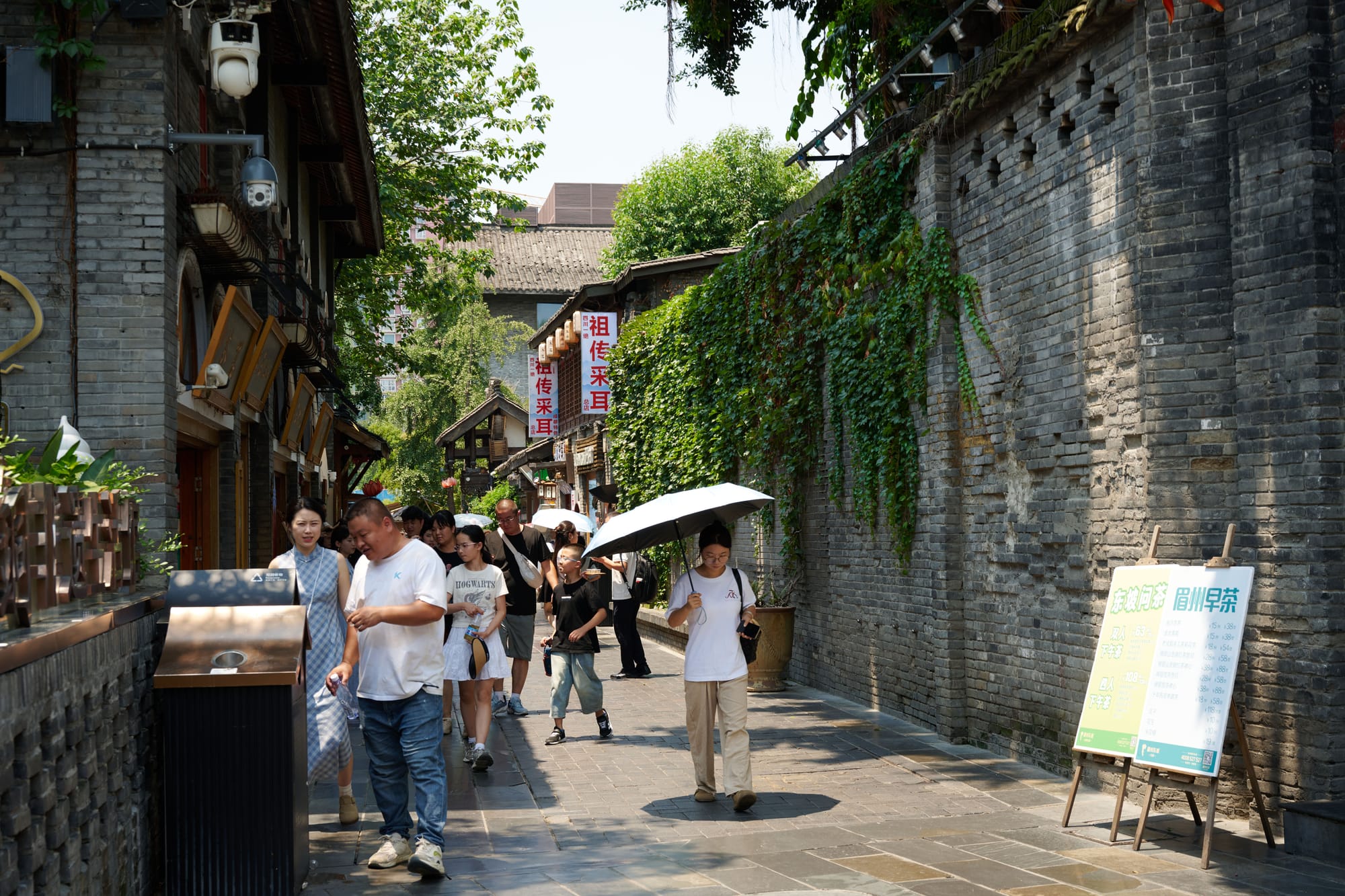
Wide and Narrow Alleys (宽窄巷子)
hree parallel Qing-dynasty alleys — originally built for Manchu military families, now restored with tea houses, street food stalls, craft shops and Sichuan opera venues. Mix of old architecture and modern cafes/bars.
It is a pleasant to stroll tourist street — we went there on our last trip and if you have some time to go, you can enjoy a walk there and souvenirs shopping there. When it comes to food, I would recommend opting for a less touristy neighbourhood.
Jinli Ancient Street (锦里)
antern-lit pedestrian street right next to Wuhou Temple. One of Chengdu's oldest commercial streets, dating back to the Three Kingdoms period. Restored in 2004. Street food stalls, handicraft shops, traditional architecture. Best visited in the evening when the lanterns are lit. More compact than Wide and Narrow Alleys.
Good for: an evening stroll + street food snacking.
Wuhou Temple (武侯祠)
We didn't go inside Wuhou Temple — with two young kids, a temple dedicated to Three Kingdoms military history wasn't going to compete with pandas and hotpot. But if Chinese history is your thing, this is one of the most significant sites in Chengdu. It honors Zhuge Liang, the legendary military strategist, and Liu Bei, emperor of the Shu Kingdom — two figures that most Chinese people know the way Europeans know Julius Caesar.
The temple complex is right next to Jinli Ancient Street, so you'll walk past the entrance anyway. If the Three Kingdoms era fascinates you, combine the two. If you are short on time, just take a look from outside, and then head straight to Jinli for the street food and lanterns.
Food Experiences You Can't Miss
Sichuan is famous for its spicy, complex cuisine, but Chengdu, designated as a UNESCO City of Gastronomy, takes it to another level.
One of the reasons we loved Chengdu so much is because you never have to think much about where to eat — food is everywhere and everything is delicious. So I don't think you need to look up any particular places before going there, because you will just see what you want to eat.
There are a few things that deserve a special mention.
Hotpot Hanfu Experience
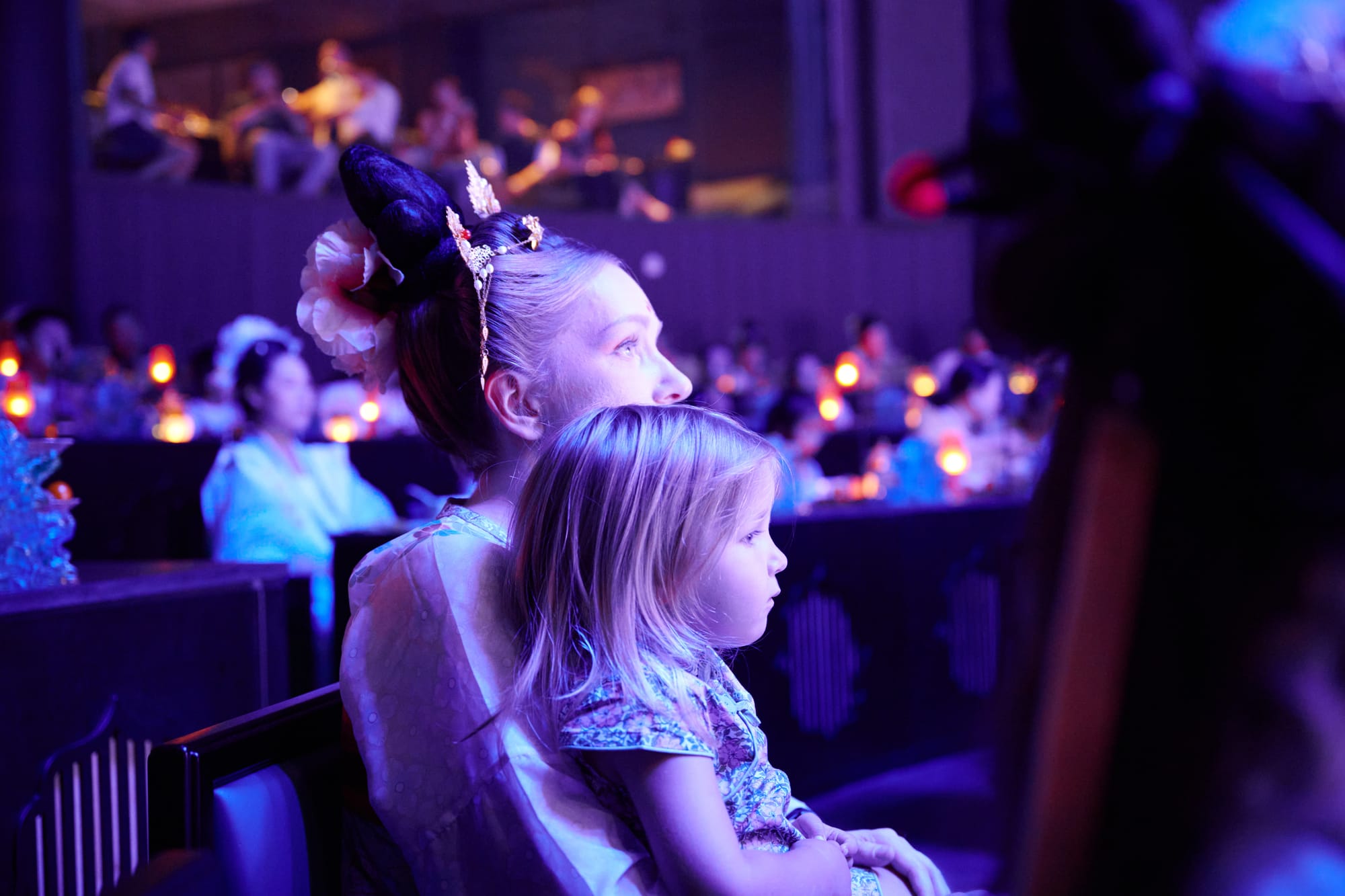
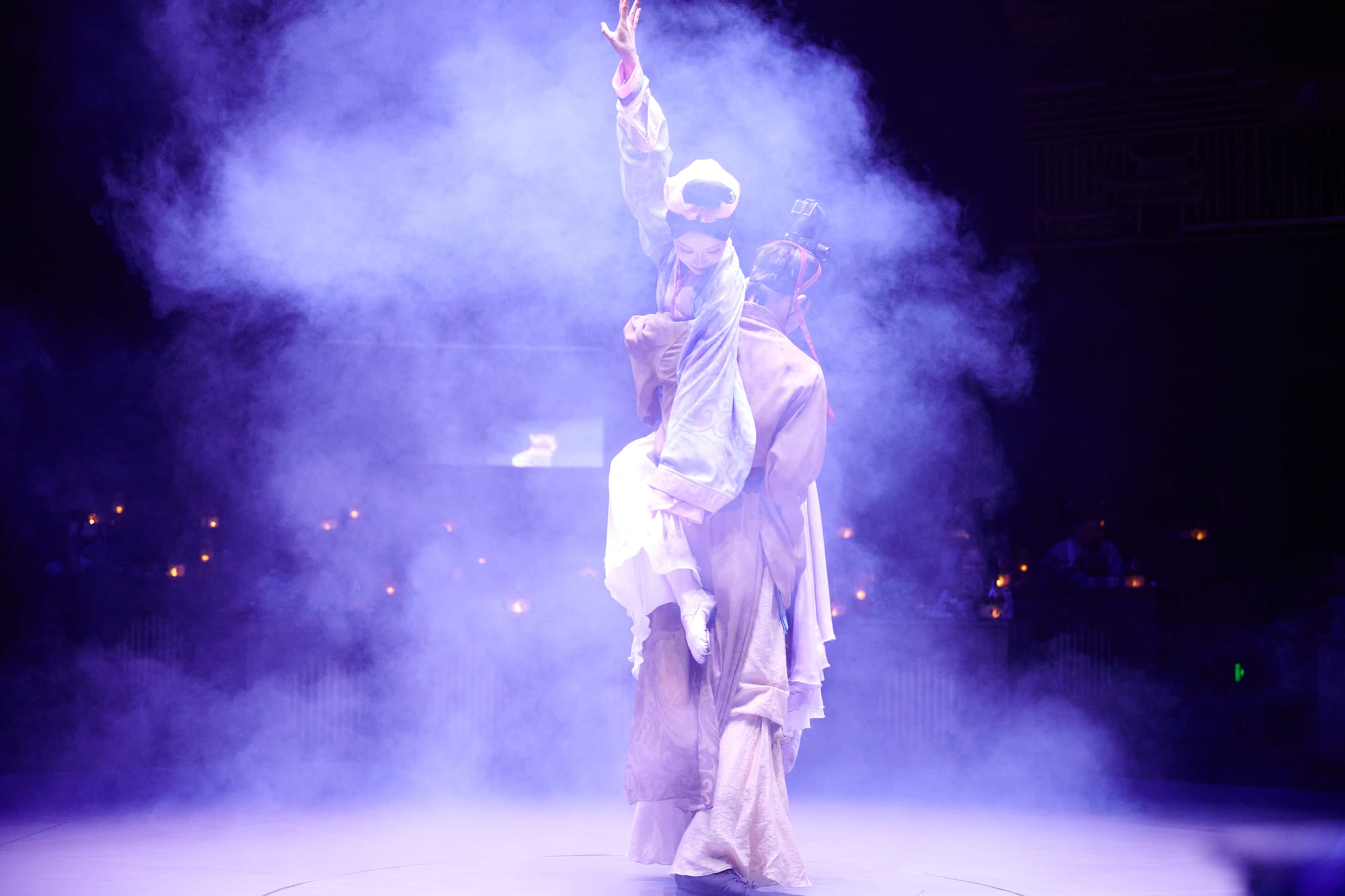
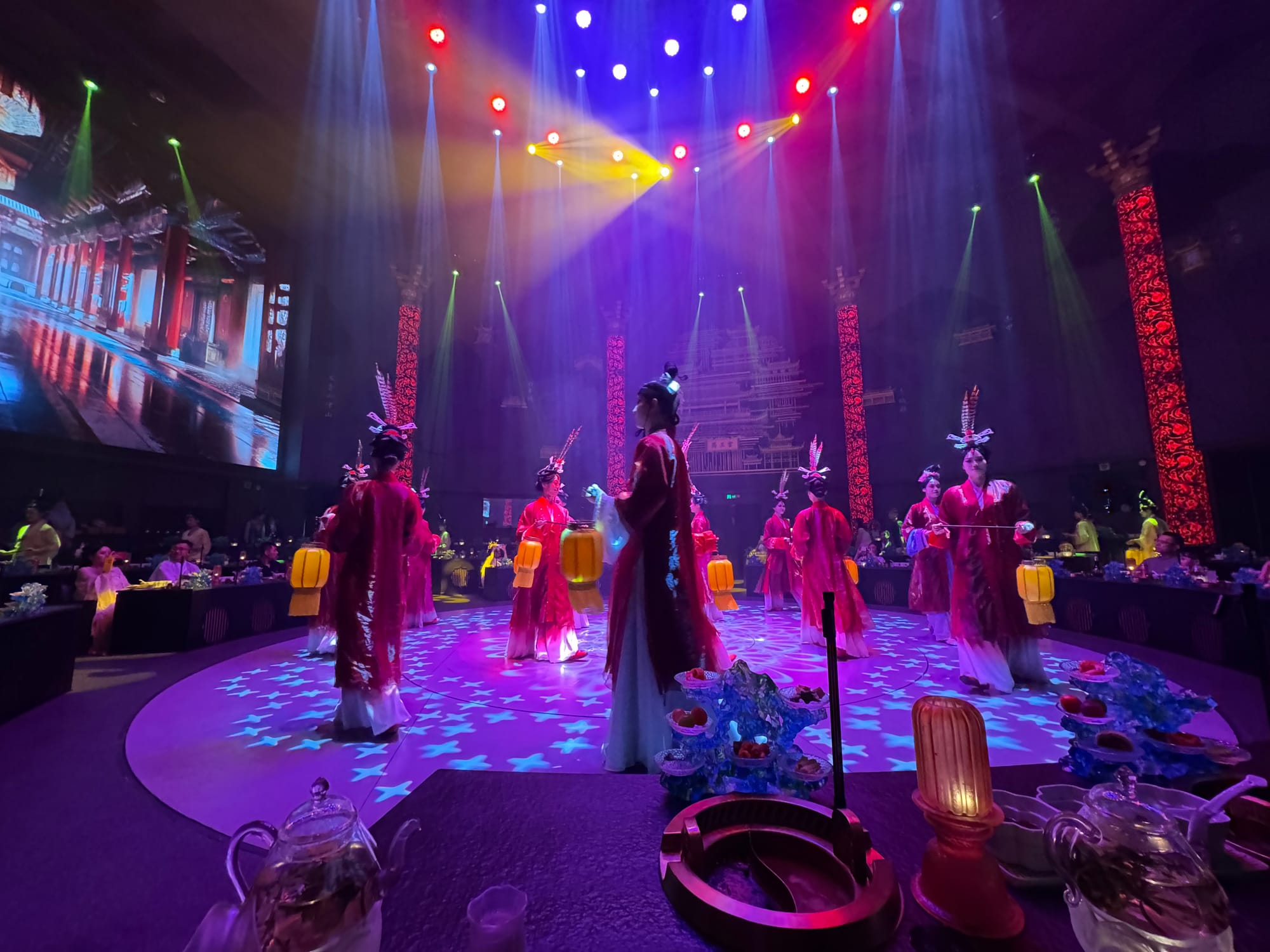
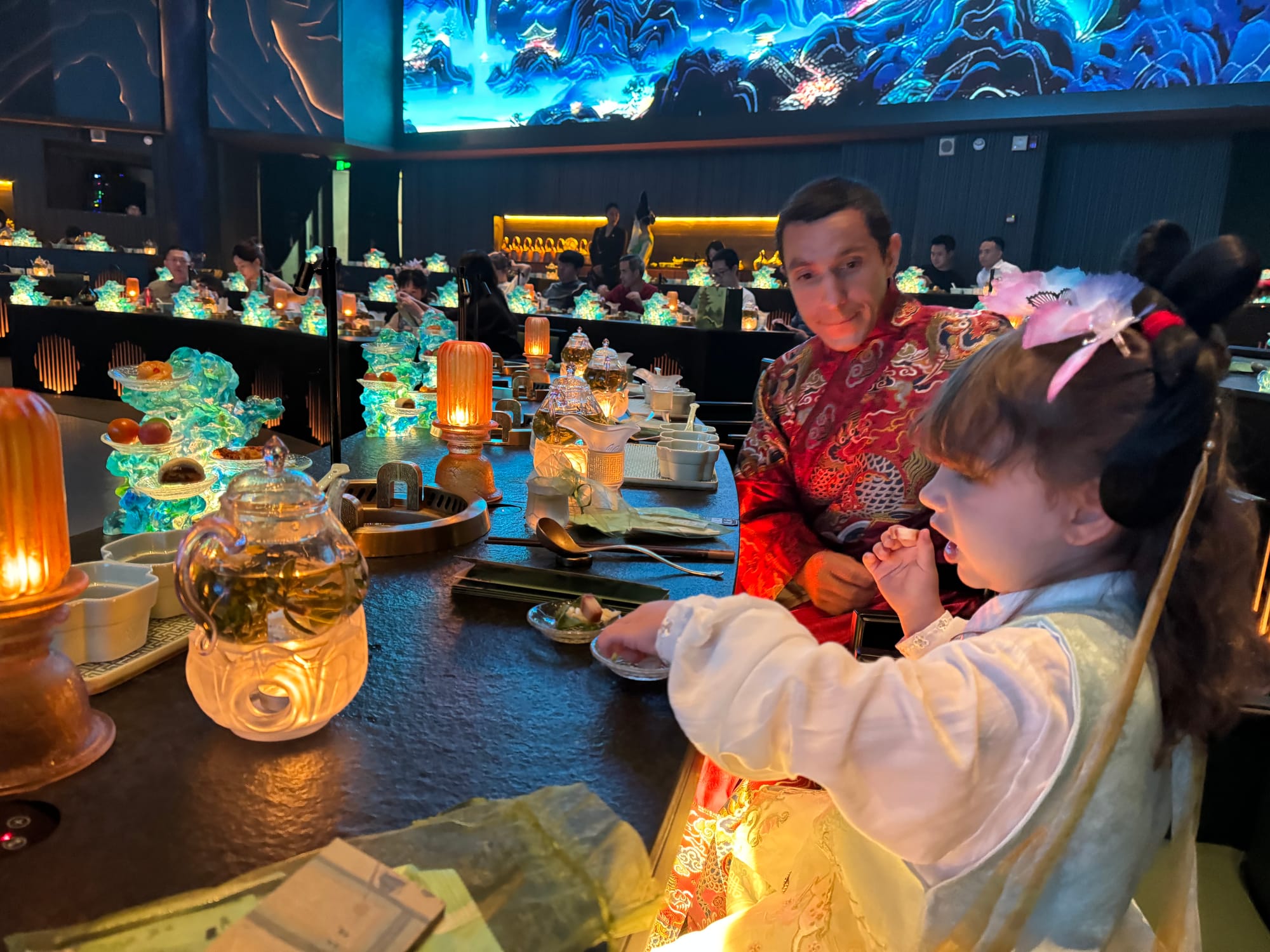
All across China, restaurants offering a banquet experience are gaining popularity — and in Chengdu, you can experience hotpot in a hanfu restaurant. Both us and our kids loved the experience of dressing up, eating gourmet hotpot and watching a performance that was a mix of traditional Sichuan opera, acrobatics and modern dance.
The restaurant we went to is called HongDingYan and is located in the High-Tech Zone.
Chen Mapo Tofu Restaurant
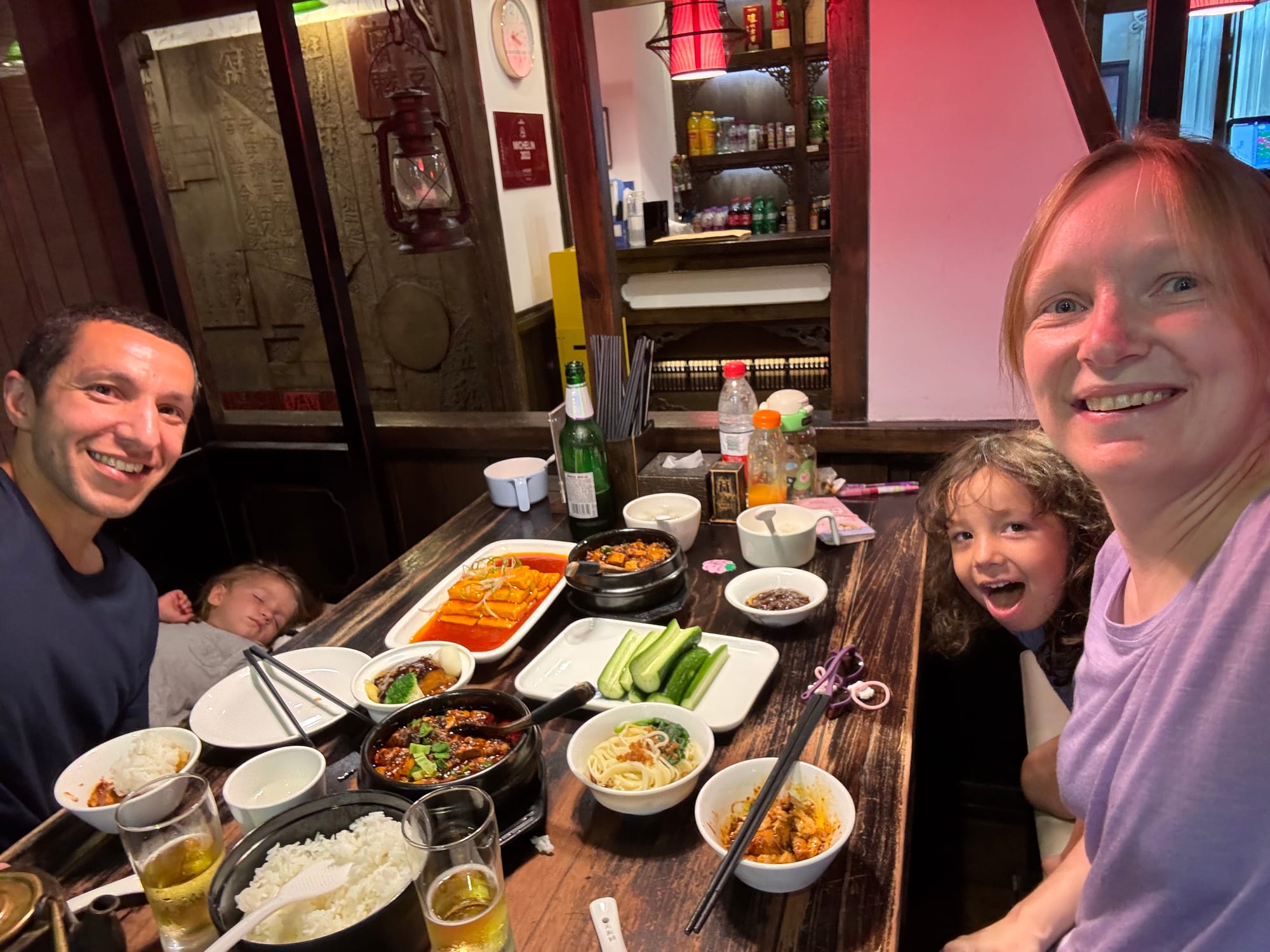
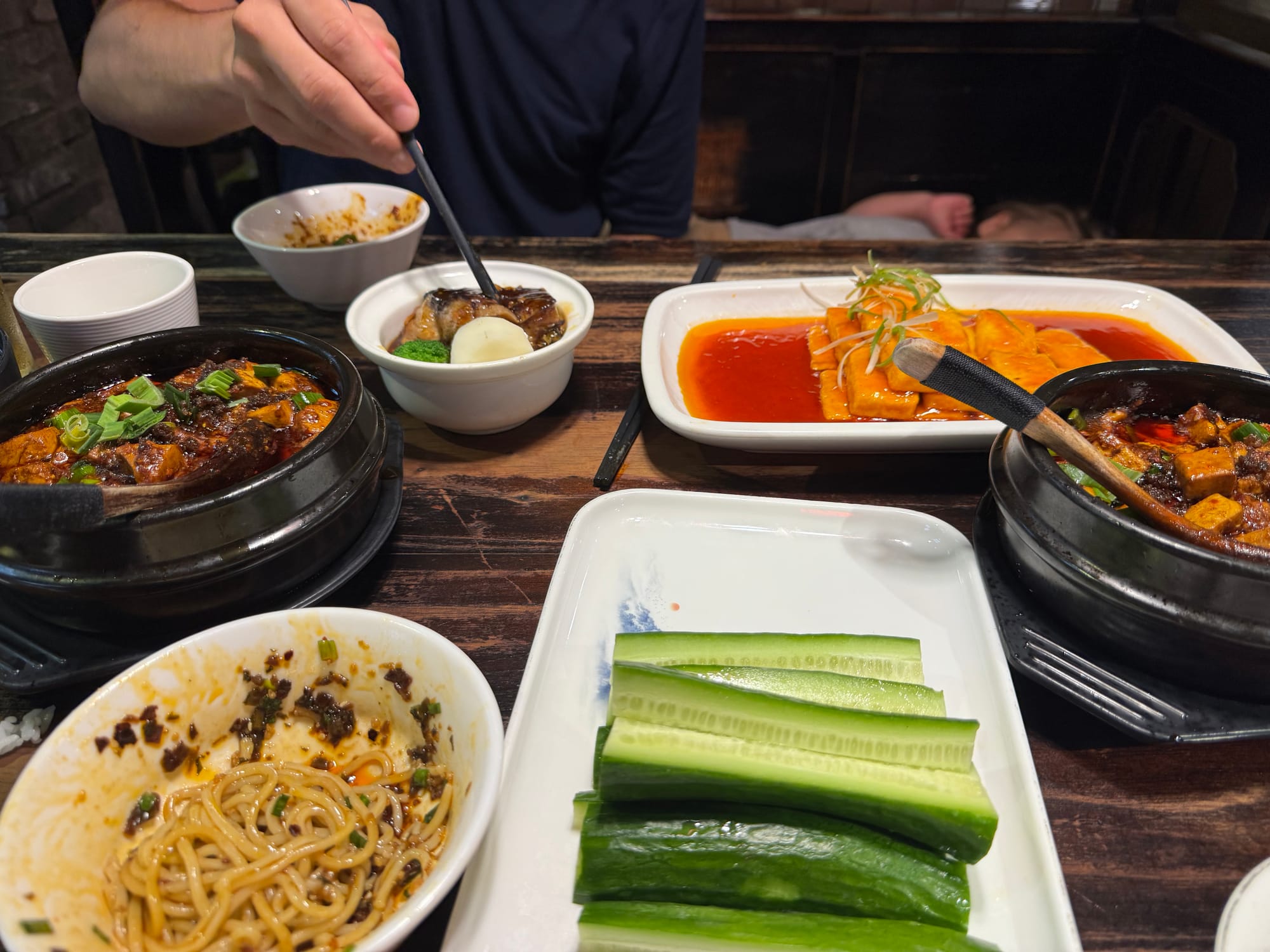
Supposedly the birthplace of the mapo tofu dish, this restaurant is really very, very good. Not only the mapo tofu itself, but all the dishes we tried. And the prices are surprisingly affordable — for our family of 4 we ordered a meal that would easily satisfy 4 adults, and we paid 240 RMB ($30) for everything including drinks — very reasonable price for what we ate.
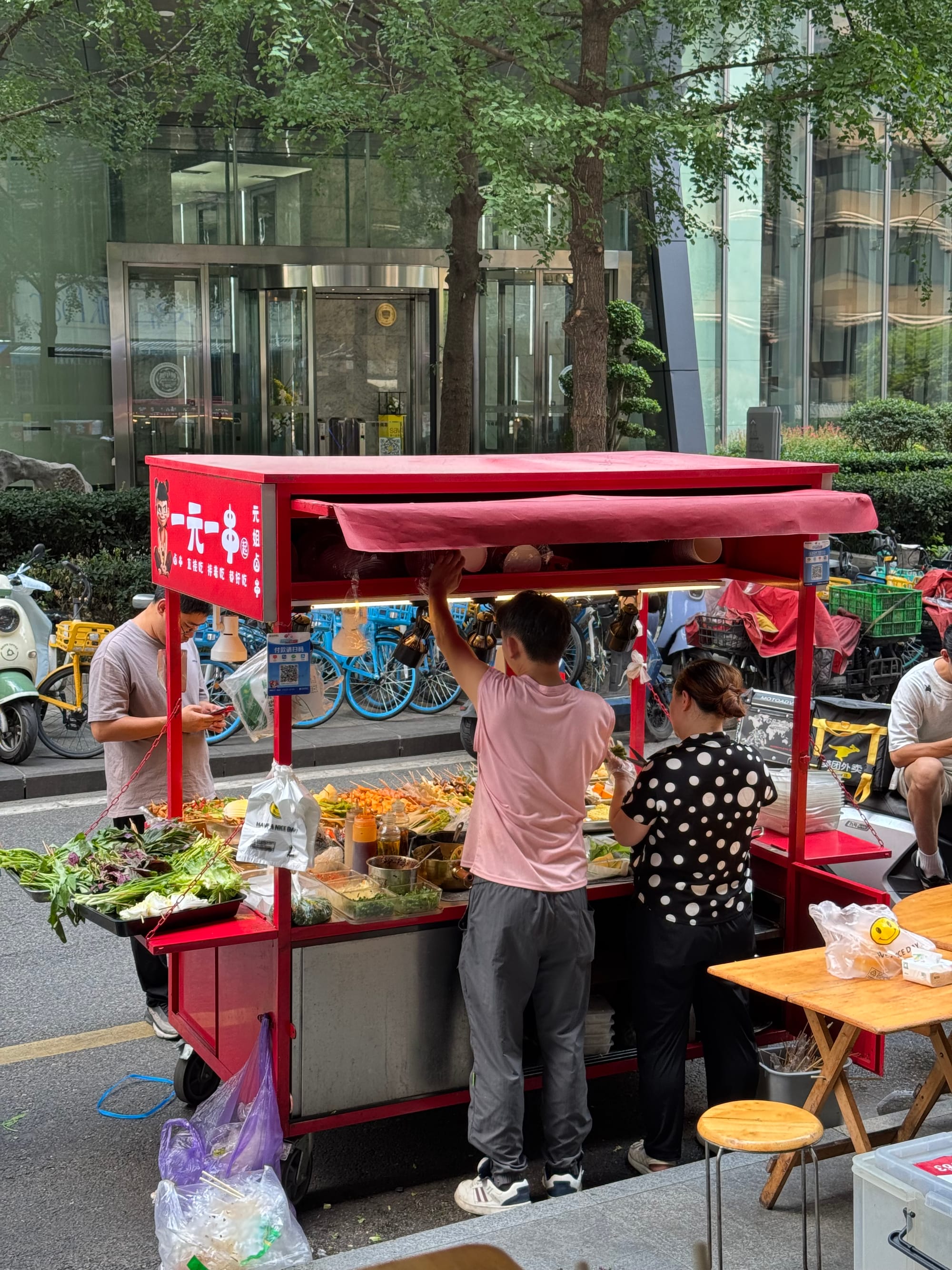
Street Food Culture
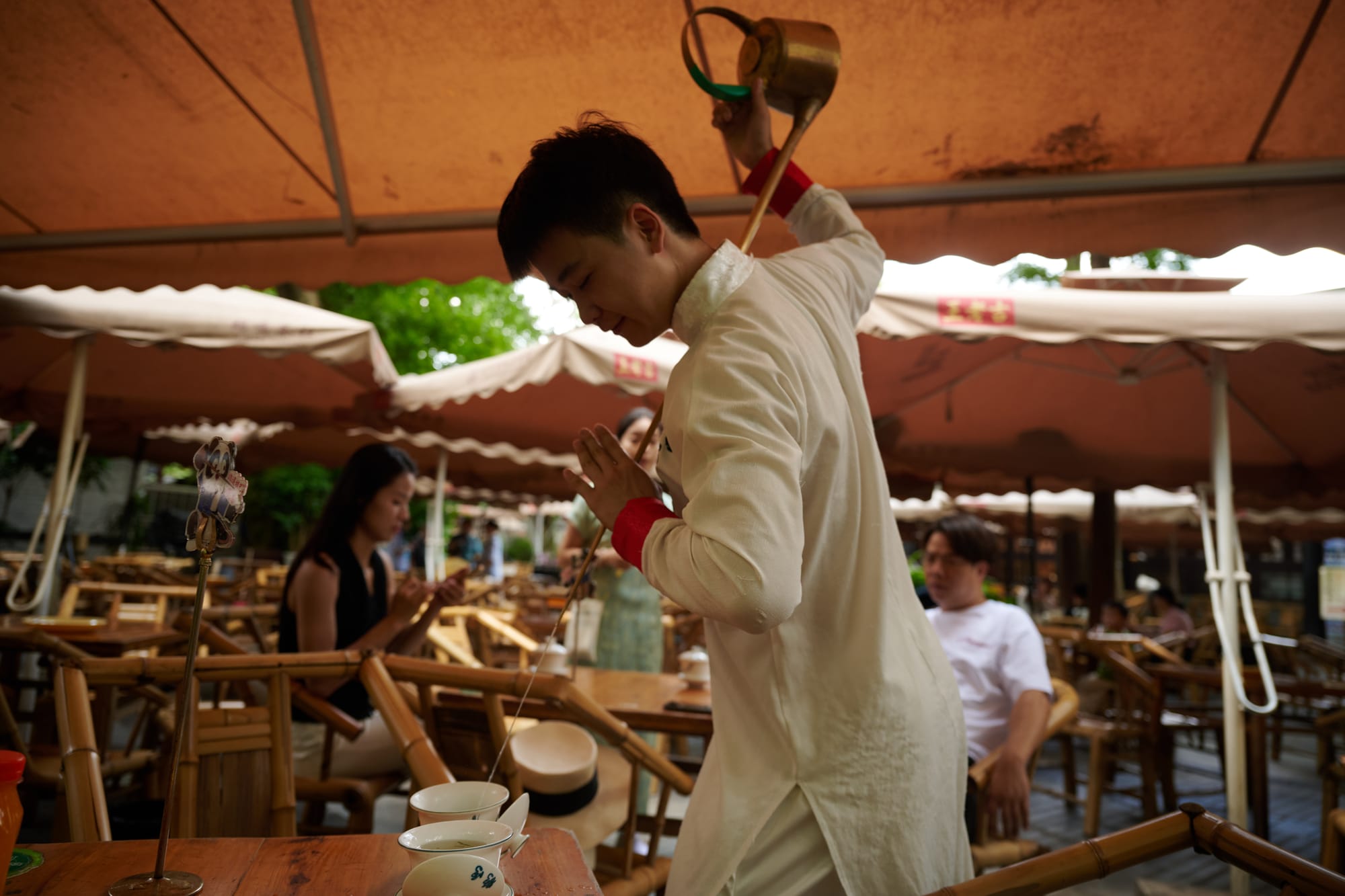
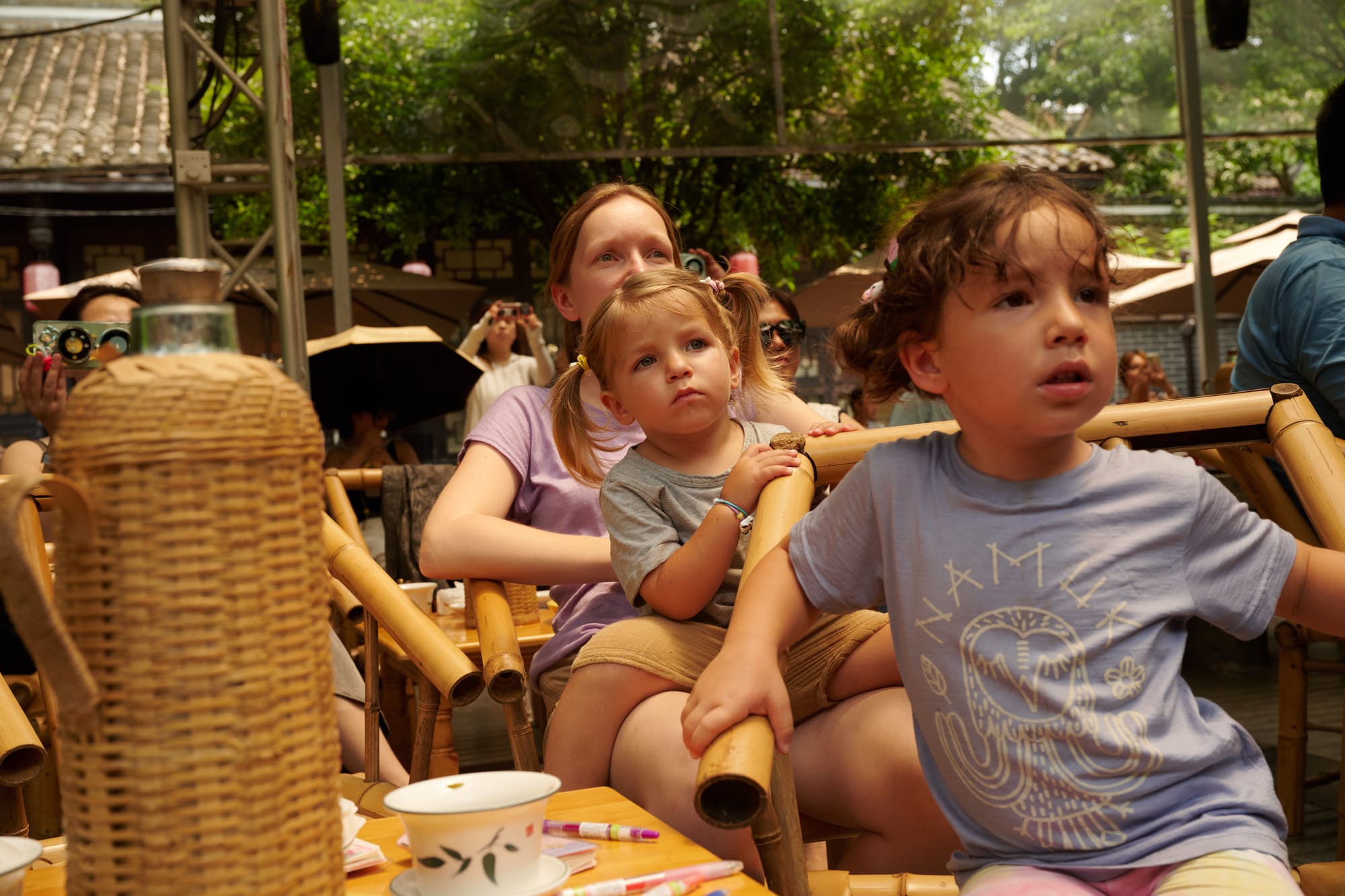
Tea House Culture
Tea houses are where traditionally people spent their time drinking tea, socialising, playing Mahjong and even getting their ears cleaned.
It is a great way to really experience the city and it‘s spirit.
Modern Chengdu
While most people (like us at first) still expect to travel to China and admire temples and ancient towns, the interesting part is how the cities combine the old with the new. And there is plenty of new to see in Chengdu.
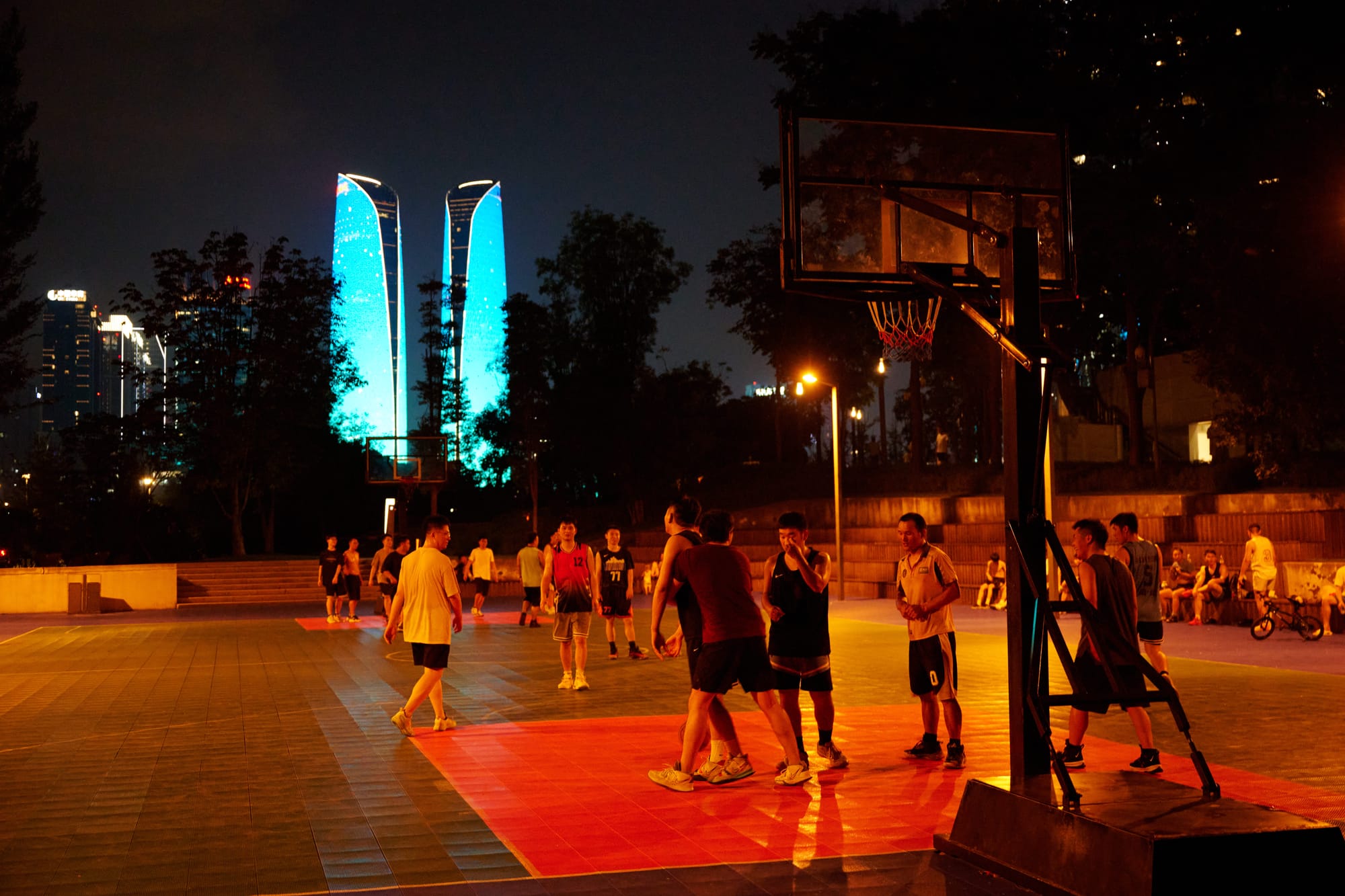
Twin Towers + Jiaozi Park
Great evening activity, not only with the kids — the park has a basketball court, outdoor gym, a playground and a beautifully lit promenade.
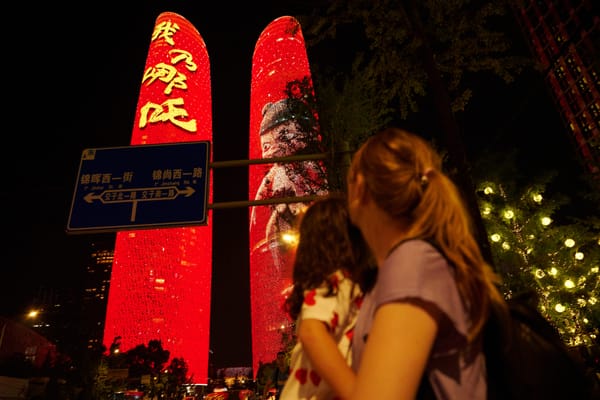
After the park, a short DiDi ride away there is a viewing point for the Twin Towers that at night become an amazing light show displaying various animations — whales, characters from the Nezha movie, and much more.
Taikoo Li Shopping Center + Fangsuo Commune Bookstore
The shopping center has very interesting architecture and perfectly showcases modern China. In the complex there is a famous 3D LED display with adverts and pandas coming out of the screen.
We visit the Taikoo Li mostly to go to an amazing Fangsuo Commune bookstore, which is a place that inspired me to learn Chinese and discover more of Chinese culture.
<!-- EXPAND: 1-2 more sentences about Fangsuo — what makes it special (underground cave-like design, mix of books/design/fashion, it's worth visiting even if you don't read Chinese). This is a personal and unique recommendation that differentiates your post. -->
IFS Climbing Panda + Chunxi Road
<!-- TO WRITE: 1-2 paragraphs. The giant climbing panda sculpture on top of the IFS building is one of Chengdu's most photographed landmarks — visible from the street and accessible via the rooftop terrace. Chunxi Road itself is the main commercial pedestrian street — busy, modern, lit up at night. Mention that this area + Taikoo Li are essentially the same neighborhood and can be explored together. If you stayed near here (you did), mention that. -->
Global Center Paradise Island Water Park
Maybe not attractive for everyone, but if you happen to travel in Chengdu during the summer heat, it is a great idea for something to do during the day. The largest (by volume) building in the world, Global Center, is a location of a giant water park where you can find a cool escape from the heat.
Next to it there is also an underground shopping mall with a park on top that also showcases modern architecture and is spectacular in the evening with feature lights.
 Magda Sawyer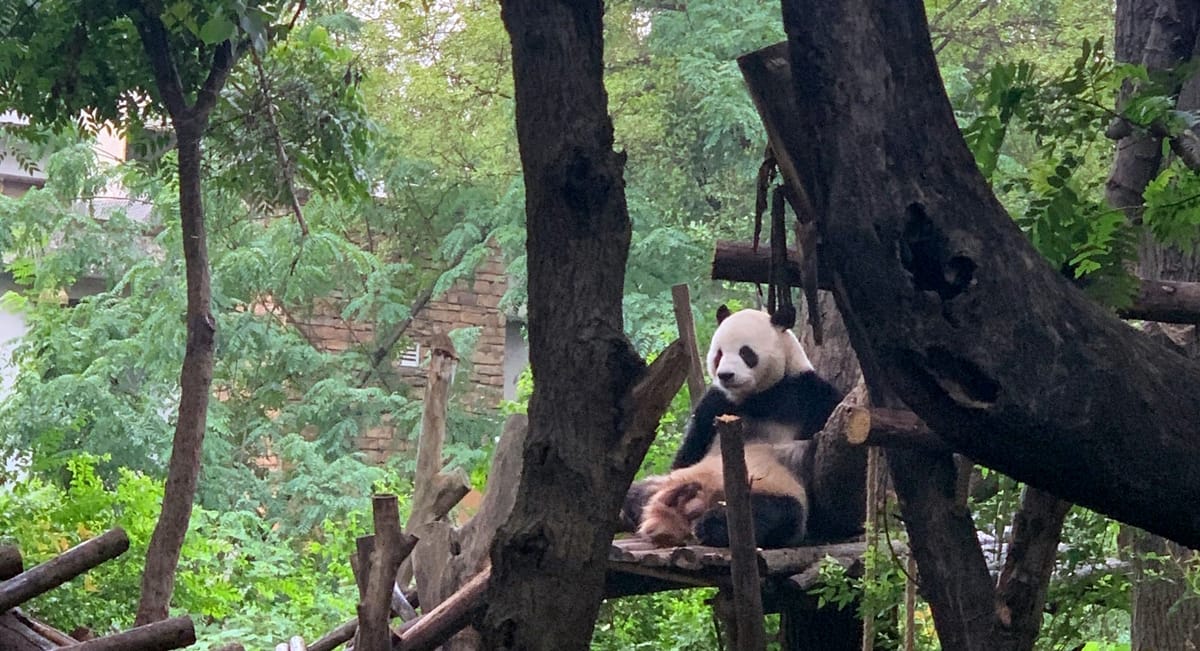
Sichuan Opera
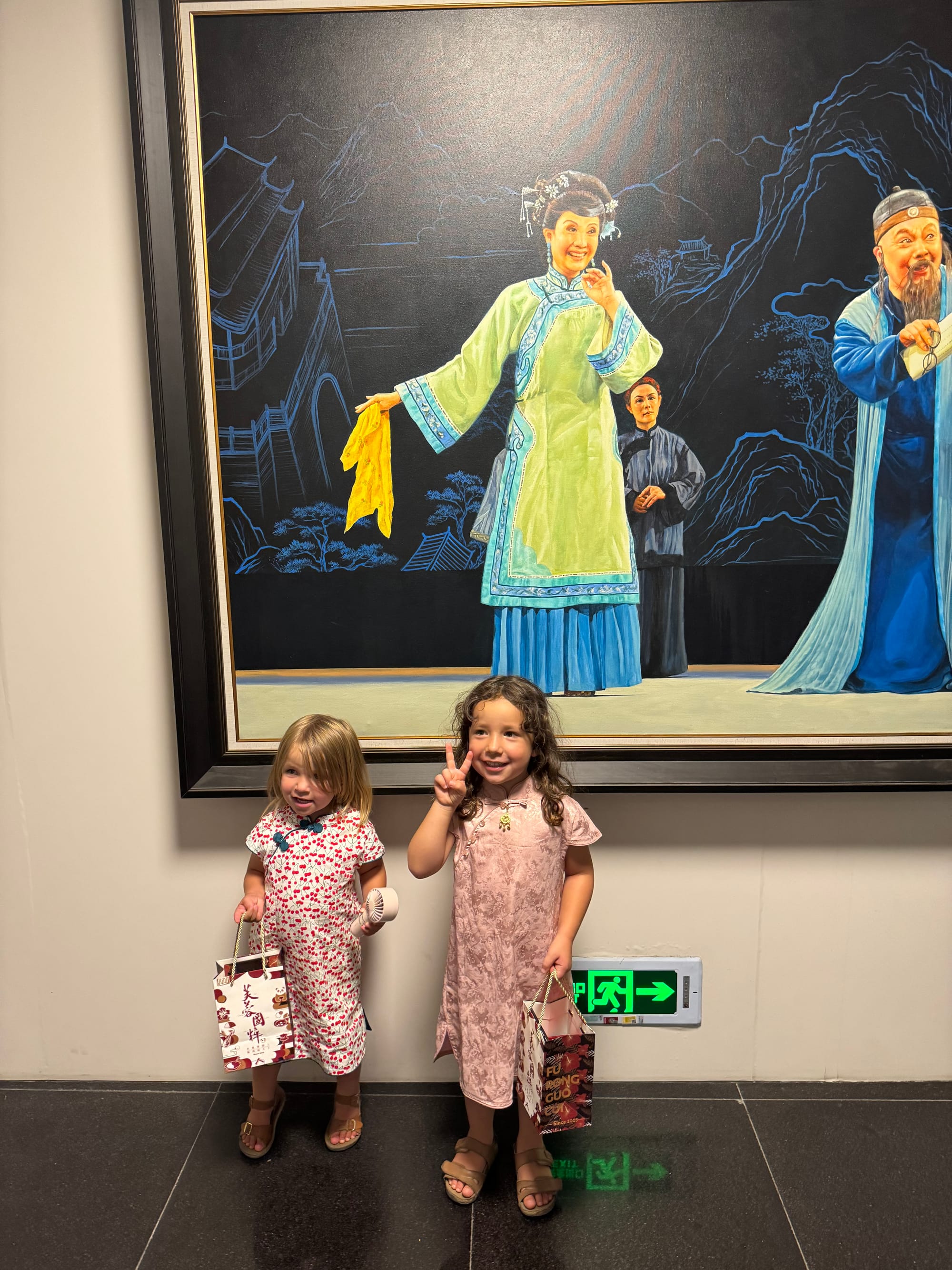
If you have visited and enjoyed Sichuan Opera in a tea house in People's Park, you will definitely like the real deal — an actual full-length performance in a theatre. In all parts of the show, actors are incredibly skilled and entertaining, but the Bian Lian — face changing — including changing masks of a puppet, is simply breathtaking.
It is around 80min and our kids simply loved it, so at least based on our experience I would say it is suitable for families with kids 2years+.
Temples, Museums & Culture
Chengdu's cultural side goes deeper than Sichuan Opera and tea houses. We haven't explored these ourselves yet — they're on our list for next time — but they're worth knowing about when planning your days.
Wenshu Monastery (文殊院)
Chengdu's best-preserved Buddhist monastery, still active with monks living on the grounds. Entry is free, the courtyards are peaceful and full of ancient trees, and there's a well-known vegetarian restaurant inside that locals swear by. If you need a quiet morning away from the crowds, this is the place. It's centrally located and easy to fit into a day of exploring.
Chengdu Museum
A modern, free museum near Tianfu Square covering the city's history from the ancient Shu kingdom to the present day. Not a must-do, but a solid option if you have a rainy afternoon or need a break from the heat. Several floors, well-curated, and a lot more interesting than you'd expect from a city museum.
Sanxingdui Museum
Located about an hour north of Chengdu, Sanxingdui is home to one of the most mysterious archaeological discoveries in Chinese history — thousands of bronze masks, gold artifacts and jade objects from a civilization that thrived 3,000 to 5,000 years ago and then seemingly vanished. The museum is impressive even just from architectural point of view, but it will be more than a half day trip.
Chengdu After Dark
Chengdu is known in China for its unique, lively and open night life scene (including LGBT community). Traveling with kids we haven‘t been
Twin Towers Light Show
As mentioned above, the Twin Towers are meant to be seen after dark. The light show is truly spectacular.
Anshun Bridge (安顺廊桥) + Riverside
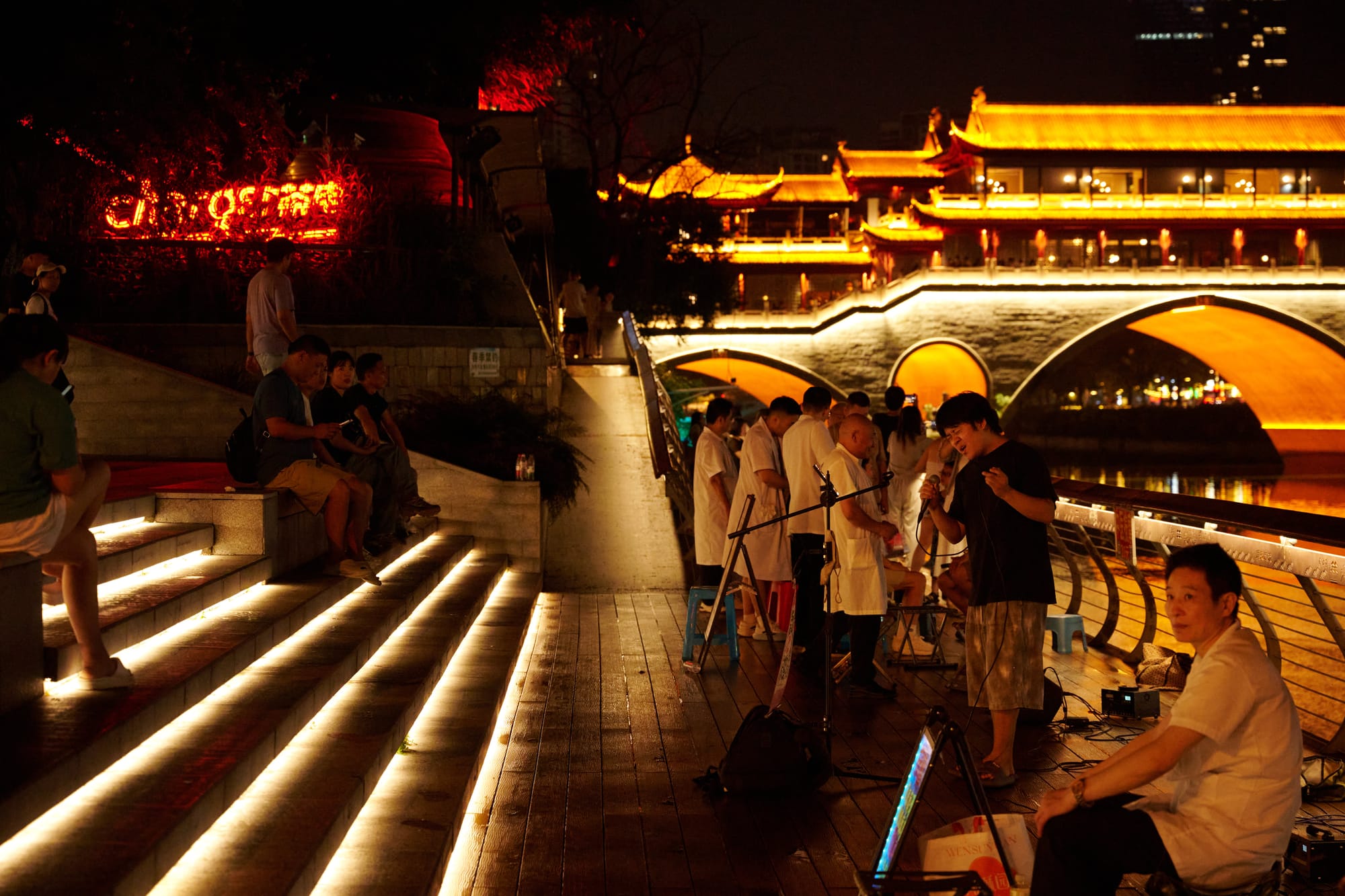
Beautiful illuminated covered bridge over the Jin River — one of Chengdu's most photographed night spots. The surrounding area has a lively bar/restaurant strip along the riverbank. Good for an evening walk after dinner.
If like us you are traveling with kids and cannot really go for a drink in the evening, taking a walk along the river near the bridge you can still experience charm of the night life — people singing, dancing and simply enjoying themselves.
Jinli Street After Dark
As many other places in China, Jinli is best visited in the evening when the red lanterns are glowing. Street food stalls, shadow puppet shows, craft vendors. More atmospheric than during the day.
Late Night Street Food
Chengdu is a city that eats late, so if you are travelling in the peak of summer heat, there will be plenty for you to see and eat until late and night so that you can spend the hight og the midday trip at home.
Day Trips from Chengdu
Chengdu is a natural base for some of Sichuan's most spectacular sights. We haven't done any of these ourselves — we're much more the type to spend an extra day getting to know the city than to pack into a tour bus at 7am. But we know that for many travelers these are the main reason to come to Sichuan in the first place, so here's what you need to know.
Leshan Giant Buddha (乐山大佛)
The world's tallest stone Buddha — 71 meters carved into a cliff face during the Tang dynasty, staring out over the confluence of three rivers. It's a UNESCO World Heritage Site and one of the most popular day trips from Chengdu, about 2 hours each way by high-speed train.
You have two options for seeing it: walk down the narrow cliff-side stairs right next to the statue (impressive but steep, crowded, and slow-moving in peak season) or view it from a boat on the river (easier, less up-close but you get the full scale of it). A half day at the site is enough for the highlights.
This is probably the day trip we'd do first if we ever manage to peel ourselves away from the tea houses long enough.
Dujiangyan Irrigation System + Mount Qingcheng
Dujiangyan is a 2,200-year-old irrigation system that still works — a UNESCO World Heritage Site about an hour from Chengdu by train. It's the kind of place where you stand on a bridge watching water being split and redirected by engineering designed before the Roman Empire, and it quietly blows your mind.
Most visitors combine it with Mount Qingcheng, considered the birthplace of Taoism — misty trails winding through mossy temples under ancient cedar trees. Together they make a full day trip. Worth noting: the Dujiangyan Panda Base (the less crowded alternative to the Research Base in the city) is also in this area, so you could combine pandas with the irrigation system if you're short on time.
Mount Emei (峨眉山)
One of the Four Sacred Buddhist Mountains of China and another UNESCO site, about 2 hours from Chengdu. The highlight is the Golden Summit at over 3,000 meters, where a giant golden Puxian Buddha statue rises above the clouds. This one requires more commitment than Leshan — a full day minimum, or better yet an overnight stay to catch the sunrise from the top. For travelers who want both culture and serious natural scenery, this is the one.
Jiuzhaigou Valley
Not a day trip — this requires 2–3 days from Chengdu — but worth mentioning because the turquoise alpine lakes, waterfalls, and forested valleys are among the most stunning landscapes in China. If you have the time and are willing to make the journey, it's the kind of place that you will get amazing pictures from.
From the experiences we have from different Chinese national parks, I would imagine it is not a place to look for solitude, so prepare for heavy tourist infrastructure and crowds.
Practical Info for Visiting Chengdu
Best Time to Visit
Spring (March–May) and autumn (September–November) offer the most comfortable weather and clear skies. Summers are hot and humid — the pandas are less active and you'll want indoor escapes like the Global Center water park. Winters are mild but grey and overcast. Avoid Golden Week (Oct 1–7) and Chinese New Year unless you enjoy crowds.
We visited in the summer both times and it was prohibitively hot — it was still a lot of fun, but if you have a chance to visit in a less hot time, might be a good idea.
Getting Around
Metro in Chengdu covers most places you would like to visit. If you are in a rush or there is no convenient metro connections, DiDi is the way to go — really easy to get around this way.
 Magda Sawyer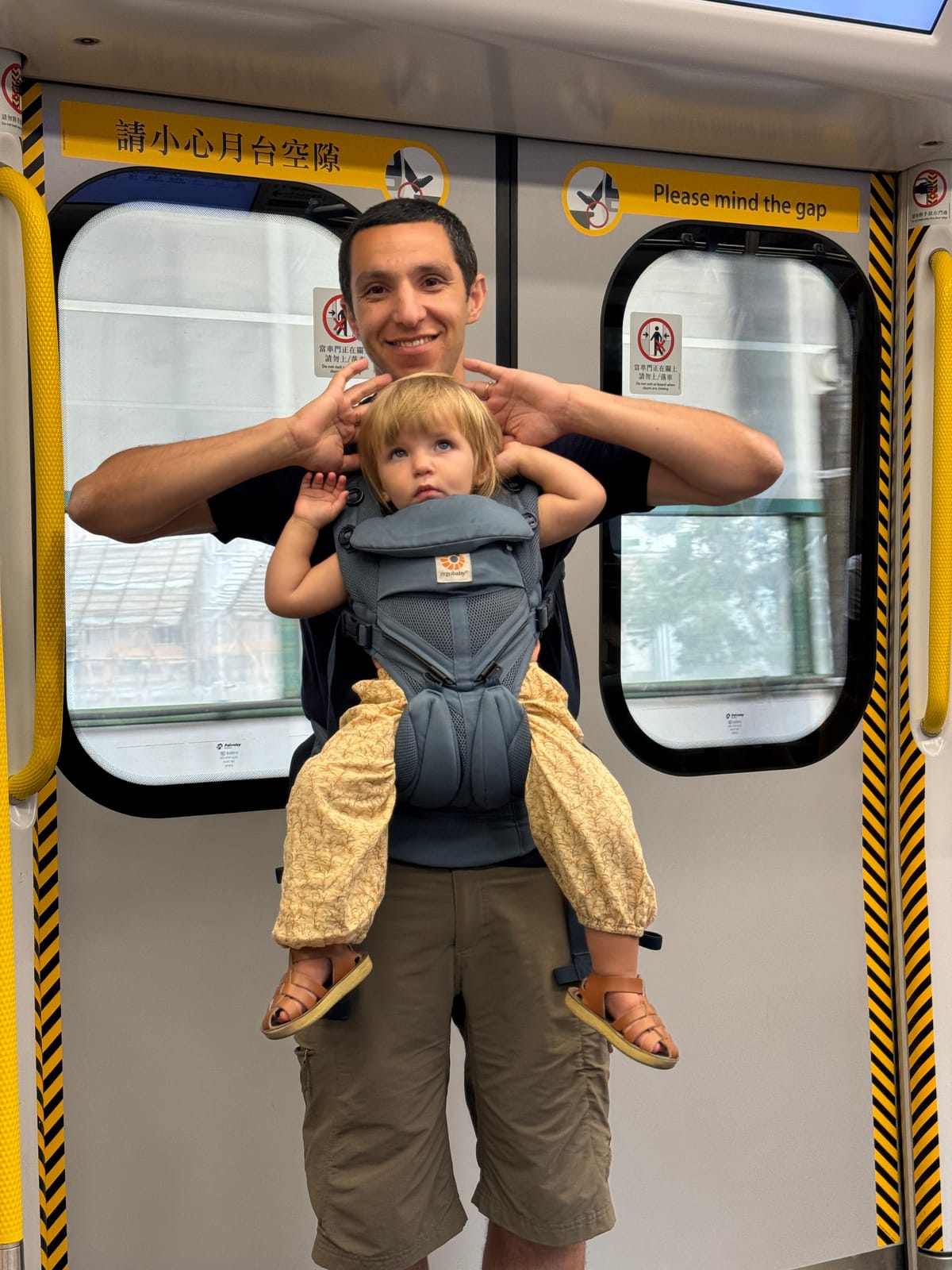
 Magda Sawyer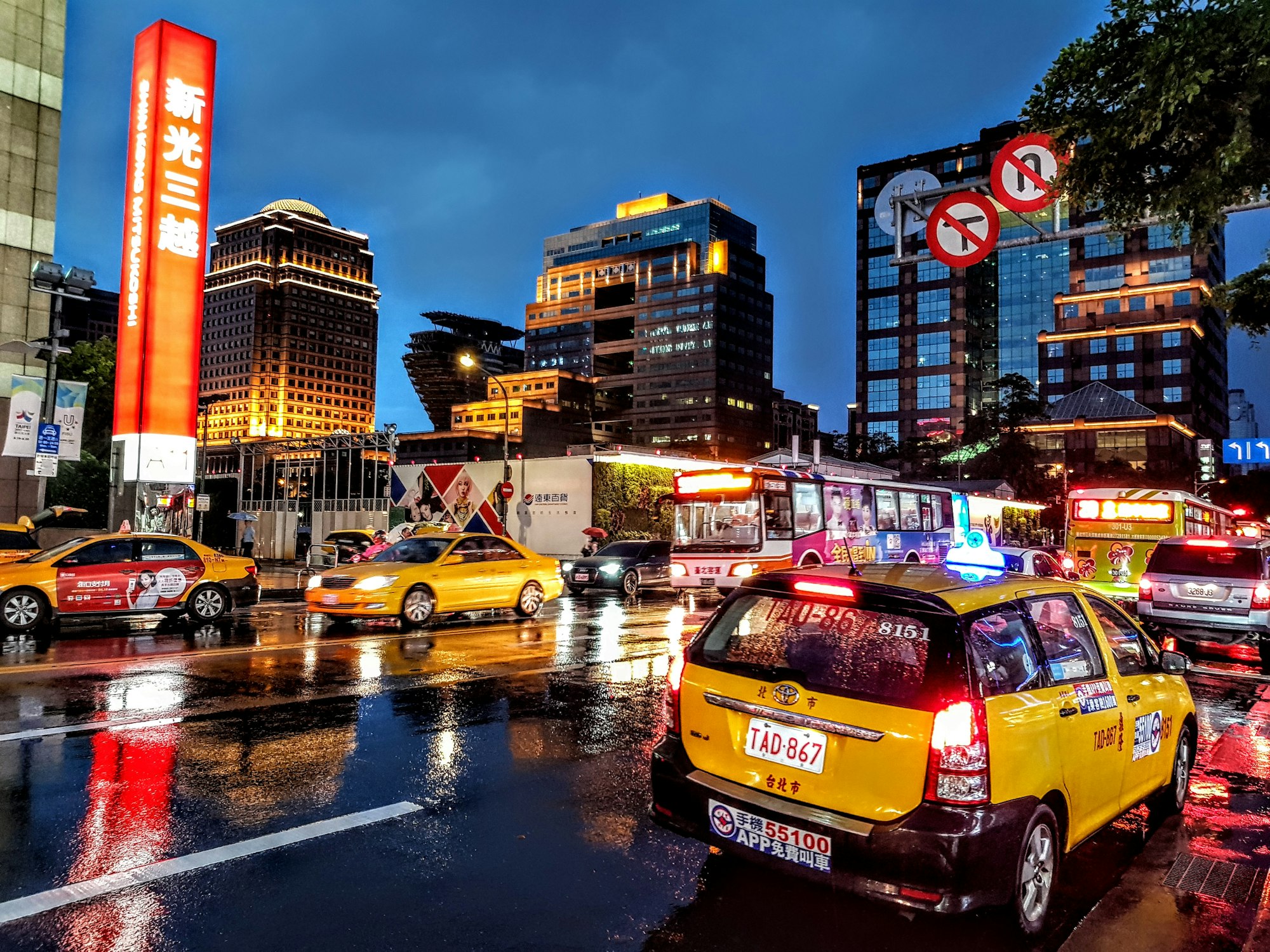
Money & Payments
Having both AliPay and WeChat installed and set up before your trip. While the cash payments are (reluctantly) accepted, buying tickets and transportation will be a hussle without the apps.
 Magda Sawyer
 Magda Sawyer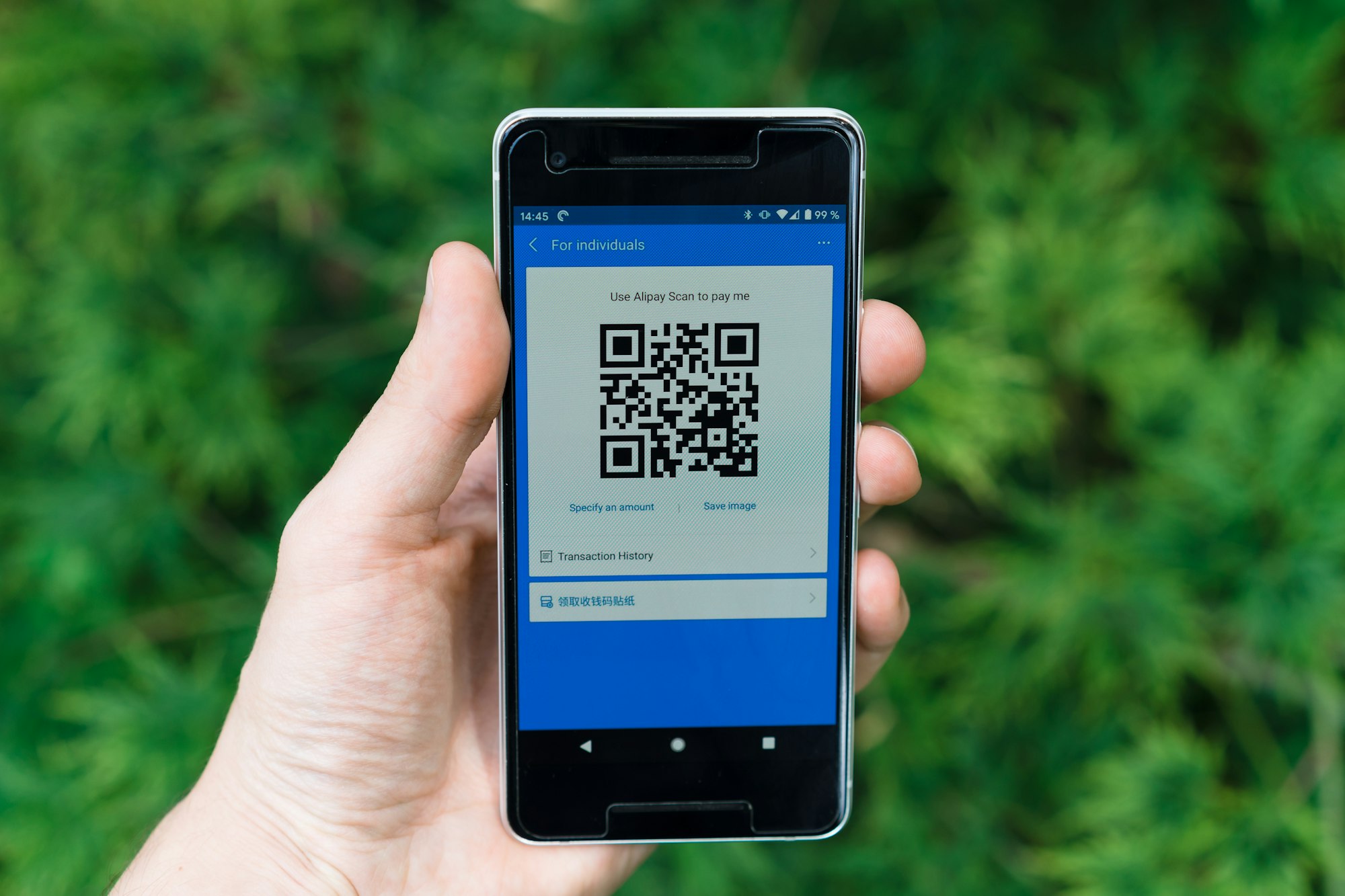
Language
Communication all across China is a bit difficult, people really don‘t speak English. At the same time, everything is well marked and usually apps are enough to go about your day.
 Magda Sawyer
Tickets & Bookings
I recommend booking China Research Base tickets in advance. Sichuan Opera tickets can usually be purchased even on the same day.
Where to Go Next
Chengdu connects easily to other destinations — here are the routes that make the most sense.
Chongqing
🚄 Just 1.5 hours by high-speed train. China's most dramatic mountain city — built vertically across steep hills where trains pass through apartment buildings. Amazing hotpot, Hongyadong, and a completely different atmosphere from Chengdu. The two cities pair perfectly and most travelers visit both.
→ Chongqing Travel Guide → Where to Stay in Chongqing
Xi'an
🚄 About 3–4 hours by high-speed train. The Terracotta Warriors, ancient city walls, and incredible Muslim Quarter street food. Xi'an adds a completely different chapter to your China trip — imperial history vs. Chengdu's laid-back culture.
→ Where to Stay in Xi'an | Visiting Xi‘an with Kids
Kunming & Yunnan
✈️ Gateway to Yunnan province — Dali, Lijiang, Tiger Leaping Gorge and the Yunnan rice terraces. About 2 hours by flight or 6–7 hours by high-speed train. For travelers with more time who want China's most diverse landscapes.
→ Where to stay in Kunming | Visiting Yunnan with Kids
Changsha
🚄 About 5 hours by high-speed train. Hunan's vibrant capital — excellent street food, Orange Island, and a great stop between Chengdu and eastern China.
→ How to buy train tickets in China | Plan your China itinerary
FAQs
Q: How many days do you need in Chengdu?
A: Three to five days is ideal. Two days lets you see the pandas and explore the city center, but you'll miss some of the best experiences. With 4–5 days you can add a day trip to Leshan Giant Buddha or Dujiangyan and still have time to just enjoy the tea houses and food.
Q: Is Chengdu worth visiting?
A: Absolutely — it was the city that surprised us most on our first China trip. Between the pandas, the food, the tea house culture, and the relaxed atmosphere, Chengdu offers something genuinely different from Beijing or Shanghai. It's also significantly cheaper.
Q: What is Chengdu best known for?
A: Giant pandas, Sichuan cuisine (especially hotpot), and its laid-back tea house culture. Chengdu is a UNESCO City of Gastronomy and the gateway to stunning natural sites like Leshan Giant Buddha and Mount Emei.
Q: Is the food in Chengdu really that spicy?
A: Sichuan cuisine is famous for its málà — a combination of spicy heat and a numbing sensation from Sichuan peppercorn. But not everything is fiery. Many restaurants have mild options, and you can always ask for bú là (不辣, not spicy). Our kids managed fine, and there's always rice, noodles, and dumplings as safe options.
Q: Which panda base should I visit — the Research Base or Dujiangyan?
A: The Chengdu Research Base is closer to the city center and easier to reach by metro + shuttle bus, but it gets very crowded, especially in summer. Dujiangyan Panda Valley is further out (reachable by high-speed train + DiDi) but offers a more natural, less touristy experience. If you want to do a volunteer program, Dujiangyan is the one.
Q: Can I visit Leshan Giant Buddha as a day trip from Chengdu?
A: Yes — it's about 2 hours each way by high-speed train or car. A half day at the site is enough to see the main highlights. It's one of the most popular day trips from Chengdu.
Q: Is Chengdu good for families with kids?
A: Very much so. The pandas are an obvious hit, but our kids also loved People's Park, the Global Center water park, the Twin Towers light show, and dressing up in hanfu for a hotpot dinner. The city is flat and easy to navigate with a stroller, and food options for fussy eaters are plentiful.
Q: What's the best time to visit Chengdu?
A: Spring (March–May) and autumn (September–November) offer the most comfortable weather. Summers are hot and humid. Winters are mild but grey. Avoid Golden Week (Oct 1–7) and Chinese New Year unless you like crowds.
Q: How do I get from Chengdu to Chongqing?
A: High-speed train takes about 1.5 hours and costs around ¥150–200. Trains run frequently throughout the day. The two cities pair perfectly — most travelers visit both.
Plan Your Trip to Chengdu
🏨 Where to stay: Where to Stay in Chengdu — Best Areas & Hotels
🐼 Panda visit: Visiting the Panda Research Base
🌳 People's Park: People's Park — Where Real Local Life Happens
👨👩👧 Family guide: Visiting Chengdu with Kids: Pandas and Beyond
🗓️ Itinerary: First Time in China: 3-Week Itinerary
💰 Budget: How Much Does a Trip to China Cost?
📱 Essential apps: Apps You Need for Traveling in China
✈️ Book flights: Find flights to Chengdu
🏨 Book hotels: Search Chengdu hotels on Trip.com
🎟️ Book tours & activities: Chengdu tours on Klook
Final Thoughts
Chengdu is the city that taught us to slow down in China. We came for the pandas and stayed for the tea houses, the hotpot, and the feeling that there's always more to discover around the next corner.
If you're planning a trip to Chengdu and have questions, drop a comment below or send me a message — I'm happy to help. Happy travels!
Read More
 Magda Sawyer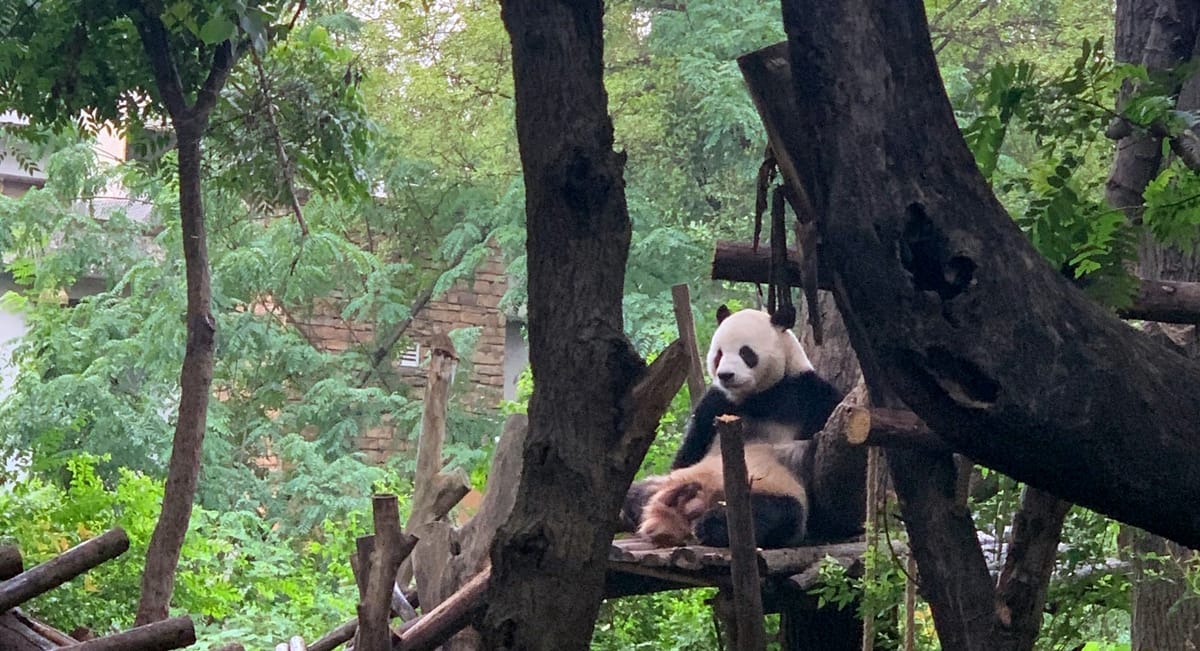
 Magda Sawyer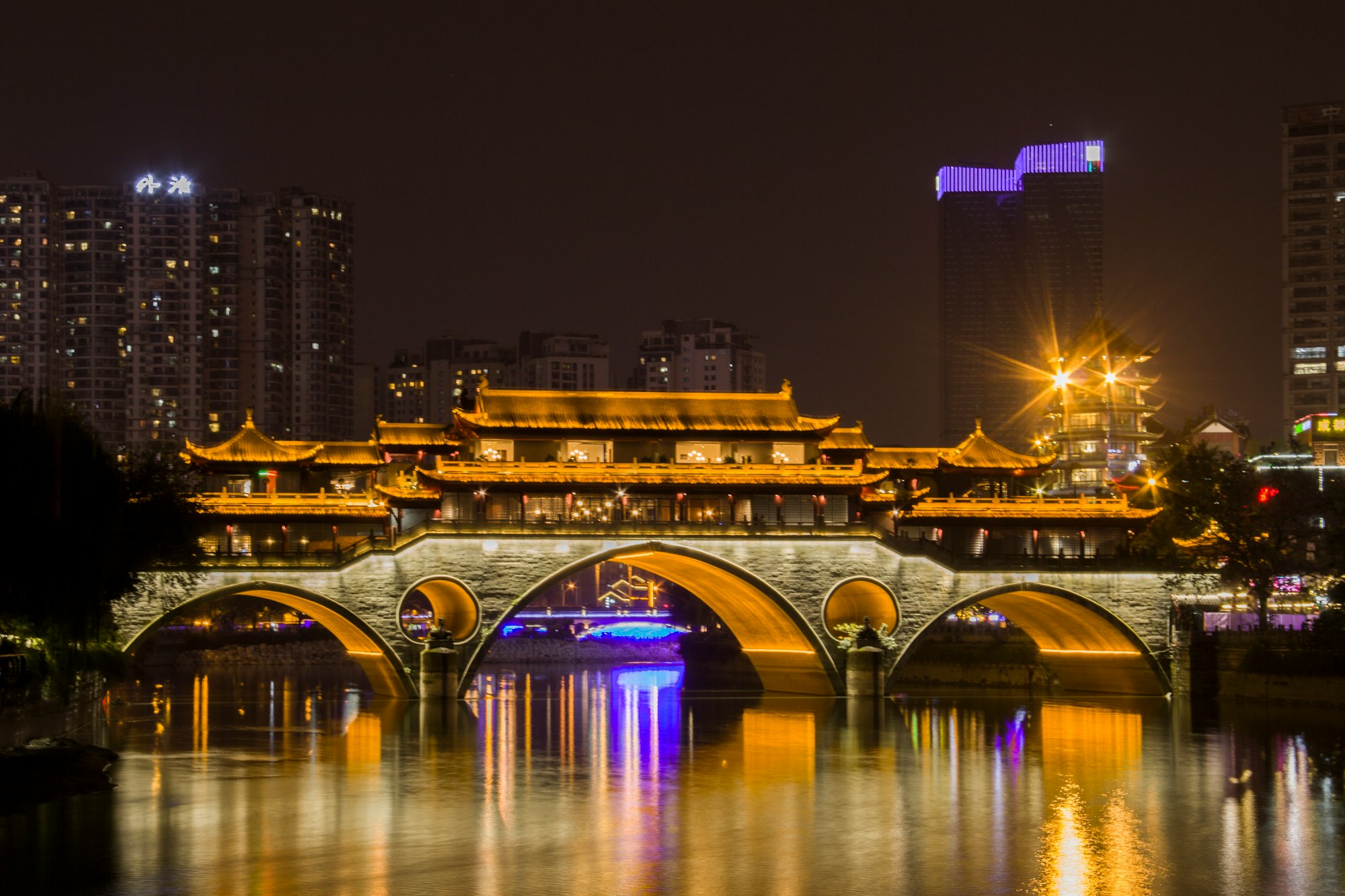
![Where to Stay in Hong Kong: Best Hotels & Neighborhoods [2026 Guide]](/content/images/size/w320/2026/03/IMG_6462.jpeg)
![Where to Stay in Harbin: Best Areas and Hotels [2026 Guide]](/content/images/size/w320/2026/03/IMG_1227.jpeg)
![Where to Stay in Guangzhou: Best Areas and Hotels [2026 Guide]](/content/images/size/w320/2026/03/IMG_4073.jpeg)