Traveling China with a Baby: Everything We Learned Over 6 Trips (2026)
Can you really travel China with a baby? We did it with a 4.5-month-old — here's everything we learned about feeding, diapers, transport, and what to expect from Chinese people (spoiler: they'll love your baby).
Share this post:
Last updated: March 2026
Quick Summary
👶 Minimum Age: We first went at 4.5 months — any age works
🛡️ Safety: Extremely safe for families with babies
🍼 Baby Supplies: Diapers, formula, baby food all easily available
🚻 Changing Facilities: Excellent in malls, metro stations, airports, trains
🤱 Breastfeeding: Nursing rooms (母婴室) widely available
👜 Carrier vs Stroller: Carrier is essential; stroller optional in flat cities
❤️ Local Reaction: Chinese people absolutely adore babies
Yes, you can absolutely travel China with a baby — we did it when Nina was just 4.5 months old, and she was honestly the easiest member of the family to travel with. China's modern infrastructure, excellent public transport, and the genuine warmth Chinese people show toward babies make it a far easier destination than most new parents expect.
Many new parents have fears around traveling with a baby — and a trip from Europe to China might seem like a journey not worth the hassle. You can barely handle taking care of the baby at home, so you might feel reluctant to try bigger adventures.
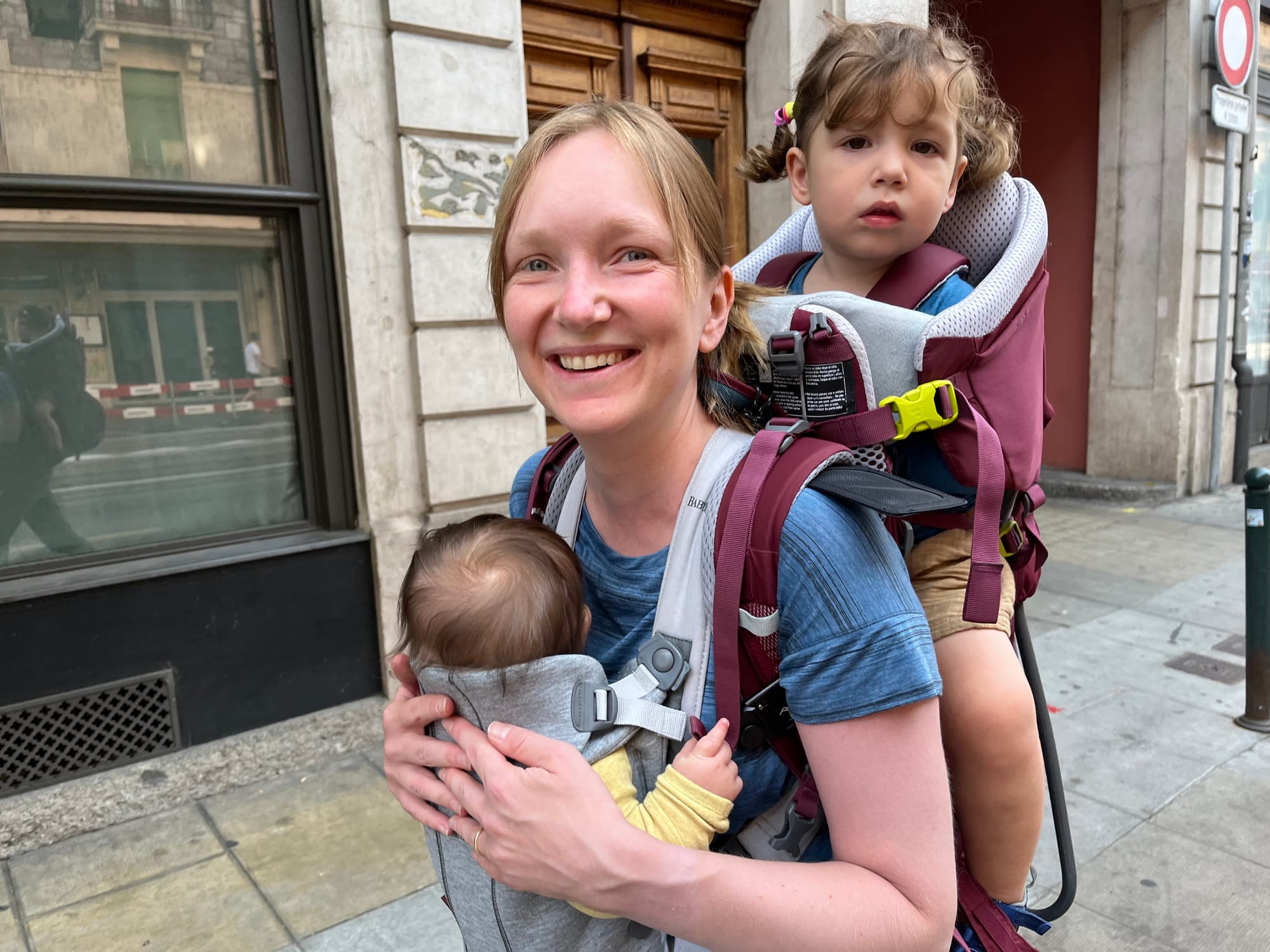
But if there's anything our experience traveling with kids has taught us, there is no easier time to travel than during infancy, when the baby still doesn't have their own opinions and doesn't need special entertainment. Especially when breastfeeding, traveling with a baby is surprisingly simple — you just need enough spare clothes and a baby carrier.
That said, I don't think it's for everyone. Traveling anywhere, and to countries very different from your own, demands a certain level of flexibility. If you're the kind of parent who stresses about whether you can buy the exact same formula you use at home and panics when your baby catches a cold, you might be better off waiting until the kids are bigger.
We've traveled to China 6 times with our daughters, and our blog has been featured in the Lonely Planet 2025 China guidebook. I speak Mandarin, which helps — but even without it, China is very navigable for families.
Is China Baby-Friendly?
Surprisingly, yes indeed. First of all, Chinese people — including men of all ages — love babies, especially Western babies. You will hear a lot of 可爱 (kě'ài — cute) and 漂亮 (piàoliang — beautiful) coming your way.
People on public transport will usually give up their seat for you and generally make an effort to accommodate you. Strangers will smile, wave, and want to interact with your baby — it's one of the warmest welcomes you'll experience anywhere in the world.
Infrastructure in major cities and tourist attractions caters well for parents — you'll often find dedicated rooms for breastfeeding and diaper changing (although we still always carry a travel changing mat with us). These baby care rooms (母婴室, mǔ yīng shì) are common in metro stations, shopping malls, airports, and train stations.
Cities are safe and clean, so you don't need to worry about much. Public transport is easy and there's no need to take long-distance buses, which makes getting around with a baby straightforward.
Best Age to Travel China with a Baby
In my opinion the best age to travel with a baby is between 4 and 6 months. The main reason is that you're still feeding them only breast milk or formula, so you don't have to worry at all about what food to give them. Another reason is that the baby really doesn't need much — your baby is almost like an additional backpack you carry and you can proceed with your trip as if you were still just two of you. An exaggeration, but you get my point hopefully.
I think 6 to 9 months is the trickiest window, because this is when you start introducing solid foods and you need to put more thought and effort into preparation. Otherwise you have to rely on baby food jars. I would probably either go earlier or wait a few more months until your baby can eat a more diverse diet. At this stage babies are also more alert but not yet very mobile, and a bit heavier, so you need to plan the journey more carefully.
From 9 to 12 months onwards it gets easier again as the baby starts eating more, so you can share some plain foods with them. They're also more mobile and interested in their surroundings, which makes it easier to fully enjoy the trip.
In terms of season, avoid the peak of summer (July-August) — the heat and humidity in most of China combined with carrying a baby in a carrier is genuinely tough. Spring (March-May) and autumn (September-October) are the sweet spot. Also steer clear of China's Golden Week holidays (first week of May and October) when crowds at popular sites are overwhelming.
Flying to China with a Baby
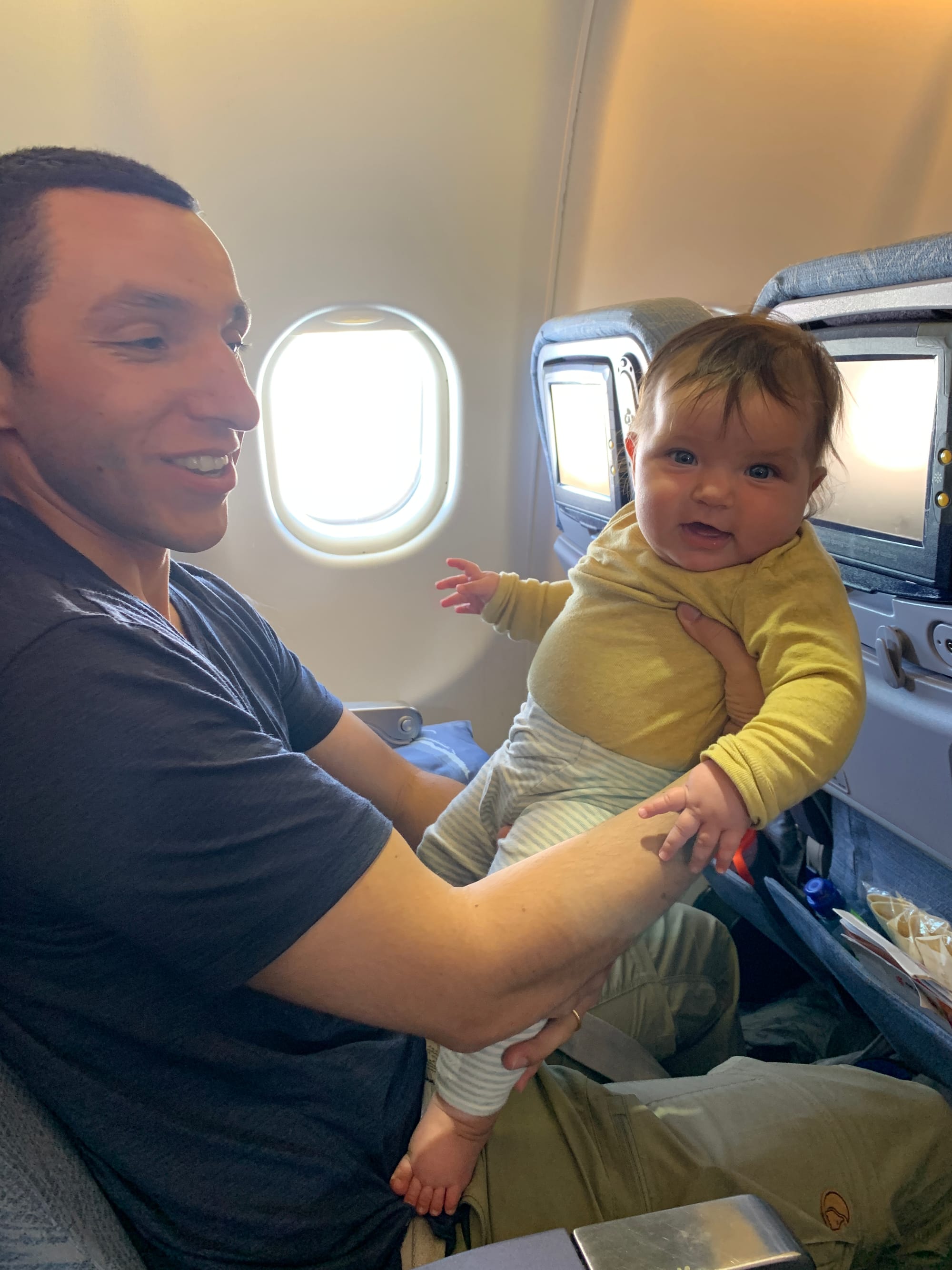
Flying on a long-haul flight was probably our biggest worry, but in the end we survived every time. Here again it's much easier with younger babies, as they'll sleep for most of the flight.
A few practical tips from our experience:
Book a bassinet seat. Most airlines offer bassinets (sky cots) on long-haul flights for babies under 10-11kg. You need to request this when booking or call the airline — they're limited to bulkhead rows and go fast. The bassinet lets your baby sleep flat while you eat, watch a film, or just breathe for a moment. We always forgot about this, don‘t repeat our mistake.
Infant tickets. Babies under 2 fly on your lap for roughly 10% of the adult fare — no separate seat. You'll get an extra baggage allowance for baby gear on most airlines. Check your airline's specific policy, but generally you can bring a stroller and car seat to the gate for free.
Feed during takeoff and landing. The sucking motion (breastfeeding, bottle, or pacifier) helps equalise ear pressure and prevents discomfort. This was the single most useful piece of advice we received before our first flight with Nina.
Pack your carry-on strategically. Diapers, wipes, a full change of clothes (for baby AND you — trust me), a light blanket, and any medicine you might need should all be within arm's reach. Pack more diapers than you think you'll need.
Managing jet lag on arrival. Get outside into daylight as soon as you can. Babies actually adjust to new time zones faster than adults — Nina was on local time within two days. Don't plan anything ambitious for day one. Check into your hotel, take a walk around the neighbourhood, and let everyone recover.
 Magda Sawyer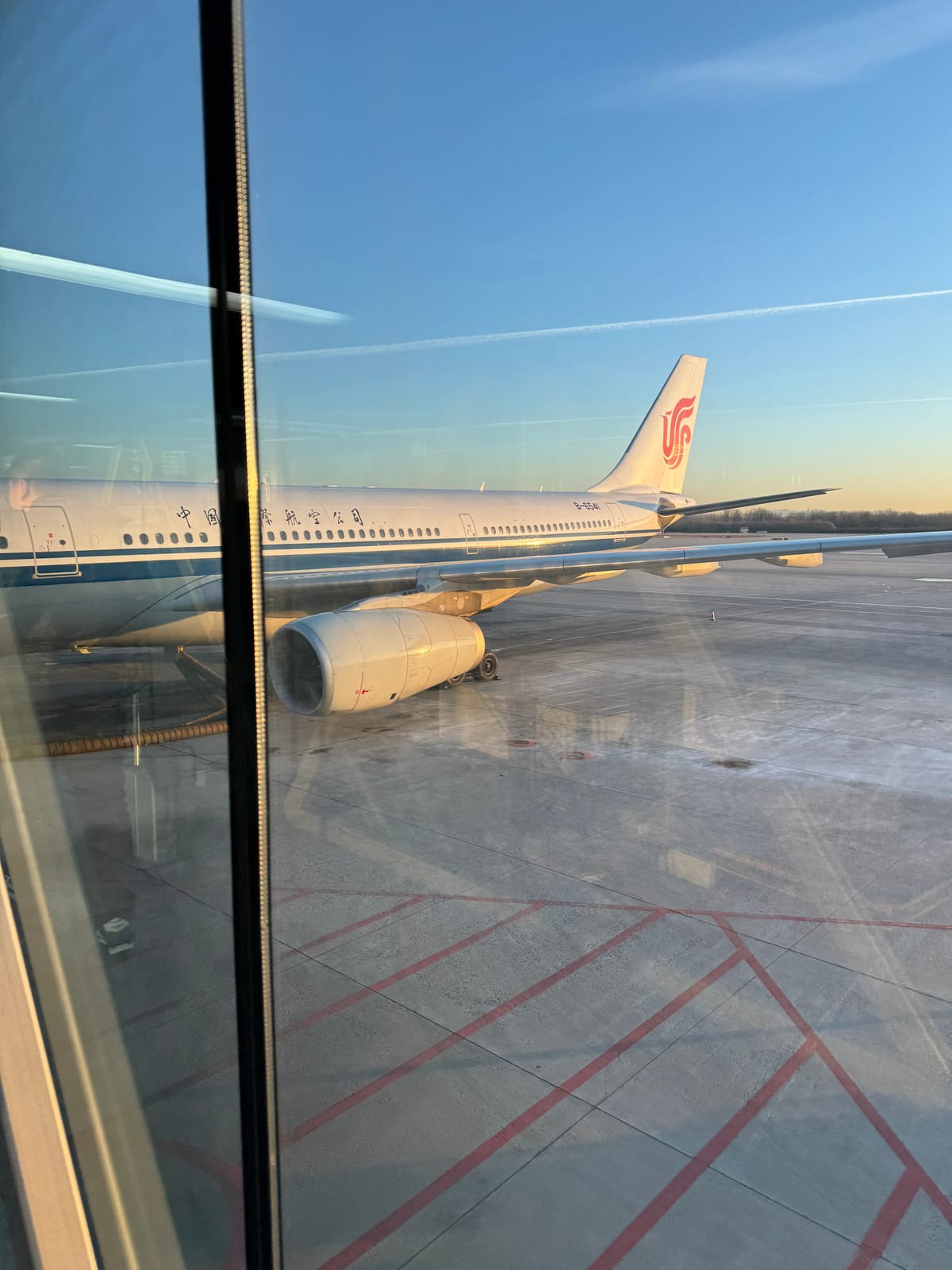
Getting Around China with a Baby
Stroller vs Baby Carrier
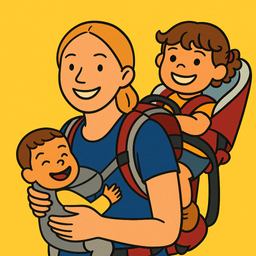
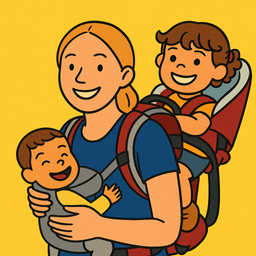
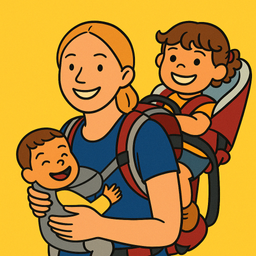
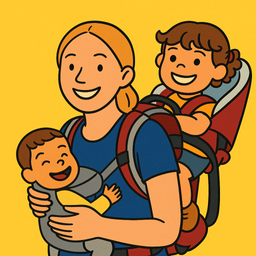
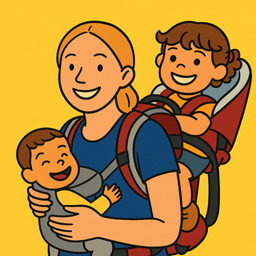
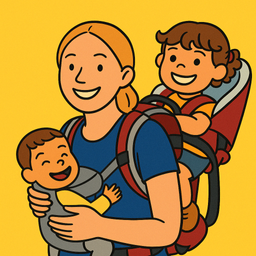
We never took a stroller to China. Our philosophy is to keep things as simple as possible. We did travel with a backpack carrier for the older one, but that was a bit of a hassle too.
For a baby, I would 100% go with just a carrier — it makes traveling so much easier. Chinese metro stations don't always have lifts in convenient locations, older neighbourhoods have uneven pavements, and attractions like the Great Wall are completely stroller-unfriendly. In hilly cities like Chongqing, a stroller is essentially useless. In flat cities like Beijing or Chengdu, you could make a lightweight stroller work for everyday use, but honestly the carrier is just simpler.
 Magda Sawyer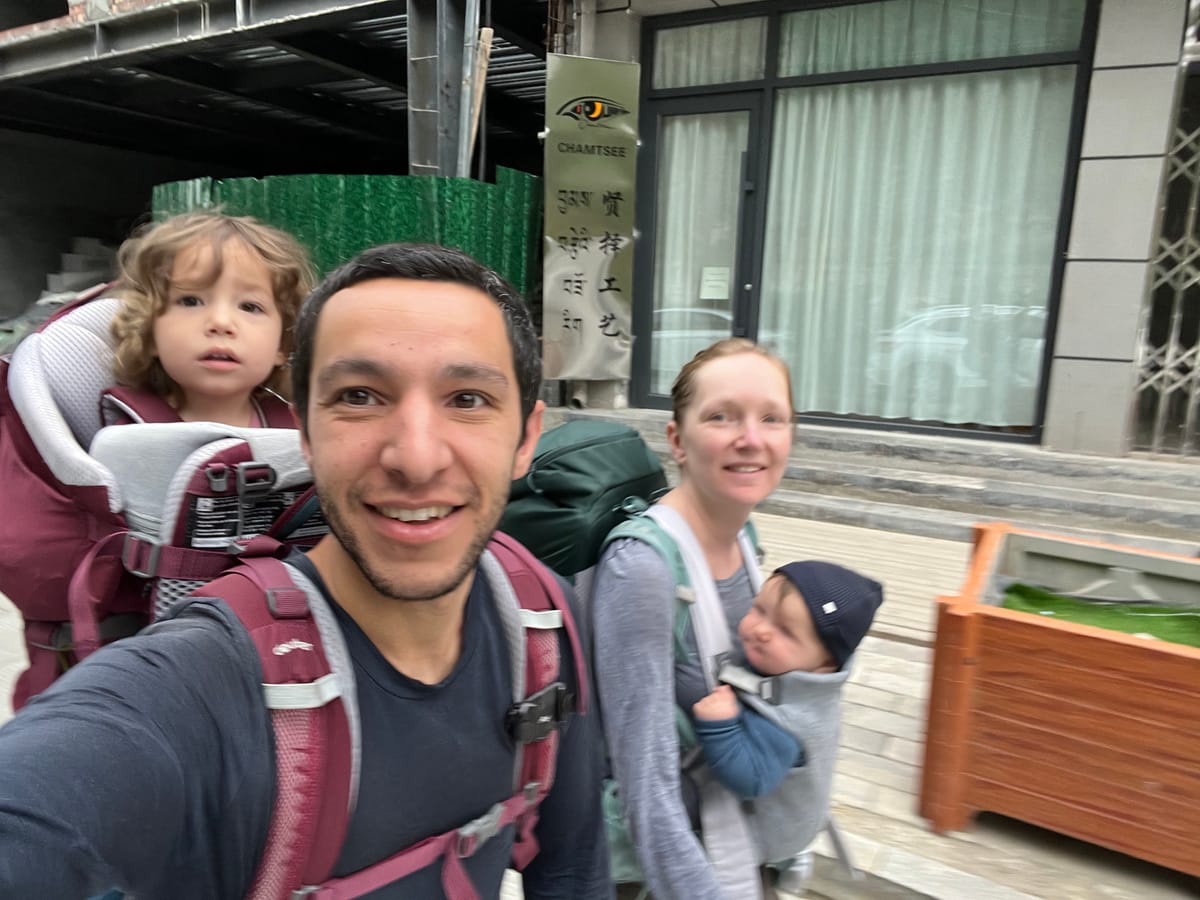
 Magda Sawyer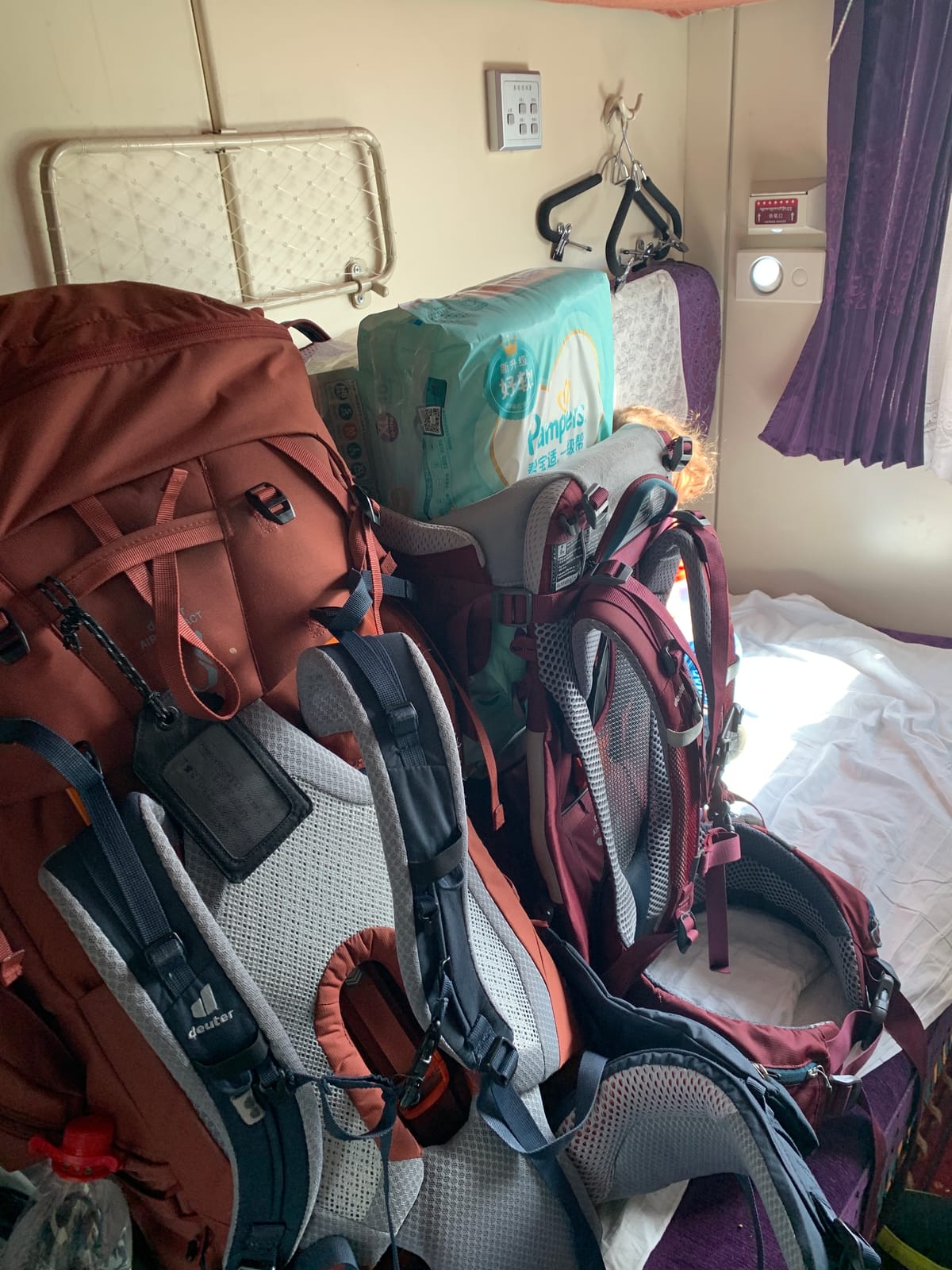
High-Speed Trains with a Baby
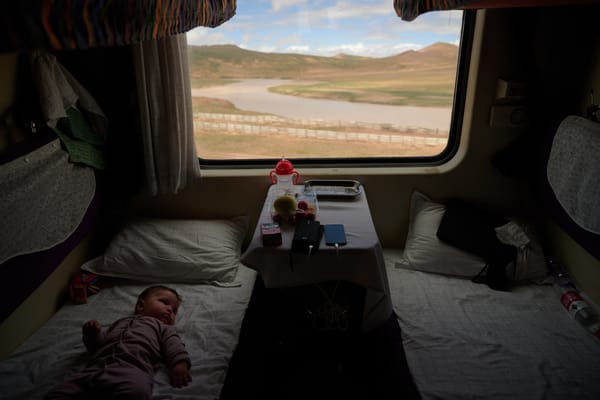
Trains are the easiest way to get around China — and high-speed trains make the journey genuinely comfortable. They're much easier than planes when it comes to keeping a baby entertained, because there's so much more space and things to look at.
The trains have an accessible toilet with a fold-down changing table in carriage 5 (the middle of the train). Its location is shown on the back of every seat. Babies under 1.2m travel free without a seat — they sit on your lap. If you want a bit more space for nursing or spreading out, consider booking first-class seats on longer journeys. The extra legroom and wider seats make a noticeable difference with a baby.
 Magda Sawyer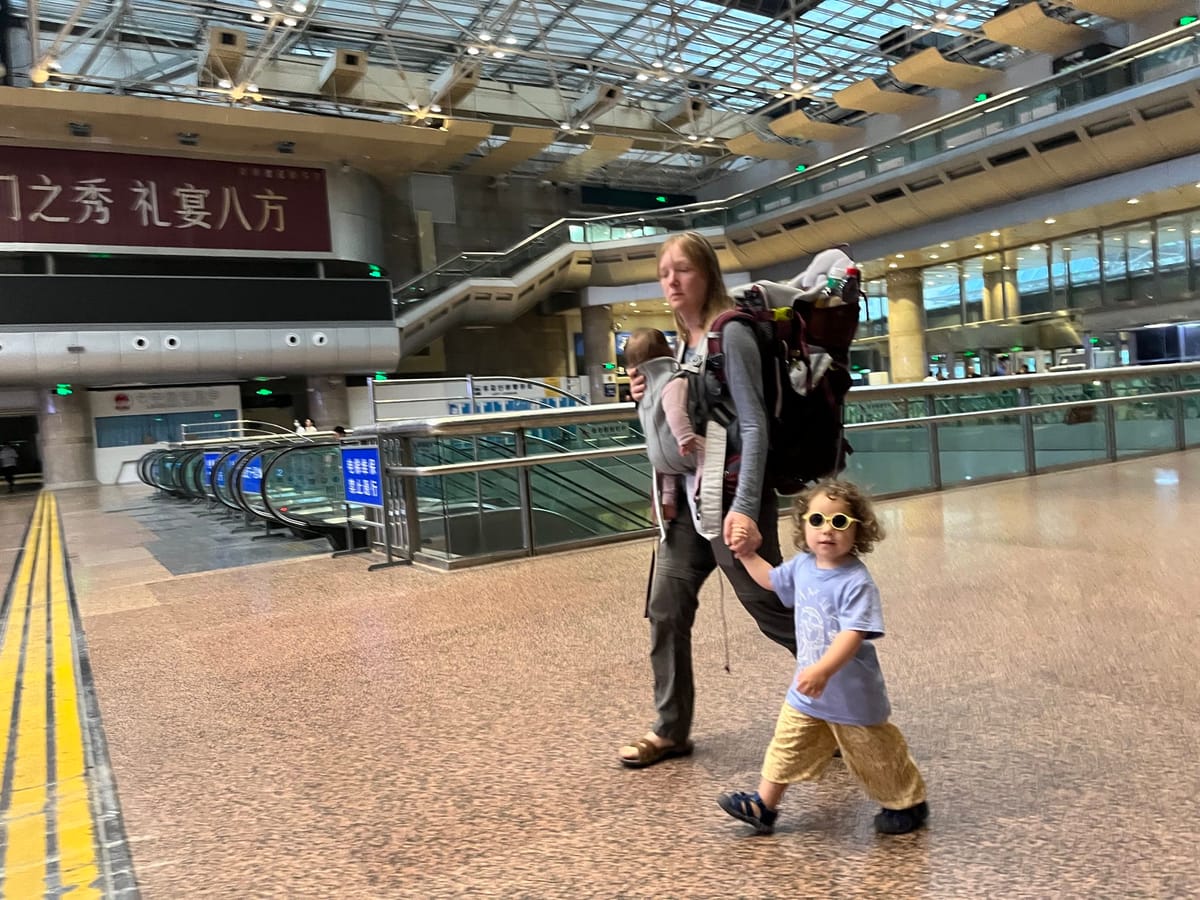
 Magda Sawyer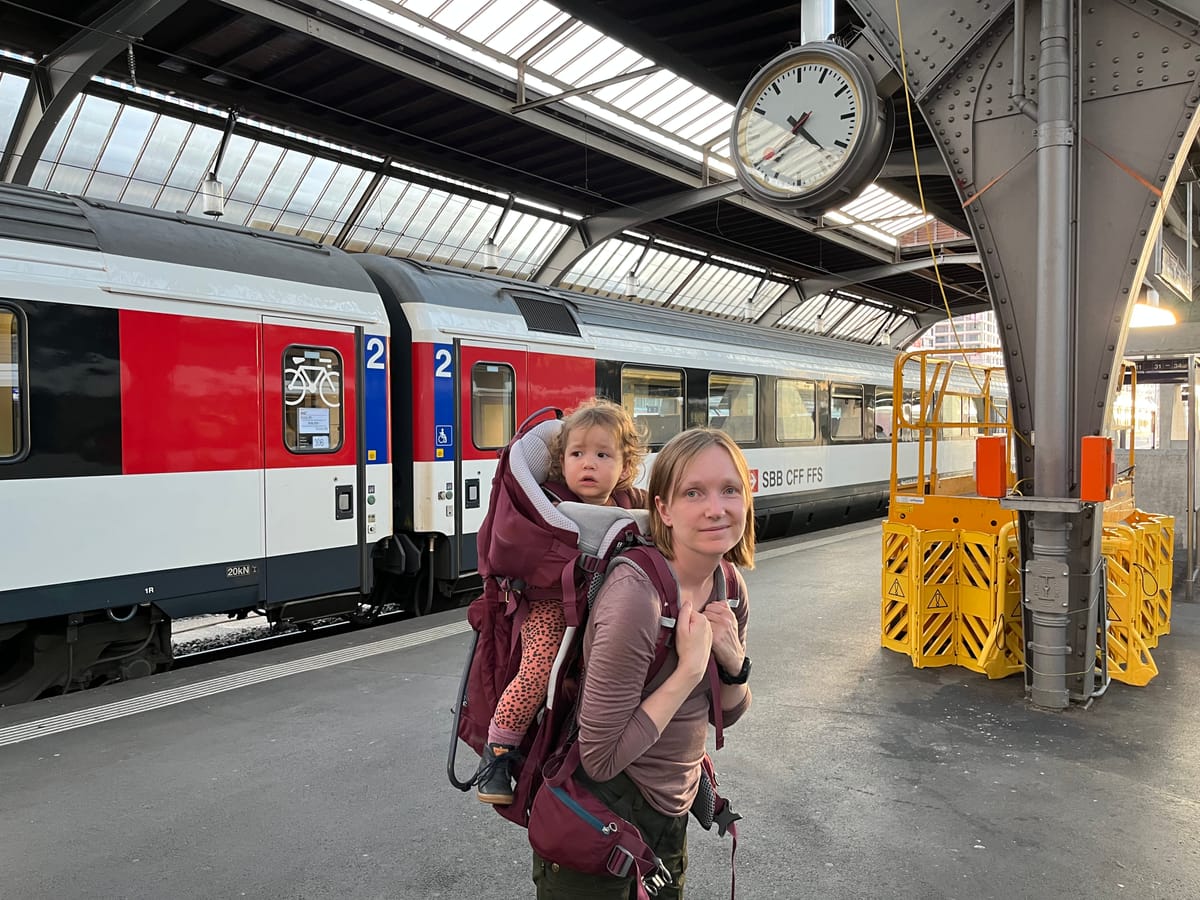
Metro with a Baby
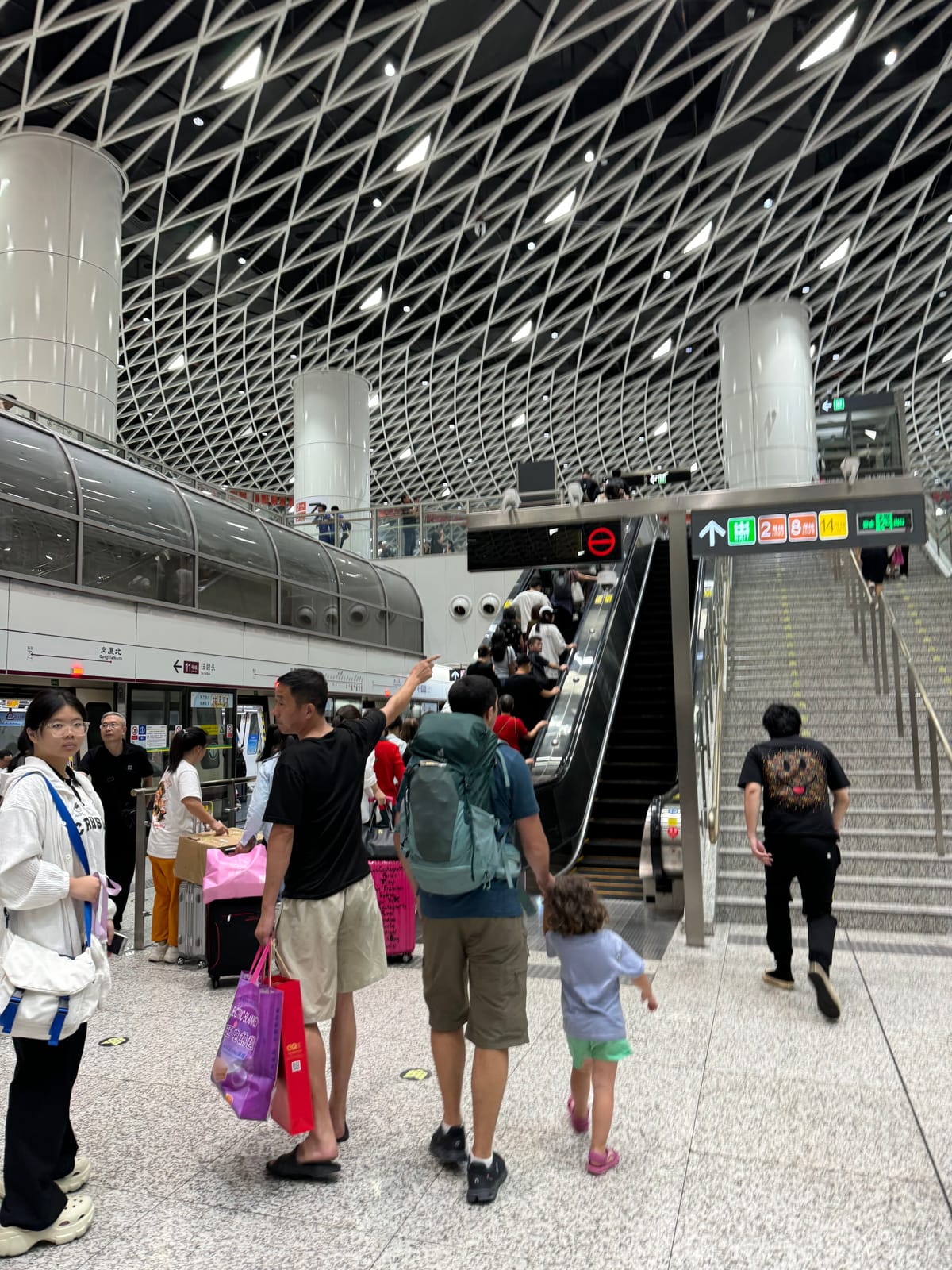
Every major Chinese city has a clean, modern metro system, and it's the fastest way to get around. With a baby in a carrier, it's completely straightforward — you tap in with AliPay, ride, and tap out. The whole process takes seconds.
If you do bring a stroller, be aware that lifts exist in most stations but aren't always in an obvious location — you might need to ask staff. Bags go through a security scanner at every station entrance, and strollers need to fold through it too (or staff will wave you around — they're usually accommodating). Newer metro stations in cities like Beijing, Shanghai, and Chongqing often have dedicated baby care rooms (母婴室) on the platform level, which we used constantly.
 Magda Sawyer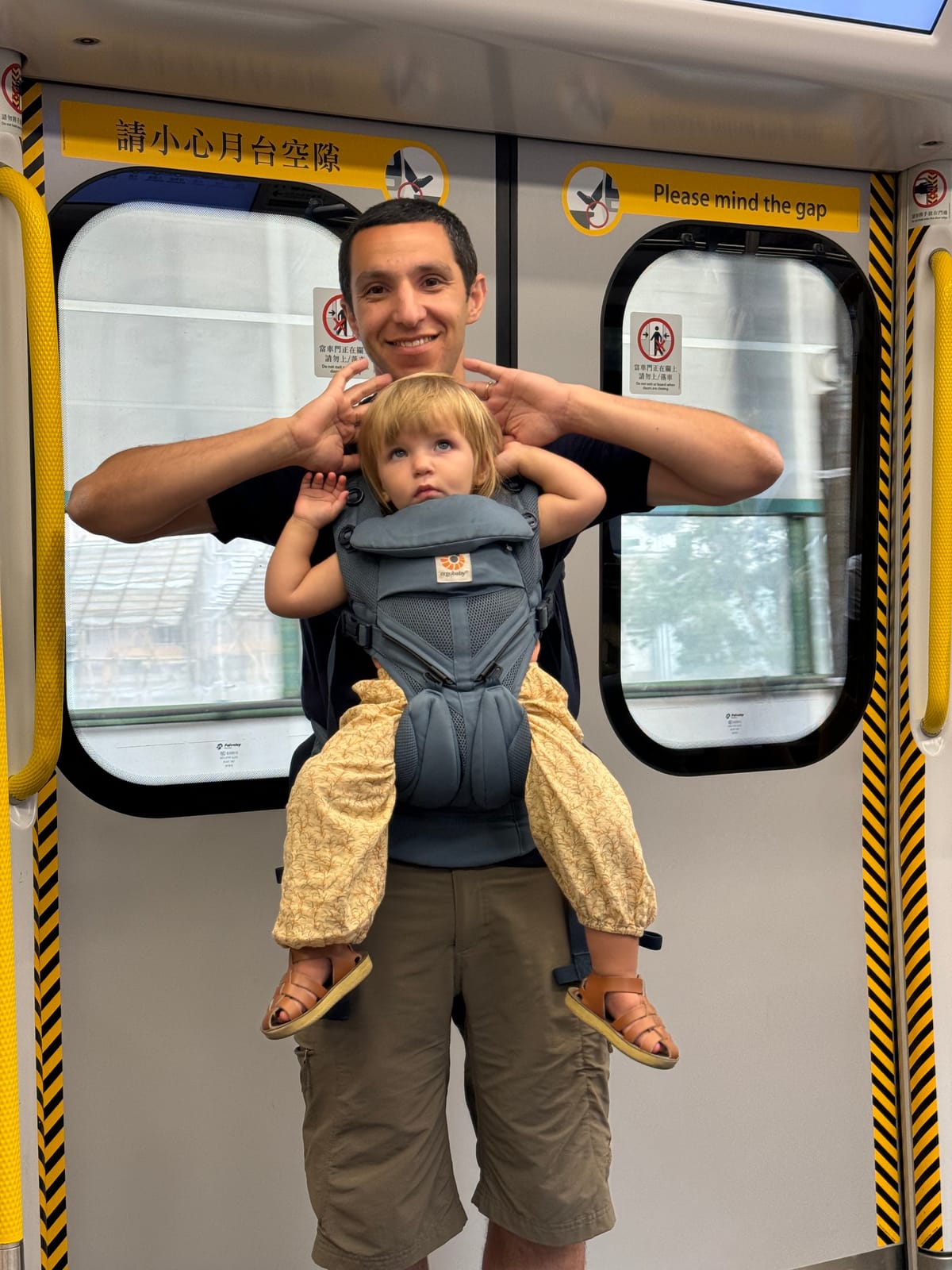
Taxis & DiDi
DiDi (China's Uber, built into WeChat) is a lifesaver at the end of a long day when you just need to get back to the hotel. It's cheap, easy to use in English, and the driver comes to you.
The one important thing to know: DiDi cars don't come with child car seats. For short rides within a city this is manageable — hold your baby on your lap. But for airport transfers, where you're on a highway at speed, we always pre-book a private transfer with a car seat through GetTransfer. It costs more but it's worth the peace of mind, especially after a long flight.
 Magda Sawyer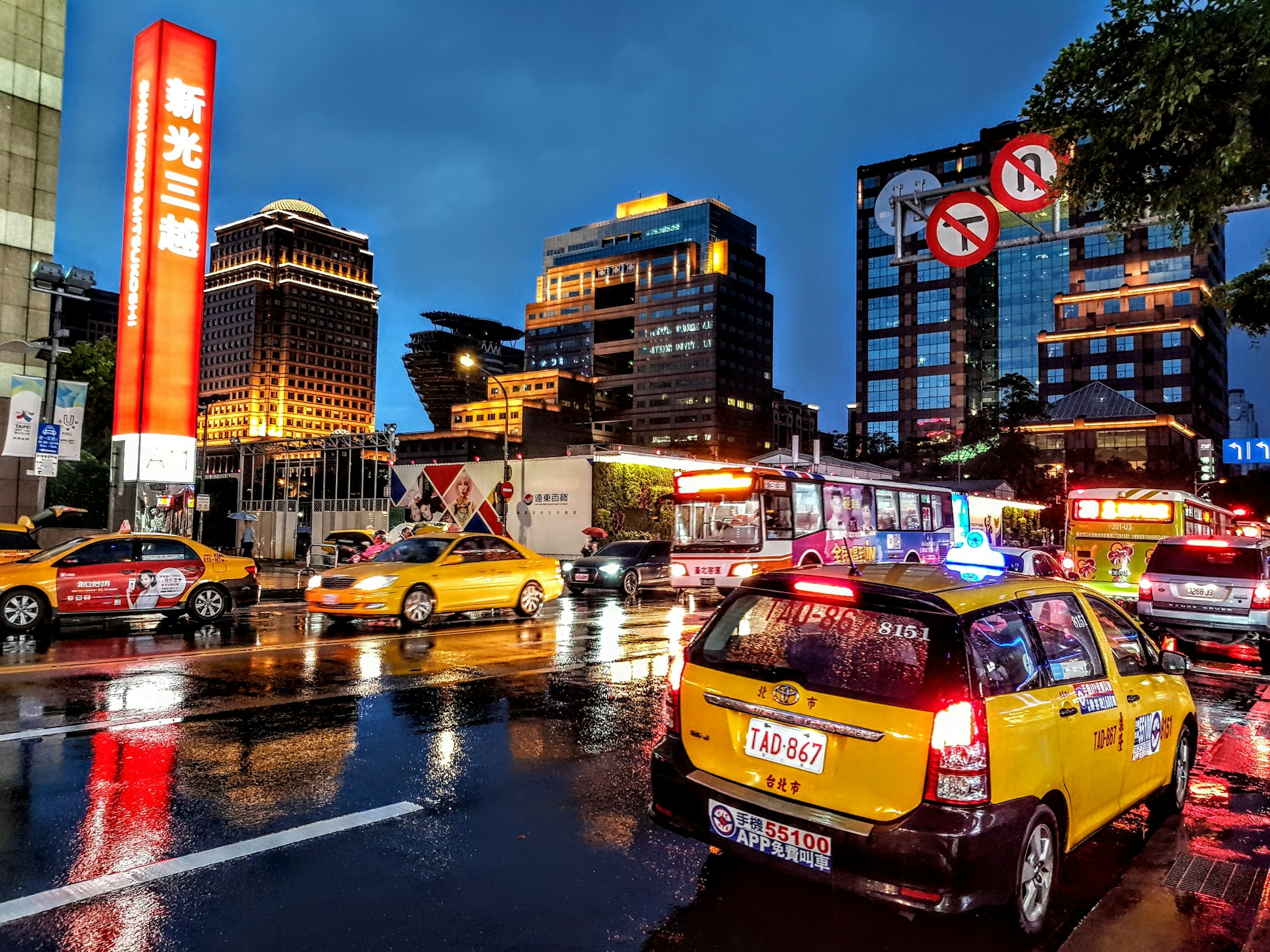
Feeding Your Baby in China
Breastfeeding
In my experience, fewer women in China seem to breastfeed in public compared to Europe — I'm not entirely sure why, but it just seems to be the case. However, all the necessary facilities are there. Train stations, metro stations, airports, and shopping malls have dedicated nursing rooms (母婴室) with comfortable seating and privacy.
Having breastfed during our first trip, I never noticed any strange looks or unfriendly attitudes. Nobody cared. If you prefer privacy, the nursing rooms are easy to find — if you're comfortable feeding wherever you happen to be, that works too.
 Magda Sawyer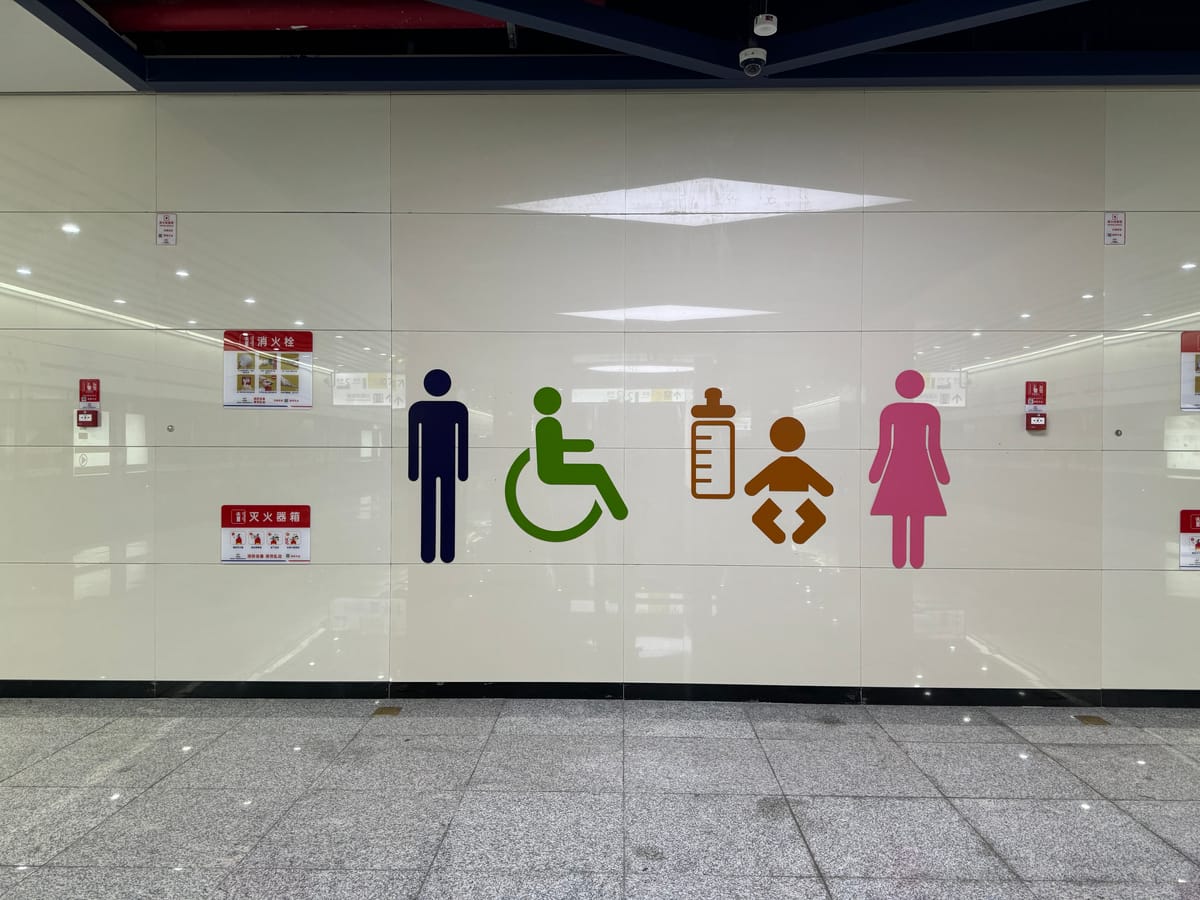
Formula & Baby Food
In supermarkets you'll find formula and baby food. International brands like Similac and Nestlé are available, and there's a huge range of local and Japanese brands too. However, if you're not flexible on brands, you should bring your own to make sure your baby gets what you know works — but I'd encourage you not to overcomplicate it.
One thing to know: the selection of Western-style baby food jars is more limited than in Europe. You'll find fruit purees easily, but meat-based purees, wheat-based foods, and freeze-dried meals are harder to come by. Fresh fruit is available everywhere and is a great fallback.
Weaning-Age Babies
If your baby is at the weaning stage, Chinese cuisine is actually your friend. Rice porridge (粥, zhōu) is served everywhere and is one of the best first foods — it's smooth, mild, and easy to digest. Steamed egg (蒸蛋, zhēng dàn) is another excellent option that most restaurants can prepare on request. Soft tofu, mashed sweet potato, plain noodles cut into small pieces, and steamed buns (馒头, mántou) all work well for babies starting solids.
The key phrase to know is 不要辣 (bù yào là) — "no spice, please." Chinese kitchen staff are generally very accommodating when they see you have a baby, and will happily prepare something plain. For more ideas on feeding kids of all ages in China, see our guide to Chinese food for kids.
That being said, for the very first months of weaning I think it is still easier to do it back home.
Diapers & Changing Facilities
This was one of our biggest concerns before our first trip, and it turned out to be a complete non-issue. Disposable diapers (Pampers, Huggies, and excellent Japanese brands) are widely available in supermarkets across all Chinese cities. Changing facilities are genuinely excellent — dedicated baby care rooms with changing tables, sinks, and comfortable seating are standard in malls, metro stations, airports, and train stations.
Don't overpack diapers — bring a 3-day supply and buy the rest locally. For everything you need to know, see our detailed guide:
 Magda Sawyer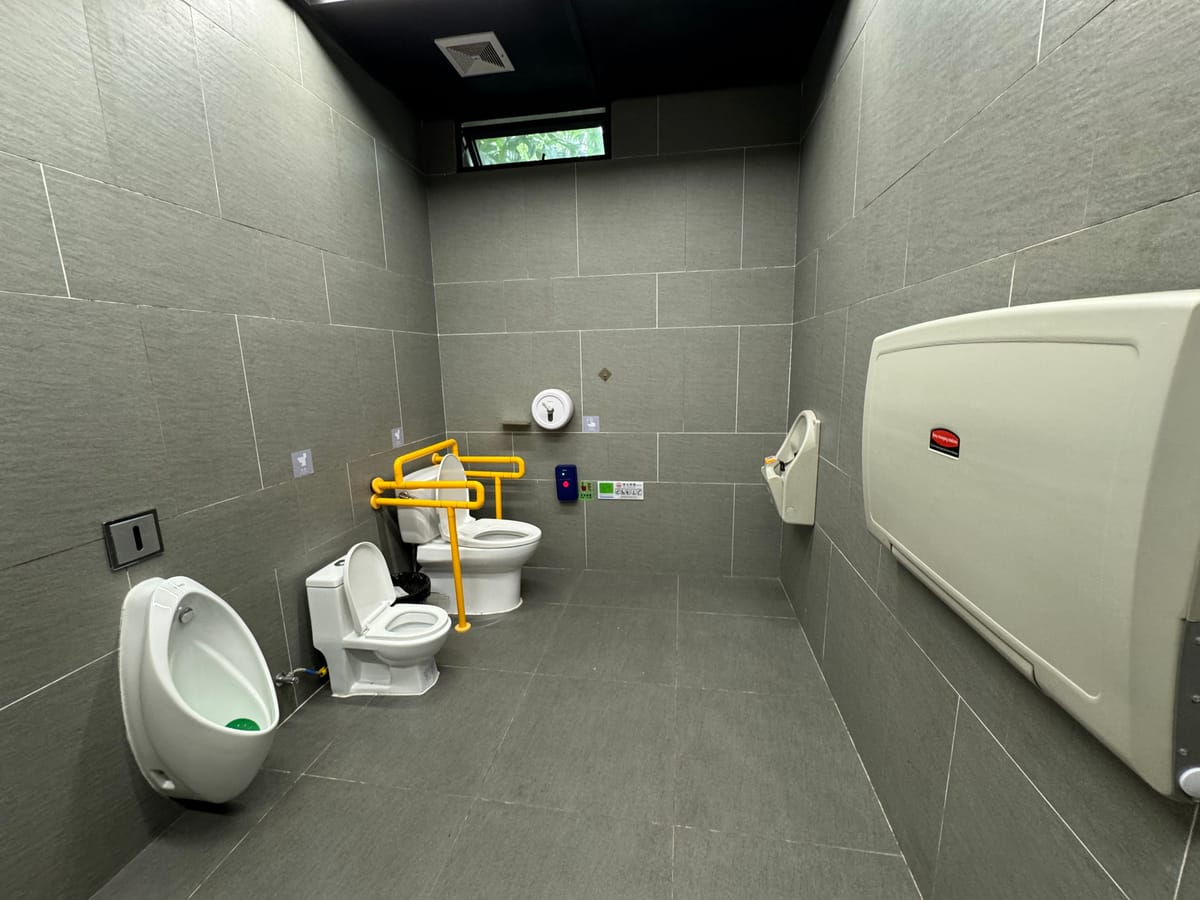
Where to Stay with a Baby
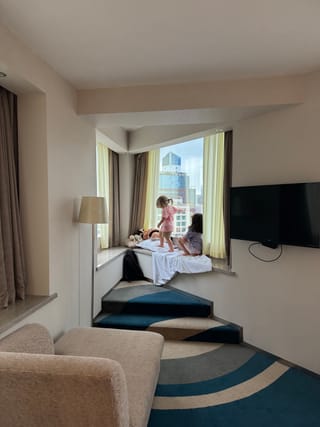
Most mid-range and international hotels in China can provide a baby cot on request — always confirm when booking. We've found that hotels booked through Trip.com handle family requests particularly well, and the platform lets you filter for family-friendly options.
A few things we've learned about choosing hotels with a baby:
Location beats star rating. Stay near a metro station with food options within walking distance. When the baby has a meltdown at 6pm, you want dinner to be a 5-minute walk away, not a 30-minute taxi ride. In Beijing, the Guomao area works perfectly. In Chengdu, stay near Chunxi Road. In Chongqing, Jiefangbei is central and walkable.
Chinese hotels are excellent value for families. What you'd pay for a basic room in London gets you a spacious 4-star with breakfast in most Chinese cities. Some hotels have dedicated family rooms with child-sized beds and extra amenities — we loved the themed rooms at the Jingju Hotel Shenzhen.
Request a cot before arrival. Don't assume — message the hotel through the booking platform a few days before check-in. Most will provide one free of charge.
For detailed hotel recommendations in each city, check our where-to-stay guides for Beijing, Shanghai, Chengdu, and Chongqing.
Baby-Friendly Activities & Pacing
Here's the honest truth about sightseeing with a baby: skip the crowded tourist sites and focus on the things that make Chinese cities genuinely wonderful for families — parks, neighbourhood walks, and food markets.
Chinese parks are perfect for babies. They're spacious, shaded, and full of friendly grandparents doing tai chi and dancing who will absolutely light up when they see your baby. Nobody minds a crying baby in a Chinese park — children are welcome everywhere. We spent some of our best days in China just wandering through parks, stopping for street food, and letting the trip unfold at its own pace.
When the weather doesn't cooperate, the indoor playgrounds inside Chinese shopping malls are a brilliant backup. They're huge, well-equipped, and give older siblings something to do while you feed or change the baby in peace.
With a baby, plan for 1 to 2 activities per day at most. Leave long gaps between them. Your best memories won't come from racing between attractions — they'll come from the slow moments: the elderly man on the bus making faces at your baby, the street vendor who insists on giving you extra food, the quiet hour in a teahouse watching the city go by.
 Magda Sawyer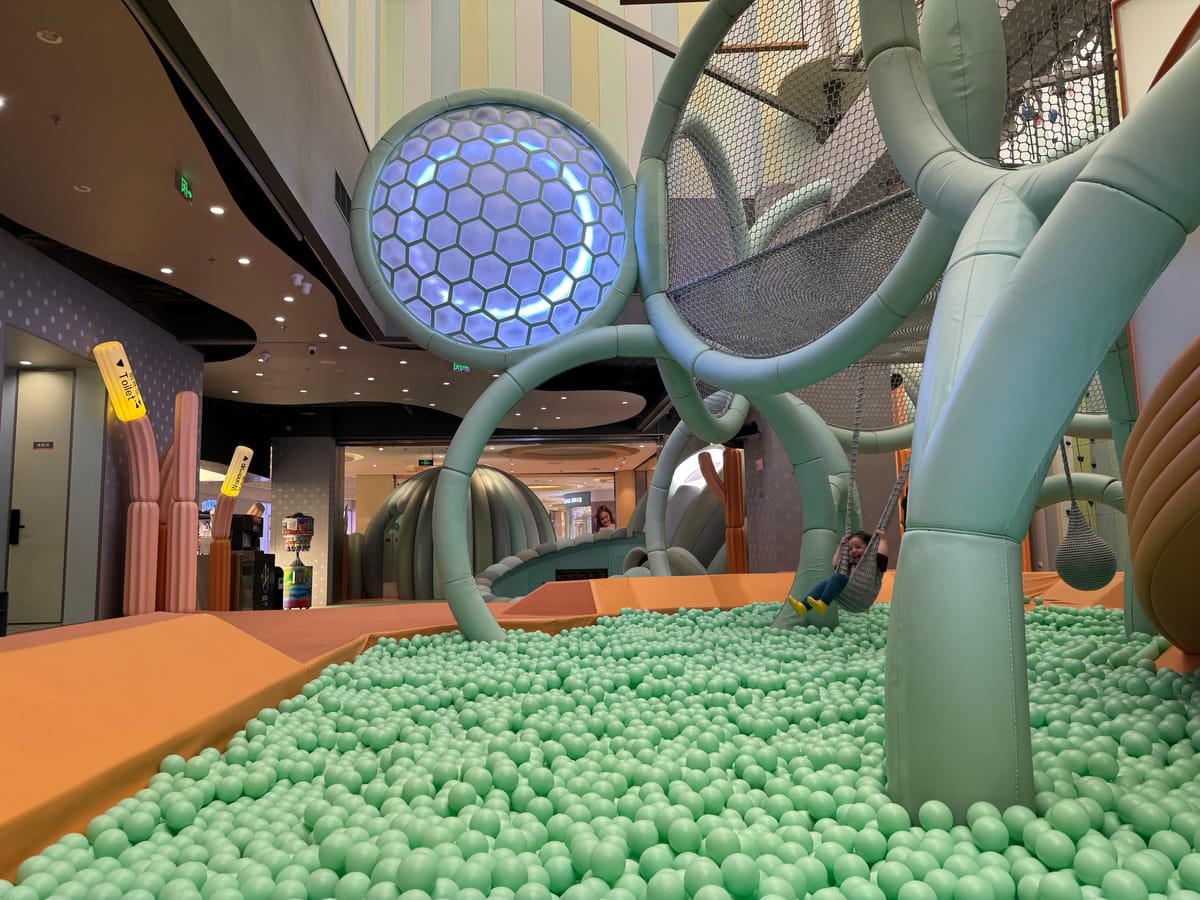
 Magda Sawyer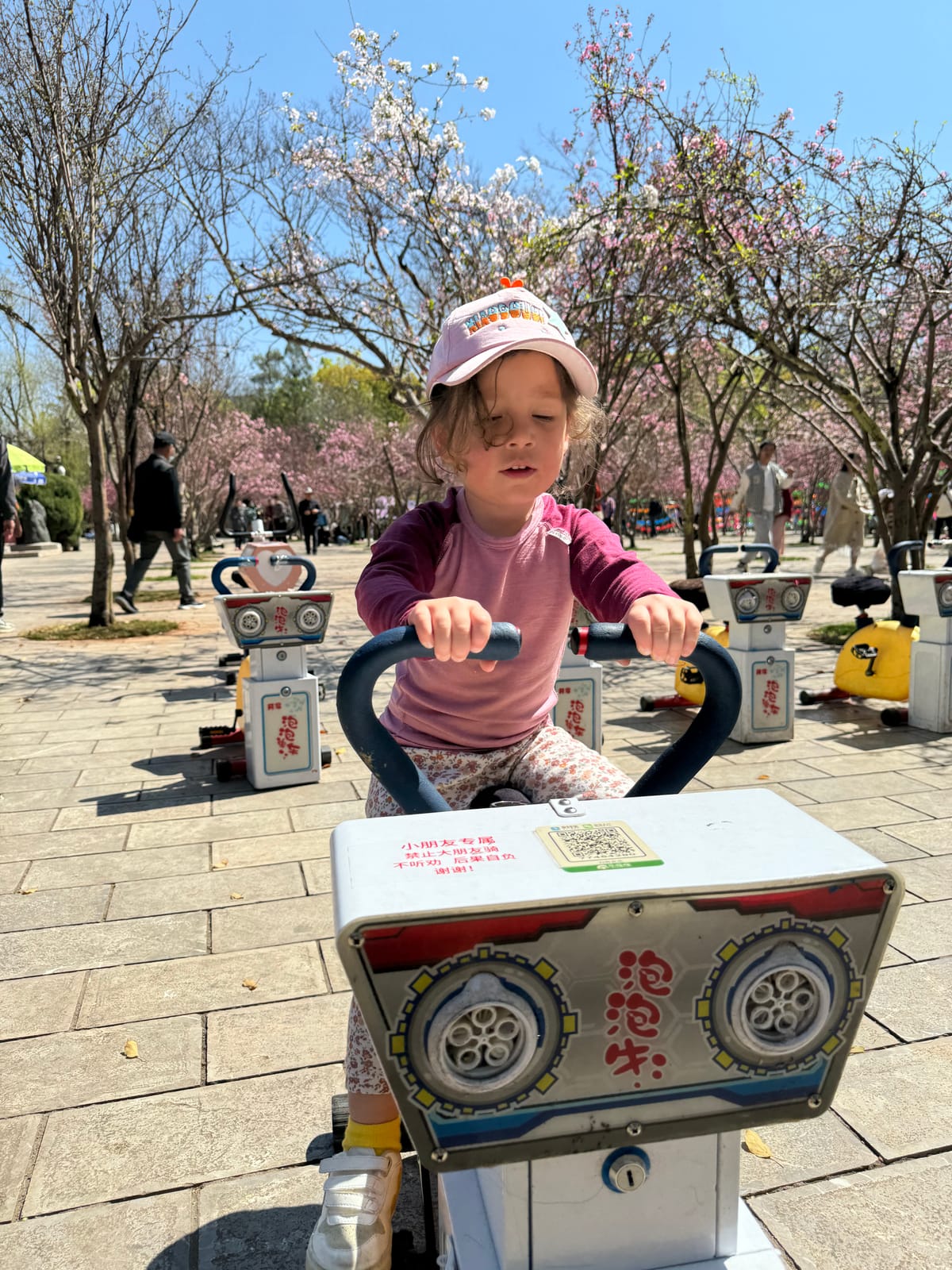
Healthcare & What to Pack
Baby First-Aid Kit
Bring your own baby medicine kit — don't rely on finding familiar brands in Chinese pharmacies. Chinese pharmacies lean heavily on traditional medicine and you won't find the brands you know. The language barrier makes it hard to explain what you need, so pack these essentials:
- medicine (paracetamol/Calpol and ibuprofen in age-appropriate doses)
- a digital thermometer
- oral rehydration salts (for diarrhoea — the most common travel illness)
- anti-nausea medicine
- diaper cream
- baby sunscreen
- any prescription medication your baby takes regularly
- A small tube of antiseptic cream
- some plasters round out the kit
If Something Goes Wrong
China's healthcare is cheap and efficient. You will face a language barrier — most doctors won't speak English — but you will still get the treatment you need.
Pharmacies are definitely hard to navigate. Chinese pharmacies seem to lean heavily on natural medicine and you won't find familiar brands, so I strongly encourage you to make sure you've packed all the medicines you might need for common situations like fever or vomiting.
We were unlucky once and had to visit the hospital in Tibet, but we were seen by a doctor the same day, received a blood test and treatment on the spot. Travel insurance is essential — don't leave home without it. If you're interested in more detail about what to expect, you can read the full story about our visit to a Chinese hospital.
 Magda Sawyer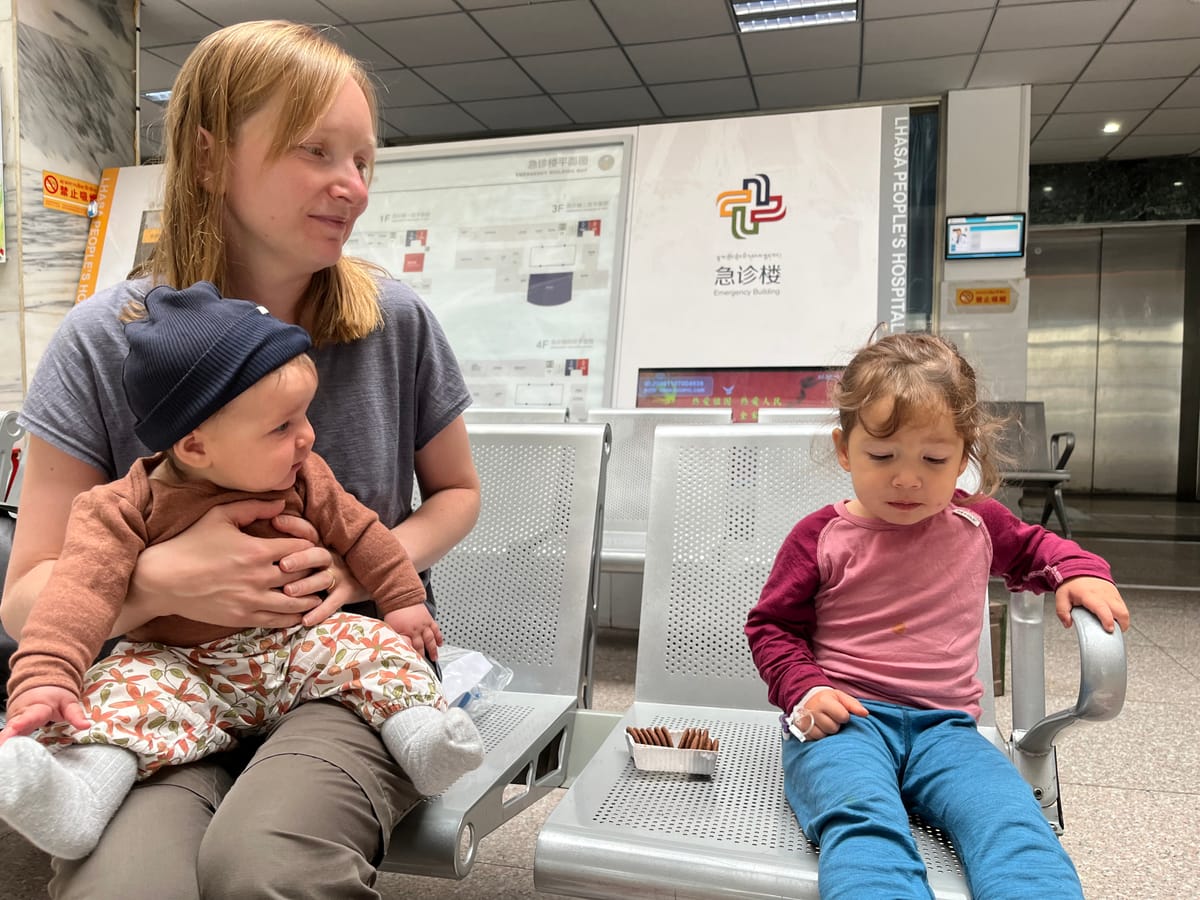
How Chinese People React to Foreign Babies
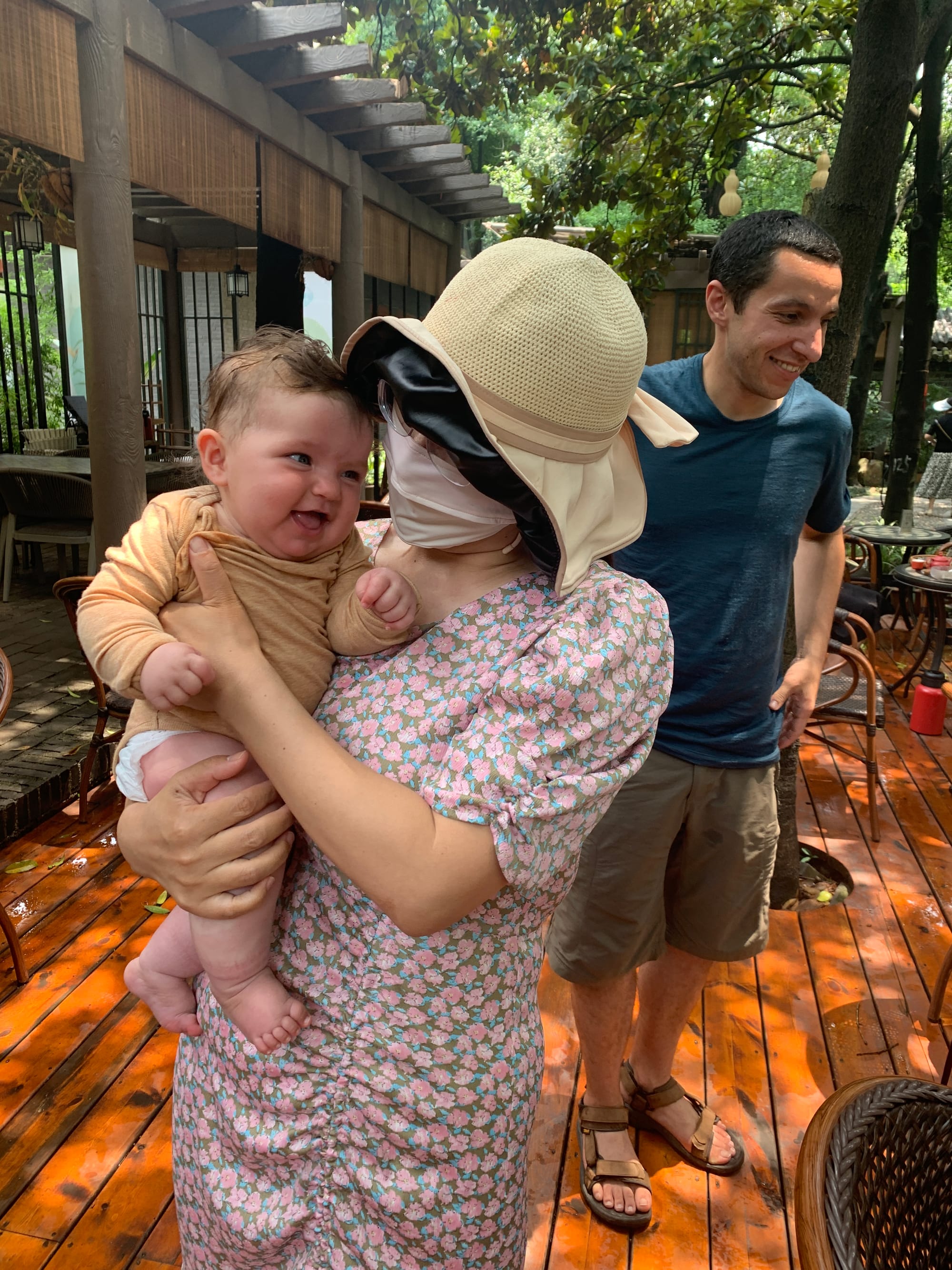
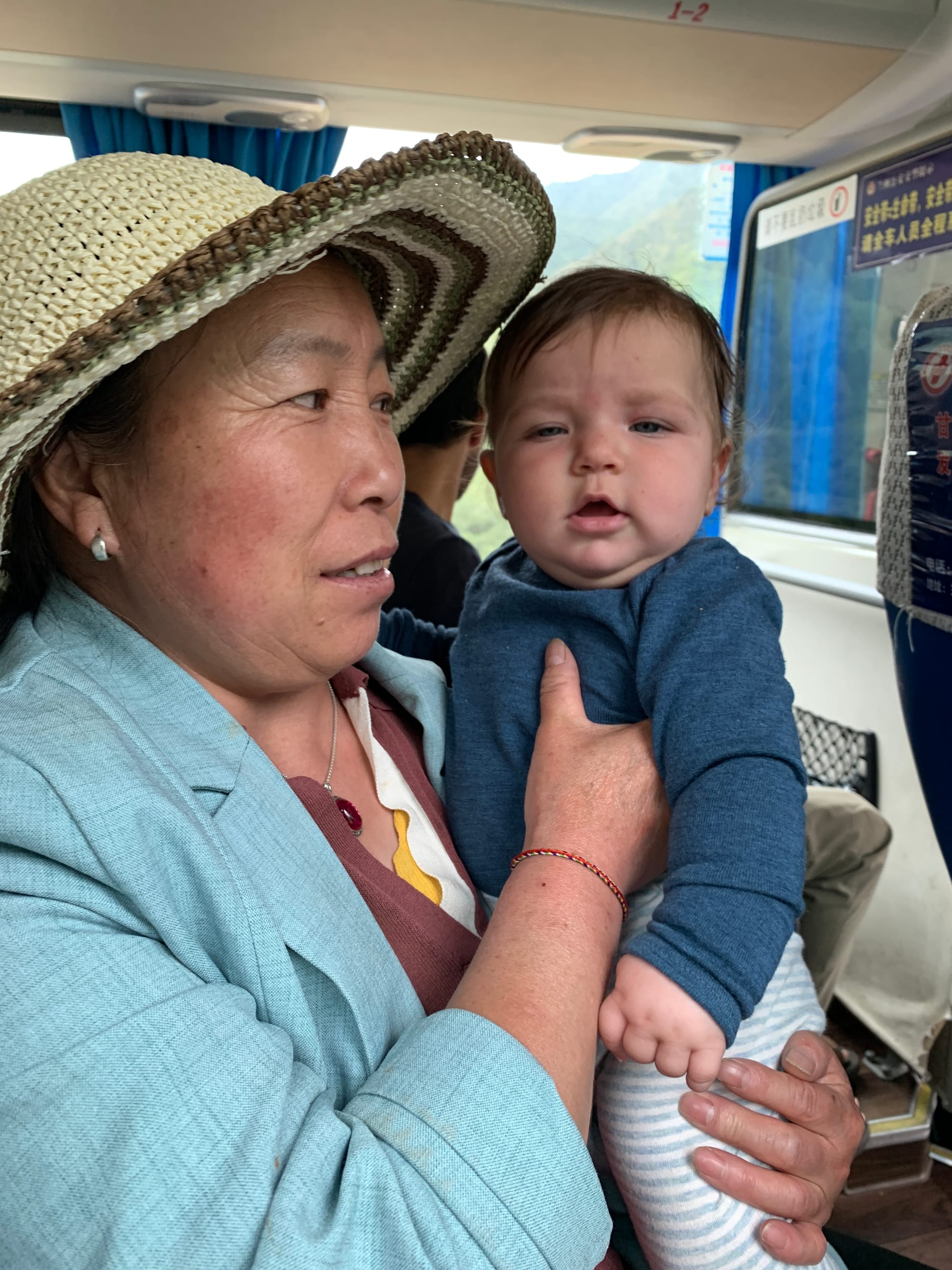
Chinese people love babies, and you might feel like a bit of celebrities at first. Especially if your baby is chubby with blue eyes and fair hair, you'll get the royal treatment.
The attention is always friendly, but it can become intense. People will smile, wave, want to take photos, and sometimes ask to hold your baby. In smaller cities or at tourist attractions, you might get stopped every few minutes. It's one of the most heartwarming aspects of traveling in China — and also one of the biggest culture shocks for Western parents who aren't used to strangers interacting with their children so freely.
If you don't want people to take pictures or hold your baby, you need to say no firmly but kindly. Most people will respect that immediately. But in our experience, the warmth behind the attention is always genuine, and it added something special to every trip.
What We'd Do Differently
We loved our first trip to China when Nina was only 4.5 to 6 months old. However, there are two things we probably would have done differently.
We went in the peak of summer, which meant it was unbearably hot in most places. Carrying a baby in a carrier all day makes you even more sweaty and uncomfortable. If you have flexibility on timing, stick to spring or autumn — it makes a huge difference to how much you enjoy each day.
The second thing was that our pace was way too quick. We didn't think we'd ever come back to China and wanted to see as much as possible, sometimes moving between cities every two days. It's always good advice, but especially with a baby: pace yourself and stay at least 3 days in every destination. It's more about enjoyment than checking places off your bucket list.
FAQs
Is China safe to travel with a baby?
Yes — China is one of the safest countries we've traveled in with our children. Cities are clean, well-organised, and have very low crime rates. Public transport is modern, streets are well-lit, and Chinese people are exceptionally warm and helpful toward families with babies. We've never had a safety concern across 6 trips.
Can you find baby supplies in China?
Yes, easily. Diapers (Pampers, Huggies, Japanese brands), formula, baby food, wipes, and all other supplies are widely available in supermarkets across all Chinese cities. You can also order delivery via the Meituan app on WeChat. See our complete diapers & changing guide.
Are there changing facilities in China?
Yes, and they're excellent. Dedicated baby care rooms (母婴室) with changing tables, breastfeeding armchairs, and child-height sinks are common in shopping malls, metro stations, airports, and train stations. High-speed trains also have changing tables in the accessible toilet (carriage 5).
Should I bring a stroller or carrier to China?
A baby carrier is essential — bring one no matter what. Strollers work in flat cities like Beijing and Chengdu but are impractical in hilly Chongqing, in older neighbourhoods, and at most major attractions. If you can only bring one, choose the carrier.
Can you breastfeed in public in China?
Yes. Nursing rooms (母婴室) are available in airports, malls, metro stations, and train stations. Nobody will be offended if you breastfeed in public — I never experienced any negative reactions. See our breastfeeding in China guide for more detail.
What is the best age to take a baby to China?
Any age works, but 4-6 months is in some ways the easiest — babies sleep a lot, eat only milk, and don't have itinerary opinions. 6-9 months is the trickiest window because of weaning. From 9-12 months it gets easier again as babies eat more varied food and are more engaged with their surroundings.
Do Chinese hotels provide baby cots?
Most international and mid-range hotels can provide a baby cot on request. Always confirm when booking — message the hotel through the booking platform a few days before check-in. Hotels booked via Trip.com generally handle family requests well.
How do Chinese people react to foreign babies?
With genuine warmth and fascination. Expect smiles, waves, requests for photos, and occasionally people wanting to hold your baby. Babies with light hair or blue eyes attract particular attention. It's always well-intentioned and one of the most heartwarming aspects of traveling in China.
Plan Your China Trip with Baby
Ready to go? Here are the resources that will help you plan:
 Magda Sawyer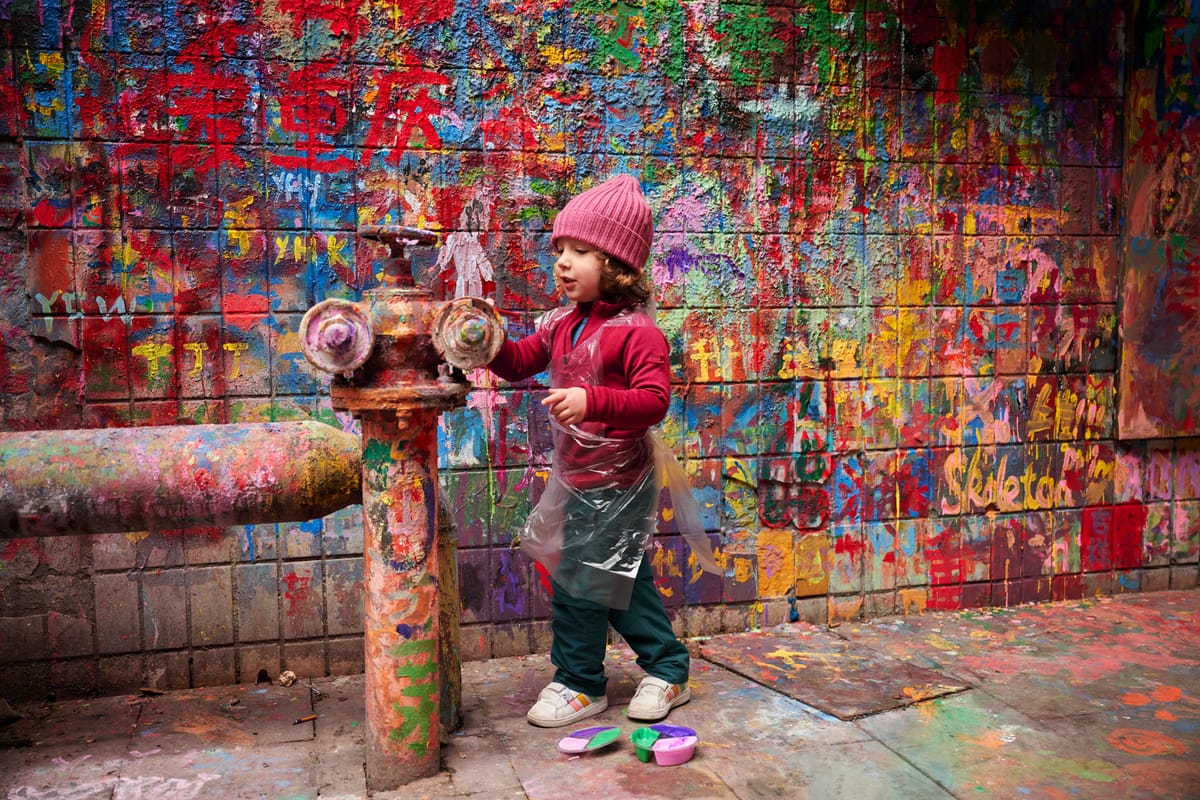
 Magda Sawyer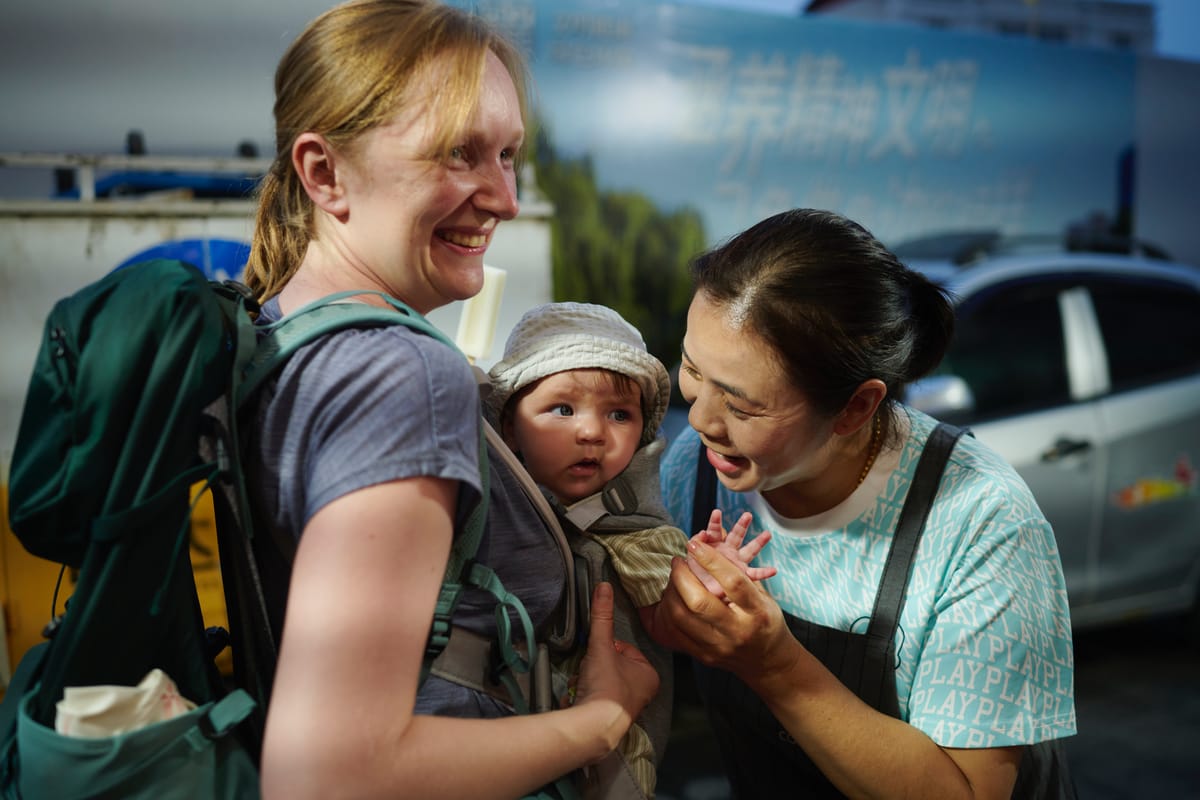
 Magda Sawyer