Best Things to Do in Xi'an — Must-See Attractions and Local Favourites

Xi'an packs far more into a few days than most travellers expect: ancient walls you can cycle, a food quarter worth planning a trip around, Tang-dynasty parks that come alive after dark, and one of the best cultural shows in China.
To make it easy to plan, we've sorted everything worth doing into clear categories — the must-see classics, the food, the parks, the shows, the modern city, and the picks that work best with kids — each with our honest take on what's worth your time and what you can happily skip.
We've been to Xi'an twice and still haven't done the most famous thing on the list, so consider this the no-FOMO version.
Quick Summary
🗺️ Location: Shaanxi Province, central China
🏛️ Best known for: The Terracotta Warriors
🆓 Best free sight: Datang Bu Ye Cheng lantern streets at night
🧱 Best activity: Cycling the 14km Ming city walls
🍜 Best for food: The Muslim Quarter
🌳 Best park: Tang Paradise after dark (Xingqinggong for families)
🎭 Best show: TuoLing Legend
🌃 Best at night: Datang Bu Ye Cheng lantern streets
🚄 Best day trip: Mount Hua (Huashan)
⏱️ How long: 2–3 days
Table of contents
Xi'an was one of the first major Chinese cities we visited, back when we still thought "doing China" meant rushing through a bucket list. Two trips later, we've learned that Xi'an is at its best when you slow it down. In this guide I'll walk you through the attractions, the spots we genuinely loved, and — honestly — the things we didn't get to but would recommend on a longer trip. For trip logistics (visas, when to go, how to get there and around), see our Xi'an Travel Guide; for a day-by-day plan, our Xi'an Itinerary.
Going to Xi'an? Find best hotels:
 Magda Sawyer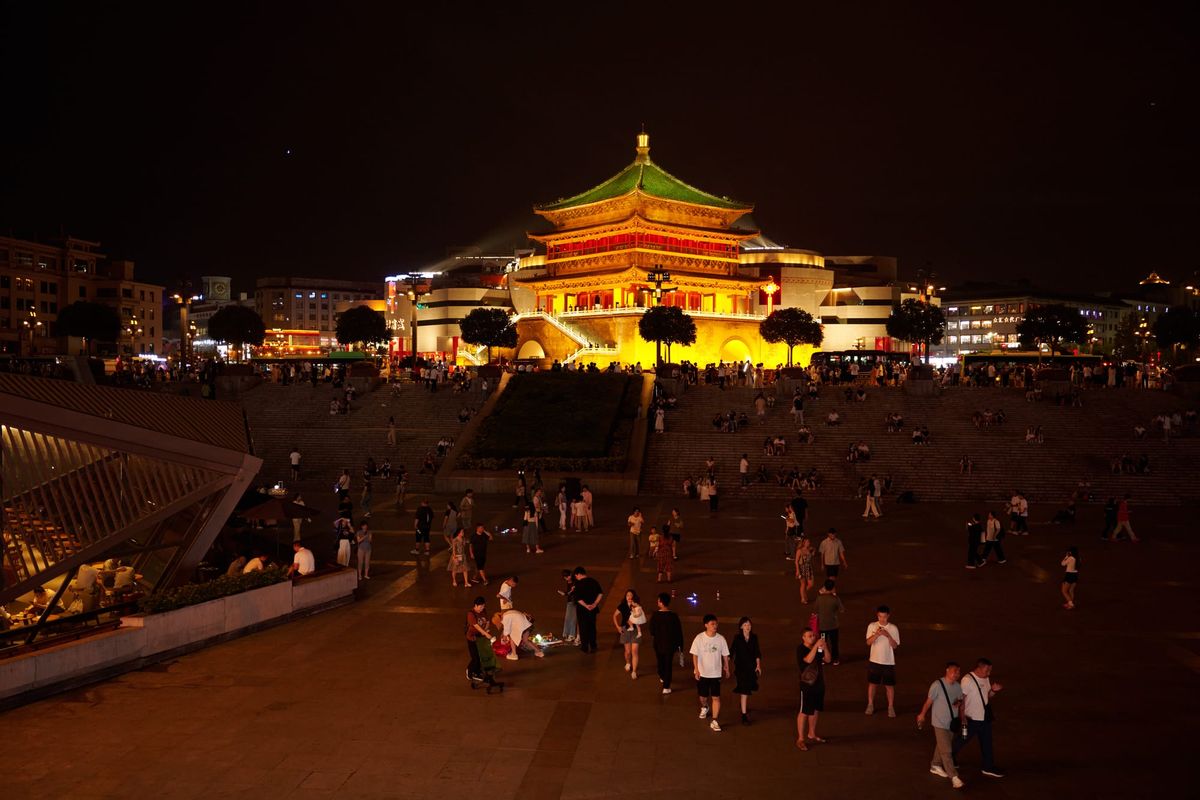
Must-See Classics
I say must-see, but our philosophy is that nothing is truly must-see in China — and Xi'an is a good example of that. We've been twice and still haven't done the most famous thing on the list (the warriors). The city has so much else going on that we never felt we were missing out. That said, these are the attractions that put Xi'an on the map.
Terracotta Warriors
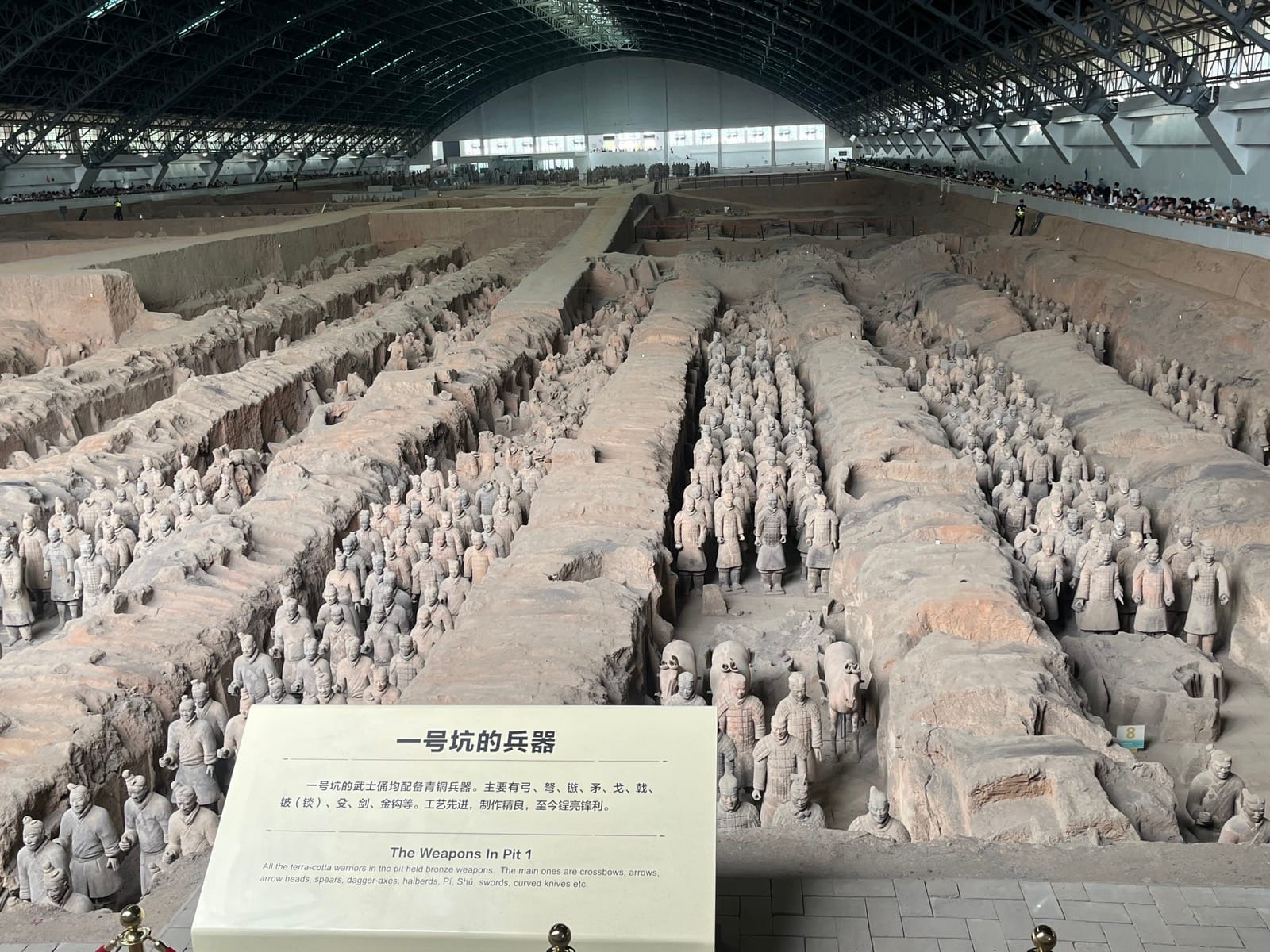
Xi'an's signature sight, and one of the most famous archaeological discoveries of the 20th century. The terracotta army is a collection of around 8,000 life-size clay soldiers, horses and chariots buried with China's first emperor, Qin Shi Huang, around 210 BCE. They were discovered in 1974 by farmers digging a well, and excavations are still ongoing.
I have to be honest: we still haven't visited. Both our trips were in peak summer heat, and committing half a day to a long metro-and-bus journey to crowded outdoor pits felt like a bad use of energy. My mum recently went on her own China trip and confirmed our suspicions — she found them interesting, but not the highlight of her trip.
That doesn't mean you should skip them. If it's your first time in Xi'an, or you're a history enthusiast, the warriors are genuinely worth the day. We just want you to know that Xi'an is more than this one site.
Practical info: Located about 1.5h from the city by metro + tourist bus (or 1h with a dedicated tour bus). Plan a half to full day. Book tickets in advance online — they sell out daily in summer. Pit 1 is the famous one; Pits 2 and 3 are smaller but worth it for the closer view of individual warriors.
Ancient City Walls
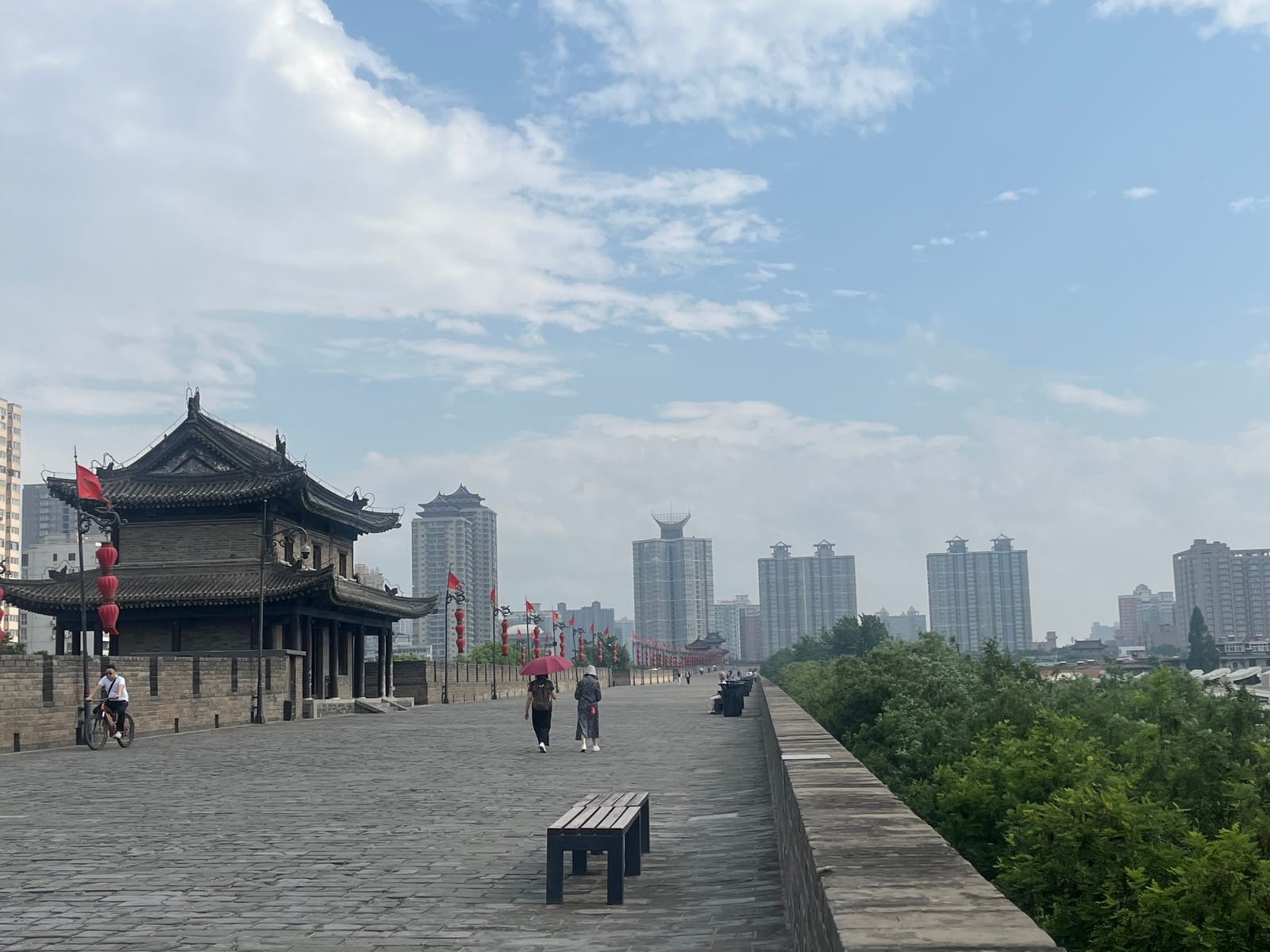
The walls are probably our favourite "headline" sight in Xi'an — and unlike the warriors, they're right in the city, free to walk around the foot of, and a great way to see the layout of the old town. The current walls are Ming dynasty (around 1370), built on top of the older Tang dynasty foundations. They form a complete 14km rectangle around the historic core, around 12m high and almost as wide.
You have three ways to experience them. Walking a section is easy — head up at the South Gate, walk for as long as your group can handle, and come back down. Cycling the full loop takes 2–3 hours; tandem bikes are available. Hanfu photo shoots are a whole experience in themselves — rent a costume nearby and join the hundreds of locals dressing up Tang-style for photos along the wall.
It is genuinely impressive — both as a structure and as a public space the city actually uses. Locals jog and exercise up there in the cool of early morning. Late afternoon and sunset are the best times to go.
Magda Sawyer
Muslim Quarter
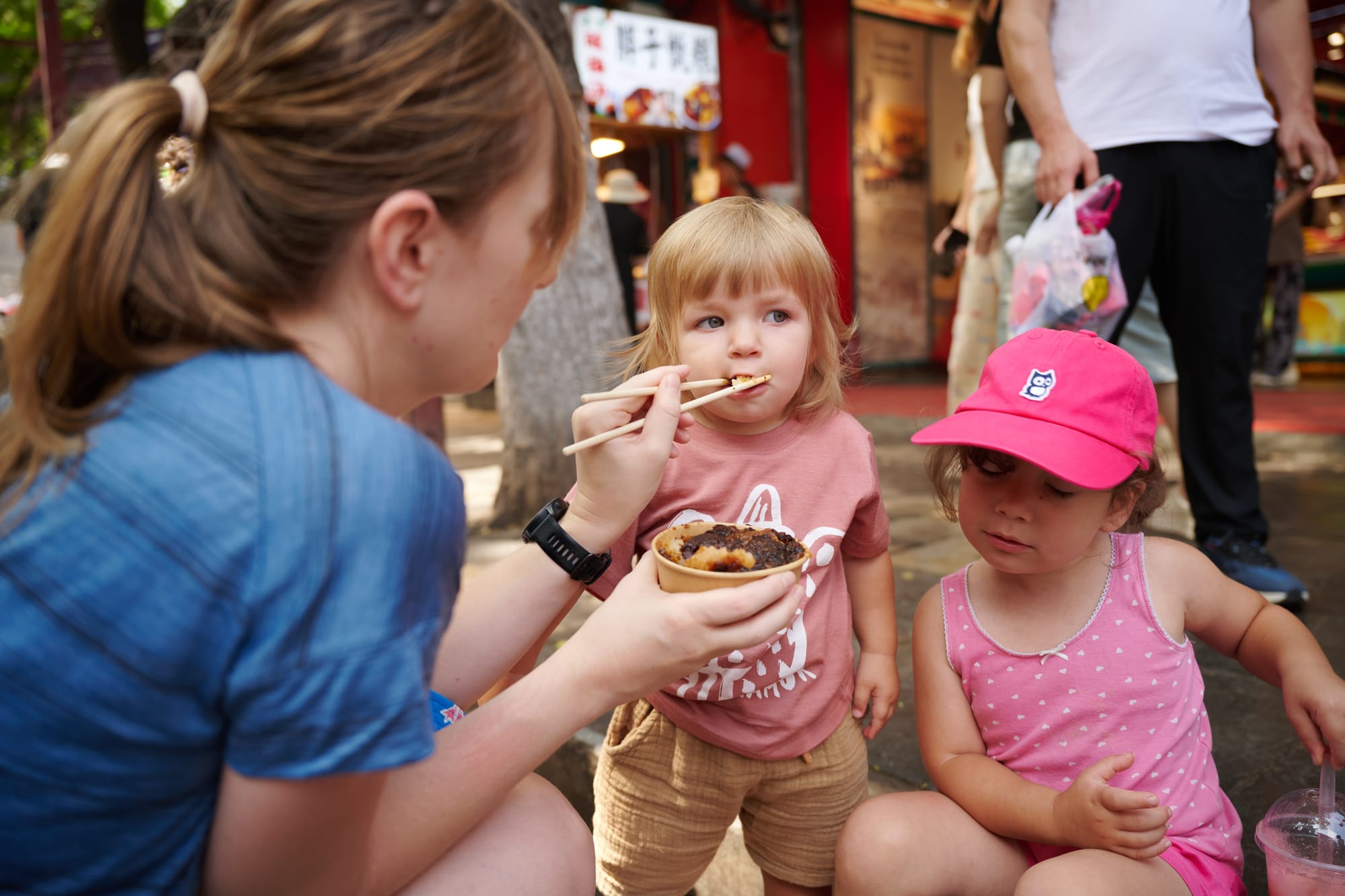
If the warriors are Xi'an's history, the Muslim Quarter is its present. This is the historic Hui Muslim neighbourhood that grew up around the Great Mosque, and despite a heavy renovation in recent years it's still where you go to eat your way through the city.
The main street (Beiyuanmen) is the obvious entry point, and it's worth a wander even though it's been sanitised into a tourist hot spot — bright lights, busy stalls, lamb skewers spinning on every corner. But the real Muslim Quarter is in the side streets running off it. Turn down any narrow alley and you'll find smaller stalls at local prices, often with queues of locals — that's your signal to join.
You can also visit the Great Mosque of Xi'an while you're there. It's one of the oldest and largest mosques in China, founded in the Tang dynasty, and architecturally fascinating because it's built in a Chinese style with pagoda-shaped minarets. Small entry fee, peaceful courtyards, worth 30 minutes.
Bell Tower & Drum Tower
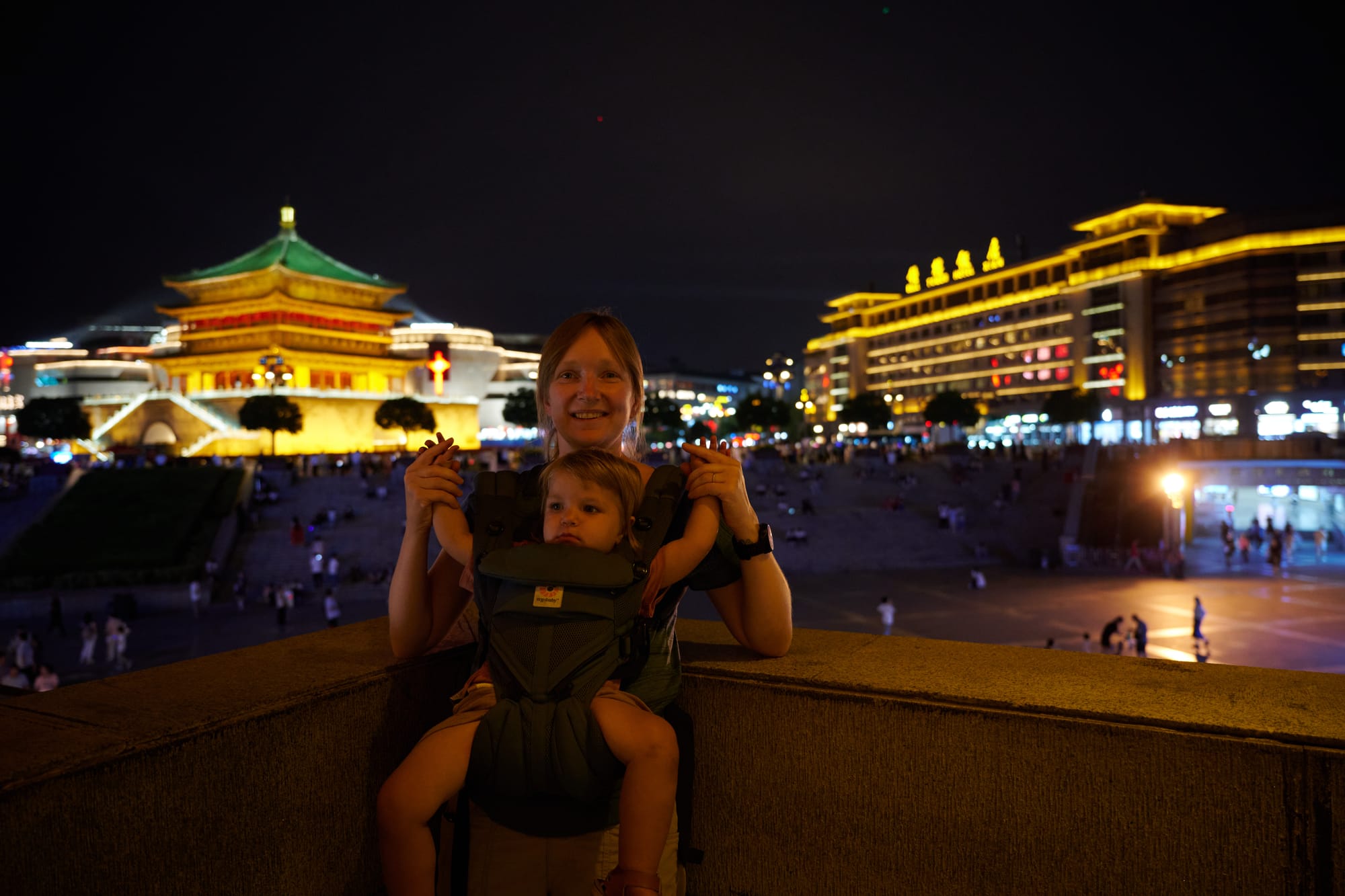
The Bell Tower and the Drum Tower stand a couple of hundred metres apart in the heart of the old city, and between them they basically anchor the centre of Xi'an. Both are Ming dynasty, both are beautifully lit at night, and both let you climb up for a small fee.
The Bell Tower is the geographic centre of the walled city — all four main roads meet at it. The Drum Tower would beat a drum at dusk to signal the closing of the city gates, and today hosts short drumming performances at set times during the day, worth catching if your timing lines up. You can experience these towers just as well from the surrounding pedestrian plaza as you can by climbing them — but if you want the photos and the bird's-eye view, the climb is short and the view is great.
Big Wild Goose Pagoda
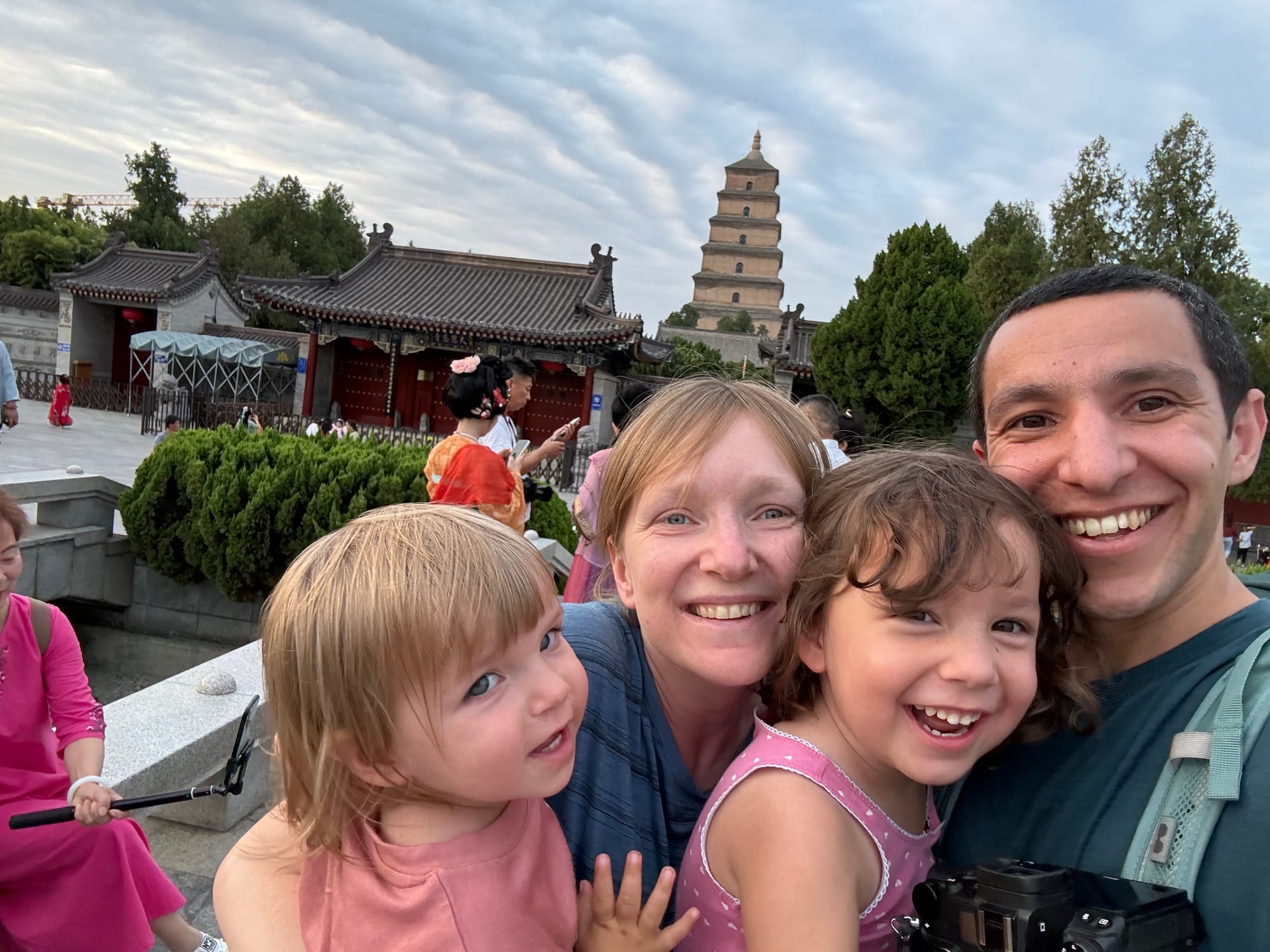
One of the most recognisable buildings in China — a seven-storey Tang dynasty pagoda built in 652 to house Buddhist scriptures brought back from India by the monk Xuanzang. It's a working temple, you can climb it, and the surrounding park and pedestrian plaza is one of the liveliest evening spots in Xi'an.
The pagoda itself is fine — climb it if you want, or admire it from the gardens around it. What really makes the area is everything around it: the North Square with its musical fountain show (usually 8pm in summer, free, worth arriving 20 minutes early), the pedestrian streets selling food and souvenirs, and the connected Datang Bu Ye Cheng area (more below) which we'd argue is the actual reason to come.
Tang Paradise (Da Tang Furong Yuan)
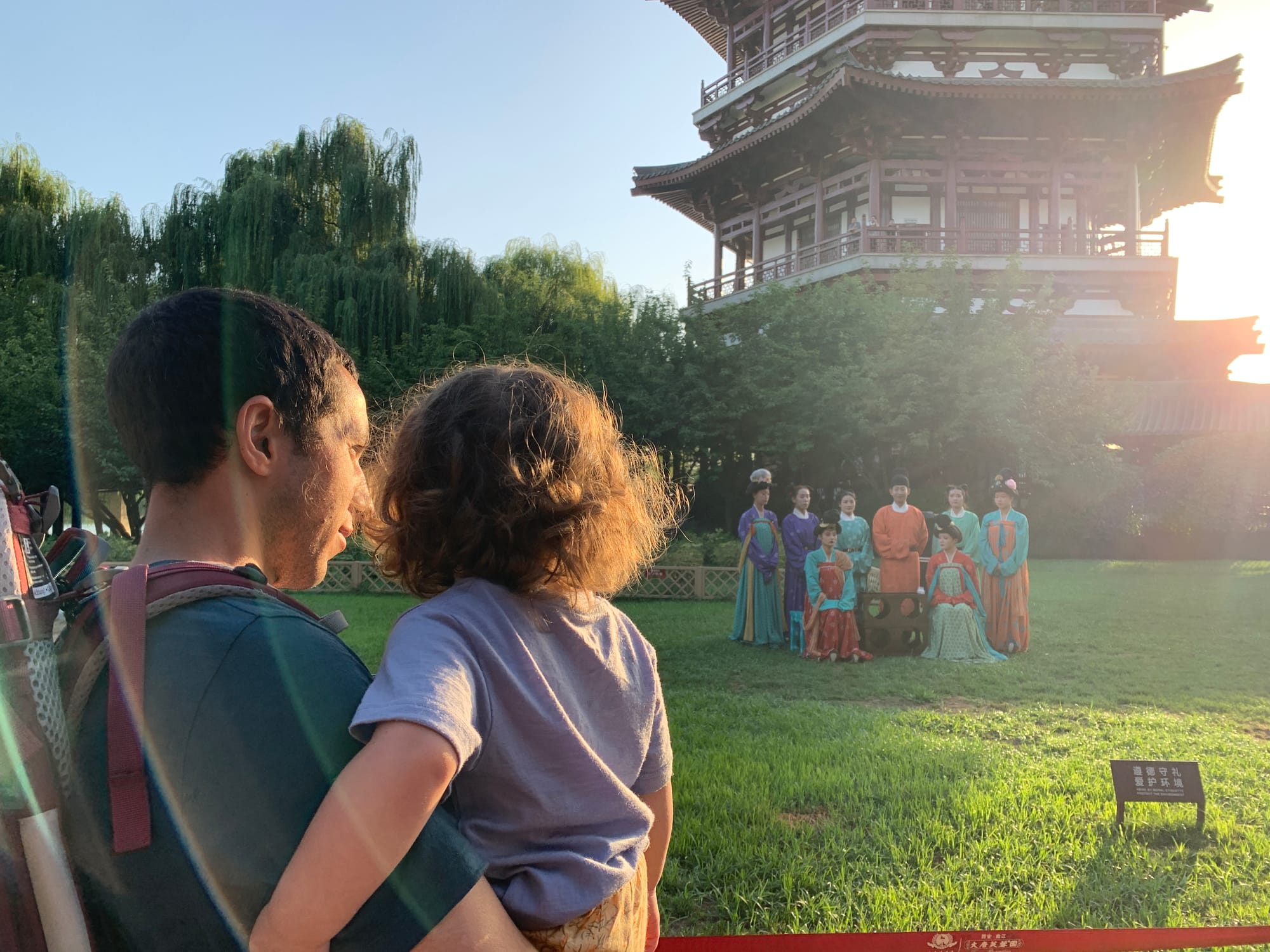
Tang Paradise is a 165-acre Tang-dynasty themed park with lakes, pavilions, imperial-style architecture and a packed schedule of outdoor performances. It opened in 2005, so it's not historic — it's a recreation of what an imperial garden in Tang-era Chang'an might have looked like — but it's done well, and walking through it at night with the buildings lit up is genuinely beautiful.
This is the evening activity we did over and over again on both trips, especially in peak summer heat when nothing else was bearable until after sunset. The park is at its best from late afternoon into the evening: the air cools, the lights come on, and the performances start (we caught water shows, traditional dance, and acrobatics on different visits).
It's right next to the Big Wild Goose Pagoda, so a perfect evening is: dinner in the Muslim Quarter, taxi to the Big Wild Goose Pagoda for the fountain show, walk across to Tang Paradise as the sun sets, stay until the park closes around 10pm. There's a ticket fee (~120 RMB) which is the priciest entry in the city — but well worth it.
Shaanxi History Museum
One of China's best museums, and a major omission on our part — we haven't been yet. Shaanxi province has been at the heart of Chinese civilisation for over 3,000 years (13 dynasties had their capital here), and this museum is where the best of the resulting archaeology has ended up: more than 370,000 artefacts spanning prehistoric times to the Tang dynasty.
Highlights include Tang dynasty murals from imperial tombs, gold and silver Silk Road artefacts, terracotta figures (different from the famous warriors), and a stunning ceramics collection.
Practical note: The basic museum entry is free, but you must reserve a ticket online in advance through the official WeChat mini-program — slots fill up days ahead in busy seasons. There's also a paid "Treasures" gallery with the most valuable items, which can be booked at the museum on the day. Plan 2–3 hours minimum.
What to Eat
Xi'an food is one of the great cuisines of China and the single biggest reason to plan a trip here, even if you have to skip the warriors. The food draws on Silk Road influences — wheat noodles, lamb, spices, flatbreads — and feels very different from southern Chinese cuisine. Most of the famous dishes are also extremely affordable.
You don't need to plan restaurants ahead — wander the Muslim Quarter or any local backstreet and you'll be fine. But these are the dishes to look out for.
Biang Biang Noodles
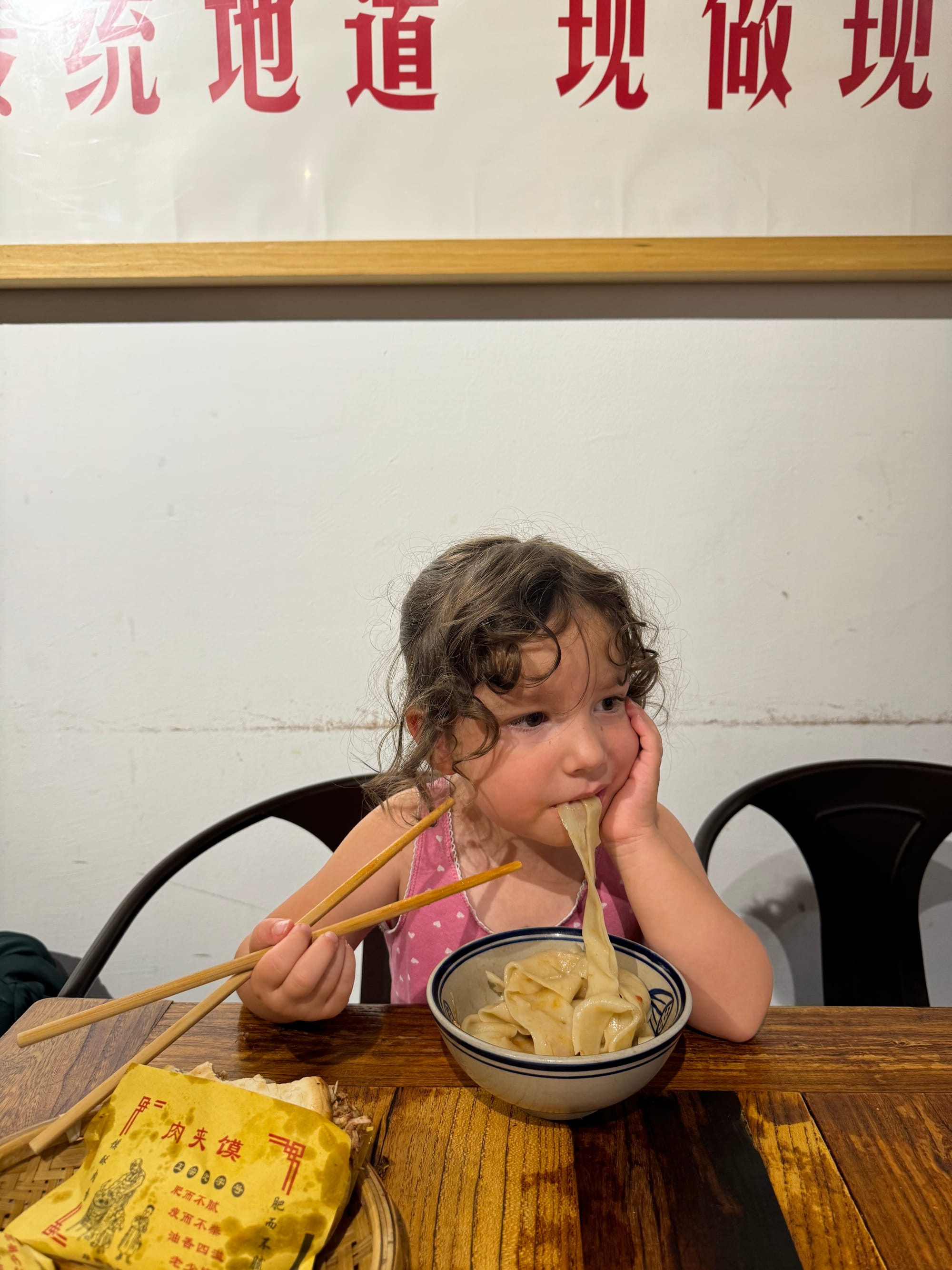
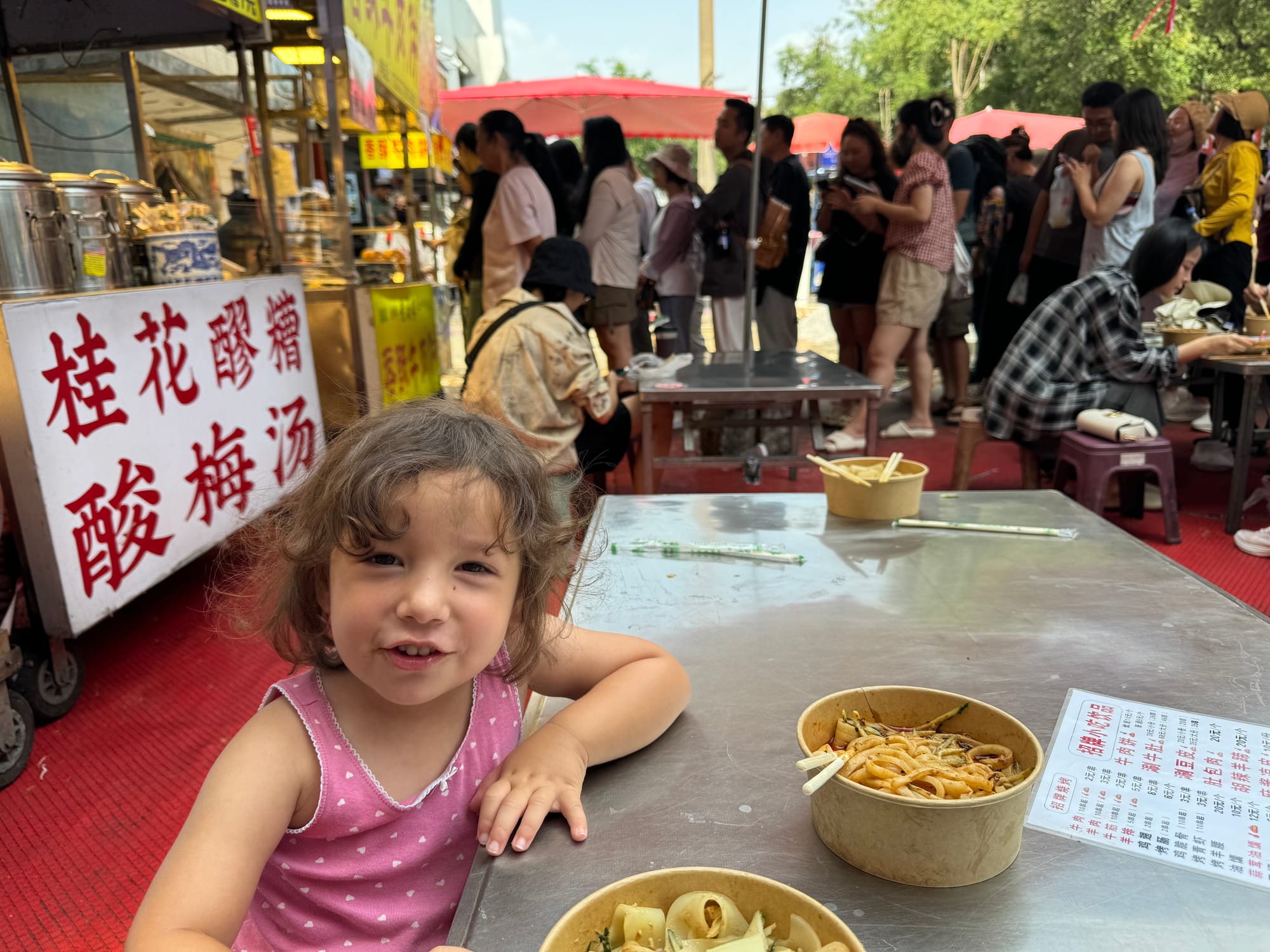
Wide, flat, hand-pulled noodles served in a chili-soy sauce, often topped with cumin lamb or vegetables. The character for "biang" (𰻞) is one of the most complex in Chinese — locals like to point this out — and the noodles themselves are a fun mix of chewy and slippery, ideal for slurping. You'll find them everywhere, but a famous spot is Wei Jia Liang Pi in the Muslim Quarter.
Roujiamo (Chinese Hamburger)
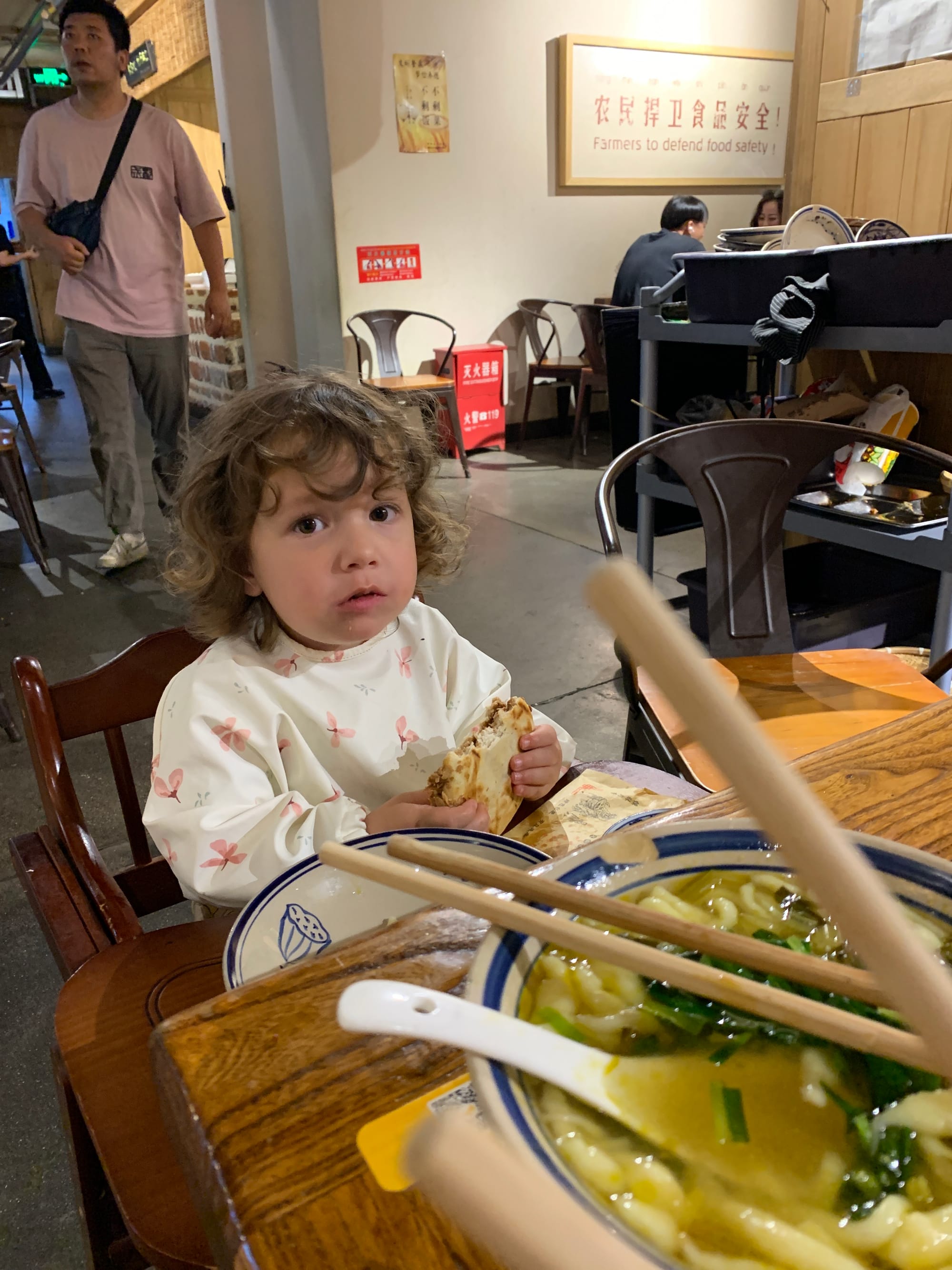
Often called the world's oldest hamburger — a crispy round flatbread split open and stuffed with slow-braised pork (or beef in the Muslim Quarter for halal versions). Costs 10–15 RMB, eaten in three or four bites, and is the perfect walking snack. Great for picky eaters and kids.
Yangrou Paomo (Mutton Stew with Bread)
The classic Xi'an winter dish — a deeply flavoured mutton broth that you eat with chunks of an unleavened bread called mo. The fun part: at most traditional restaurants you tear the bread into small pieces yourself (the smaller, the better), and they take it back to the kitchen to add the broth on top. It's a slow, communal meal and a quintessentially Xi'an experience. Lao Sun Jia and Tongshengxiang are the famous old-school spots.
Liangpi & Cold Sour Noodles
For summer, the cold-noodle game in Xi'an is unmatched. Liangpi (cold skin noodles) are made from wheat starch, served chewy and slippery in a vinegar-and-chili dressing with bean sprouts and cucumber. Refreshing and ferociously addictive. Pair with a roujiamo and you have the most classic Xi'an street meal there is.
Lamb Skewers
Cumin lamb skewers are everywhere in the Muslim Quarter — grilled over hot coals, dusted with cumin and chili, and served on long bamboo skewers. Most stalls also do chicken wings, tofu, and aubergines. A few skewers and a beer is a perfect 9pm snack.
Parks & Green Spaces
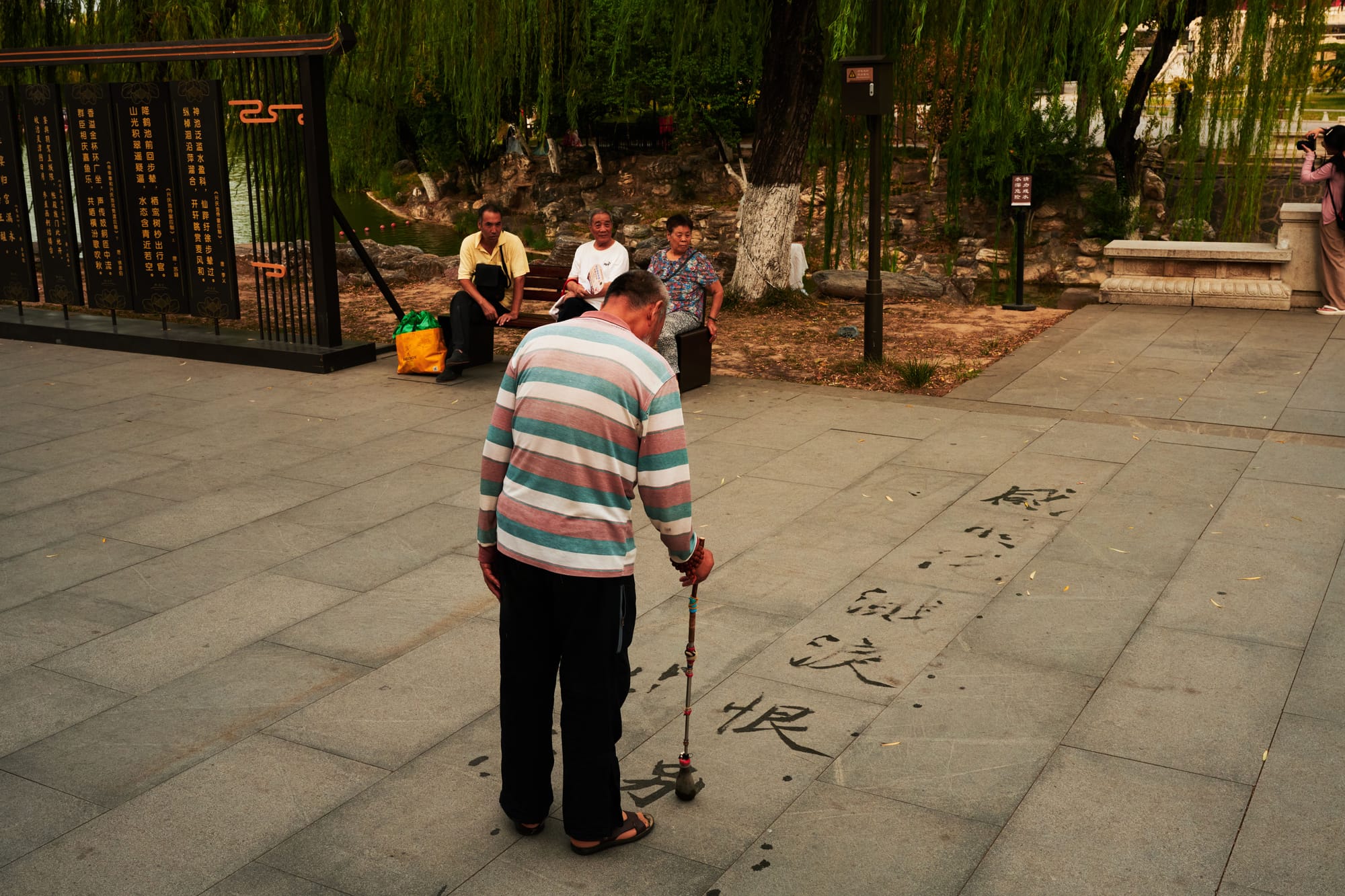
Xi'an might not be a super green city on the surface, but its parks are where you see locals actually living their lives — doing taichi, dancing in groups, flying kites, singing opera in the corners. They're free (or close to it), shady in summer, and some of our favourite "do nothing" hours in the city.
Xingqinggong Park
One of the largest parks in Xi'an, in the south-east of the city. The site is where the Tang emperor Xuanzong's palace once stood, and although the original buildings are long gone, the park is full of pavilions, a boating lake, and a playground that our kids loved. If you want to see Xi'an residents in their element, this is the place — and it's a brilliant break from sightseeing with children.
 Magda Sawyer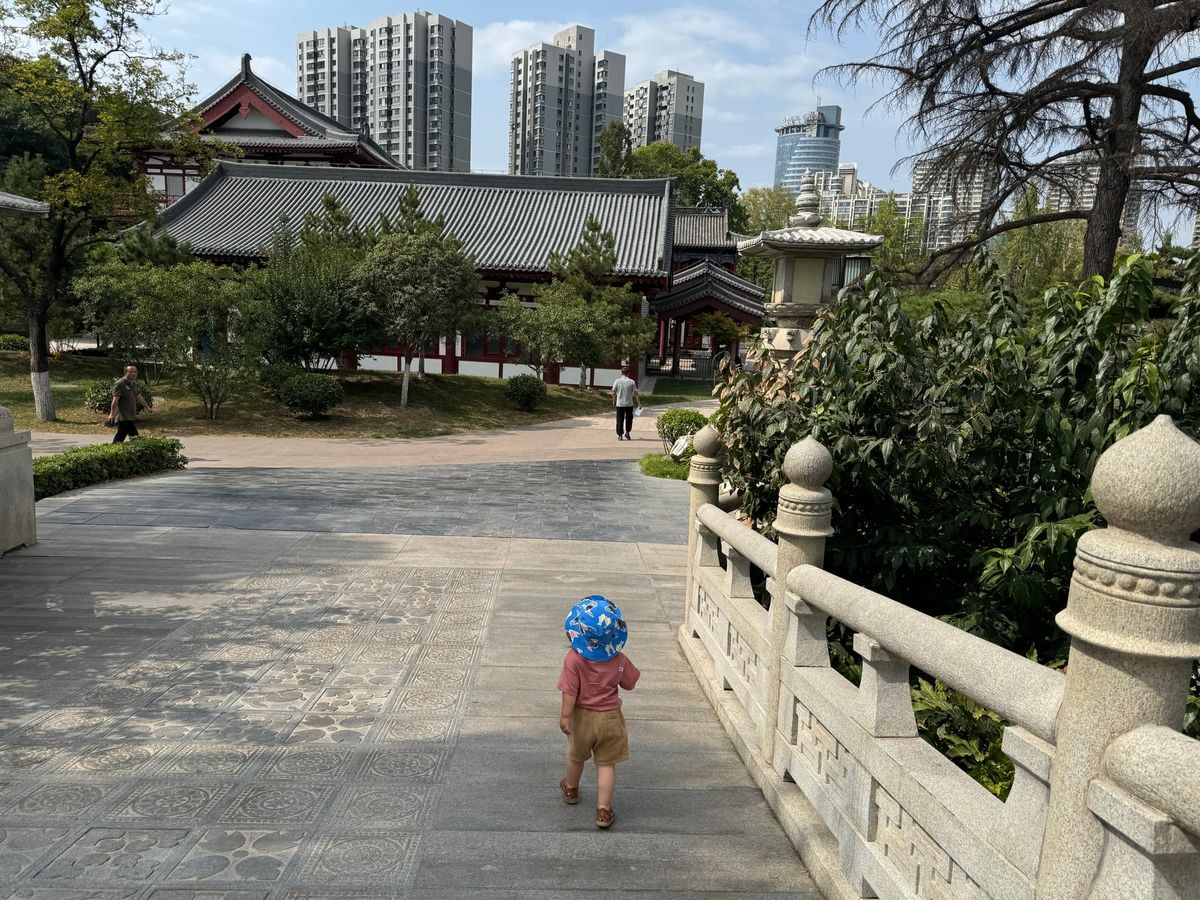
More green spaces
A few others worth knowing about if you have time or are travelling with kids: Tang Paradise (covered above) is the showpiece Tang-themed park, best at night; Lianhu Park and Revolution Park inside the walls are small, local, and good for a quick breather; and the green ribbon along the foot of the city walls (the moat park) is a pleasant, flat stroll or jog that loops the whole old town.
Shows & Cultural Performances
If you do one ticketed cultural experience in Xi'an, make it an evening show. China is investing heavily in big-budget cultural performances aimed at tourists, and Xi'an has several of the best in the country.
TuoLing Legend Show
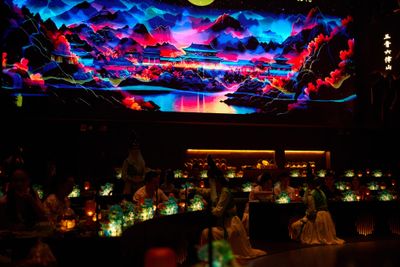
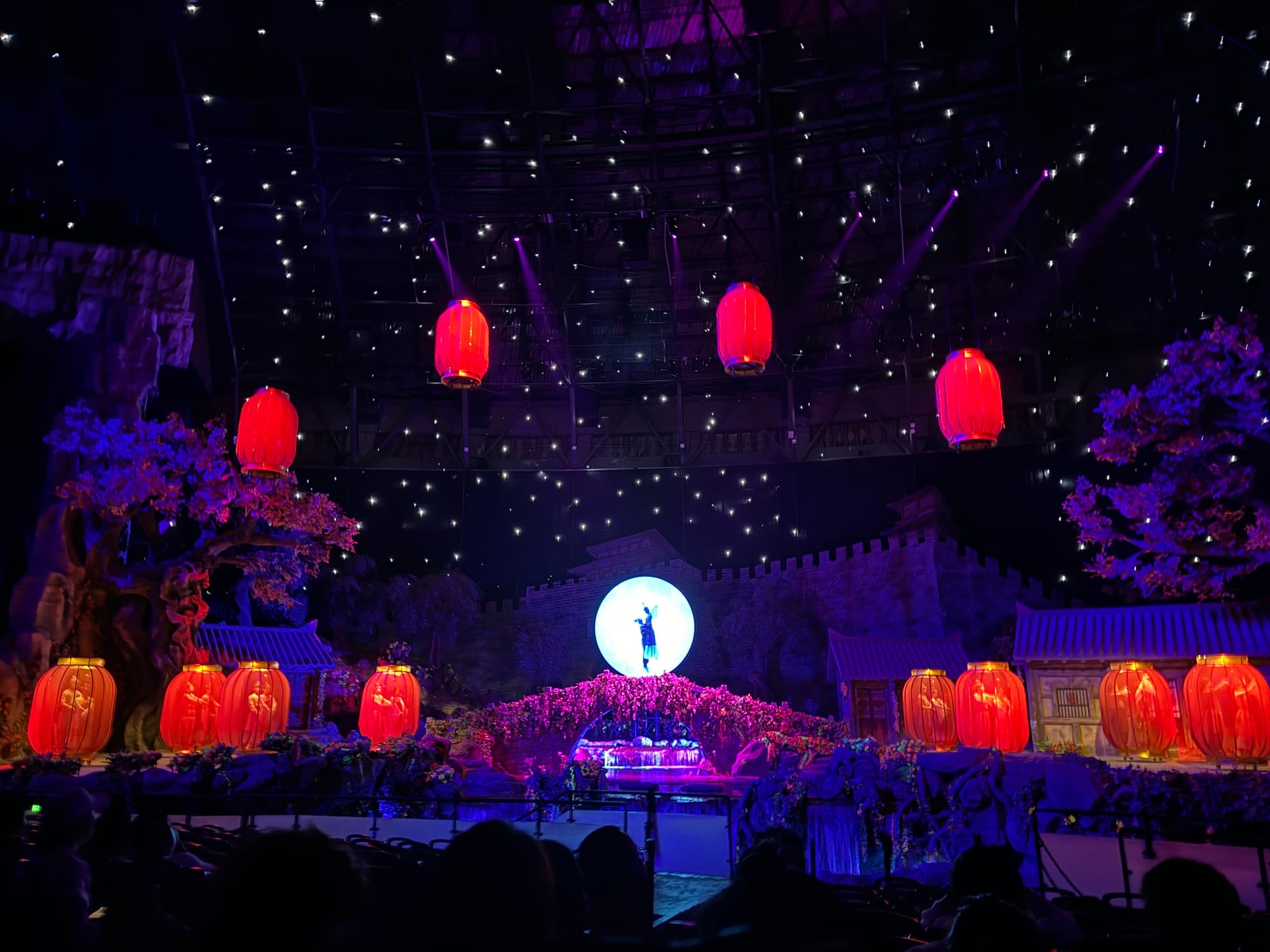
This is the one we did and the one we'd recommend without hesitation. TuoLing Legend is a 90-minute theatrical performance telling the story of a Silk Road caravan, with stunning scenography, live music, projection mapping, and real animals (yes — there are camels and wolves on stage). The story is told visually so language isn't a barrier — it held our whole family transfixed from start to finish, the youngest included, which is about the highest praise we can give a show. Tickets start around 280 RMB; book a few days in advance, especially in summer.
Tang Dynasty Music and Dance Show
We didn't do this one, but it's the classic Xi'an cultural performance and worth knowing about. Held at the Tang Dynasty Theatre Restaurant, it's a dinner-and-show format featuring traditional Tang court dance, music and costumes — running since the 1980s, so it's the established option. Reviews are mixed compared to TuoLing — some travellers find it dated, others love the historical authenticity.
The Song of Everlasting Sorrow
An outdoor performance at Huaqing Palace (near the Terracotta Warriors site), telling the famous love story of the Tang Emperor Xuanzong and his concubine Yang Guifei. We haven't been, but it gets strong reviews for spectacle — massive cast, real ponds and waterfalls as part of the set — and it's the kind of show that could anchor your warriors day if you stay out there until evening.
Modern Xi'an
Most travellers come to Xi'an for the ancient stuff, but the city has a lively modern side that we ended up enjoying just as much. If you have a third or fourth day, these are the spots to slot in.
Fangsuo Commune Bookstore
Tucked under the Maximall 7 mall in the south of the city, Fangsuo Commune is an architectural marvel disguised as a bookstore. The interior is a vast, cave-like vaulted space with circular bookshelves, a coffee bar, design objects and curated fashion. It won an international design award and it's worth visiting even if you don't read a word of Chinese — just walking through the space is the point. For us it's one of those windows into modern China that most Western visitors never see — a perfect rainy afternoon, or an escape from the summer heat.
Datang Bu Ye Cheng (Tang Never Sleeps City)
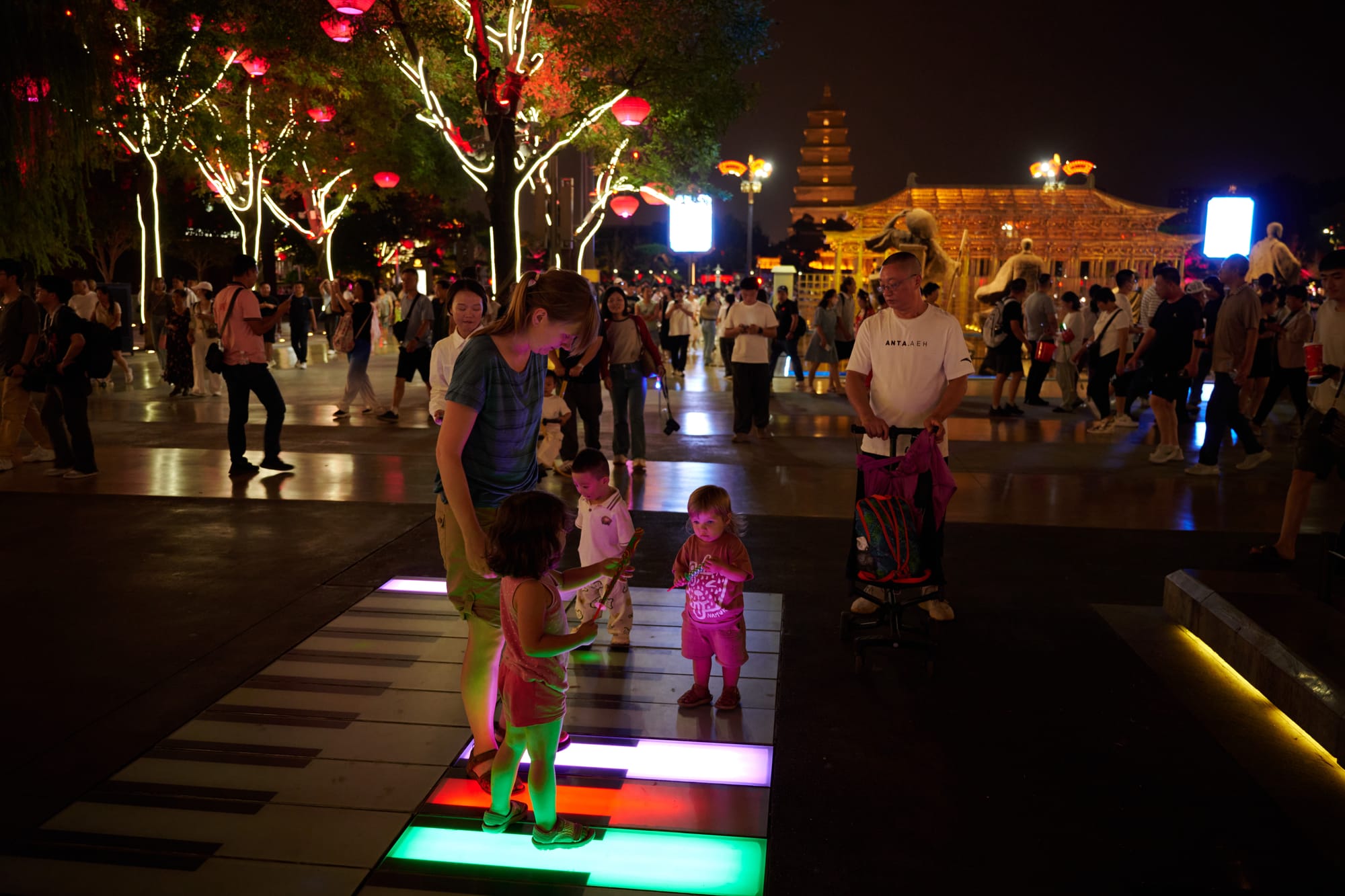
Right next to the Big Wild Goose Pagoda, Datang Bu Ye Cheng is a free open-air pedestrian street themed around Tang dynasty Chang'an. By day it's busy with families and souvenir shops; by night it transforms into one of the most photographed places in Xi'an, with thousands of lanterns, costumed performers, street musicians, and crowds of locals in hanfu. This is honestly where we'd send first-time visitors before the warriors — a free, atmospheric, easy way to soak up Xi'an's character.
Yongxingfang Food Street
A renovated old neighbourhood that's been turned into a curated street food destination, just inside the city walls near the Zhongshan Gate. It's less chaotic than the Muslim Quarter and showcases regional Shaanxi specialities you don't always find on Beiyuanmen — including the famous "Crying Pot", a noodle dish where customers slap a wooden block to "wake up" the noodles in the pot.
Temples, Museums & History We've Yet to Explore
Xi'an has 3,000 years of layered history that goes well beyond the warriors, and there's a long list of cultural sites we haven't made it to yet. Worth knowing about for a slower or more history-focused trip.
Stele Forest (Beilin Museum)
The largest collection of ancient stone tablets and steles in China — more than 11,000 inscriptions, the oldest dating back over 2,000 years. For anyone interested in calligraphy or Chinese writing, this is one of the most significant museums in the country. Inside the old city walls, easy to reach on foot or by metro.
Small Wild Goose Pagoda
The lesser-known sister to the Big Wild Goose Pagoda, set in a much quieter park, with the Xi'an Museum next door. The pagoda was built in 707 and has survived earthquakes that have actually changed its shape over the centuries. Goes well with the Xi'an Museum for a half-day combo, and it's free to enter.
Xi'an Museum
Not to be confused with the Shaanxi History Museum — Xi'an Museum is smaller, focuses on city history, and is far less crowded. Located next to the Small Wild Goose Pagoda. Free entry, reservation required.
Daming Palace National Heritage Park
The reconstructed grounds of what was once the largest royal palace complex in the world — the seat of the Tang dynasty for 220 years. The actual palace is long gone, but the foundations and reconstructed gates give a sense of the scale, and the park is a peaceful place to walk. North of the historic centre.
Xi'an After Dark
Xi'an is a city that comes alive at night, and many of the headline sights are at their best after sunset. If you only have 2–3 days, plan your evenings carefully — they're often more memorable than the daytime sightseeing.
- Walking the illuminated walls — the full city wall is lit up at night; the stretch between the South Gate (Yongning) and the West Gate is the quietest and most atmospheric.
- Bell & Drum Tower at night — both stunningly lit, with a busy plaza between them and the Muslim Quarter. A perfect after-dinner photo stop.
- Muslim Quarter after 9pm — open until midnight; the 9–11pm stretch is at its best, once the day-trippers have gone and the stalls fill with locals.
- Big Wild Goose Pagoda fountain show — free musical fountains in the North Square, usually 8pm in summer (check on the day; arrive 20 minutes early).
Things to Do with Kids
Xi'an is genuinely one of the easier Chinese cities to enjoy with children — walkable, full of forgiving street food, and packed with evening spectacle. The standouts for families:
- Cycle or walk the city walls — rent a tandem or a bike with a child seat at the South Gate; flat, traffic-free, and a hit with kids.
- Muslim Quarter street food — roujiamo and plain noodles are easy wins for picky eaters, and the lights and bustle keep little ones entertained.
- Tang Paradise after dark — lanterns, water shows and lots of space to run around once the heat drops.
- TuoLing Legend show — camels, acrobatics and projection mapping that hold all ages, no language needed.
- Xingqinggong Park — playground, boating lake and locals flying kites; a proper break from sightseeing.
- Big Wild Goose Pagoda fountain show — free, fun, and timed nicely for an early evening.
The one we'd think twice about with little ones is the Terracotta Warriors — a long round trip and big crowds for a payoff toddlers rarely appreciate. For the full breakdown — what works by age, what to skip, and the most family-friendly places to stay — see our dedicated family guide:
Magda Sawyer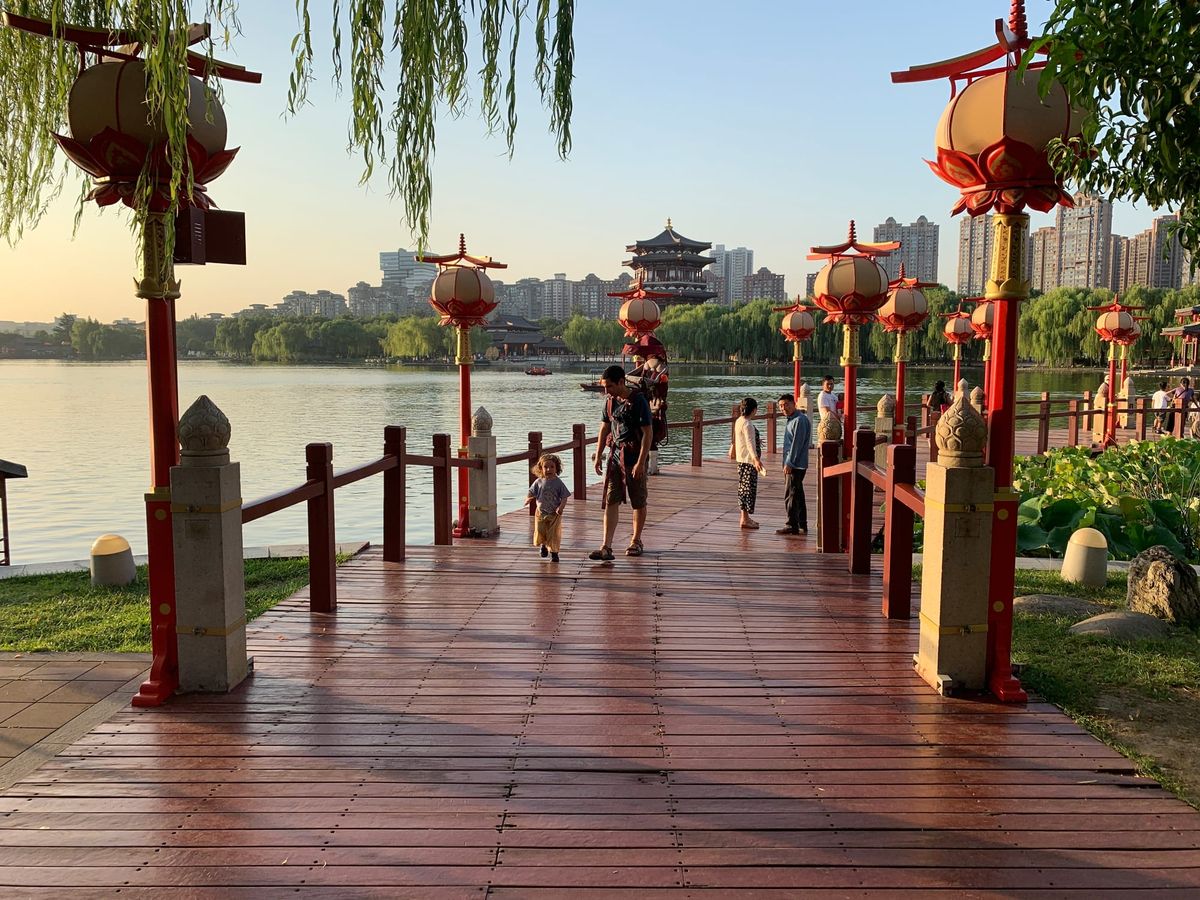
Day Trips from Xi'an
Xi'an is a great base for several major day trips. We haven't done any of these ourselves — with limited time, we focused on the city itself — but they're worth knowing about for a longer or more adventurous trip.
Mount Hua (Huashan)
One of China's Five Sacred Mountains, about 1.5 hours from Xi'an by high-speed train. Famous for its dramatic granite peaks, narrow ridge trails, and the (in)famous Plank Walk in the Sky — a wooden plank bolted to the side of a sheer cliff that you traverse clipped to a safety cable. Most visitors take the cable car up and hike between the peaks. A full-day trip minimum, and many travellers stay overnight in nearby Huayin to catch sunrise from the East Peak.
Hanyang Tomb (Han Yang Ling)
The tomb of the fourth Han dynasty emperor (about 100 years younger than the Terracotta Warriors), with thousands of smaller painted clay figurines buried alongside him. The big draw is the museum, where you can walk on glass floors directly over the excavated pits — visually striking and far less crowded than the warriors. About an hour from central Xi'an, closer to the airport.
Famen Temple
A major Buddhist pilgrimage site about 2 hours from Xi'an, famous for containing finger-bone relics of the Buddha. The temple complex is a striking mix of ancient and ultra-modern — the original 1,700-year-old pagoda sits next to a 148-metre modern hands-shaped pagoda built in 2009. Polarising design, but the relic museum is genuinely impressive. Easy to combine with the nearby Qianling Mausoleum (the only tomb of a Chinese empress regnant, Wu Zetian).
Qinling Mountains
The mountain range south of Xi'an — the geographic dividing line between northern and southern China. The Qinling are home to wild giant pandas, golden snub-nosed monkeys, and some of the country's best alpine hiking. Less developed and less touristy than Huashan. Good for a multi-day add-on if you have time.
Planning & Practicalities
A few attraction-specific booking notes, since several of Xi'an's best sights need reserving ahead:
- Terracotta Warriors — book online a day or two ahead; sell out daily in summer
- Shaanxi History Museum — free but requires a WeChat reservation 3–5 days ahead
- TuoLing Legend show — book here, at least 24h in advance
- Xi'an Museum + Small Wild Goose Pagoda — free, reservation needed
Everything else (city wall, Bell Tower, Drum Tower, Muslim Quarter, Tang Paradise) can be done on the day. For the full logistics — best time to visit, getting to and around the city, money and payments, and language tips — see our complete Xi'an Travel Guide.
FAQs
Q: Is Xi'an just the Terracotta Warriors?
A: Definitely not. The warriors are the headline, but we've visited Xi'an twice and skipped them both times — and never felt we missed the city. The walls, the Muslim Quarter, Tang Paradise, the TuoLing Legend show, and the Shaanxi History Museum are all standout experiences in their own right.
Q: What are the best free things to do in Xi'an?
A: Plenty of Xi'an's best experiences cost nothing: wandering the Muslim Quarter, the Big Wild Goose Pagoda North Square fountain show, the Datang Bu Ye Cheng pedestrian street at night, Xingqinggong Park, and admiring the Bell and Drum Towers from the plaza. The Shaanxi History Museum and Xi'an Museum are also free (reservation required).
Q: Which cultural show in Xi'an is best?
A: We'd pick the TuoLing Legend show — a modern, cinematic 90-minute Silk Road spectacle with live animals and projection mapping, told visually so language isn't a barrier. The long-running Tang Dynasty Music and Dance Show is the more traditional dinner-and-show option, and The Song of Everlasting Sorrow at Huaqing Palace is a large outdoor spectacle near the warriors.
Q: How long do you need at the Terracotta Warriors?
A: Plan a half to full day including travel — the site is about 1.5 hours from the city centre by metro and bus, and you'll want 2–3 hours at the pits themselves. Go early to beat the crowds and the heat, and book tickets online a day or two ahead.
Q: What's the best thing to do in Xi'an at night?
A: Xi'an is a night city. Our favourite evening is dinner in the Muslim Quarter, the fountain show at the Big Wild Goose Pagoda, then Tang Paradise lit up after dark. Walking an illuminated section of the city wall is a quieter alternative.
Q: Are the day trips from Xi'an worth it?
A: If you have a fourth day, yes. Mount Hua is the standout for hikers, Hanyang Tomb is a quieter, more intimate alternative to the Terracotta Warriors, and Famen Temple suits anyone drawn to Buddhist history. With only 2–3 days, we'd stay in the city.
Plan Your Trip to Xi'an
📖 Trip planning & logistics: Xi'an Travel Guide (2026)
🗓️ Day-by-day plan: Xi'an Itinerary (2–4 Days)
🏨 Where to stay: Where to Stay in Xi'an — Best Areas & Hotels
👨👩👧 Family guide: Xi'an with Kids: An Honest Family Travel Guide
🎫 Top cultural show: Book TuoLing Legend tickets
🎭 TuoLing show guide: Complete Guide to TuoLing Legend Show
🌳 Xingqinggong Park: Xingqinggong Park in Xi'an
Final Thoughts
Xi'an is the city that taught us a Chinese travel destination doesn't have to be defined by its single most famous sight. We've been twice, skipped the warriors both times, and still feel like we know the city — through its food, its parks, its evening lights, and its surprisingly tender modern side. Whatever you choose to see, don't try to rush it. Eat slowly. Walk the walls at sunset. Go to one cultural show. Sit in Tang Paradise after dark.
If you're planning a trip to Xi'an and have questions, drop a comment below or send me a message — I'm always happy to help. Happy travels!
Read More
Magda Sawyer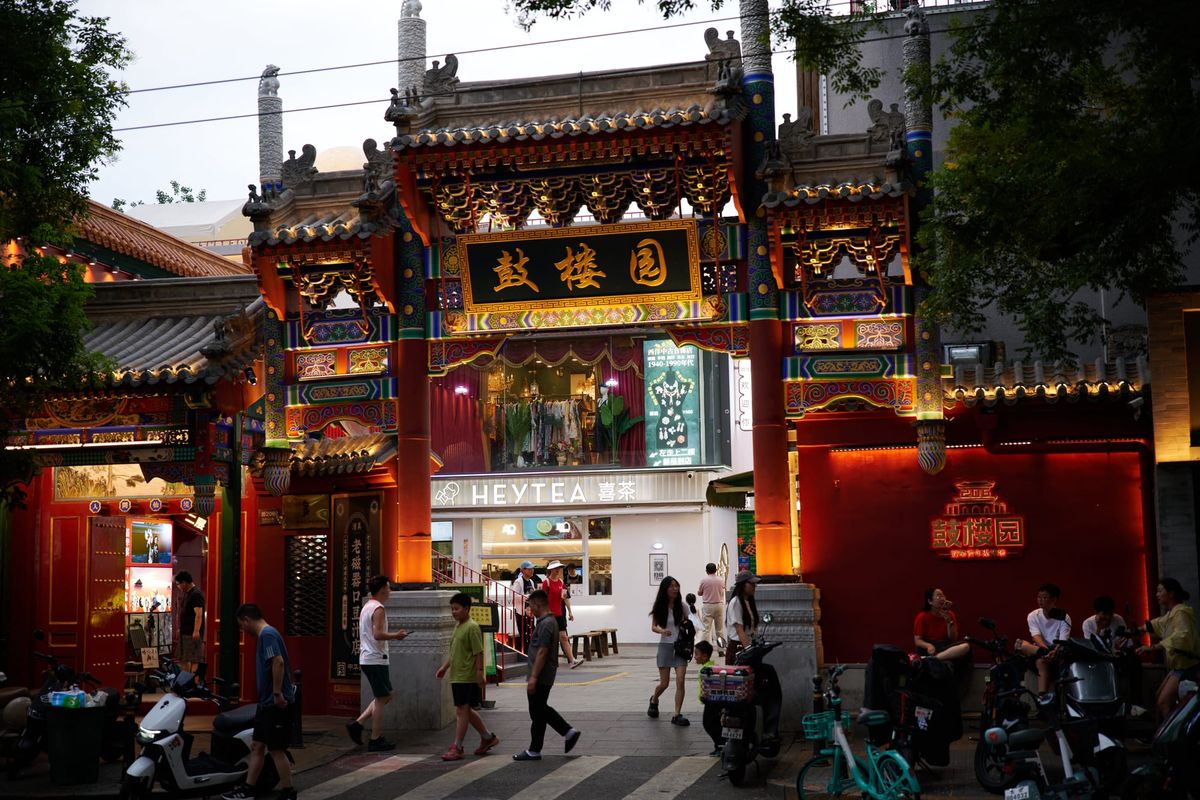 Magda Sawyer
 Magda Sawyer
This post contains affiliate links. For more information, click my disclosures here.