Xi'an Travel Guide (2026): Plan Your Trip to China's Ancient Capital

Last updated: June 2026
Everyone comes to Xi'an for the Terracotta Warriors — but the city's real magic is everything around them. This is where the Silk Road began and where 13 Chinese dynasties built their capital, yet it still feels surprisingly easy to explore: a walkable old town wrapped in a 14km wall, some of the best street food in China, and evenings lit up at Tang Paradise that we'd happily fly back for. We've been twice (and skipped the Warriors both times, honestly).
If you're wondering whether Xi'an is worth it, how many days you need, and what's genuinely worth your time, this guide covers it all — from someone who's been on the ground, not just read the brochure.
Quick Summary
🗺️ Location: Shaanxi Province, central China
⏱️ Recommended Stay: 2–3 days
💲 Daily Budget: $40–100
🌡️ Best Time: April–May or September–October
🏠 Best Area: Inside the city walls, near the Bell Tower
🚇 Getting Around: Metro + DiDi
💡 Known For: Terracotta Warriors, Ming-era city walls, Muslim Quarter food, Silk Road history
Table of contents
Xi'an was one of the cities we visited on our very first China trip — back when we still thought "doing China" meant treating cities as transport hubs rather than points of interests in its own rights. After multiple trips to China and two visits in the city itself, we have realised there is much more to experience than just the "main list".
The Terracotta Warriors might be the headline, yes, but the real Xi'an is the food, the walls, the evening walks around the Big Goose Pagoda, and the cultural depth of a place that has been a capital for thirteen Chinese dynasties.
🧳 Trip Planning Essentials
🛫 Flights, Trains & Hotels
Book everything in one place on Trip.com.
🎟 Tours & Tickets
Skip lines with GetYourGuide or Klook.
💰 Payments
AliPay and WeChat are a must — use it with Wise card to save on fees and get better conversion rates!
📱 Stay Connected
For cheaper data access without VPN use Saily eSIM.
🚖 Airport Transfers
Traveling with luggage? Pre-book a private car pickup for a smooth arrival.
👉 See more China travel essentials
 Magda Sawyer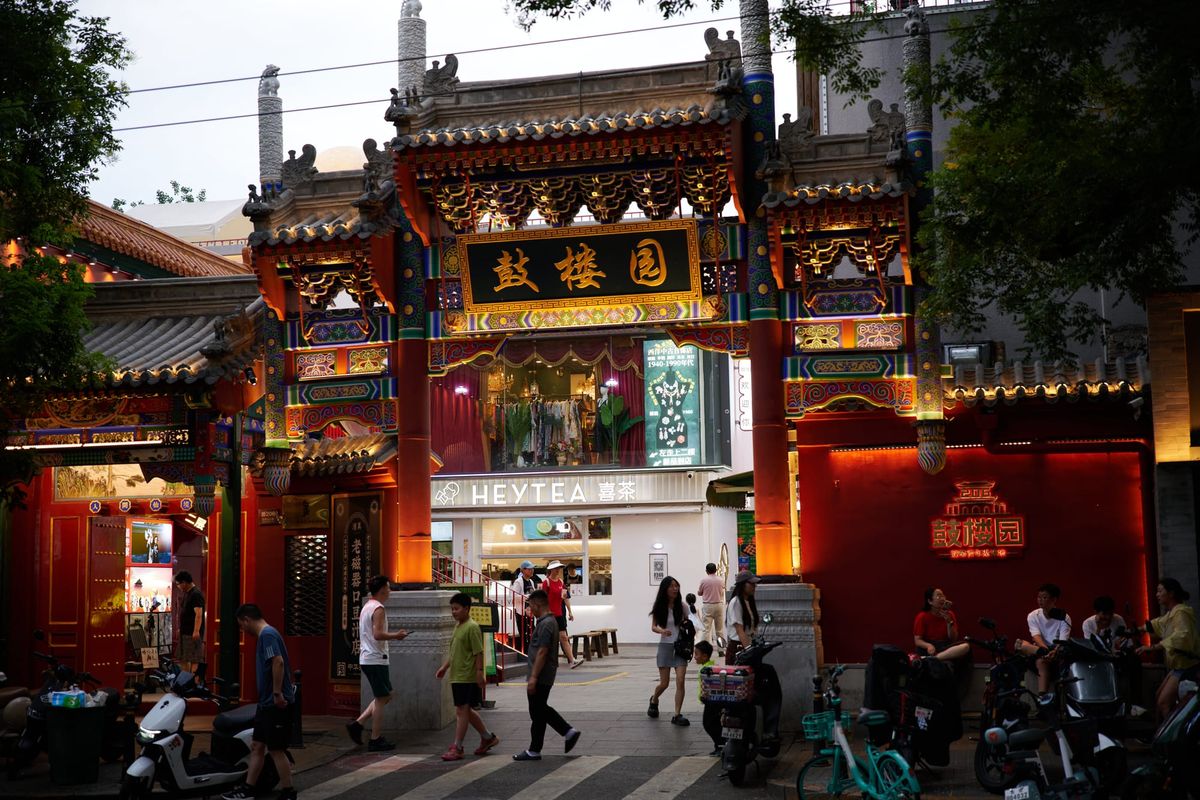
Why visit?
Xi'an is where Chinese history starts. It was the eastern terminus of the Silk Road, the capital of the Tang dynasty (one of the most cosmopolitan civilisations of the medieval world), and the burial site of China's first emperor and his Terracotta Army. Walk through the city today and you're walking on a thousand years of layered history.
But the city isn't a museum. It's also one of China's best food destinations — the Muslim Quarter alone is worth a trip — and one of the most walkable historic centres in the country, all wrapped inside a complete 14km Ming-era wall that you can cycle around in an afternoon.
What makes Xi'an special
- Living history: Thirteen Chinese dynasties chose Xi'an as their capital, and the city wears its history openly — from the Terracotta Warriors to the Tang dynasty pagodas to the Ming city walls you can still walk and cycle today.
- One of China's best food cities: Wheat noodles, lamb skewers, hand-pulled Biang Biang noodles (my personal favourite), roujiamo (the original "Chinese hamburger") — Xi'an's Silk Road cuisine is unlike anything else in China and a destination in itself.
- The Silk Road gateway: Xi'an was the eastern starting point of the Silk Road for over a thousand years. It's still the natural launchpad for any westward journey through Gansu, Qinghai, and Xinjiang.
- Walkable Ming-era core: Unlike most Chinese megacities, Xi'an's old town fits inside a complete rectangle of walls. You can stay in the centre, walk most places, and feel the city's scale in a way you can't in Beijing or Shanghai.
Who will love Xi'an
- History enthusiasts: From the Terracotta Warriors to the Shaanxi History Museum to the Stele Forest, Xi'an offers some of the richest historical sites in China — and most are walkable from the centre.
- Foodies: Xi'an cuisine is one of the great regional cuisines of China, and the Muslim Quarter is one of the country's best places to eat your way through a city.
- First-time China visitors: As one corner of the classic Beijing–Xi'an–Shanghai triangle is by far the most popular itinerary (although as I mention later, not the most exciting one if keeping just to those 3 cities)
- Independent travellers heading west: If you're planning a Silk Road trip, Xi'an is where it begins — and a great place to acclimatise before heading deeper into Gansu and Xinjiang.
When to consider alternatives
- If you only have a week in China: With limited time, Beijing and Shanghai usually win out as the must-do pairing. Add Xi'an only if you have 10+ days.
- During mid-summer: Like Wuhan and Chongqing, Xi'an gets brutally hot in July–August (35–40°C is normal). Outdoor sightseeing becomes a slog. We've been twice in summer — don't recommend it.
- If you're not interested in history: Xi'an is a deeply historical city. If you prefer modern Chinese culture, night life, megacity skylines, or natural landscapes, you might enjoy Shenzhen, Chengdu or Yunnan more.
Honest take
For a completely honest take: we loved food in Xi'an, but the city itself was not my favourite one. There is plenty to do, and it is lively, but other cities we visited were more memorable. Some of the parts of the city are not as well connected by metro, and we had to rely on DiDi to get there.
I know that many people start exploring China doing the classic first-timer loop of Beijing-Xi'an-Shanghai, but I have to say that if this is your starting point, you might not find the country as compelling as we do — there is just so much more interesting and unique things to see!
While I DO recommend visiting Xi'an, I would say that it is mostly worth putting on the list if you have something other than Beijing and Shanghai in your itinerary.
Best time to visit
Xi'an has four very distinct seasons, and timing matters a lot for what your trip will feel like.
- Spring (Mar–May) – Mild temperatures (12–25°C), dry weather, blossoms across the parks. The single best time to visit. Aim for April or early May.
- Summer (Jun–Aug) – Hot and dry, regularly hitting 35–40°C. Heavy crowds at the Terracotta Warriors. We've been twice in summer and it's exhausting — plan early-morning and evening sightseeing only.
- Autumn (Sep–Oct) – Clear blue skies, comfortable temperatures (15–25°C), and the best photography conditions of the year. A close second to spring. Avoid Golden Week (1–7 October) when domestic travel peaks.
- Winter (Dec–Feb) – Cold and dry (-5 to 5°C). Quiet, much cheaper, and surprisingly pleasant if you don't mind layering up. Snow occasionally dusts the city walls — beautiful when it does.
The sweet spot is April–May or September–October. If you have flexibility, target those months.
How to get there
By air
Xi'an Xianyang International Airport (IATA: XIY) is about 40km northwest of the city centre. It's a major hub with direct flights from across Asia and a growing number of long-haul routes. From the airport you can reach the centre by:
- Airport Express Metro (Line 14) — opened in 2024, the fastest option to reach the centre (around 30 minutes to Xi'an North Station, then transfer to Line 2 for the Bell Tower).
- Airport shuttle bus — multiple routes serve different parts of the city; useful if you're staying near the railway station or Big Wild Goose Pagoda.
- Taxi or DiDi — around ¥150–200 to the centre, takes 45–60 minutes depending on traffic.
- Pre-booked private transfer — most stress-free option with luggage or kids. Book one here.
By high-speed rail
Xi'an is one of the best-connected cities in China by high-speed rail. Frequent trains link it to:
- Beijing — around 4.5 hours
- Shanghai — around 6 hours (or overnight sleeper)
- Chengdu — around 3.5 hours
- Chongqing — around 5 hours
- Zhangjiajie — around 8–10 hours
- Lanzhou (Silk Road westwards) — around 3.5 hours
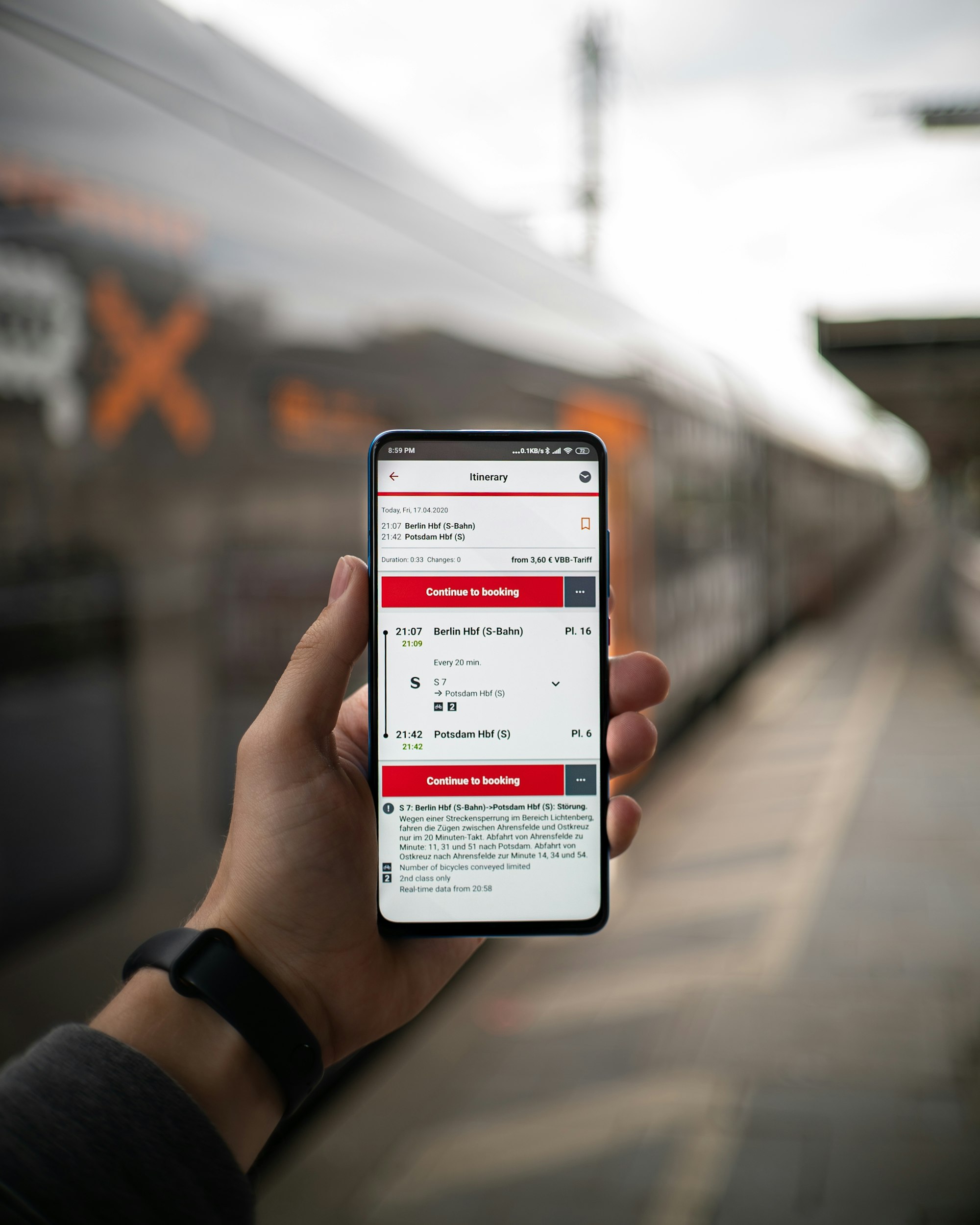
The main station is Xi'an North (西安北), which handles almost all high-speed services and connects to the city by Metro Line 2. Xi'an Railway Station (the older one near the city walls) handles overnight and regional trains.
 Magda Sawyer
 Magda Sawyer
How to get around
Xi'an's old town is small enough to walk most days, and the metro covers everything beyond it. Specifically:
- Metro — Lines 1, 2, 3, 5, 6 and the new 14 cover all major tourist sights and the airport. Line 2 runs north–south through the Bell Tower; Line 9 goes east to the Terracotta Warriors area. Pay with AliPay QR codes — no need for a physical card.
- DiDi — China's Uber equivalent and the easiest option for anywhere not on a metro line. Set up before you arrive — it's much easier than flagging down a taxi as a foreigner.
- Walking — Inside the city walls, walking is genuinely the best way to get around. Most major sights (Bell Tower, Drum Tower, Muslim Quarter, Great Mosque, city wall gates) are within a 20-minute radius of each other.
- Bike rental on the wall — A dedicated activity rather than transport: rent at the South Gate for the full 14km circuit, 2–3 hours.
Magda Sawyer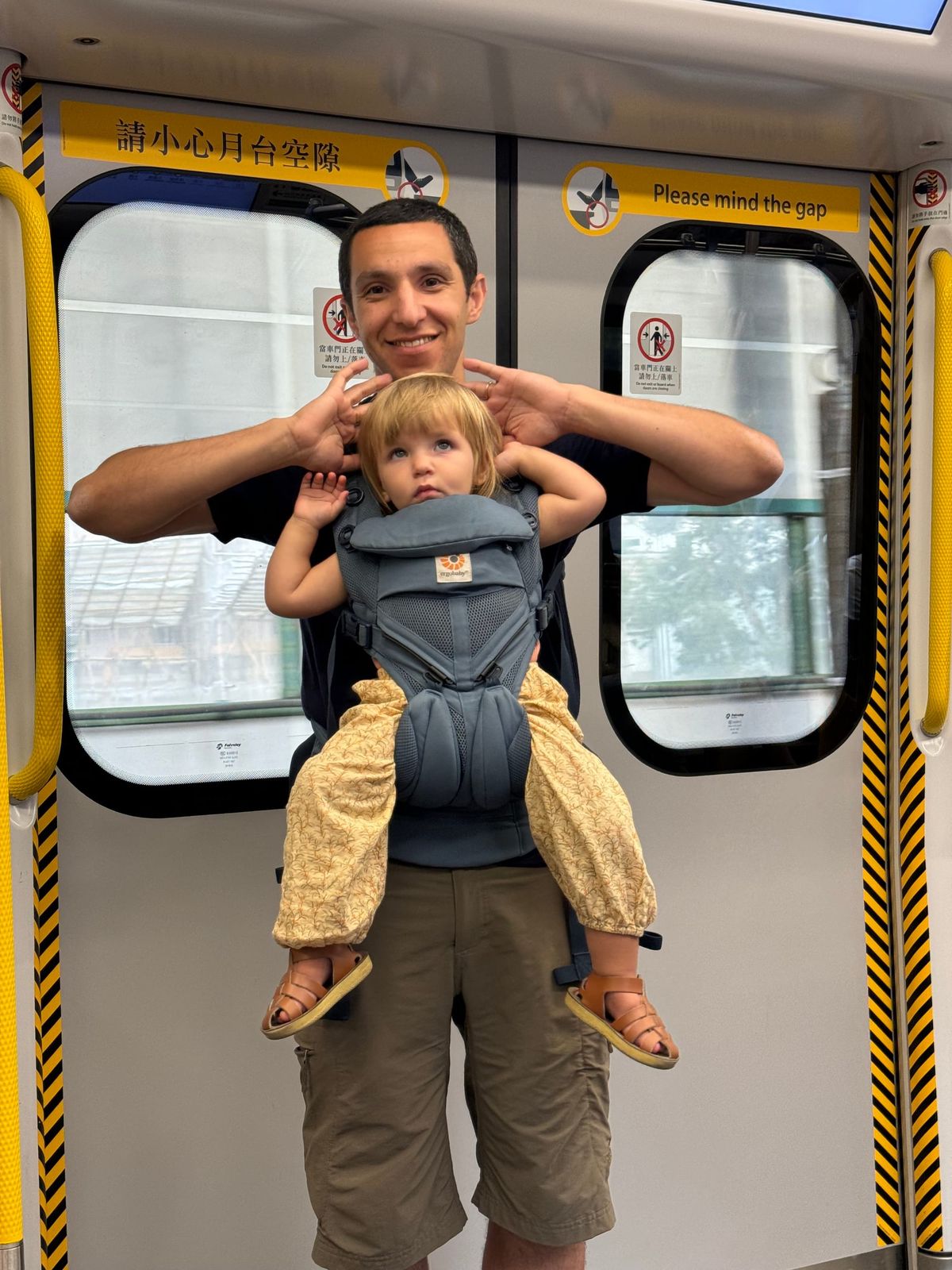 Magda Sawyer
Where to stay
Best neighbourhoods
- Inside the city walls (Bell Tower / Drum Tower area) — Best for first-time visitors. Walking distance to the Muslim Quarter, easy metro access, and you're right at the heart of historic Xi'an.
- South Gate area (Yongningmen) — Slightly quieter than the Bell Tower, still inside the walls, and a great base if you plan to walk or cycle the walls.
- Big Wild Goose Pagoda / Qujiang district — Best for staying near Tang Paradise and the evening pedestrian streets. Further from the historic centre but well-connected by metro.
- Near Xi'an North Station — Best for one-night stopovers if you're catching an early train. Less atmospheric but very convenient.
My top recommendation for Xi'an is to stay inside the city walls, somewhere near the Bell Tower or Drum Tower so you can walk to the Muslim Quarter.For families, we recommend the Xi'an Zhonglou Orange Crystal Hotel — great location with kid-friendly themed family rooms. We stayed at Xi'an Bell Tower Hotel — a slightly old-school hotel with a spectacular panoramic view of the Bell Tower from our room.
That's the short version. For a full neighbourhood-by-neighbourhood breakdown with tested hotels at every budget, see our dedicated guide:
Magda Sawyer
Things to do
Xi'an comfortably fills 2–3 days. Here are the headline sights at a glance — for the full breakdown, including the modern city, cultural shows, hidden corners and day trips, head to our dedicated Things to Do guide.
- Terracotta Warriors — Xi'an's signature sight: around 8,000 life-size clay soldiers buried with China's first emperor, 1.5h from the city. Half to full day; book online ahead.
- Ancient City Walls — the complete 14km Ming-era wall ringing the old town. Walk a section at sunset or cycle the full loop. Our favourite "headline" sight.
- Muslim Quarter — the historic Hui neighbourhood and the best place to eat in Xi'an. Skip the touristy main street; head down the side alleys.
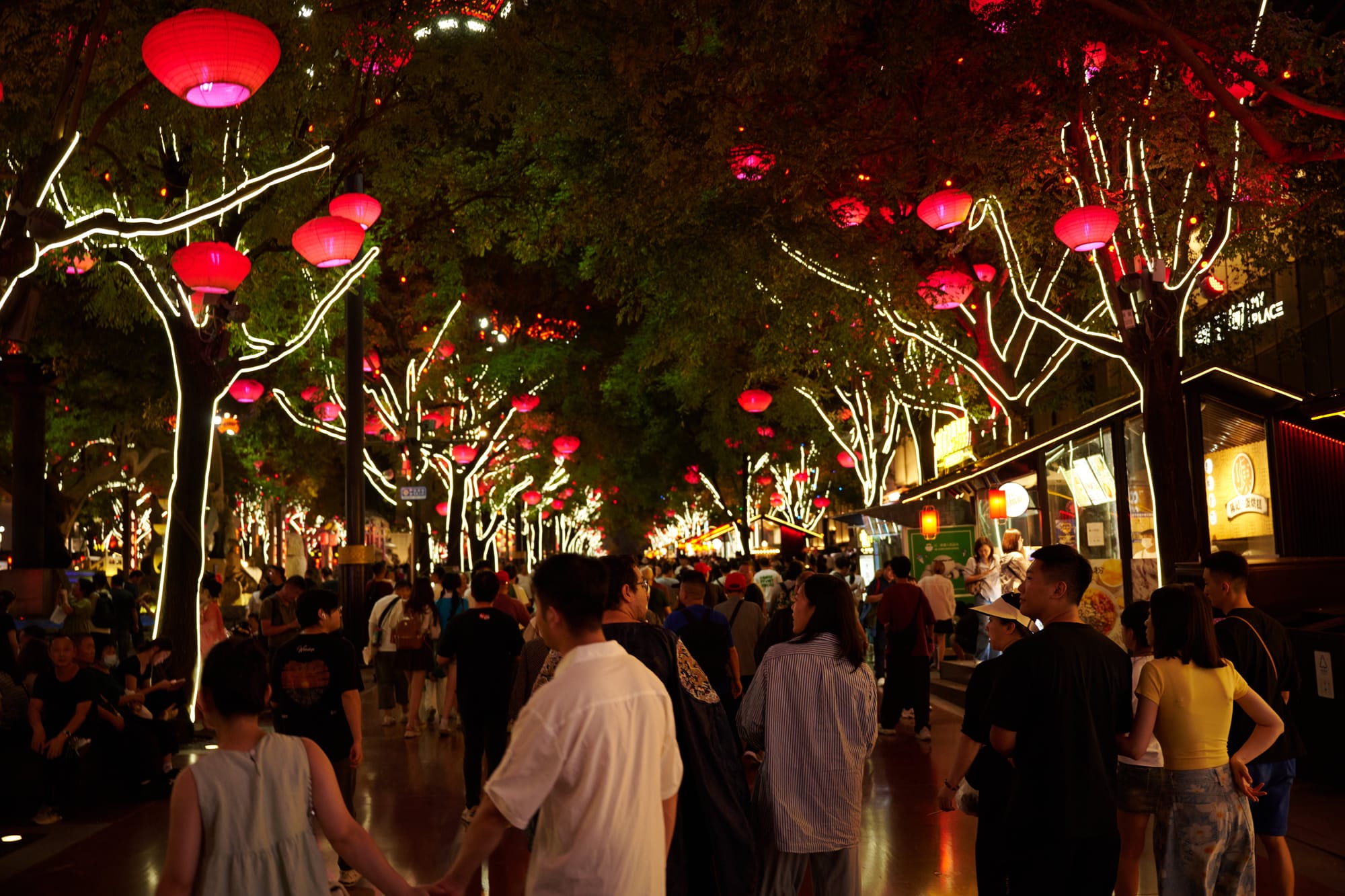
- Tang Paradise — a 165-acre Tang-themed park, beautiful at night. Our favourite Xi'an evening.
- Big Wild Goose Pagoda — a Tang-dynasty pagoda whose real draw is the free fountain show and the Tang-themed pedestrian streets around it.
- TuoLing Legend show — the best evening cultural show we've seen in China. Book tickets here.

What to eat
Xi'an cuisine is one of the great regional cuisines of China — heavy on wheat noodles, lamb, cumin and flatbreads, all reflecting the city's Silk Road history. It's also very affordable and very kid-friendly. The essentials to look for: Biang Biang noodles (wide hand-pulled noodles in chili-soy sauce), roujiamo (the original "Chinese hamburger"), yangrou paomo (mutton stew with hand-torn bread), liangpi (cold skin noodles) and cumin lamb skewers. You don't really need a restaurant list here — wander any backstreet in the Muslim Quarter or Yongxingfang and follow the queues.
→ Full dish-by-dish breakdown with where to find each in our Things to Do in Xi'an guide.
How many days do you need?
Two to three days is the sweet spot for most travellers. Here's how the trip scales:
| Days | What you'll fit in |
|---|---|
| 1 day | City centre only — Bell Tower, Muslim Quarter, a stretch of the walls, and one evening at the Big Wild Goose Pagoda / Tang Paradise. |
| 2 days | The above plus either the Terracotta Warriors or a cultural show. Tight but workable. |
| 3 days | The full city — Warriors, walls, Muslim Quarter, Shaanxi History Museum, Tang Paradise and the TuoLing Legend show. The pace we'd recommend. |
| 4+ days | Add a day trip — Mount Hua, Hanyang Tomb or Famen Temple — or use Xi'an as a Silk Road launchpad westward. |
For the full day-by-day version — what to do each morning, afternoon and evening, in what order, with timings and a budget breakdown — follow our complete itinerary:
Magda Sawyer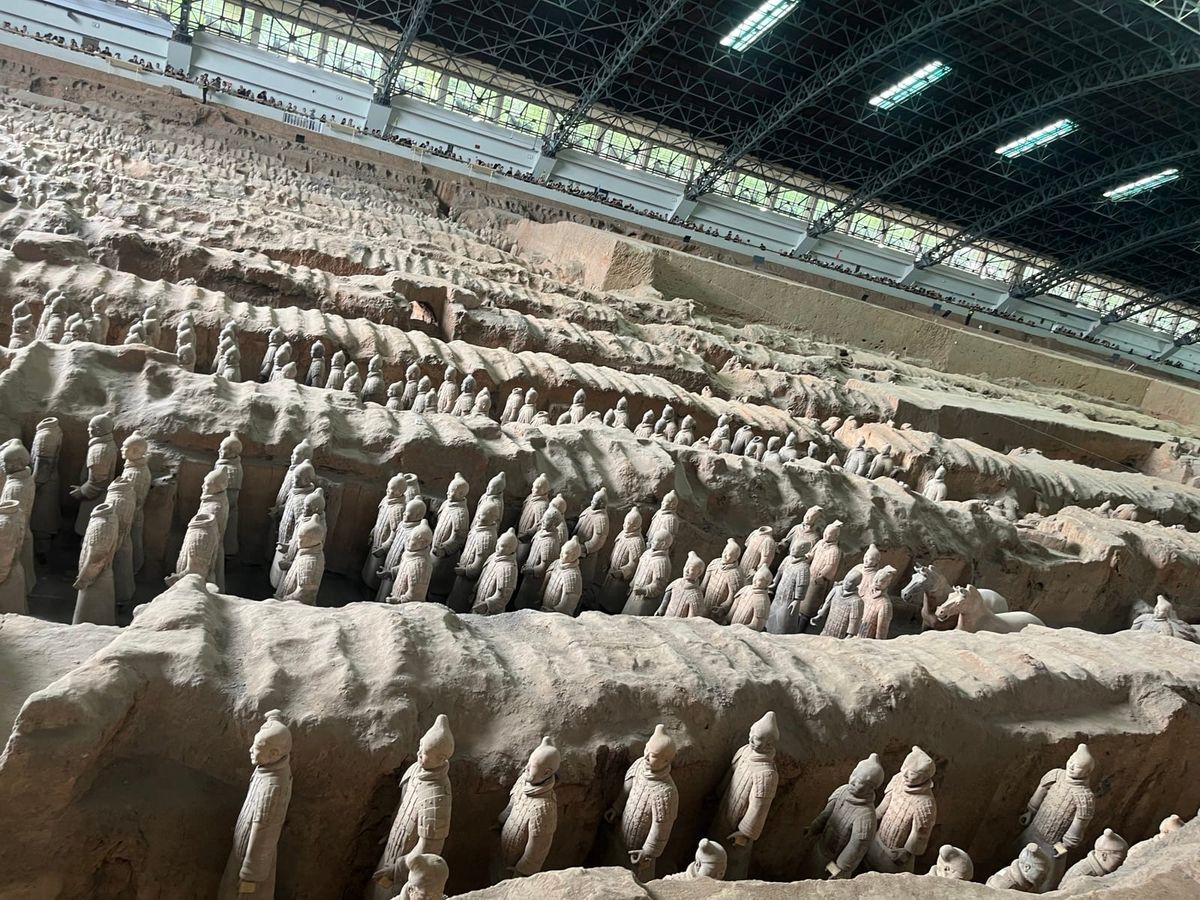
Visiting Xi'an with kids
Visiting Xi'an with kids is relatively easy and rewarding — I can tell you because we have done it twice.
Kids will enjoy the food, strolling around the Big Goose Pagoda, visiting a Tang Paradise themed park, watching a cultural show or dressing up in Hanfu.
Older kids can take a challenge of cycling the city walls.
We have a dedicated family guide covering what to do by age, what to skip, and where to stay:
Magda Sawyer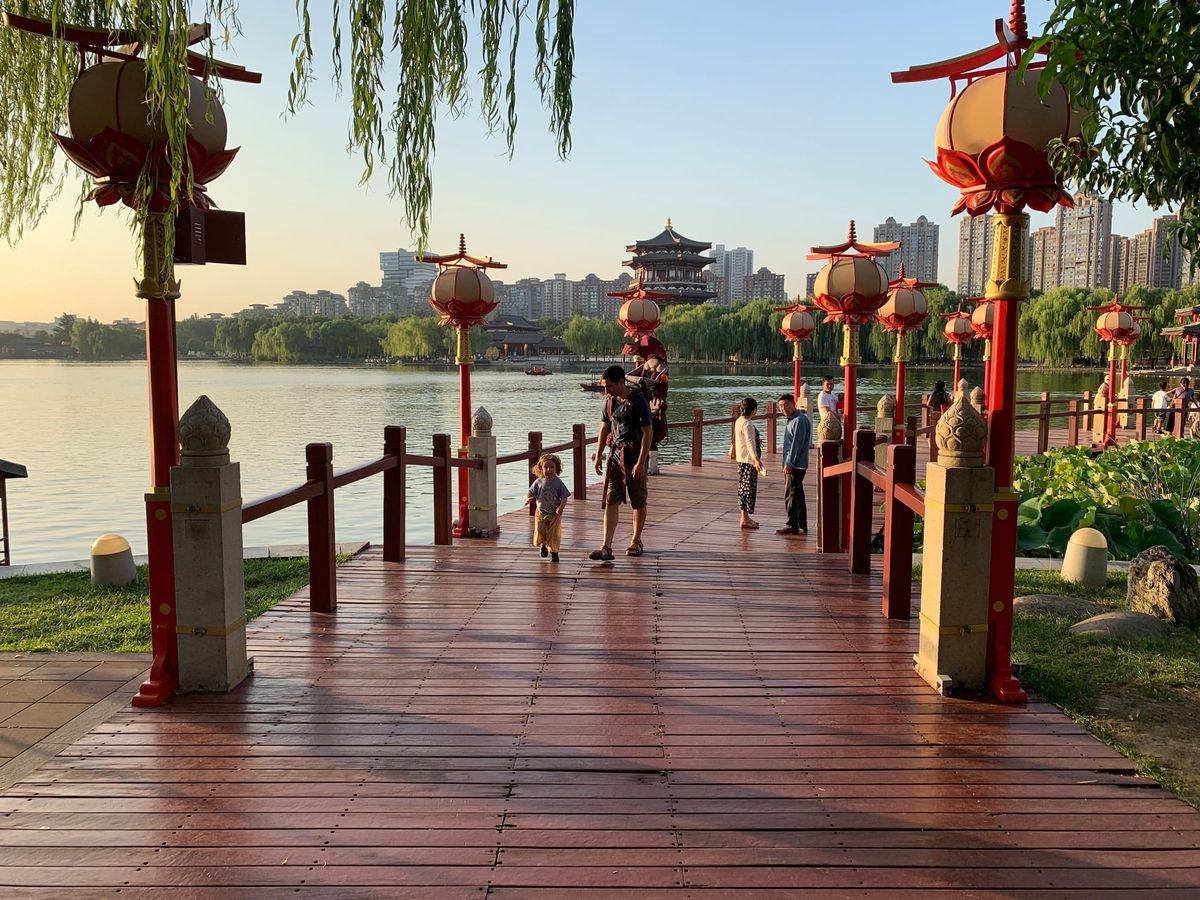
Where to Go Next from Xi'an
Xi'an is one of the best places to base a longer China itinerary — it's at the crossroads of high-speed rail routes between Beijing, Shanghai, and the southwest, and the natural starting point for any Silk Road journey.
- Beijing — 🚄 4.5h. The classic first-time pairing. → Beijing Travel Guide
- Shanghai — 🚄 6h, or overnight sleeper. The Beijing–Xi'an–Shanghai triangle is the most popular first-trip route. → Shanghai Travel Guide
- Chengdu — 🚄 3.5h. Pandas, hotpot, and a much slower pace. → Things to Do in Chengdu
- Westwards along the Silk Road — trains run to Lanzhou (3.5h), Xining (7h), Dunhuang (12h) and ultimately Xinjiang. → Train Travel in China
FAQs
Is Xi'an worth visiting?
Yes — even setting aside the Terracotta Warriors. Xi'an has 3,000 years of layered history, some of the best street food in China, and a walkable historic core inside Ming-era walls. It's also the eastern starting point of the Silk Road, making it the natural gateway for any westward journey.
When is the best time to visit Xi'an?
April–May and September–October are ideal — mild temperatures, dry weather, clear skies. Avoid June–August (extreme heat, often 35–40°C) and Chinese national holidays (Oct 1–7 Golden Week, late January–February Chinese New Year), when domestic crowds peak.
Is Xi'an or Beijing better to visit?
They're complementary, not competitors. Beijing is the imperial capital — Forbidden City, Great Wall, modern political seat. Xi'an is the ancient capital — Silk Road origin point, Tang dynasty heart, older history layer. Most first-time visitors do both, with Beijing taking 3–4 days and Xi'an 2–3. The high-speed train between them takes 4.5 hours.
Is Xi'an safe for tourists?
Yes, very safe. Violent crime is extremely rare, the metro runs without issue at all hours, and locals are friendly and helpful. The main everyday risks are summer heat and tourist scams around major attractions — book transport and tickets through official channels.
Can I visit Xi'an without speaking Chinese?
Yes, though English is less common than in Beijing or Shanghai. Major sights and metro stations have English signage; restaurants and shops outside tourist zones are Chinese-only. A translation app makes everything easy.
How much does a trip to Xi'an cost?
Xi'an is mid-priced for China — cheaper than Beijing or Shanghai, pricier than Chengdu. Budget travellers can manage on around $40/day, mid-range around $80–100/day excluding flights. The full per-day and per-trip breakdown is in our itinerary's budget table.
Explore more of Xi'an
🎯 What to do: Best Things to Do in Xi'an
🗓️ Day-by-day plan: Xi'an Itinerary (2–4 Days)
🏨 Where to stay: Best Areas & Hotels in Xi'an
👨👩👧 With kids: Xi'an with Kids — Family Guide
🎭 Top cultural show: Complete Guide to TuoLing Legend Show
Ready to Plan Your Xi'an Adventure?
✈️ Book your flights
🏨 Find your hotel
🚂 Reserve train tickets
🎫 Book activities & tickets
🚌 Book a tour
This post contains affiliate links. For more information, click my disclosures here.