China with Kids: A Practical Guide to Planning Your Family Trip

Last updated October 2026 · 6 family trips since 2023
Yes, traveling to China with kids is possible and in fact, it is not difficult.
Cities are clean and modern, high-speed trains connect every major destination, and Chinese people are exceptionally welcoming to families with small children.
When we first came in 2023 we had our doubts but now it feels like it was a different era – there were virtually no other foreign babies/kids in sight even in major cities like Beijing or Chengdu. Now when we go back we see a big change – more and more families visit China, and not only the biggest tourist spots.
But for parents who haven't been to China or have not travelled with kids far from their home country, an idea of a trip to China might still seem overwhelming.
We have now experience travelling with kids from 0-6 years old, and have pretty good idea how to make it work at any pre-teen age (that part is still ahead of us!)
This guide is here to both inspire you to pick China for your next trip and to help you with the logistics! I will tell you what makes China special and how to make the most of your trip! Where to go, what to eat, how to get around, what to pack, and what kind of activities to pick —. you can find all of it here!
🗺️ Best Cities for Families: Beijing, Chengdu, Guangzhou, Shenzhen
⏱️ Recommended Trip Length: 2 weeks minimum, 3 weeks recommended (min. 3 days per city)
💲 Daily Family Budget: $60–$200/day (family of 4)
🌡️ Best Time: March–May or September–November
👶 Minimum Age: We first went with a 4.5-month-old — any age works
🛂 Visa: 30-day visa-free for most European countries
🚂 Getting Around: High-speed trains + metro in every major city
📱 Essential Apps: WeChat, AliPay, DiDi (available directly from WeChat), Amap
Let me start by reassuring you: China is a perfectly safe, fun, interesting place to visit with kids! In fact, we loved it so much that since then we signed up our daughters for Mandarin class, I started studying it myself, we returned to China many times and look for every opportunity for integrating China in our daily lives back at home.
And this is why I am so excited to help families plan their holiday there — for us it became a go to place for our family holiday, and I know that with the right resources, you also can have a great trip.
China offers a unique blend of ancient traditions and futuristic solutions, making it an exciting destination for families. It is also changing fast, so what might have been a reality few years back is likely outdated by now.
This comprehensive guide will help you navigate the ins and outs of traveling to China with kids, from practical tips on where to buy nappies to fun family activities and destinations, ensuring a memorable and stress-free experience for the whole family.
What makes China special for families?
Most of our friends, including Chinese friends, don't understand our obsession with China.
For me, China offers two things that don’t always come together: the adventure you miss as a new parent and the reassurance you want when travelling with children.
There’s so much to discover: vibrant cities, spectacular landscapes, rich traditions and street food you’ve never tried before. Yet the practical side is surprisingly manageable. We’ve found clean, safe cities, welcoming people, high-speed trains that make getting around easy, and prices that keep a family holiday affordable.
You get to feel adventurous again, while knowing you can keep your children comfortable, fed and happy along the way.
 Magda

Our favourite things to do in China with kids
After having travelled to China many times with and now also without kids, I have my own personal list of favourites. And I have also been surprised to discover that even though travelling with kids is challenging, I enjoy China much more on family trips than solo/in an adult group.
Here is a list of things that has always been a highlight for us and you can use it as an inspiration to plan your itinerary.
The parks!
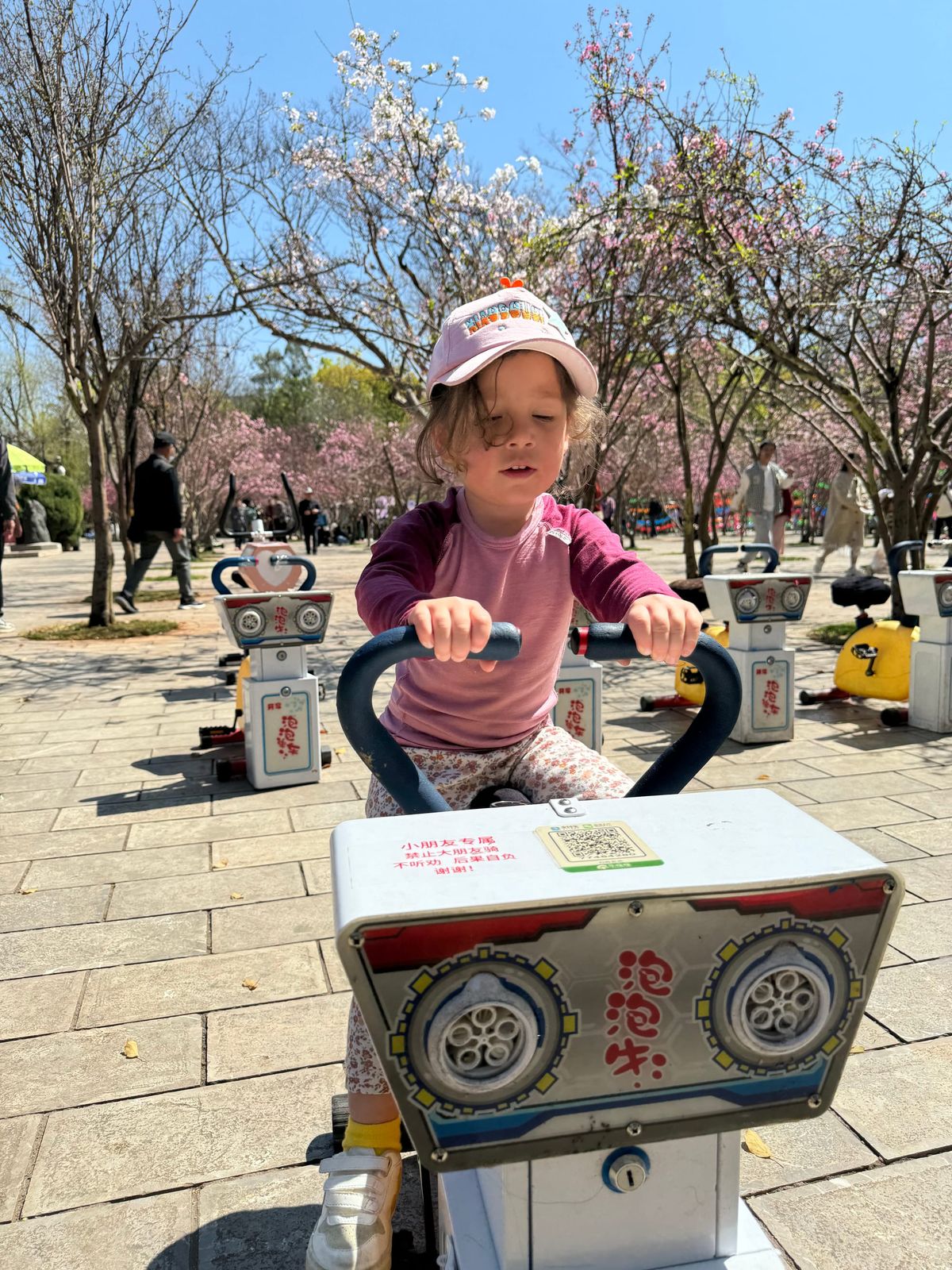
If you have not been in China yet, you probably cannot fully appreciate why I keep on raving about the parks. But parks in China are a central point where life is happening.
If you take a walk around any Chinese park in the early morning, you will see aunties dancing, uncles doing pull-ups, old people practicing tai-chi, playing games, instruments and socialising.
This continues throughout the day and in the evening.
All Chinese cities have big parks, so I recommend staying close to one and starting your day with simple breakfast people watching in the park.
 Magda Sawyer
Indoor and outdoor playgrounds
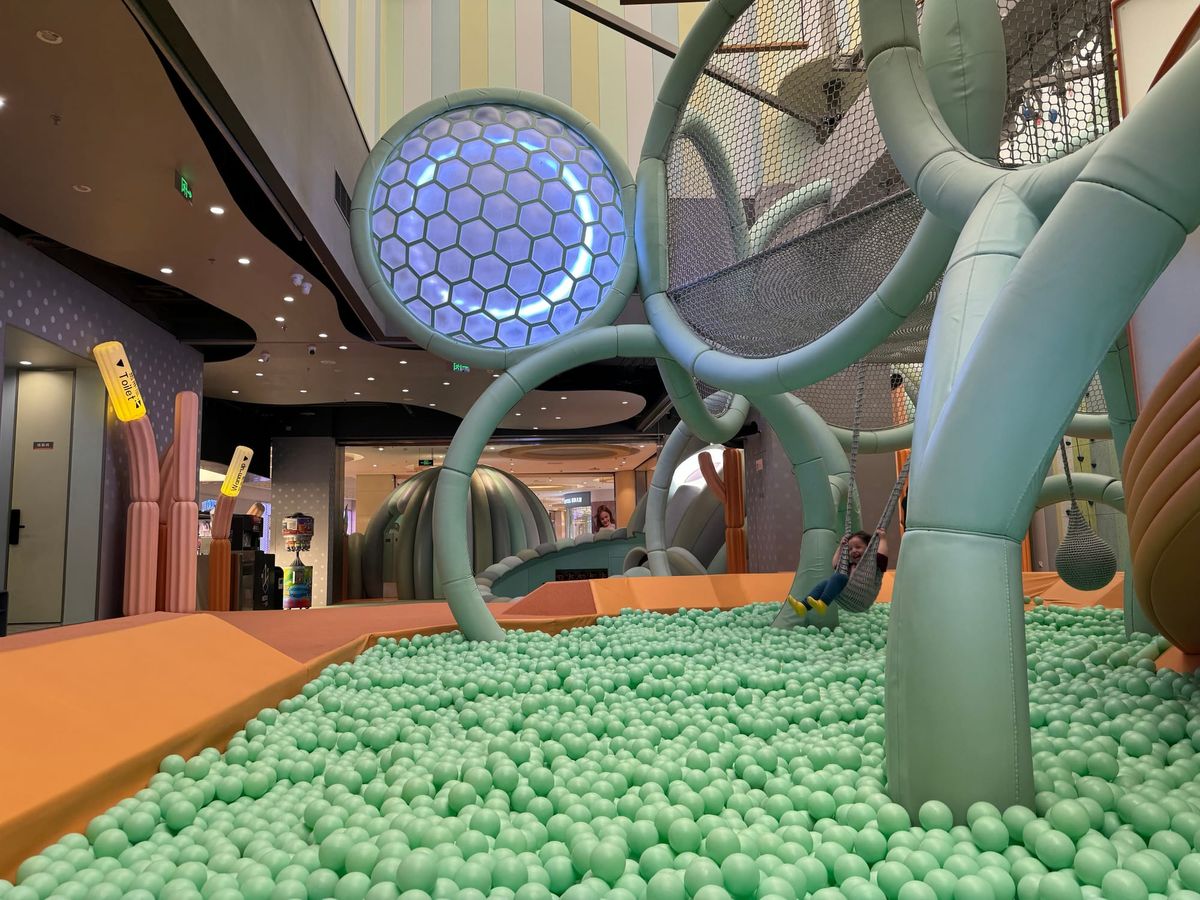
Indoor playground in China are super cool – they are not just basic climbing frames and loud noises – they are all in one edutainment centres with role-playing games, entertainers, rides, dress up, crafts – you name it! And they are huge, you can easily spend the whole day there and your kid will not be bored. They are a great way to take a break between more intense days. Chains that are the most popular and you can find in most big cities are Meland and Neobio.
When we first came to China I was writing about the absence of outdoor playgrounds as we know them from Europe – there were plenty of theme parks with paid rides but not so much slides and swings and climbing frames. But actually this is rapidly changing – more and more parks have big fun and busy playgrounds similar to what we know from home.
And the best park in both – Chinese kids are very curious about foreign kids and welcoming. They will very likely want your child to join their games!
 Magda Sawyer
Friendly and helpful people
If you are travelling to China with kids you will very likely get a lot of attention. While after a while you might be slightly annoyed with people trying to take pictures of your kids (guaranteed it will happen!), everyone is very friendly.
Chinese people love giving gifts and sharing, and it happens a lot that we were given gifts or food – even from kids which I am still trying to figure out how Chinese parents do it.
Nightlife (for the whole family to enjoy)
While strolling around European capitals late in the evening cannot really be considered a family-friendly activity, in China nightlife is more inclusive and you will see whole families out and about, eating and playing. This creates a lively and safe atmosphere for everyone to enjoy.
Shows and cultural experiences
What is also quite special about China is that a lot of its traditions are still alive – it has developed so quickly that even though the cities are modern, there are still people that dress in traditional clothes, play instruments and sing folk songs.
China is putting a lot of effort into keeping the culture alive and in cities and tourist destinations there are many shows and immersive performances that kids love.
Easy, exciting and varied food options
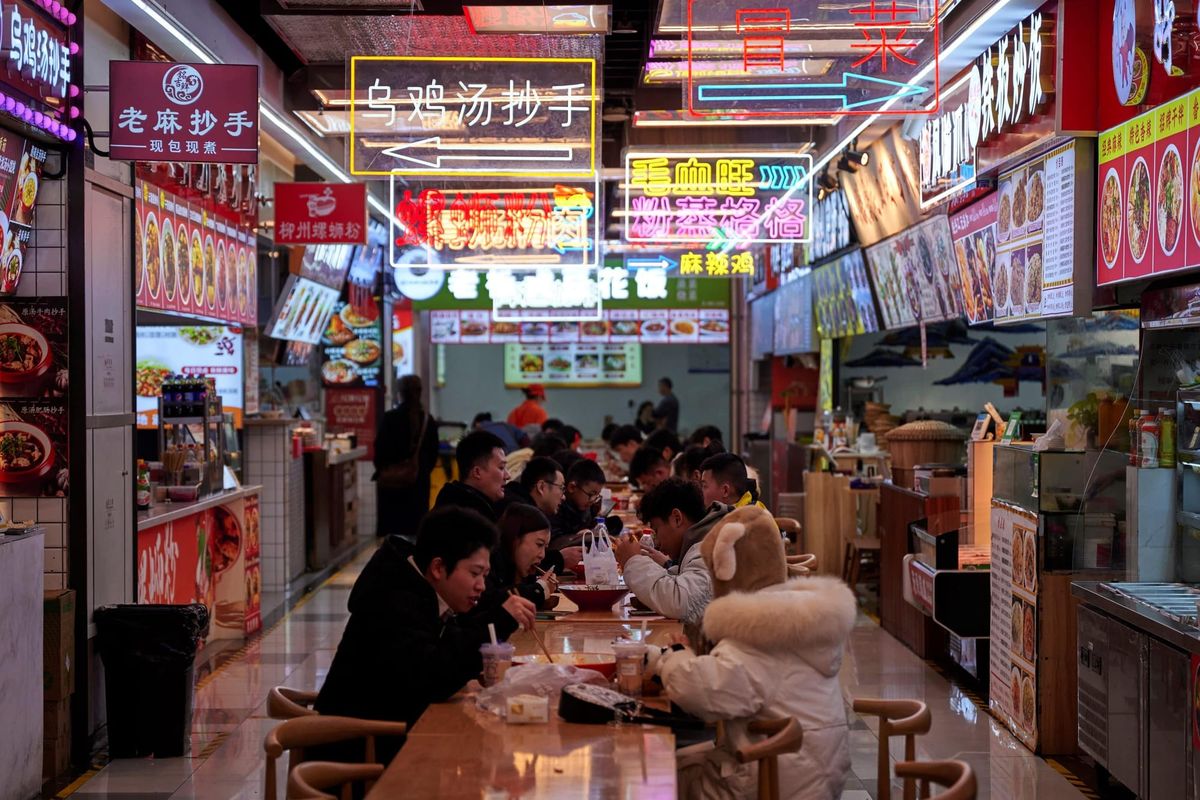
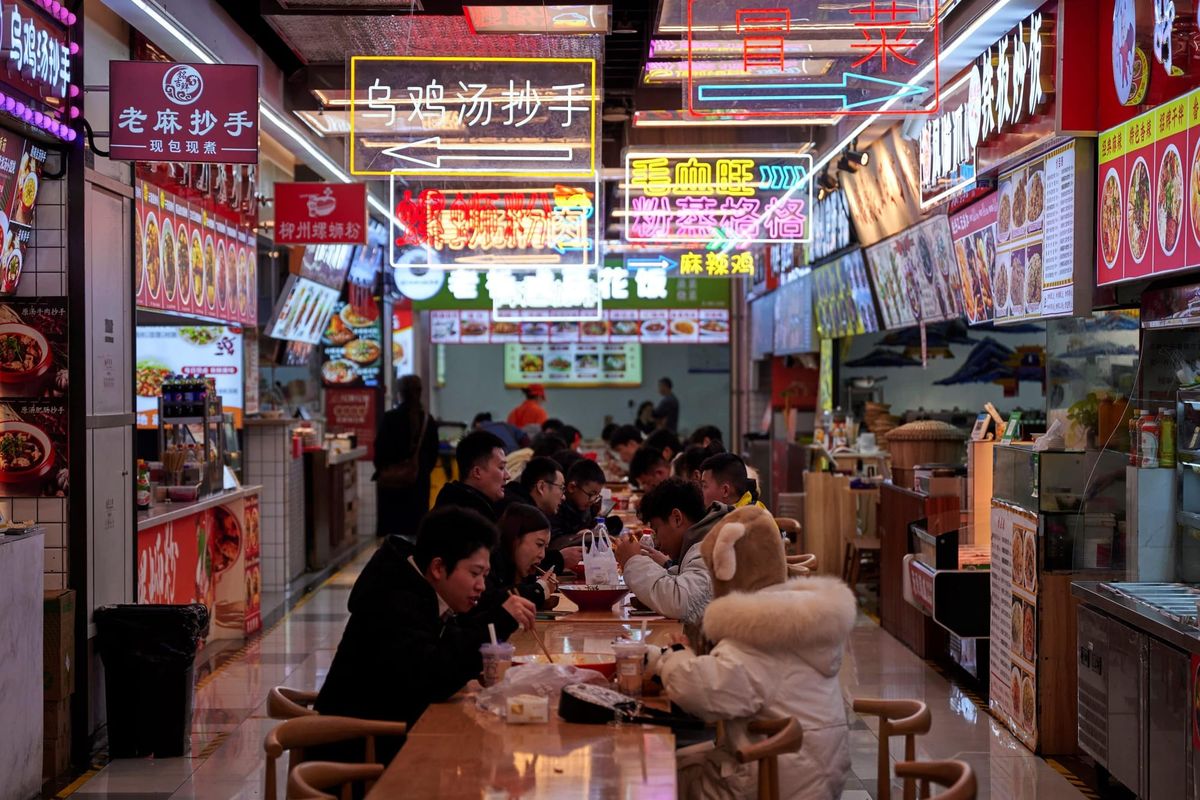
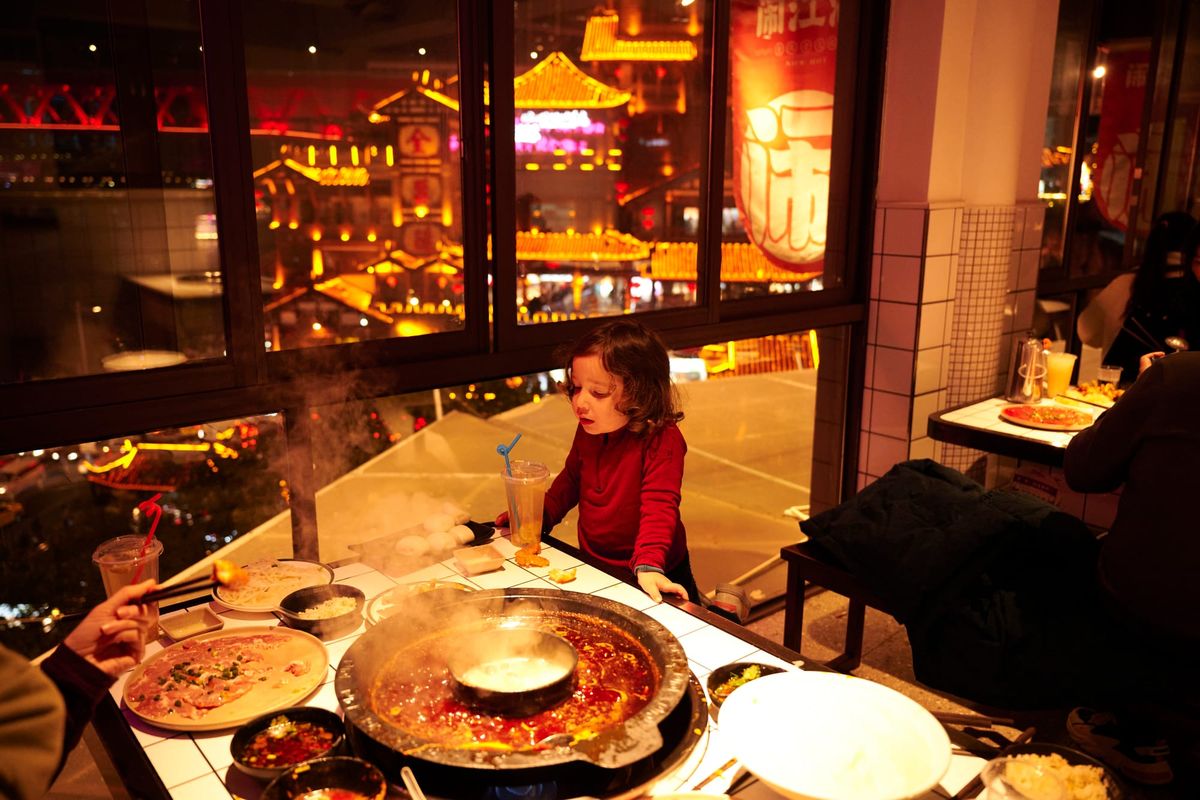
While you might be worried about what your child will eat in China, there is plenty to pick from, both basic safe options like rice and plain noodles, as well as things you wouldn't think your child would try – like hotpot.
 Magda Sawyer
What challenges should you prepare for?
While I really believe traveling to China with kids is fun and rewarding, there are some challenges that you should be aware of and prepare for.
Language barrier
Communication issues are real and it is not an exaggeration that almost nobody speaks English. In big hotel chains staff will know basic English, and occasionally you will meet young people who speak English reasonably well, but other than that they mostly don't speak any. Not only this, sometimes it is hard to get your point across even with gestures, because the expectations are just so different.
Signs on train stations and metro as well as on streets (at least in major cities) have English writing on them.
The only advice I have for you is to be relaxed about communication – and have a translation app ready. Make sure to translate simple sentences or single words, otherwise what you mean will likely get lost in translation.
 Magda Sawyer

Crowds
Contrary to popular belief, Chinese cities do not feel crowded – of course metro is busy at rush hour, but it is not busier than London or Paris.
Where it does get busy is tourist spots at the times of school and national holiday. My advice would be to think twice about going places that you only want to go because it is on your bucket list. We haven't been yet to The Great Wall or Terracotta Warriors, and I don't think our kids are sad about it.
Tourist spots reality
Chinese people's way of sightseeing is different than European for sure – I don't know about other places.
And because of the crowd management, accessibility and the "need" for entertainment – national parks, scenic spots and historical sites are always heavy developed and you can expect shuttle buses, escalators and many group tours.
This is just the reality and I am not the biggest fan of this way of traveling. My advice here is again quite simple – if there is something you really want to see just brace for that, otherwise just skip the tourist traps and enjoy the cities, or find lesser known nature spots that have not yet been turned into tourist attractions.
Chinese food kids will eat
Many parents worry a lot about what will their kids eat. While I would not expect your kid to enjoy a full Chinese dinner, especially on the first trip, there are plenty of staple foods to choose from, which include:
- Dumplings (饺子Jiaozi)
- Rice (米饭MiFan)
- Noodles (面Mian)
- Steamed buns (包子Baozi)
Always let them try different things if they are curious but don't force them. Our philosophy is that even if they eat mostly rice and plain noodles for 2 weeks, they will be fine. Also, you can always buy food in supermarket and find hotels with kitchenettes if once in a while you want them to eat a proper, familiar meal. Big hotels also offer Western breakfast, and in big cities Western food is abundant as well.
 Magda Sawyer
 Magda Sawyer
Car seats
Regular taxis and DiDi cars generally don’t come with child seats. This isn’t unique to China: UK rules also allow children to travel in the back of a licensed taxi or minicab without a child seat if the driver doesn’t provide one. Children aged three and over must wear an adult seat belt; under-threes can travel without one. That is a legal exception, though—not a statement that travelling without a suitable seat is equally safe.
To be transparent, we do use DiDi without car seats, usually for short journeys, and we’re comfortable with that personal decision. It is not a general recommendation: a short journey still carries risks, and you should use your own judgement rather than take our experience as reassurance about safety.
My recommendation for a trip mainly between Chinese cities is to leave the car seat at home and plan around trains and public transport instead of taxis. Staying near a metro station and checking your airport connections beforehand makes this much easier.
If you need a private transfer or plan an excursion by car, request a suitable child seat in advance. Give the operator your child’s age, height and weight, and confirm which seat they will provide.
For transfer from the airport, you can pre-book one through GetTransfer.com – that service allows you to select a car with car seat.
If you plan an excursion by car, request a suitable child seat in advance. Give the operator your child’s age, height and weight, and confirm which seat they will provide.
Chinese apps ecosystem
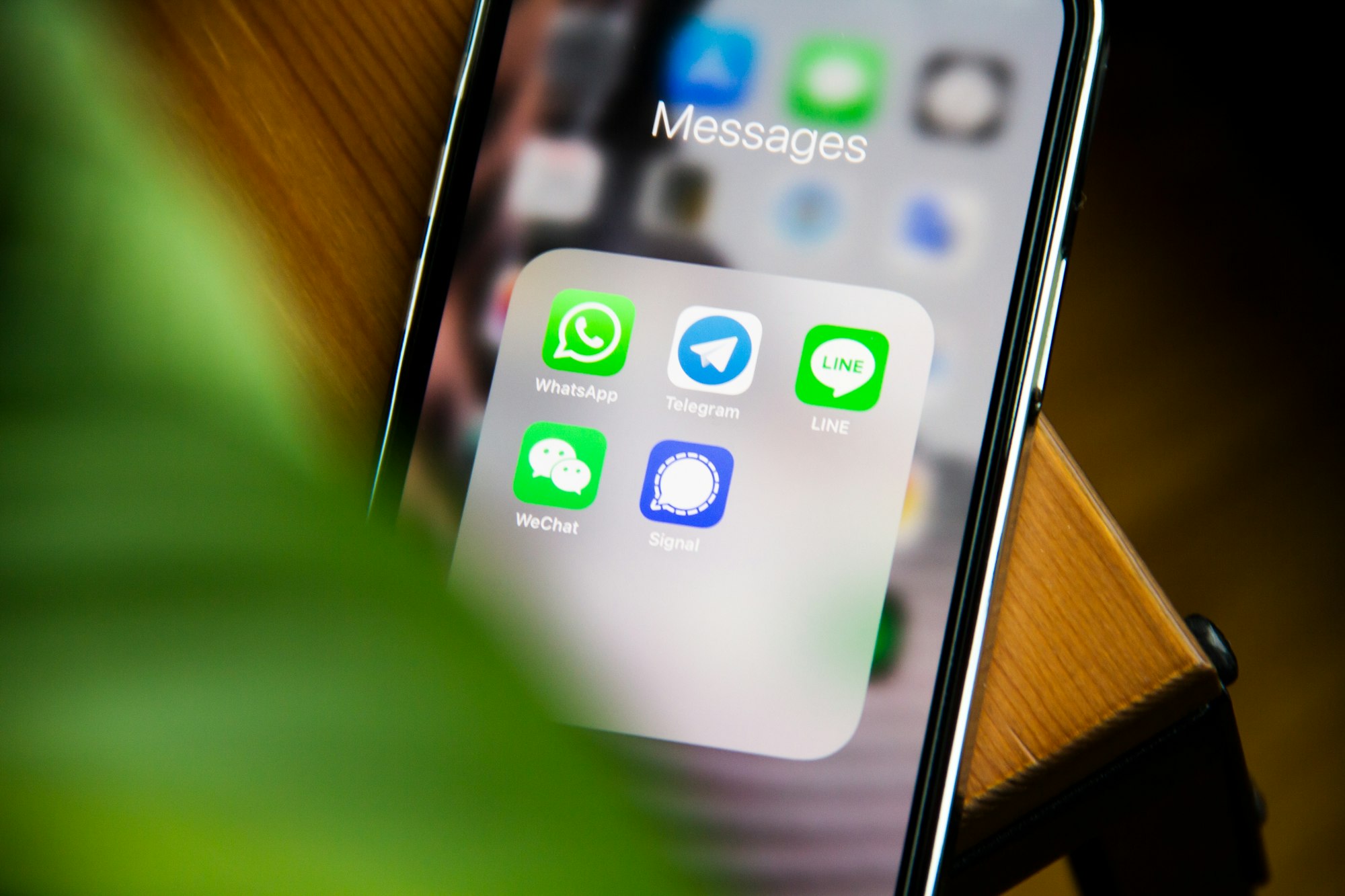
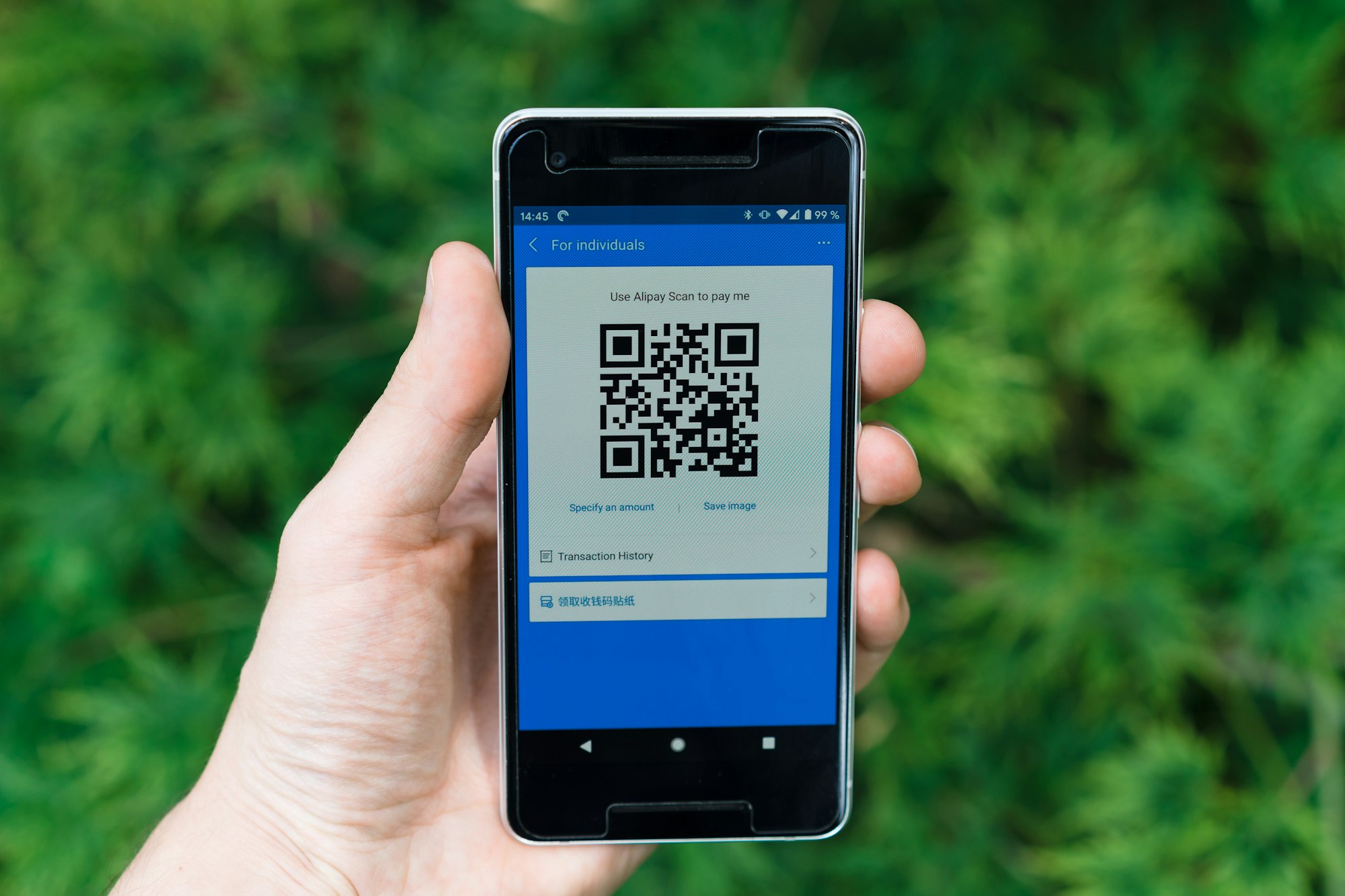
When you go to China you will have to use WeChat and AliPay, period. I highly recommend familiarising yourself with them before the trip and make sure you successfully add your credit card for payments before you go. If you do that, traveling will be really smooth – WeChat for payments, communication with locals (WeChat has built in translation), mini programs; AliPay for payments and public transport tickets. Make sure to set up both.
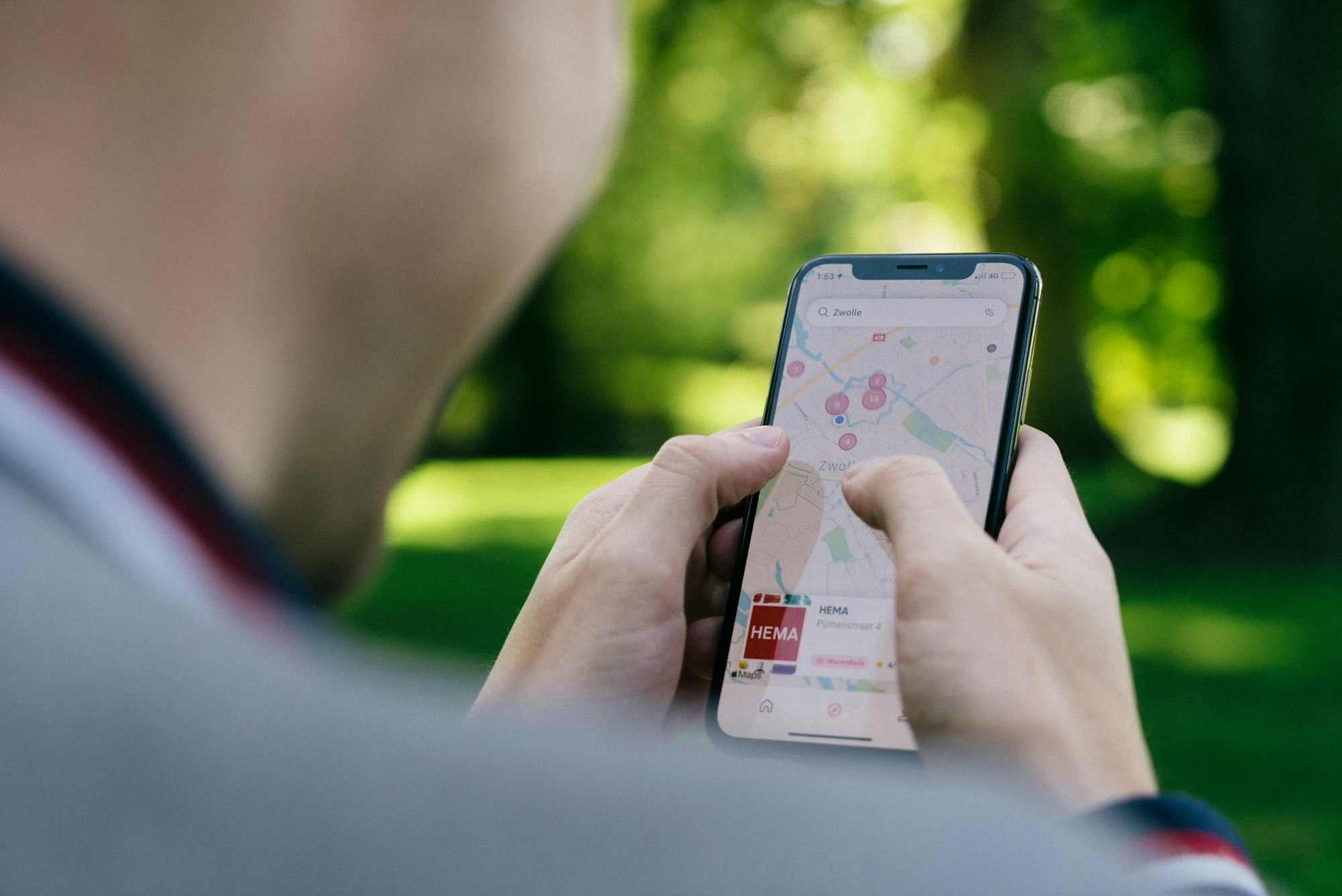
When it comes to maps, don't rely on Google Maps, they are outdated and not at all useful in China. Amap is a great Chinese alternative, and it has an English interface.
Read my other posts to understand what apps you need and how to use them.
 Magda Sawyer
 Magda Sawyer
 Magda Sawyer
 Magda Sawyer

Extreme weather
China is huge and for the climate is varied. In every season there is somewhere you can go and not suffer from extreme cold or heat.
However, in the summer most of the country is very, very hot and some places experience heavy rainfall.
If you can, take that into account when planning the trip – overall best time to go for most destinations is spring and autumn. If you happen to travel in the summer, just try to spend most time outside in the morning and later in the evening and take a rest in the hotel in the afternoon, or find some indoor attractions like museums and indoor playgrounds.
Where should you go in China with kids?
That is for me the hardest section to write about because we have been to so many places that it is difficult to put myself again in the shoes of a first timer who has not been to China yet.
For first trip, I would definitely recommend including Beijing and Chengdu. Beijing is the capital with unique atmosphere and a blend of old and new. Chengdu has real pandas but also panda decorations and mascots everywhere you look – it is super cute and kids love that.
Which parts of China work best with children?
You don’t have to stick to the classic tourist route to enjoy China with kids. We’ve travelled with ours through big cities, mountain regions and winter landscapes, and found something to enjoy in very different places.
For a first trip, I would start with destinations that make everyday logistics straightforward: good transport connections, convenient accommodation and plenty of activities close together. Beijing and Chengdu are my personal favourites.
Think about the season as well as the destination. Somewhere that’s enjoyable in spring can be exhausting in summer heat, especially when you’re carrying a baby or spending long days outside.
High-altitude destinations such as Tibet need separate consideration. Our family’s experience doesn’t mean they suit every child or itinerary. Discuss plans with a qualified healthcare professional, allow for acclimatisation and understand the symptoms of altitude illness before deciding to go.
Popular destinations
When planning your family trip to China, consider these popular destinations:
- Beijing: Our gateway to China — blend of old and modern, incredible parks and playgrounds. Great Wall and Forbidden City. Always our first and last stop.
 Magda Sawyer

- Xi'an: Terracotta Warriors, cycling on the ancient city wall, the best street food in China (in my opinion), and unforgettable cultural performances.
 Magda Sawyer

- Chengdu: Giant pandas, lively People's Park, cycling along the 100km Tianfu Greenway and some of the best food in China. A must for families.
 Magda Sawyer

- Chongqing: Internet sensation cyberpunk city, amazing hot pot (yes, with kids!) and architecture, and the best indoor playgrounds we've found anywhere.
 Magda Sawyer

- Guangzhou: Underrated and fantastic for families. Canton Tower, Chimelong attractions, incredible Cantonese food, and fewer crowds than Beijing or Shanghai.
 Magda Sawyer

- Shenzhen: Modern, futuristic, and surprisingly fun for kids. The new Museum of Natural History alone is worth a trip. Easy to combine with Hong Kong.
 Magda Sawyer

- Shanghai: China's most cosmopolitan city. The Bund, Disneyland, and an endless choice of family-friendly activities. Can feel overwhelming with very small kids but brilliant with school-age children.
 Magda Sawyer

- Yunnan province: For families seeking nature and slower pace — breathtaking mountain scenery, ancient villages, and a completely different side of China.
 Magda Sawyer

- Tibet: An unusual choice, but a truly unique experience. We took our kids to a homestay in the Tibetan countryside and it's one of our most treasured memories.
 Magda Sawyer

 Magda Sawyer

Quick Itinerary Ideas
Not sure where to start? Here are three route ideas based on how much time you have:
1 Week — Classic First Trip Beijing (4 days) → Xi'an (3 days)
The two most iconic cities, connected by a 4.5-hour high-speed train. Enough time for the Great Wall, Forbidden City, Terracotta Warriors, and the Muslim Quarter — plus plenty of downtime for parks and local food.
2 Weeks — The Golden Route Beijing (3 days) → Xi'an (3 days) → Chengdu (3 days) → Chongqing (3 days)
Our most recommended route for families. You get ancient history, pandas, incredible food, and one of China's most exciting modern cities. All connected by high-speed train.
3 Weeks — The Full Experience Beijing (4 days) → Xi'an (3 days) → Chengdu (3 days) → Chongqing (3 days) → Guangzhou (3 days) → Shenzhen or Hong Kong (3 days)
Want more personalised advice? I offer trip planning services and consultations:


Where to Stay
Accommodation in China ranges from international luxury chains to cosy boutique hotels, and most of them are very family-friendly. We've consistently been impressed by how well Chinese hotels cater to families — free upgrades, baby cots arranged without asking, and staff who genuinely go out of their way to help.
Recommended hotel chains:
Ascott – their hotels are more like serviced apartments, with family room options, washing machine and kitchen. They have indoor playgrounds and swimming pool.
Atour – Chinese hotel chain with consistent standard across different cities. Though it is primarily a business hotel, they have a free laundry service, very good and modern facilities and a free self-service laundry.
Shangri-La – high-end hotel chain that owns different brands. We particularly like Jen by Shangri-La but they have many hotels of different prices and standard, all of them are on the higher end of the spectrum though.
A few things that are good to know:
Hotels in China are excellent value. What you'd pay for a basic 3-star in London gets you a well-appointed 4-star with breakfast in most Chinese cities. We've stayed in everything from hostels to five-star hotels, and the quality-to-price ratio is always impressive.
Location matters more than star rating. I always recommend staying near a metro station — it makes everything easier with kids. Additionally, if you find a hotel near a park, it would allow you to start a day in the park.
Hotel with breakfast or easy street food nearby. Kids are mad when they are hungry. Either pick a district with plenty of street food options or book a room with breakfast if you are staying in a modern finance/coroporate district.
Themed and family rooms exist. Some Chinese hotels have brilliantly designed kids' rooms — our favourite discovery was the Jingju Hotel in Shenzhen with incredible themed rooms that our kids went absolutely wild for.
For detailed hotel recommendations in each city, check out our "where to stay" guides:
 Magda Sawyer

 Magda Sawyer

 Magda Sawyer

Itinerary Planning
Planning a trip with kids can be daunting, and if it is your first trip it is very difficult to set for an itinerary.
I recommend planning for relaxed pace and staying in every city at least 3 days.
Consider skipping popular tourists attractions when traveling with small kids — they tend to be crowded and kids don‘t take too much in. Keep your plan flexible and just enjoy exploring the cities.
I know it might seem strange to go to China and skip Great Wall or Terracotta Warriors, but with kids under 5 I would highly advise that.
Getting Around China with Kids
One of the things that surprised us most on our first trip was just how easy it is to get around China with children. The transport infrastructure is, honestly, better than what we're used to in Europe — and I say this as someone who travels with Swiss trains on a daily basis.
High-Speed Trains
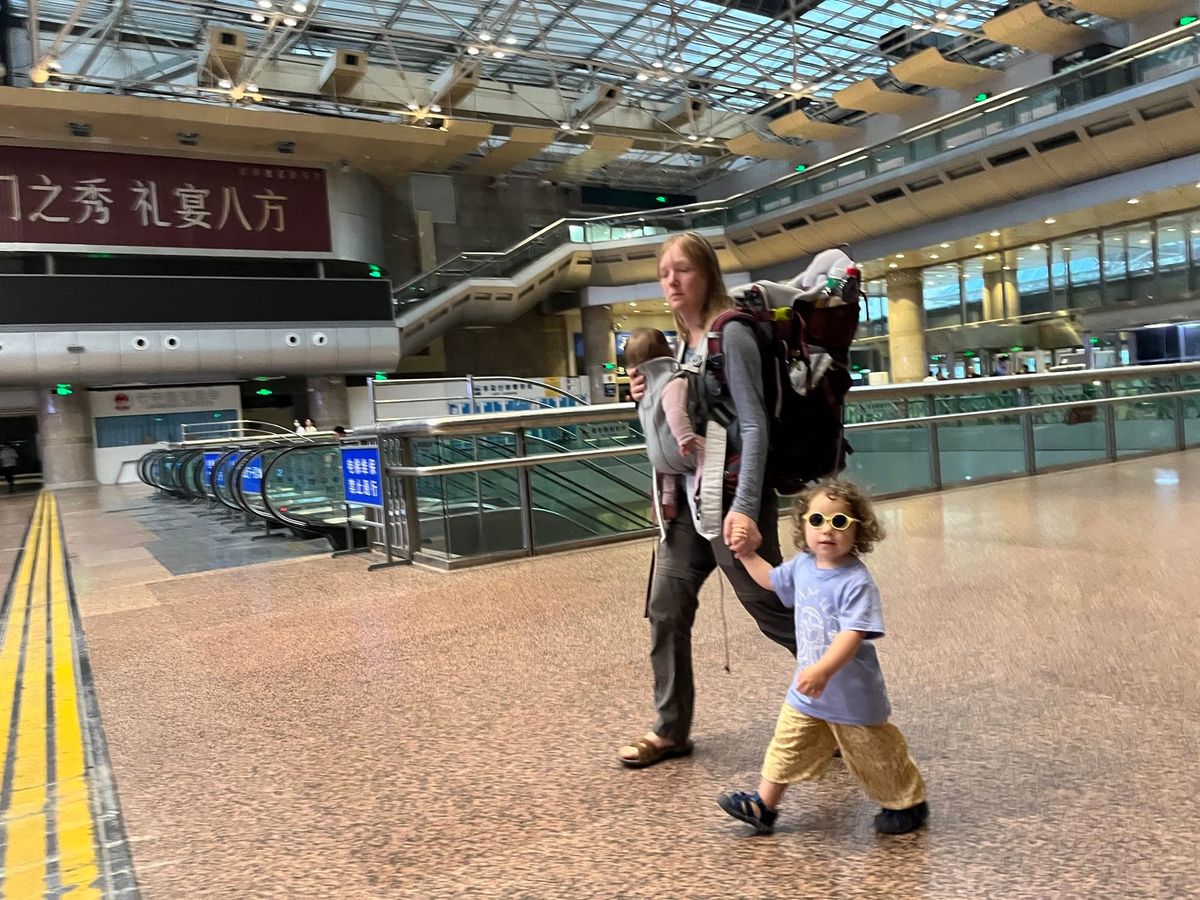
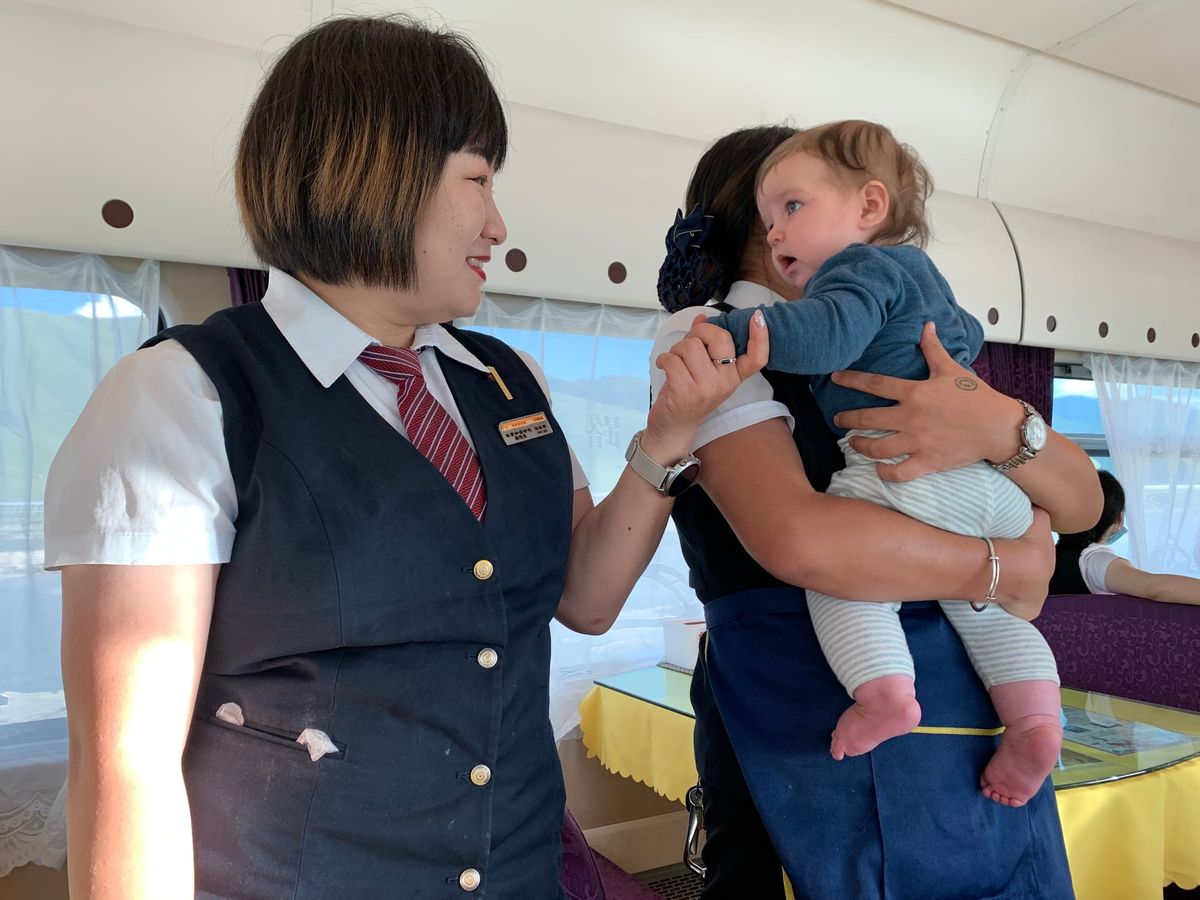
High-speed trains are our favourite way to travel between Chinese cities. They’re comfortable, smooth and an exciting part of the holiday for our children. There’s room to get up and stretch, and you can bring your own food for the journey.
Child tickets are based on age, not height:
- Under six: each ticketed adult can bring one child free, without a separate seat. You must still add the child to the booking.
- Ages six to thirteen: children need a discounted child ticket.
- Fourteen and older: children pay the full fare.
You can also buy a child ticket for an under-six who needs their own seat. For a longer journey, that extra space can make everyone more comfortable. Bring every family member’s passport, including children travelling free.
When planning your route, allow time for getting to the station, security checks and reaching your next hotel. A four-hour train journey takes up more than four hours of your day.
See my family train guide for booking instructions, seat choices and what to expect on board.
 Magda Sawyer
 Magda Sawyer
Metro
Every major Chinese city has a modern, clean metro system with signage in English. It's the fastest way to get around within a city. On our last trip, we didn't buy a single physical ticket — we set up AliPay's transport function and just scanned QR codes to tap in and out. It takes two minutes to set up and works in every city.
One thing to keep in mind: metro stations often involve stairs, so if you're traveling with a stroller, you'll need to factor in some extra time finding lifts. In hilly cities like Chongqing, I'd skip the stroller entirely and go with a baby carrier.
Read more:
 Magda Sawyer

Stroller vs Baby Carrier
This is a question I get asked a lot. My honest advice that most people will likely not follow: keep things easy and bring only the carrier. Chinese cities are modern, but older neighbourhoods, metro stations, and attractions like the Great Wall are not always stroller-friendly. Chongqing in particular is built on hills — I cannot stress enough how much you need a carrier there. In flat cities like Beijing or Chengdu, a lightweight stroller works fine for everyday use.
If you cannot imagine travelling without a stroller, take both, but from our experience adding a carrier to your luggage is not a big deal and it will make your life much easier.
 Magda Sawyer


Traveling in China by Age Group: What to Expect
Having traveled to China with our daughters at every stage — from a 4.5 month old baby to an active 5 year old — I can tell you that every age has its own set of joys and challenges. Here's what we've learned.
Babies (0–12 months)
In some ways, this is the easiest age to travel with. Babies sleep a lot, they don't have opinions about the itinerary, and they attract an incredible amount of positive attention in China. People will stop you on the street to admire your baby, make funny faces, and generally treat your little one like a celebrity.
Nina was 4.5 months on our first trip and honestly she was the easiest travel companion. She slept through train rides, napped in the carrier while we explored, and was perfectly content as long as she was fed and close to us. The main things to sort out: make sure you have a good carrier, plan for breastfeeding or bottle feeding (attitudes in China are very relaxed), and know that nappies are available everywhere. Hotels are generally very accommodating — many can provide a cot upon request (check before booking).
 Magda Sawyer

Toddlers (1–3 years)
This is where it gets more interesting! Toddlers want to move, touch everything, and have strong opinions about food. The good news is that China is brilliantly set up for this age group. The indoor playgrounds are unlike anything we have in Europe — huge, well-equipped, with organised activities and staff supervising. They are perfect for burning off energy on days when the weather doesn't cooperate or you need a break from sightseeing.
For food, toddlers do well with plain rice, noodles, steamed buns, and dumplings — all cheap, available everywhere, and easy to eat with little hands. Check out my guide to Chinese food for picky toddlers for more ideas.
The biggest practical consideration at this age is the stroller question. In flat cities like Beijing, Chengdu and Guangzhou, a lightweight stroller works fine. But in hilly Chongqing — forget it. You need a backpack carrier, full stop. We always opt-in for the carrier
Preschoolers (3–5 years)
This is the sweet spot for China travel. Kids this age are old enough to be excited about new experiences but young enough to still be flexible. Hanna was 3.5 on our second trip and the difference from when she was 2.5 was remarkable — she loved the cultural performances, was excited about trying new food, and still talks about painting "graffiti" on the wall in Chongqing.
At this age, focus on experiences rather than traditional sightseeing. Parks are more fun than museums. Night markets are more exciting than temples. The Tuo Ling Legend show in Xi'an had both our kids (1.5 and 3.5 at the time) sitting in absolute silence, mesmerised. Interactive experiences like these are what make China special for this age group.
School-Age Kids (5+)
Older kids can finally appreciate the "big" attractions — and get something meaningful out of them. The Great Wall becomes an actual adventure, the Terracotta Warriors turn into a fascinating history lesson, and cities like Xi'an offer a real window into how ancient and modern China coexist.
This is also a great age for cooking classes, bike riding on the Xi'an city wall (we haven't done this yet but it's on our list!), and starting to pick up a few words of Mandarin — which Chinese people absolutely love.
Major Chinese cities invest a lot in educational experiences for kids so modern museums are really worth a trip — our kids loved the Science and Technology Museum in Shenzhen, but it is far from the only one there.
If your children are school age, I'd also consider adding destinations like Harbin in winter that require a bit more physical stamina but offer unforgettable experiences.
Is it expensive to travel in China?
China itself is a relatively cheap destination, but having to add plane tickets and visa cost on top, it probably puts it in the mid-range holiday budget. Transportation and food are cheap, so are the hotels if you don't choose to spoil yourself, so it is definitely a place a mid-income family (from the West) can afford.
I have written a detailed budget break down here:
Magda
Practical Stuff: Nappies, Toilets & Healthcare
Can you buy nappies in China?
You can buy ANYTHING in China. China has undergone a rapid transformation and the stories we have heard of people holding kids over the bins to do a poo are long gone. Yes, we have seen kids with the Chinese-style open-bottom trousers, but there was always a Pampers underneath!
Magda
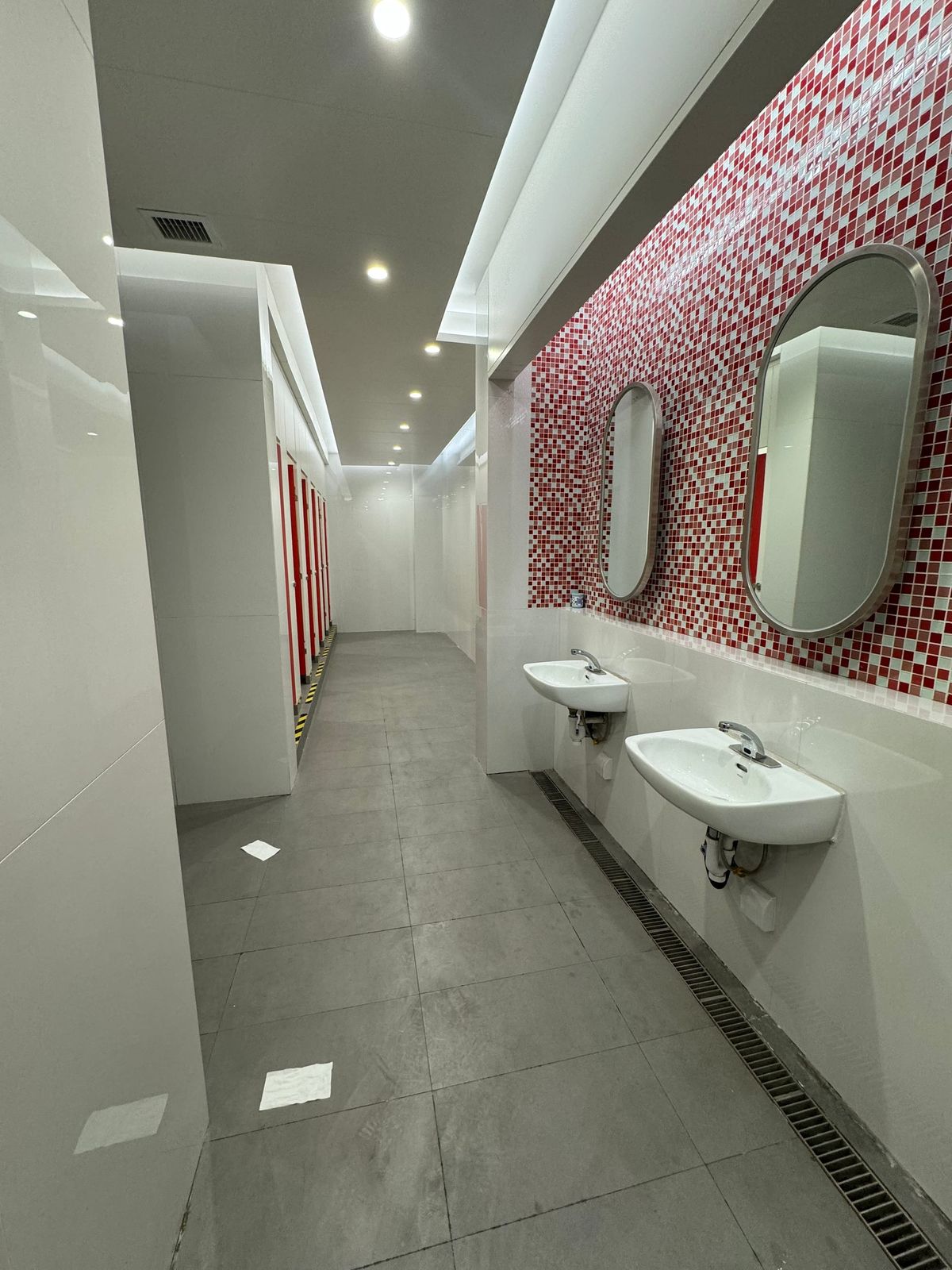
What are the toilets like?
If you are going to be traveling in cities and major tourist destinations, toilets are not a big worry. China has invested heavily in improving sanitation in recent years and now you can find clean toilets almost everywhere. You can often find "accessible toilets" in shopping malls, train stations and trains, tourist attractions and metro stations.
In 2nd and 3rd tier cities, it is better to plan for toilets in bigger shopping malls, newer metro stations and hotel.
But places that most tourists focus on planning their first trip are not more difficult than any other big city.
 Magda
Health and Safety
When traveling to China with family, it's important to prioritise health and safety. Make sure to but a travel insurance.
Tap water in China is not drinkable and hotels provide bottled water.
Access to healthcare in China
We needed to visit a hospital with Hanna during one of our trips and had a positive experience. She received thorough care, including a blood test and treatment for dehydration. That experience was reassuring, although the process and costs will vary between hospitals – but generally for a doctor check-up without any procedures or complex tests it is very affordable (for us it was less than $100 for everything including tests, treatment and medication).
Bring your child’s passport and insurance details. You may need to register for a hospital card before seeing a doctor; keep it for any follow-up appointments. We have been told that hospitals in other cities will automatically have access to your child’s records.
Keep copies of test results, prescriptions and receipts, both for future treatment and any insurance claim. A translation app can help with communication, and it’s useful to have allergies, medications and relevant medical history written down.
Before travelling, check what your insurance covers and how to contact its assistance service. For more detail, read my account of visiting a Chinese hospital.

Packing for Your Family Trip to China
Packing efficiently can make a big difference in the comfort and enjoyment of your family trip. We prefer to pack light and mostly pick travel clothes that can dry quickly and don't smell as much – wool is great for that.
I would recommend planning for laundry few times mid-trip rather than packing a tone of clothes.
From our experience it is better to have one bigger pieces of luggage rather than multiple things to carry.
Only take kids backpacks if they will really carry them — otherwise it is just annoying.
And I know kids suitcases are cute but traveling with multiple pieces of luggage when you might also need to carry the kids is unnecessary obstacle to otherwise smooth journey.
FAQs
Q: Is China safe to travel with kids?
A: Yes. China is one of the safest countries we've traveled in with our children. Cities are clean and well-organized, public transport is modern and reliable, and Chinese people are exceptionally warm and helpful toward families with young children. We've traveled there 6 times with our daughters (starting at 4.5 months old) and have never had a safety concern. Standard travel precautions apply, but violent crime toward tourists is virtually unheard of.
Q: What is the best age to take kids to China?
A: We first travelled with a 4.5-month-old baby and a toddler, and have enjoyed returning as they’ve grown. Babies bring feeding and carrying logistics; toddlers need plenty of flexibility; older children can take a more active interest in choosing activities. There isn’t one perfect age—plan around your children’s needs and interests.
Q: What can kids eat in China?
A: Plenty. Chinese staples like rice, plain noodles, dumplings (jiaozi), steamed buns (baozi), and egg fried rice are universally available and kid-friendly. Street food halls let every family member choose different dishes. Yoghurt drinks are everywhere and make great snacks. Even picky eaters won't go hungry — and food is very affordable, so you can order multiple options without worrying about cost.
Q: Do I need a visa to visit China with my family?
A: Most European countries now enjoy 30-day visa-free entry to China — a policy introduced post-Covid to boost tourism. This applies to all family members including children. Check the latest status for your nationality, as the policy is periodically reviewed and extended. For longer stays or nationalities not covered, a standard tourist visa (L visa) is required.
Q: How much does a family trip to China cost?
A: As a broad planning estimate, allow US$60–$200 per day for a family of four sharing one room, excluding international flights, visas and insurance. The lower end means modest accommodation, inexpensive meals and mostly free or low-cost activities. More comfortable hotels and paid attractions push the total higher.
Budget separately for intercity journeys, and expect costs to rise during busy holidays or if your children need a second room. See my detailed budget guide for a breakdown.
Q: Can I buy nappies and baby supplies in China?
A: Absolutely. China is fully modernized — you can buy Pampers, formula, baby food, and all other supplies in any city. Supermarkets, pharmacies, and convenience stores stock international and domestic brands. We never had trouble finding anything we needed, even in smaller cities. Online delivery via apps is also extremely fast if you prefer.
Q: What's the best time of year to visit China with kids?
A: Spring (March-May) and autumn (September-November) offer the most comfortable weather for families — mild temperatures, manageable crowds, and pleasant conditions for outdoor sightseeing. Avoid summer in southern China (extreme heat and humidity) and Chinese public holiday weeks (first week of May and October) when domestic tourism peaks and attractions get very crowded.
Q: How do you get around China with kids?
A: China's transport infrastructure is excellent for families. High-speed trains connect all major cities and are clean, spacious, and child-friendly. Every major city has a modern metro system. DiDi (China's ride-hailing app) is a lifesaver for short trips with tired kids. For hilly cities like Chongqing, bring a baby carrier instead of a stroller. The main thing to prepare in advance is setting up WeChat and AliPay for payments, as cash is rarely used.
Q: Do I need a VPN in China?
A: For most visitors, my recommendation is to use an international travel eSIM that provides access to your usual apps without a separate VPN. It’s a straightforward way to stay connected while travelling.
Check that your chosen plan supports access to services such as Google, WhatsApp and Instagram in mainland China—not every eSIM works the same way. Install it before departure and check that your phone is compatible and unlocked.
This applies when using your eSIM’s mobile data. Hotel and public Wi-Fi connections can still block those services, so switch back to mobile data when needed.
Q: What should I pack for China with kids?
A: Beyond standard travel items: a baby carrier (strollers struggle in older city areas and metro stairs), a portable charger (you'll use your phone constantly for payments and navigation), universal power adapters, familiar snacks for fussy moments, and comfortable walking shoes for everyone. Download offline translation packs before you go. Don't overpack — you can buy almost anything in China cheaply and quickly.
Our advice for your first family trip
Choose a few places you’re excited about, give yourselves enough time in each, and leave space for everyday life. Some of our best memories come from parks, shared meals and things we never planned to do.
Set up the practical essentials before you leave, but don’t feel you need to organise every hour. That combination—some preparation and plenty of flexibility—is what keeps us coming back.