Fenghuang Ancient Town: Phoenix Town Travel Guide (2026)
📍 Where: West Hunan (Xiangxi), about an hour by high-speed train from Zhangjiajie
⏱️ Time needed: one night. A day trip is possible but you'd miss the point
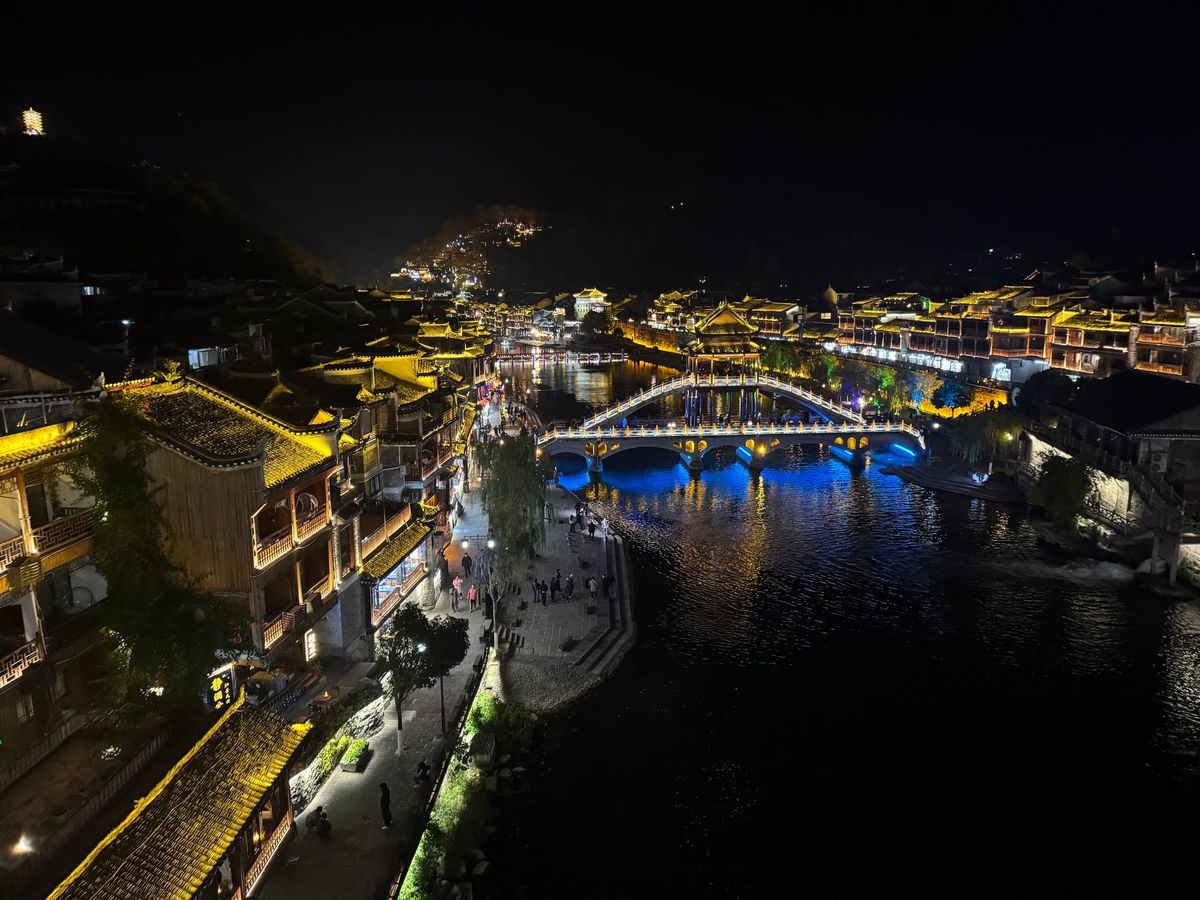
🌃 Highlight: the stilt houses along the Tuojiang River, lit up after dark
🛶 Don't miss: the small-boat ride down the river
💲 Cost: free to wander; a 9-site combo ticket is ¥128–148, the boat ¥60–85
👨👩👧 With kids: works for a night — lights, a boat, lanterns — but it's crowded and late
🏨 Stay: a riverside guesthouse in the old town
Quick answer: Fenghuang (Phoenix) Ancient Town is a riverside old town in West Hunan, famous for its wooden stilt houses hanging over the Tuojiang River and for the way the whole place lights up at night. Since the high-speed railway opened, it's about an hour from Zhangjiajie West station, so it slots easily onto the end of a Zhangjiajie trip. Walking the town is free; you only pay for the heritage buildings and the boat. Stay one night, in a hotel inside the old town, and see it after the day-trippers leave — that's when it's worth the journey. It is beautiful and it is very touristy, and both of those things are true at once.
We've stayed in both of the old towns near Zhangjiajie, and if you make me choose, I'd pick Furong for its waterfall. But Fenghuang is the one most people have heard of, the river is prettier, and the little boat ride was one of the loveliest half-hours we spent in Hunan. Here's how to do it without feeling like you've been processed.

What it is
Fenghuang is a Ming- and Qing-era market town on the Tuojiang River, in the hills of Xiangxi where Hunan meets Guizhou. The old core is a few hundred metres of riverbank: wooden houses on stilts over the water, a covered bridge (the Hong or Rainbow Bridge), stone stepping stones across the river, narrow flagstone lanes behind, and the old city wall and gate towers. It's the home town of the writer Shen Congwen, whose novel Border Town is set in this landscape, and it sits in Miao and Tujia country, so you'll see both cultures in the food, the dress and the silverwork for sale.
It was "discovered" by Chinese tourism a couple of decades ago and has been busy ever since. Expect bars with live music along the water, shops selling the same ginger candy and silver on every corner, and a lot of people in rented Miao costumes taking photos. Expect, too, that at 7 in the morning with the mist on the river, none of that matters.
How to get there
The old advice — four or five hours on a bus — is out of date. Fenghuang Gucheng (凤凰古城) high-speed station opened in 2021 on the line from Zhangjiajie to Jishou and Huaihua, and it changed everything.
- From Zhangjiajie: high-speed train from Zhangjiajie West to Fenghuang Gucheng, about 50–70 minutes, ¥75–95 in second class, roughly eight departures a day between early morning and early evening. Book on Trip.com or 12306 with your passport.
- From Furong: Furong Town station is on the same line, so the two old towns are about 30 minutes apart by train — easy to do both.
- From Changsha: 2–3 hours by high-speed train depending on the service, around ¥175.
The station is about 10 km from the old town. From the station square there's a shuttle bus (¥7, 20–30 minutes) into town, a short maglev line (¥28–38 one way; a gimmick, but the kids may insist), or a taxi for around ¥30. Hotels in the old town are mostly car-free, so expect to walk the last few minutes with your bags — pack light. For the train and station basics, see our China train guide.
Tickets: what's free and what isn't
Walking into the old town, along the river and across the bridges is free — the entry fee that existed a few years ago was scrapped. What costs money:
- The combo ticket for the heritage sites — Shen Congwen's former residence, the Hong Bridge interior, the East Gate tower, the Yang family ancestral hall and a few others, nine in total — is about ¥128–148 and valid for two days. You'll see wider bundles at ¥208 that add a night boat ride.
- The boat ride on the Tuojiang River, if bought on its own, is ¥60–85 depending on the operator and time of day.
Honest take: the buildings are interesting if you've read Shen Congwen or want context, and skippable if you haven't. The boat is the one thing I'd pay for.
The best things to do
Take the boat. Wooden boats with a boatman at the pole run a short stretch of the river through the stilt-house corridor, under the Rainbow Bridge, in 20–30 minutes. By day you see the houses; after 7 pm you see them lit, which is better. We loved it. Go from the jetty near the Hong Bridge and expect a queue on weekends.
Walk the river at first light. The town's real character is in the hour after dawn, before the shops open: locals washing vegetables at the water's edge, mist on the river, the stepping stones empty. If you only get up early once on your trip, make it here.
Cross the stepping stones. Two lines of stone pillars run across the river below the North Gate. They're the most photographed thing in town and fun to hop across; hold small hands.
Climb the city wall and gate towers. The restored Ming wall along the river and the North and East Gate towers give you the view over the rooftops. The towers are on the combo ticket.
See the lights. Every evening the stilt houses, bridges and the pagoda on the hill are lit up and the river fills with reflections. It's over the top and it works. The best viewpoints are from the Rainbow Bridge and from the far bank opposite the stilt houses.
Eat. Xiangxi food is Hunan food with the volume turned up: blood duck, sour fish, smoked pork, and the town's ginger candy pulled by hand in shop doorways. Pick the busy places away from the main river strip.
Shen Congwen's house. A small courtyard home with photographs and manuscripts. Quiet, quick, and more interesting than it sounds if you've read him.
Is it too touristy? Our honest take
Yes, by any normal measure. The main lanes are wall-to-wall shops and the riverside bars play music until late. On a holiday weekend the stepping stones have a queue. If you come at midday on a day trip, you'll walk through a crowd, take the same photo as everyone else, and wonder what the fuss was about. That's the experience most people have, and it's why some of them call it a tourist trap.
It isn't, quite. The fix is simple: sleep there. By 9 pm the tour groups are on their buses. By 7 am the next morning the town is nearly empty, the light is soft and the river is doing what rivers do. Those two windows — late evening and early morning — are the whole reason to come, and you only get them if you stay the night. Same rule as Furong, and the same rule as every old town in China.
Where to stay
Stay inside the old town, not by the station or on the new-town side of the river, so the evening and the early morning are on your doorstep. Within the old town there's a trade-off:
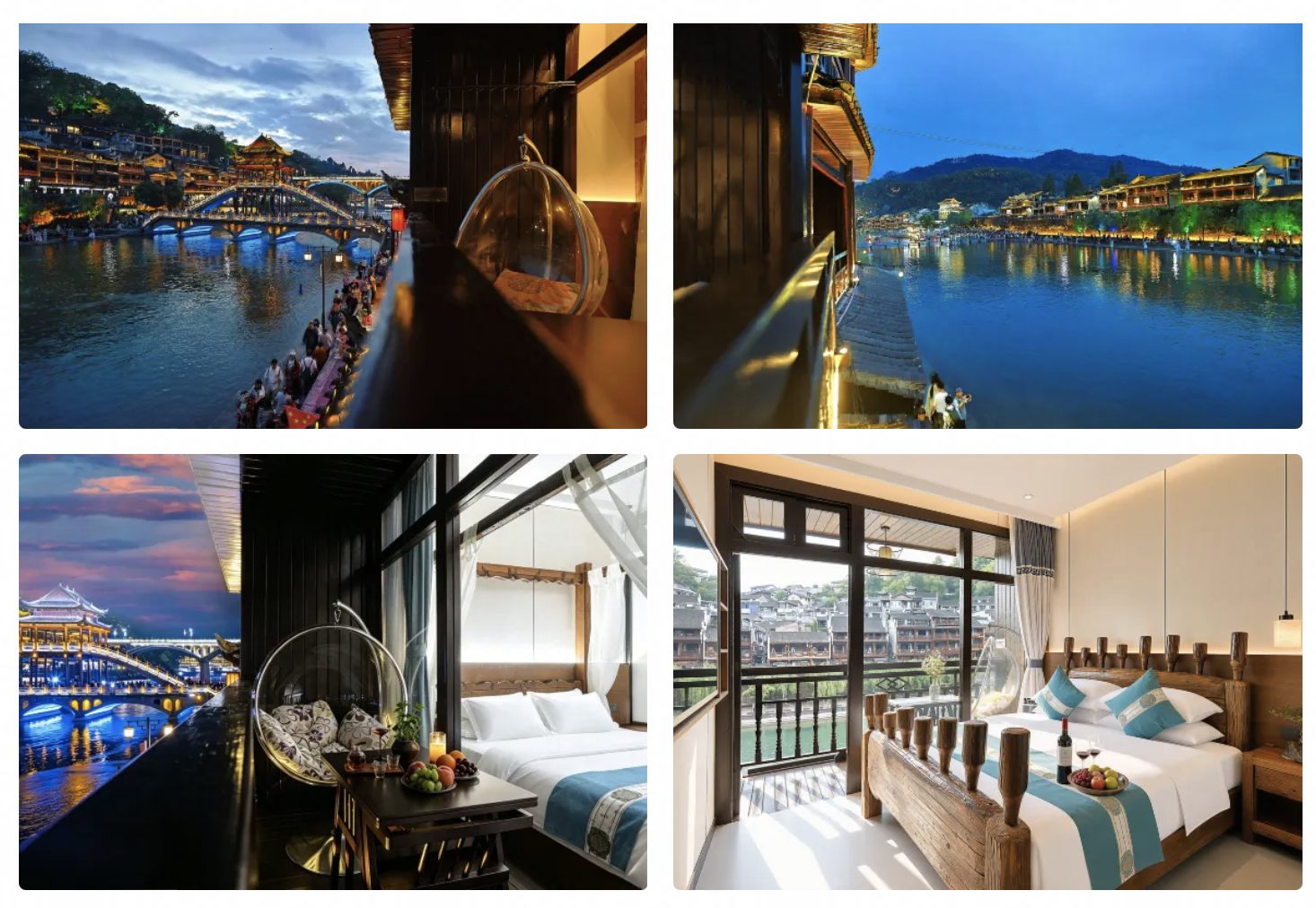
- Riverside, in a stilt house — the view from your window is the town's best, and sunrise over the water is the memory you'll keep. The downside is noise from the bars until late and thin wooden walls. Pick the upper floors.
- In the lanes behind — a few minutes' walk from the water, far quieter, usually newer hotels, and cheaper.
Prices are reasonable — most decent guesthouses are in the ¥150–400 range, with a handful of boutique places above that. Book ahead for weekends and any Chinese holiday. The town is small enough that nowhere inside the walls is more than ten minutes from the river.
If you want to have views of the river, pick a room with immersive 180 degree view of the river in Yunsheli River View Homestay.
Visiting with kids
Our kids got the old-town experience at Furong, and it was the evening that won them — lights, music, outdoor performances they could leave whenever they'd had enough. Fenghuang offers the same ingredients plus a boat, which for most children beats a waterfall. The stepping stones, the lanterns and a boat ride at dusk are all easy wins.
Three things to plan around. It's crowded, so a carrier for little ones and a hand on bigger ones along the river edge — there are no railings in places. It's a late town, so eat early and don't fight bedtime for the lights; they're on by dusk. And stay in the lanes rather than on the water if anyone in the family sleeps lightly. One night is plenty. For how the old towns fit with the mountain days, see the Zhangjiajie with kids guide.
How long do you need? Day trip vs overnight
A day trip from Zhangjiajie is doable now — an hour on the train each way, a few hours in town — but you'd arrive with the crowds and leave before the lights, which is the worst version of Fenghuang. One night is right: arrive mid-afternoon, boat at dusk, dinner, the lights, early walk the next morning, train out by lunch. Two nights only if you want to use it as a base for the Miao villages below.
In a 4–5 day Zhangjiajie trip, Fenghuang is the last stop: park, then Tianmen in the city, then the train down to Fenghuang and out via Huaihua or back through Changsha. If you have the time, stop at Furong on the way and compare them yourself.
Beyond the town: Miao and Tujia villages
Fenghuang is the polished front door to Xiangxi. The region behind it is Miao and Tujia farming country — terraced valleys, stone villages, markets where people still wear traditional dress because it's Tuesday rather than because tourists are watching. The easy taster is Dehang Miao Village, about an hour away near Jishou, with a gorge walk and a waterfall. Deeper than that takes a car, some Mandarin and a willingness to get lost.
If that's the trip you actually want, it's worth having someone handle it. Eastogo, a small Chengdu-based agency, runs slow, custom trips through West Hunan that go past the famous stops — they travel the way we do, and it's the only way we'd recommend for the villages beyond Fenghuang. For a quick, organised version of the two old towns, there's also a private day tour to Fenghuang and Furong from Zhangjiajie.
FAQs
Is Fenghuang Ancient Town worth visiting?
Yes, if you stay the night and see it lit up in the evening and empty in the early morning. As a midday day trip it's a crowded shopping street with a nice river. The boat ride and the first hour after dawn are what make it worth the journey.
How do I get from Zhangjiajie to Fenghuang?
High-speed train from Zhangjiajie West to Fenghuang Gucheng station, about an hour, then a 20–30 minute shuttle bus, maglev or taxi the 10 km into the old town. The old road route takes four to five hours and isn't worth it anymore.
Do you need a ticket for Fenghuang?
No. Walking the old town and the riverside is free. A combo ticket of ¥128–148 covers nine heritage sites and is valid two days; the boat ride is ¥60–85 if bought separately.
Can you do Fenghuang as a day trip from Zhangjiajie?
You can, but you'd arrive with the crowds and leave before the lights come on. Stay one night.
When is the best time to visit Fenghuang?
Spring and autumn for mild weather and clear light. Avoid Chinese public holidays, when the town is uncomfortably full. Winter is quiet and cold; summer is hot and the river is high.
Fenghuang or Furong — which is better?
Furong is smaller, has a waterfall running through it and is 30 minutes from Zhangjiajie; it's our pick with kids. Fenghuang is bigger, more famous and prettier on the water, with the boat ride. They're 30 minutes apart by train, so with time you can do both.
Plan your Hunan trip
- 📍 Zhangjiajie travel guide
- 🗓️ Zhangjiajie itinerary — where Fenghuang fits
- 💧 Furong Ancient Town guide
- 🏙️ Things to do in Changsha
- 👨👩👧 Zhangjiajie with kids
- 🚆 Book trains in Hunan
- 🏨 Find a hotel in Fenghuang
Final thoughts
Fenghuang is a place that rewards people who stay and punishes people who rush. Give it a night, take the boat when the lanterns come on, and get up early enough to have the river to yourself. Do that and you'll understand why it's famous. Skip it and you'll have an extra day for Furong, which is also a perfectly good answer.
This post contains affiliate links. For more information, see our disclosures.