Baby Diapers in China: Where to Buy & Where to Change (2026)
Last updated: March 2026
Quick Summary
🏪 Availability: Widely available in all Chinese cities
💰 Cost: Similar to Western prices
🌟 Best Brands: Pampers, Huggies + excellent Japanese brands
🍼 Changing Facilities: Baby care rooms in malls, stations, metro
🚂 On Trains: Changing table in accessible toilet (middle carriage)
💡 Pro Tip: Pack a 3-day supply, buy the rest locally
Buying diapers and finding places to change them were two of our biggest concerns before our first China trip — we had two kids in diapers, including a 4.5-month-old baby. Both turned out to be complete non-issues. Disposable diapers are easily available everywhere in China, and the changing facilities in places like metro stations and shopping malls are genuinely better than what we're used to in Europe.
Here's everything we learned about buying diapers and finding changing facilities across six trips to China, covering Beijing, Shanghai, Chongqing, Shenzhen, Chengdu, and smaller towns like Lijiang.
Can You Buy Diapers in China?
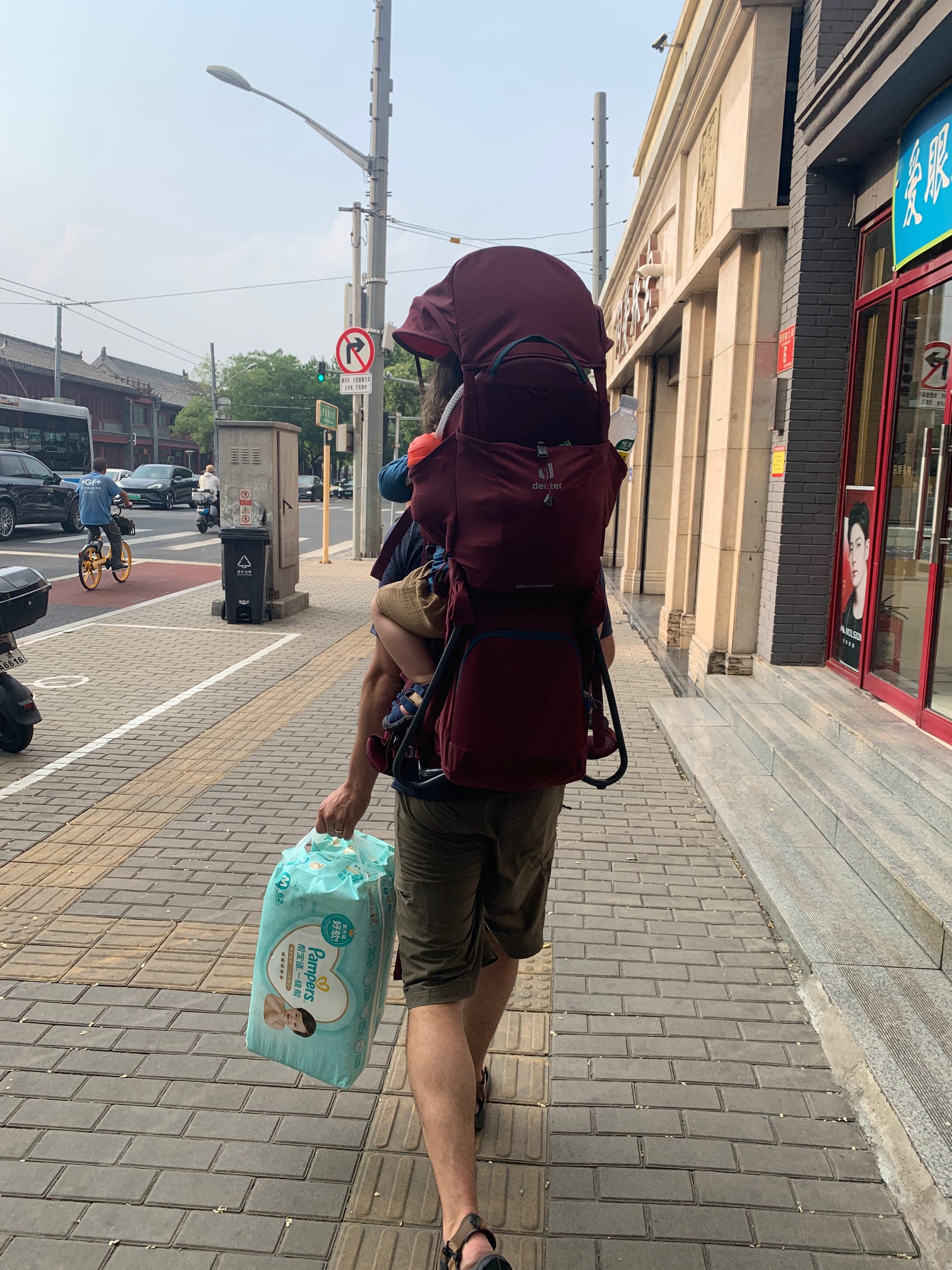
Yes, absolutely. Despite what you might read in outdated travel guides or hear from people who visited years ago, disposable diapers (纸尿裤, zhǐ niào kù) are now the norm in urban China. We saw babies wearing them everywhere, and finding diapers was much easier than we initially feared.
You'll find Pampers, Huggies, and several excellent local and Japanese brands in any large supermarket. Japanese diaper brands like Merries and MamyPoko are particularly popular in China and, in our experience, some of the best diapers we've ever used.
Where to Buy Diapers in China
Best places to buy
Large supermarkets are your best bet — they stock a wide range of brands and sizes with clear pricing. Look for chains like Walmart, Carrefour, or local chains like Hema (盒马). Ask your hotel staff for the nearest large supermarket if you can't find one.
Shopping mall supermarkets often have a baby section with diapers, wipes, and baby food. Any modern mall in a Chinese city will have one.
Convenience stores like Family Mart or 7-Eleven sometimes carry small packs, useful in a pinch but not the cheapest option.
Ordering diapers on your phone
Chinese people wholeheartedly embrace technology, and you can use the 美团 (Meituan) app — available as a mini-program inside WeChat — to order diapers for delivery straight to your hotel, often within an hour. This is incredibly convenient when you're jet-lagged or it's late at night.
What to avoid
Small local shops and traditional pharmacies have limited stock and fewer brand options. Street markets don't sell diapers. Stick to supermarkets and malls for the best selection.
The biggest challenge: finding the shop
Your biggest problem won't be finding diapers themselves — it's finding the supermarket. Google Maps is unreliable in China and often shows outdated or incorrect locations. Use Gaode Maps (高德地图) or Apple Maps instead. Gaode requires searching in Chinese, but it has the most accurate directions, often with photos so you can verify the store before walking there. For all the essential apps you need in China, see our dedicated guide.
Useful Chinese Words for Diapers
Knowing these characters will help you find what you need, whether you're asking a shop assistant or searching in a Chinese map app:
尿布 (niào bù) — diaper/nappy (general term)
纸尿裤 (zhǐ niào kù) — disposable diaper (what you'll see on packaging)
湿巾 (shī jīn) — wet wipes
母婴室 (mǔ yīng shì) — baby care room / mother-and-baby room
换尿布 (huàn niào bù) — change a diaper
For more help with the language barrier, see our guide to translation apps for China.
How Much Do Diapers Cost in China?
Prices are similar to Western markets. A pack of Pampers costs roughly the same as it would in Europe or the US. Local Chinese brands and Japanese brands can offer better value — and in our experience, the Japanese brands are excellent quality. Bulk packs are usually available if you're staying in one city for a while.
For a full breakdown of what things cost, see our China travel budget guide.
Where to Change Diapers in China
This is where China genuinely surprised us — the changing facilities are excellent, especially in newer public spaces. Here's what we found across our trips:
Shopping malls
All modern shopping malls have accessible toilets with changing tables, and many have dedicated baby care rooms (母婴室). These are consistently clean and well-maintained — our most reliable option in any city.
Metro stations
Newer metro stations in cities like Beijing, Shanghai, Chongqing, and Shenzhen often have dedicated mother-and-baby rooms. These typically include a changing table, a comfortable armchair for breastfeeding, and sometimes a microwave for warming milk. We used these constantly and they were genuinely excellent — better equipped than most European equivalents.
Train stations
Major train stations have dedicated family/nursing spaces for changing and breastfeeding. Look for signs with 母婴室 or ask staff — they're usually located near the waiting areas. For more on navigating Chinese train stations, see our train travel guide.
On the train
All high-speed (G) and medium-speed (D) trains have the same layout: each set of 8 connected carriages has an accessible toilet with a fold-down changing table, always located in the middle carriage (usually carriage 5). The location of this toilet is shown on the back of every seat, so you'll always know where it is. For everything about riding Chinese trains with kids, see our complete guide.
Airports
Chinese airports have excellent family facilities — dedicated baby care rooms with changing tables, sinks, and comfortable seating. These are well-signposted and easy to find.
Tourist attractions
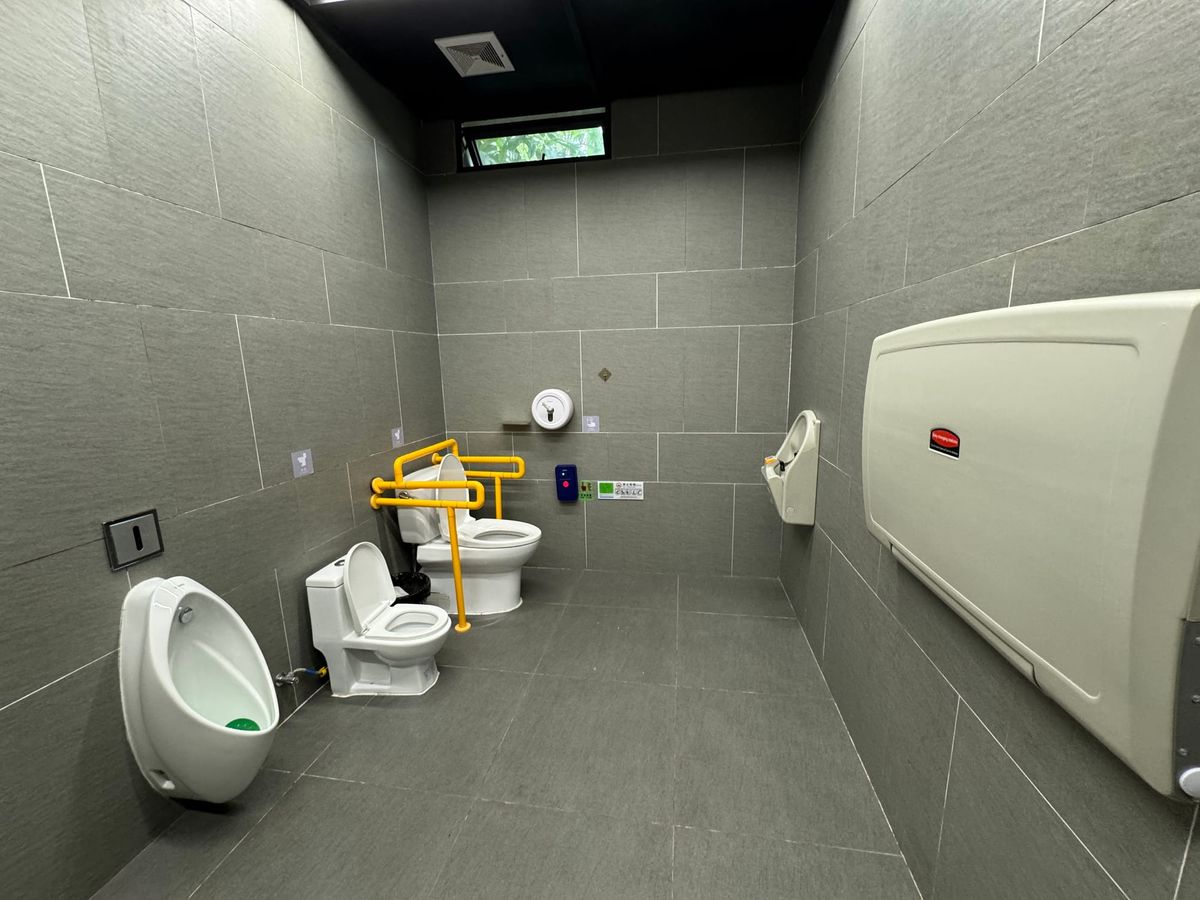
Major tourist sites (especially those rated AAAAA) always have accessible toilets with changing stations. For more on what to expect from public toilets in China, including the family restrooms that impressed us the most, see our dedicated guide.
Restaurants
This is the one place where changing tables are not standard. Be prepared to ask — or to get creative. In one restaurant in Beijing, the staff just told us to change the diaper on a chair in the dining hall, which was a bit unexpected (especially with staff members gathering around to help). It worked better than the toilet floor, but a portable changing mat is a smart thing to carry.
When nothing else works
A few times we changed diapers on park benches — it wasn't a problem and nobody really cared. We always carried a compact travel changing mat for exactly these situations. Honestly, we didn't need it more in China than we do in Europe.
Practical Tips from Our Experience
Pack a 3-day supply. Don't waste precious luggage space with a huge diaper stash. We found that carrying a 3-day supply was more than enough while we got our bearings in each new city.
Learn 母婴室 (mǔ yīng shì). This means "baby care room" and is the sign you're looking for in malls and stations. Search this term in Gaode Maps to find the nearest one.
Don't rely on Google Maps. It will send you to closed shops or empty lots. Use Amap or Apple Maps instead.
Carry a portable changing mat. Not always needed, but invaluable when a restaurant or older building doesn't have facilities.
Use Meituan for delivery. When you're exhausted after a day of sightseeing, ordering diapers delivered to your hotel is a game-changer.
FAQs
Can you buy diapers in China?
Yes, disposable diapers are widely available in all Chinese cities. Pampers, Huggies, and excellent Japanese brands like Merries are sold in supermarkets, malls, and convenience stores. You can also order them for delivery via the Meituan app on WeChat.
Are there diaper changing facilities in China?
Yes, and they're better than you'd expect. Shopping malls, airports, train stations, and newer metro stations have dedicated baby care rooms (母婴室) with changing tables, breastfeeding armchairs, and child-height sinks. Major tourist attractions also have accessible toilets with changing tables.
Do Chinese babies use disposable diapers?
Yes, disposable diapers are now the norm in urban China. The old practice of split-crotch pants (开裆裤) is much less common in cities, though you may occasionally see it in rural areas.
Should I pack diapers from home?
Bring a 3-day supply to cover your arrival, but don't fill your luggage. Diapers are easy to buy locally at similar prices to Western markets.
Can you change diapers on Chinese trains?
Yes. All high-speed and medium-speed trains have an accessible toilet with a fold-down changing table in the middle carriage (usually carriage 5). Its location is marked on the back of each seat. Train stations also have dedicated family/nursing rooms.
What is the Chinese word for diaper?
尿布 (niào bù) is the general word. 纸尿裤 (zhǐ niào kù) means disposable diaper — this is what you'll see on packaging. Baby care rooms are called 母婴室 (mǔ yīng shì).
Planning Your China Trip with Kids?
Diapers and changing facilities are just one piece of the puzzle. Here's more to help you plan:
 Magda Sawyer
 Magda Sawyer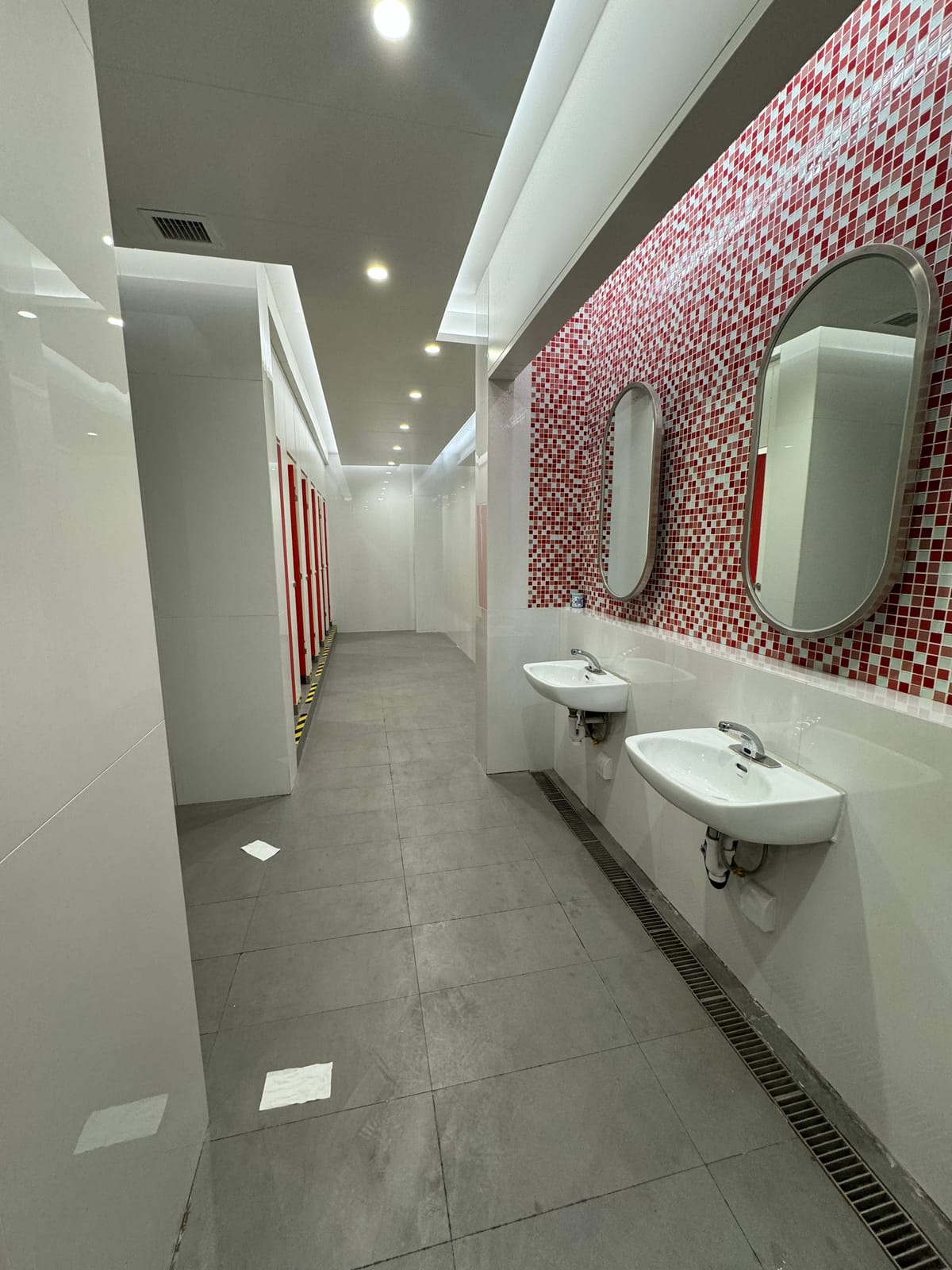
 Magda Sawyer
🏨 Ready to book? Find family-friendly hotels across China on Trip.com — we recommend checking our guides for Beijing, Shanghai, Chengdu, and Chongqing.