![How Much Does a Trip to China Cost? Complete Budget Breakdown [2026]](https://images.unsplash.com/photo-1554209721-6dbb1575b852?crop=entropy&cs=tinysrgb&fit=max&fm=jpg&ixid=M3wxMTc3M3wwfDF8c2VhcmNofDF8fHl1YW58ZW58MHx8fHwxNzE0MzM0Mjc2fDA&ixlib=rb-4.0.3&q=80&w=600)
How Much Does a Trip to China Cost? Complete Budget Breakdown [2026]
Detailed cost breakdown for different types of travellers.
Share this post:
Last updated: February 2026
Quick Summary
💲 Budget traveler: $45-75/day in China
💲💲 Mid-range traveler: $75-160/day in China
💲💲💲 Comfortable traveler: $155-265+/day in China
💰 2-week solo trip (mid-range): ~$1,650-3,100 total (incl. flights) 💰 2-week couple (mid-range): ~$2,700-4,800 total
👨👩👧👦 2-week family of 4: ~$3,500-6,000 total
💱 Exchange rate: ¥7.2 = $1 USD (Feb 2026)
✈️ Visa: FREE for 50 countries (30 days) | $150 for others
A 2-week trip to China costs approximately $1,650-3,100 per person at a mid-range comfort level, including international flights from Europe. Once you're in the country, daily costs for accommodation, food, transport and activities can be as low as $45-75 for budget travelers — making China significantly cheaper than Japan, South Korea, or most of Western Europe.
The real secret? China's price-to-quality ratio is extraordinary — a $80-100/night hotel in Chengdu or Xi'an gets you a property that would cost $200+ in Tokyo or Seoul, complete with swimming pool and excellent breakfast buffet.
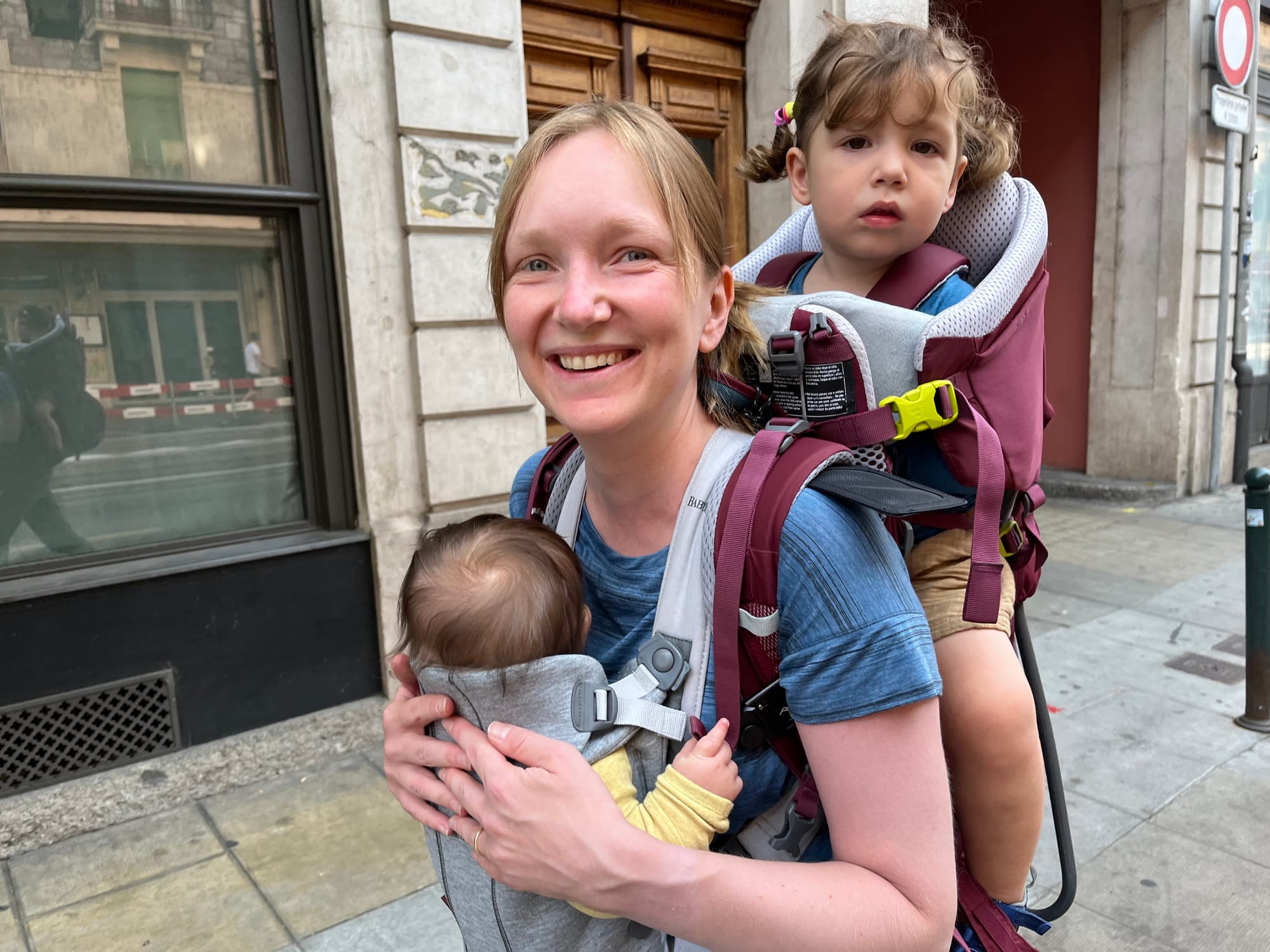
Having traveled to China multiple times with my family, I can tell you from experience: this is one of the best-value destinations in the world right now, especially with the expanded visa-free policy and a weak Chinese yuan working in your favour.
As featured in the Lonely Planet China 2025 guidebook as a recommended resource for family trip planning.
China Trip Cost Calculator
Use our interactive calculator below to estimate your personal trip cost. Adjust the sliders to match your travel style and group size.
🧮 China Trip Cost Calculator
Estimate your total trip cost based on your travel style
Estimated Trip Cost
Exchange rate used: ¥7.2 = $1 USD. Accommodation costs are per room, not per person.
Daily Costs in China by Category {#daily-costs}
Here's what you can expect to spend per day once you're in China, broken down by travel style. All prices are in USD based on the current exchange rate of approximately ¥7.2 = $1.
Accommodation
Hotels in China offer incredible value compared to most destinations. Trip.com is the best platform for booking — it has far more Chinese hotel inventory than Booking.com and clearly shows which properties accept foreign guests.
| Budget Level | What You Get | Price Per Night (per room) |
|---|---|---|
| Budget | Clean chain hotel (Home Inn, Hanting), basic but functional | $20-30 |
| Mid-range | Modern 4-star hotel, good location, breakfast often included | $30-80 |
| Comfortable | International 5-star or top Chinese brand (Atour, NUO), pool, great service | $80-120 |
| Top-end | Luxury international (Shangri-La, Mandarin Oriental) | $120-250+ |
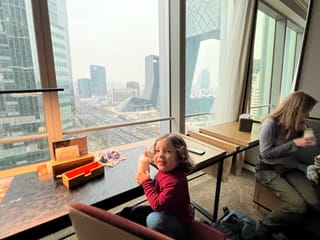
One thing we've learned over multiple trips: splurging on a top hotel in a tier-2 city is absolutely worth it. An $80-120/night hotel in Chengdu, Changsha or Chongqing gets you a 5-star experience with a swimming pool, executive lounge, and a breakfast spread that would cost $200-300 in Shanghai or any European capital. Chinese luxury hotels often have beautiful, uncrowded pools — a godsend after a day of sightseeing, especially if you're traveling with kids.
Shanghai is the most expensive city for accommodation, with top-end prices approaching European levels at $150+. Beijing and other large cities offer top hotels from $120+. In tier-2 and tier-3 cities, $80-100+ gets you something really special.
Important: Not all budget hotels accept foreign guests. The very cheapest listings on booking sites ($8-15/night) typically require Chinese ID. Realistic budget accommodation for foreign travelers starts around $20-40/night.
 Magda Sawyer
 Magda Sawyer
 Magda Sawyer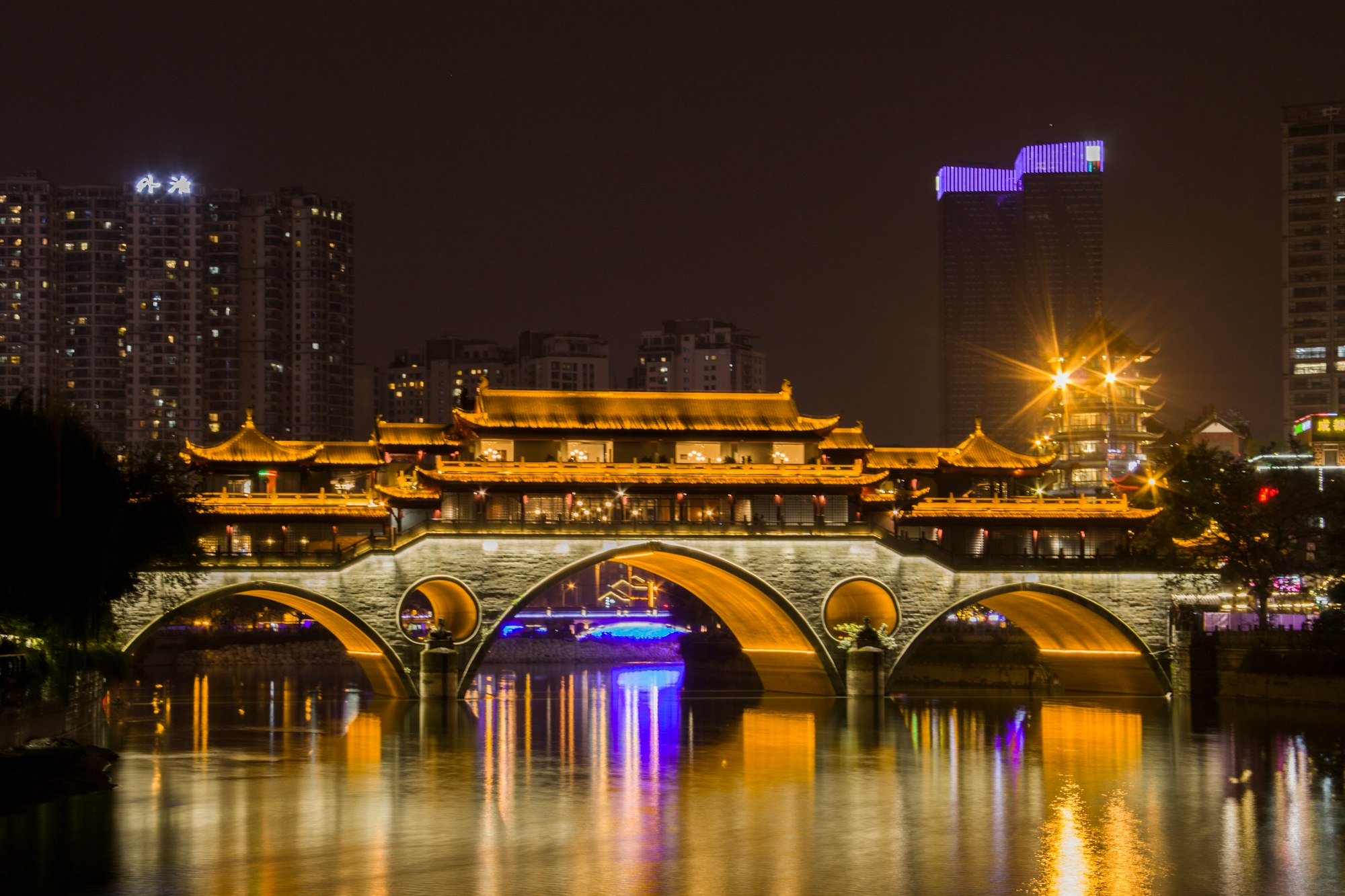
Food & Dining
Food is where China truly shines as a budget destination. You can eat incredibly well for very little — as long as you eat Chinese food (which you absolutely should, because it's amazing).
| Meal Type | Price Range | Examples |
|---|---|---|
| Street food snack | $0.50-2 | Jianbing (crepe), baozi (steamed buns), chuan'r (skewers) |
| Local restaurant meal | $3-5 | Bowl of noodles, plate of dumplings, rice dish |
| Nice local restaurant | $5-15 | Hot pot (per person), Peking duck, regional specialties |
| Western food | $10-25+ | Burger, pasta, Western brunch |
| Good coffee | $4-6 (Western) / $2-3 (Luckin) | Starbucks ~$5, Luckin Coffee ~$2-3 |
| Beer | $0.50-1.50 (local) / $4-7 (import) | Tsingtao, Snow Beer, craft beer bars |
Daily food budget: $8-15 per person is realistic and comfortable if you eat at local restaurants. You'll eat better for $10 in China than for $30 in most European cities.
Our tip: Skip Western food entirely — it's both expensive and pointless when you're surrounded by one of the world's greatest food cultures. The one exception: if you need coffee, Luckin Coffee (瑞幸咖啡) is everywhere and serves decent coffee for about $2-3 — roughly half the price of Starbucks. You'll see their blue-and-white logo on every other street corner.
Local Transport
Getting around Chinese cities is ridiculously cheap.
| Transport | Cost | Notes |
|---|---|---|
| Metro ride | $0.30-0.80 | Distance-based, modern systems in 40+ cities |
| City bus | $0.15-0.30 | Cheapest option, can be confusing for non-Chinese speakers |
| DiDi ride (taxi app) | $1.50-5 | Short city trip, like Uber |
| Taxi | $1.50-5 | Metered, honest, rarely a problem |
Daily local transport budget: $3-8 per person. The metro is your best friend — it's clean, fast, efficient, and you can pay with AliPay by scanning the QR code.
 Magda Sawyer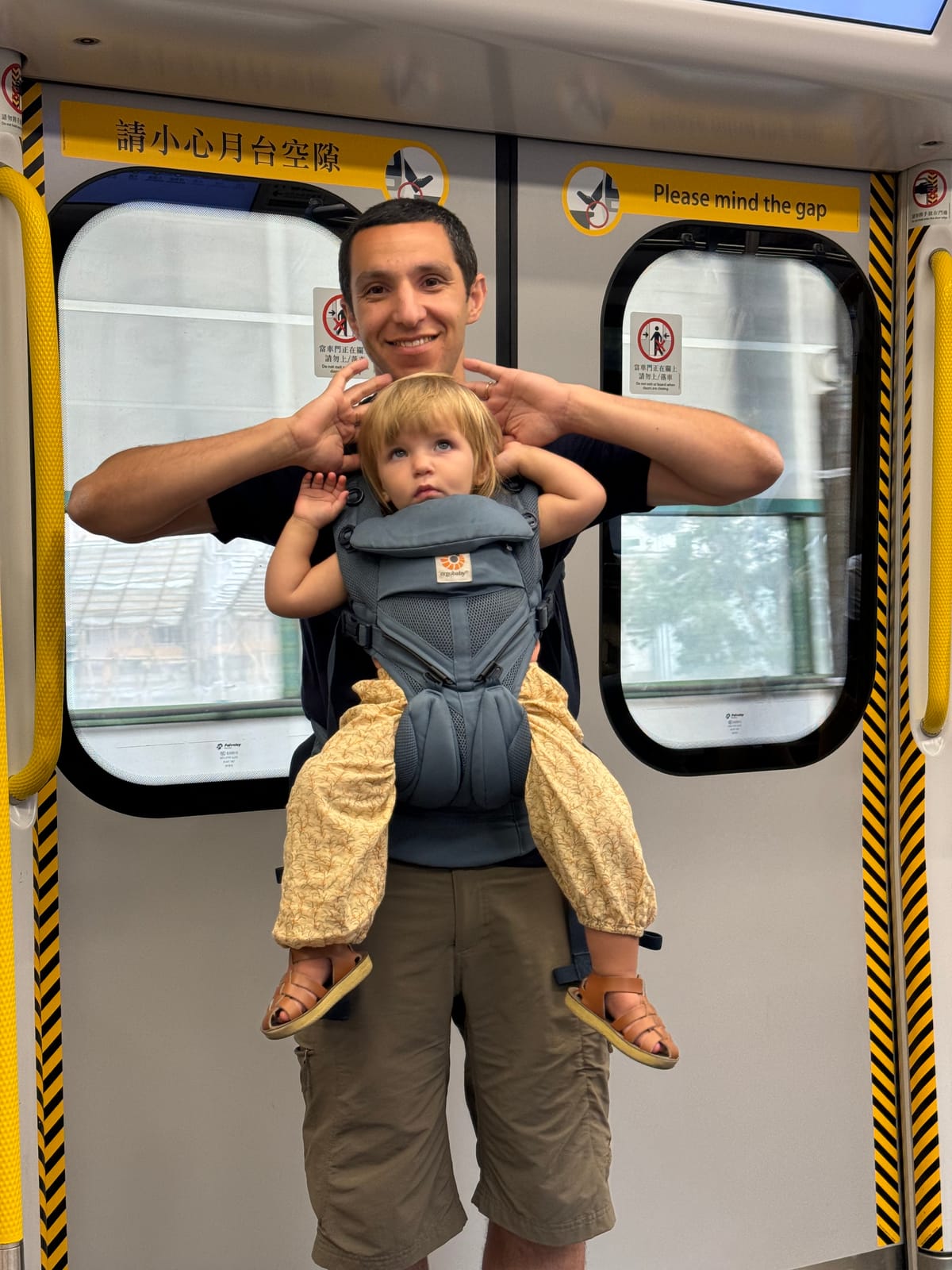
Train Travel Between Cities
China's high-speed rail network is the largest in the world and, compared to Europe, absurdly cheap. This is one of the biggest advantages of traveling in China — you can cover huge distances quickly and comfortably for a fraction of what you'd pay in Europe or Japan.
| Route | G-Train 2nd Class | Slower Train | Journey Time (G) |
|---|---|---|---|
| Beijing → Shanghai (1,300km) | $70-95 | $40-47 (sleeper) | 4h 18min |
| Beijing → Xi'an (1,200km) | $65-80 | $39-41 (sleeper) | 4h 10min |
| Shanghai → Hangzhou (200km) | $8-12 | $5-8 | 45min |
| Chengdu → Chongqing (300km) | $13-22 | $6-8 | 1h-1.5h |
| Beijing → Kunming (2,100km) | $120-180 | $70 (sleeper) | 10h 40min |
To put this in perspective: in Switzerland, a full-price ticket from Zurich to Geneva (280km) costs about $90. In China, that same $90 takes you from Beijing to Shanghai — a distance of 1,300km on a brand-new bullet train traveling at 350km/h.
Money-saving move: Non-G trains (Z, T, K class) cost 40-60% less than high-speed options. On routes under 6 hours, the slower train is still comfortable. On longer routes, overnight sleeper trains save you both money and a hotel night.
Book through Trip.com or the official 12306.cn site (Chinese interface, no service fee). Tickets release 15 days in advance.
 Magda Sawyer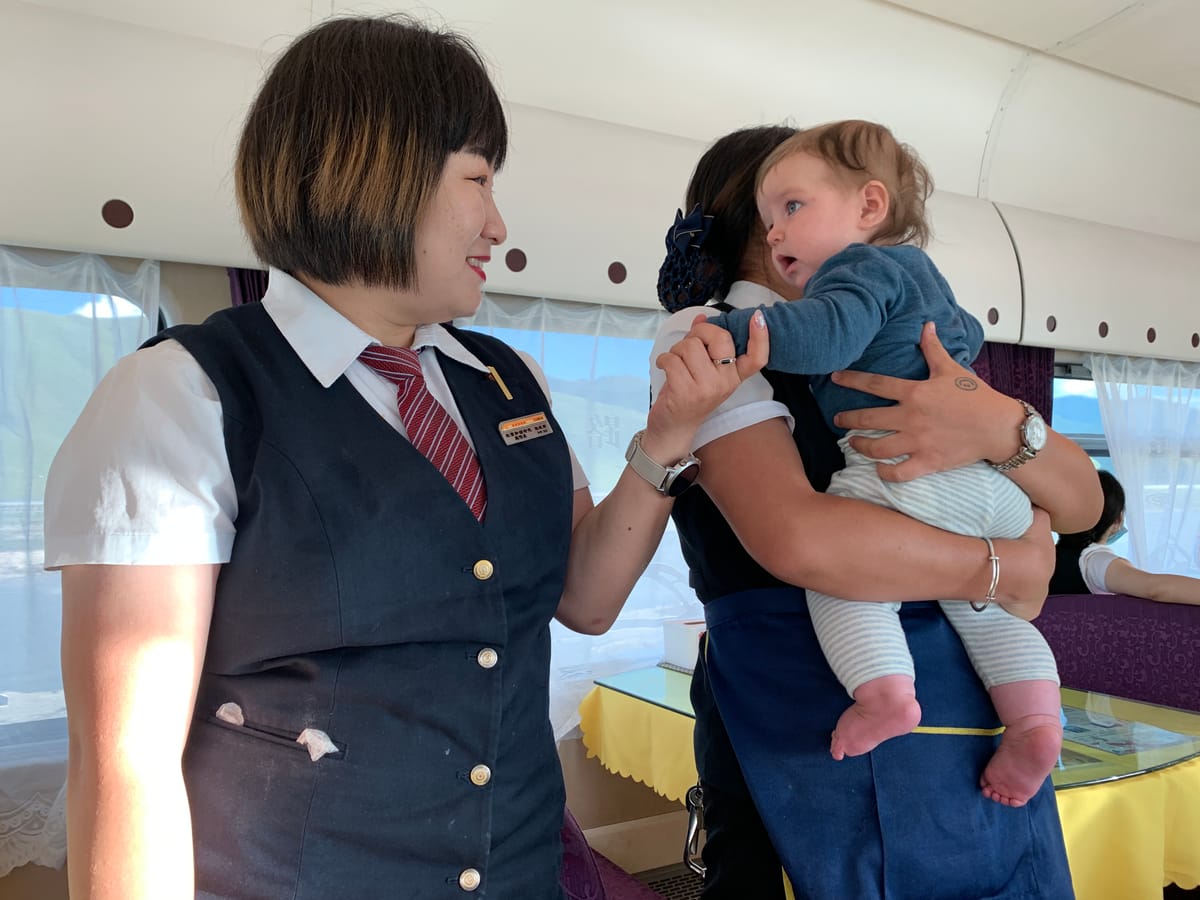
 Magda Sawyer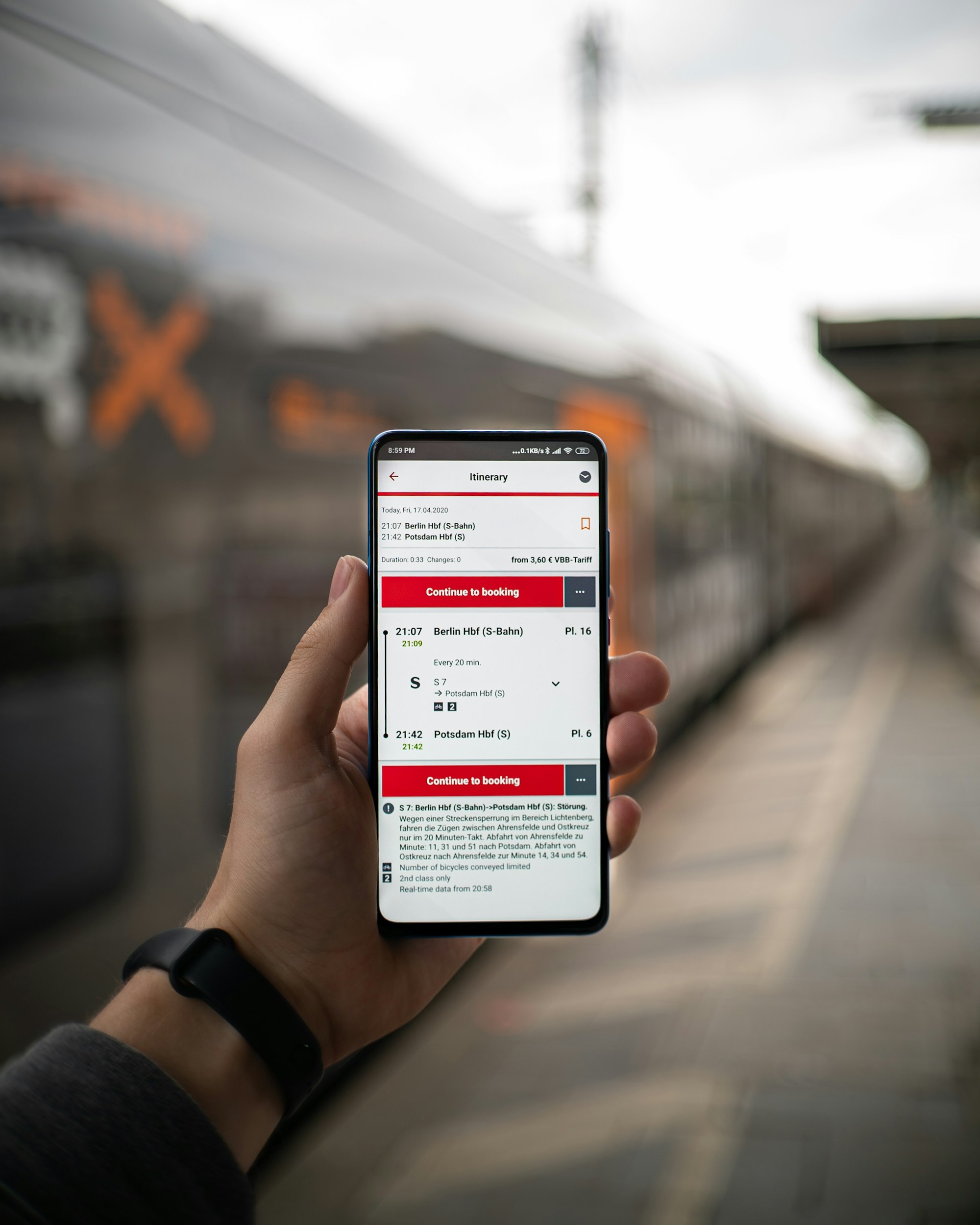
Attractions & Activities
Entrance fees at Chinese attractions are very reasonable by global standards, and many museums are completely free (though you'll need to book online in advance).
| Attraction | Adult Price | Notes |
|---|---|---|
| Forbidden City (Beijing) | $5.50-8.30 | Online booking required, closed Mondays |
| Great Wall - Mutianyu | $5.50 + $16.50 cable car | Shuttle bus extra ~$2 |
| Great Wall - Badaling | $5.50 | Under 18 and over 60: FREE |
| Terracotta Army (Xi'an) | $16.50 | Includes all 3 pits + shuttle |
| Chengdu Panda Base | $7.60 | Over 60: FREE |
| Zhangjiajie National Park | $33 | Valid 4 days, includes shuttle buses |
| Jiuzhaigou Valley | $26-38.50 | Lower in off-season |
| Temple of Heaven (Beijing) | $4.70 | Under 18 and over 60: FREE |
| Summer Palace (Beijing) | $8.30 | Through-ticket with extras |
| Most museums | FREE | Must book online in advance |
Daily activities budget: $5-15 per person. Many of the best experiences in China cost nothing — wandering hutong alleyways, watching tai chi in the park, exploring night markets, or hiking in the countryside.
 Magda Sawyer
Shopping & Souvenirs
Everything is made in China, and it shows in the prices. Everyday items and souvenirs are very cheap. To give you an example — in Chongqing we bought a "bian lian" toy figure (a face-changing opera character) for ¥10 ($1.40). I've seen almost the same toy in a Swiss shop for 13 CHF — literally 10 times the price.
Budget $3-10/day for small souvenirs and everyday items. Branded and luxury goods are a different story — shopping malls in Shanghai have prices comparable to Europe.
Total Trip Cost: What to Expect
Here's the part everyone wants to see — total costs for a complete China trip, including flights from Europe. I've calculated three scenarios based on real prices.
2-Week Trip to China — Total Cost Per Person
| Expense | Budget | Mid-Range | Comfortable |
|---|---|---|---|
| Return flight (Europe) | $500-600 | $600-800 | $800-1,200 |
| Visa | $0 (visa-free) | $0 (visa-free) | $0 (visa-free) |
| Accommodation (14 nights) | $280-420 | $420-1,120 | $1,120-1,680 |
| Food (14 days) | $110-170 | $170-280 | $280-490 |
| Local transport | $42-80 | $70-110 | $110-200 |
| Intercity trains (3-4 trips) | $50-120 | $120-250 | $200-400 |
| Activities & attractions | $70-140 | $140-280 | $250-500 |
| eSIM (14 days) | $10-20 | $15-25 | $15-25 |
| Travel insurance | $15-30 | $50-90 | $90-180 |
| Souvenirs & extras | $30-60 | $60-120 | $120-250 |
| TOTAL PER PERSON | $1,100-1,650 | $1,650-3,100 | $3,000-4,900 |
| Daily in-China cost | $45-75 | $75-160 | $155-265 |
Note: Accommodation is priced per room. A couple or a family of 4 (2 adults + 2 small kids) shares one room, so the accommodation cost is the same whether it's 1 or 2-4 people. This makes China particularly good value for couples and families.
By Travel Group
| Group Type | Budget (2 weeks) | Mid-Range (2 weeks) | Comfortable (2 weeks) |
|---|---|---|---|
| Solo traveler | $1,100-1,650 | $1,650-3,100 | $3,000-4,900 |
| Couple (sharing room) | $1,700-2,700 | $2,700-4,800 | $4,800-7,800 |
| Family of 4 (2 adults, 2 small kids) | $2,200-3,600 | $3,500-6,000 | $5,800-9,500 |
Why couples and families get great value: Accommodation is per room, not per person. A couple pays the same for a hotel room as a solo traveler. A family of 4 (2 adults + 2 small kids) also fits in one room. Add in free train tickets for under-6s and half-price attractions, and family travel in China is remarkably affordable.
3-Week Trip to China — Total Cost Per Person
| Budget | Mid-Range | Comfortable | |
|---|---|---|---|
| TOTAL PER PERSON | $1,350-2,000 | $2,100-4,100 | $3,900-6,500 |
These numbers assume 4-5 intercity train journeys and visiting 3-4 cities. A trip focused on a single city or region would cost less on transport.
Costs Before You Arrive
International Flights
From Europe, return flights to Beijing typically cost €500-800 when booked 2-3 months in advance. Shanghai flights tend to be slightly more expensive. I've personally seen return tickets to Beijing for as low as €500, but you need to be flexible with dates and do some research.
Tips for cheaper flights:
- Book 2-3 months ahead for the best prices
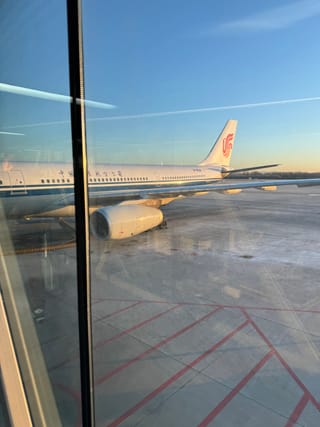
- Air China often has the best direct routes and prices from European hubs
- Avoid Chinese holidays (Golden Week in October, Chinese New Year in Jan/Feb)
- Mid-week departures are typically cheaper
- Shoulder season (March-May, September-November) offers the best balance of price and weather
 Magda Sawyer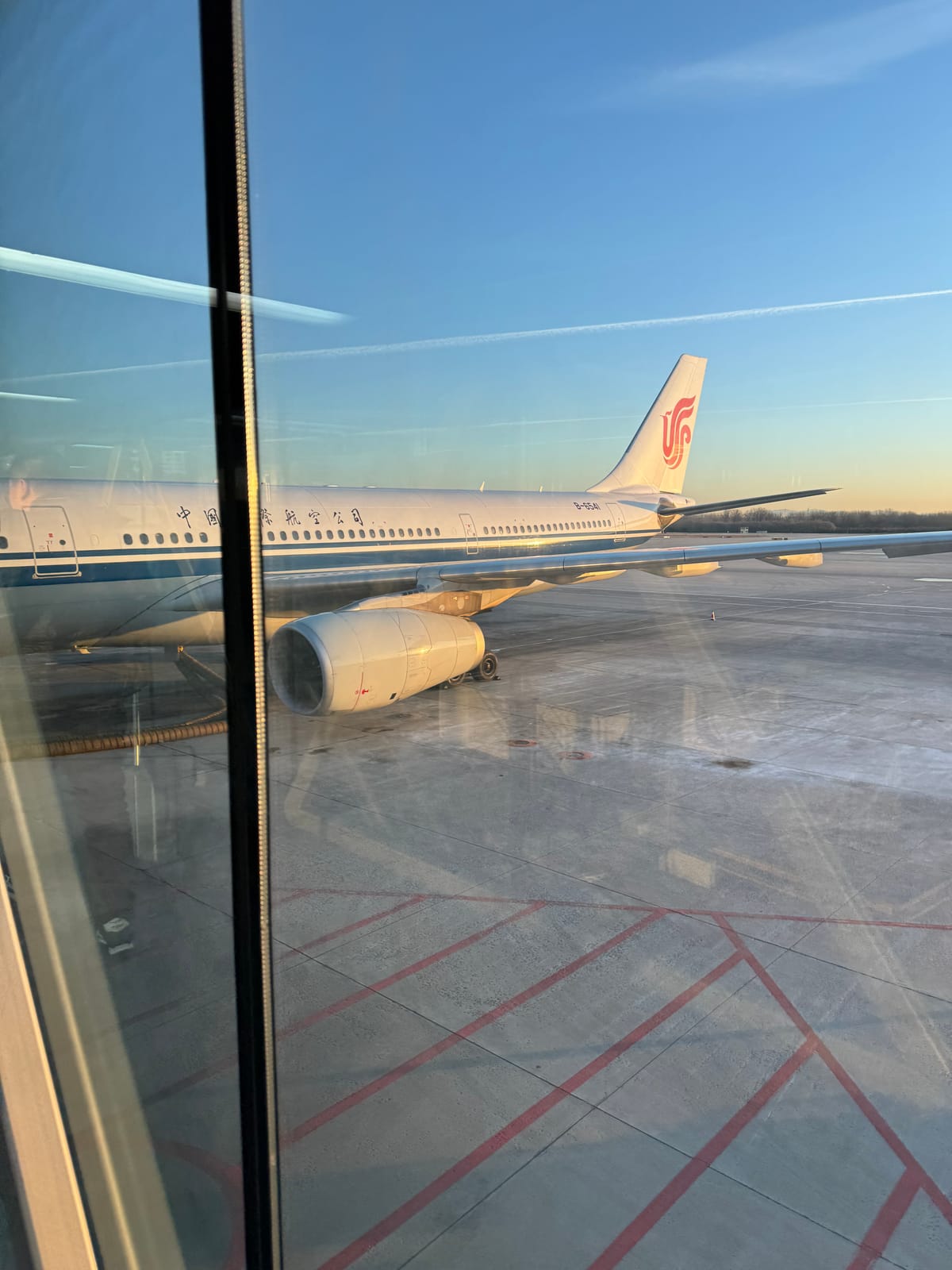
Visa: Free for Most Europeans
Great news: as of 2026, citizens of 50 countries can enter China visa-free for up to 30 days. This includes all EU/Schengen nations, the UK, Australia, New Zealand, Canada, Japan, and South Korea. The policy is currently valid through December 31, 2026.
For Americans and citizens of other countries not on the 30-day list, the 240-hour (10-day) visa-free transit allows entry if you're continuing to a third country or region (Hong Kong, Macau and Taiwan count). If you need a standard tourist visa, expect to pay around $150.
 Magda Sawyer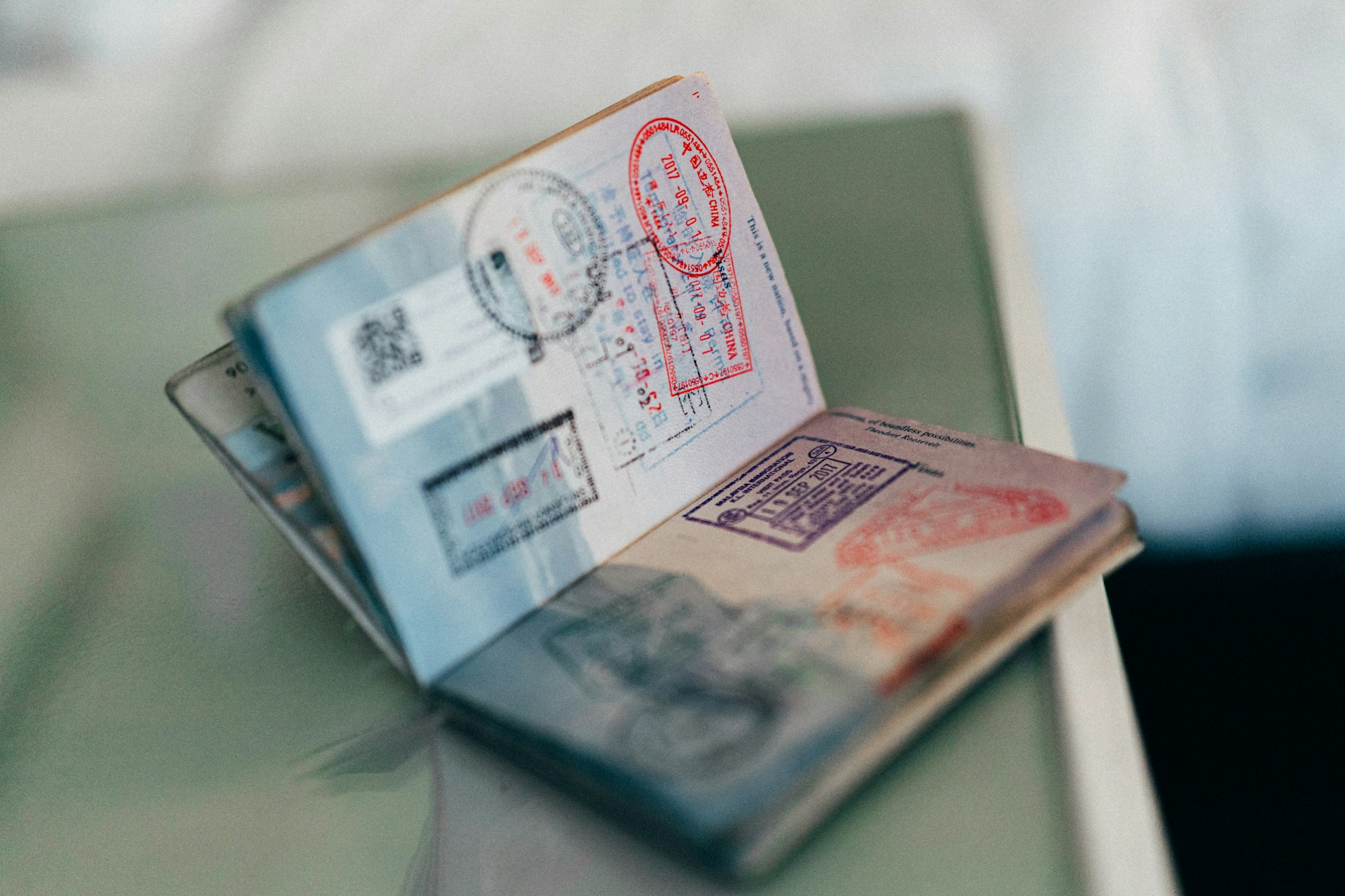
Travel Insurance: $15-180
China doesn't require travel insurance, but I strongly recommend it. Chinese hospitals typically demand upfront cash payment before treatment — even in emergencies. Medical evacuation from remote areas like Tibet can cost $50,000+.
| Provider | ~Cost (2 weeks) | Best For |
|---|---|---|
| SafetyWing | ~$28 | Budget travelers, basic coverage |
| World Nomads | ~$90-130 | Adventure travelers, hiking |
| Allianz OneTrip | ~$100-180 | Families (kids free on parent plans) |
For families, Allianz is worth a close look — children 17 and under travel free when on a parent's plan. If you're heading to Tibet or remote western China, make sure your plan covers evacuation above 3,500m altitude.
eSIM: $10-25
You'll need data to use AliPay, navigate, translate, and stay connected. The best part: international travel eSIMs automatically bypass China's Great Firewall through roaming — Google, WhatsApp, Instagram and Gmail all work without a VPN.
| Provider | 7-Day Plan | 14-Day Plan |
|---|---|---|
| Airalo | 10GB / ~$23 | 10GB / ~$24 |
| Saily | 1GB / ~$4.50 | 5GB/30 days / ~$16 |
| Holafly | Unlimited / ~$27 | Unlimited / ~$51 |
| MobiMatter | 5GB / ~$5.50 | 10GB/30 days / ~$8 |
Buy your eSIM before arriving — eSIM provider websites are blocked within China.
You do NOT need a separate VPN if you're using an eSIM or data roaming on your home SIM. Only get a VPN if you plan to use local Chinese WiFi extensively.
 Magda Sawyer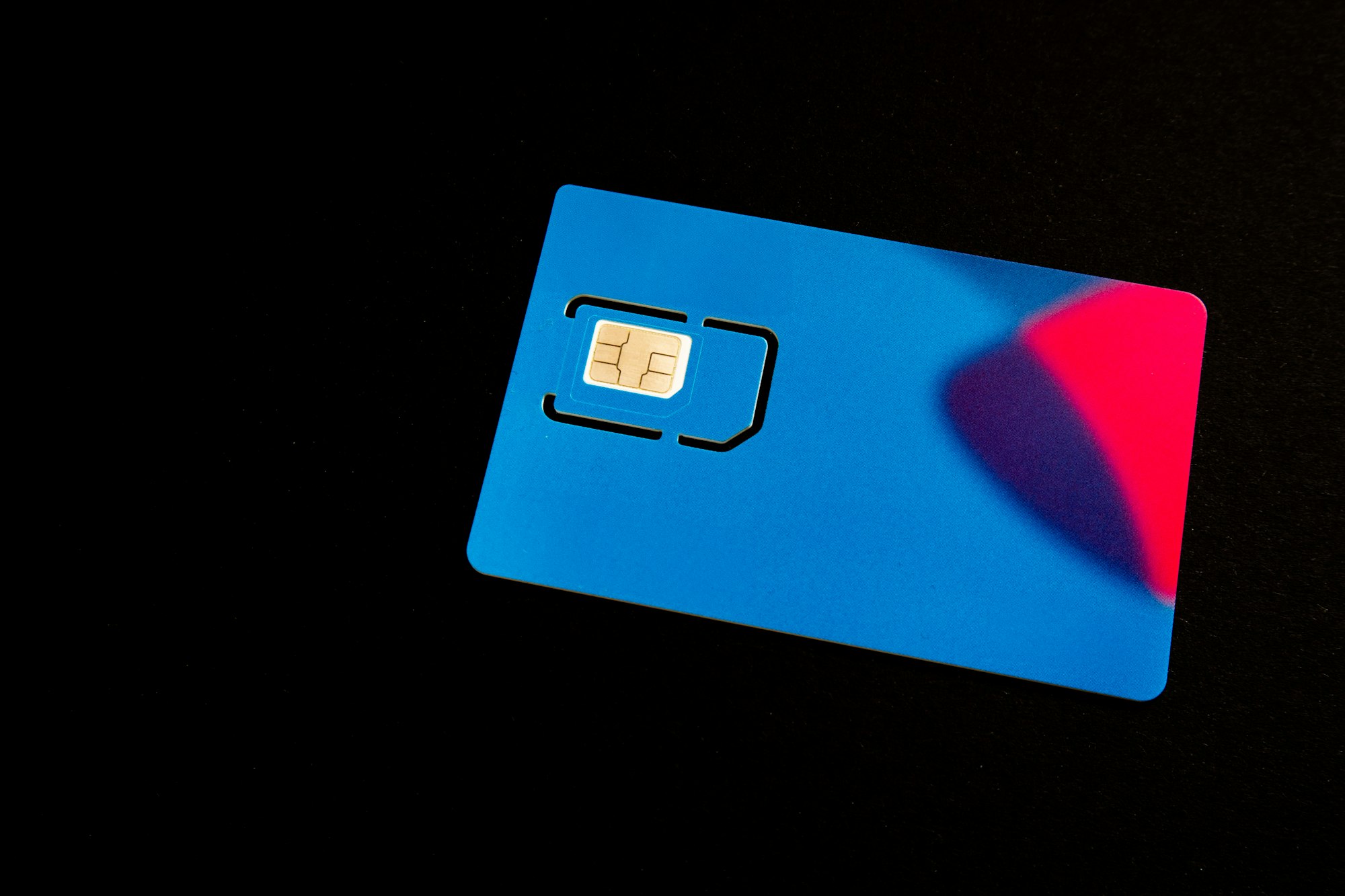
 Magda Sawyer
City-by-City Price Comparison
Prices vary significantly depending on where you go. Tier-2 cities offer 25-40% savings compared to Shanghai and Beijing.
| City | Budget Hotel | Mid-Range Hotel | Local Meal | Metro Ride | Tier |
|---|---|---|---|---|---|
| Shanghai | $25-35 | $50-100 | $4-7 | $0.30-0.80 | 1 |
| Beijing | $20-35 | $40-90 | $3-5 | $0.30-0.80 | 1 |
| Shenzhen | $20-30 | $35-75 | $3-5 | $0.30-0.60 | 1 |
| Chengdu | $15-25 | $25-60 | $2-4 | $0.30-0.55 | 2 |
| Chongqing | $15-25 | $25-65 | $2-4 | $0.30-0.55 | 2 |
| Xi'an | $15-25 | $25-60 | $2-4 | $0.30-0.55 | 2 |
| Changsha | $15-25 | $25-55 | $2-4 | $0.30-0.55 | 2 |
Our recommendation: Mix tier-1 and tier-2 cities in your itinerary. Beijing and Shanghai are essential for first-timers, but places like Chengdu, Changsha and Chongqing are equally fascinating — and your money goes much further. A top-end hotel in Chengdu for $80-100/night often includes a pool, a huge breakfast buffet, and service that rivals $200+ properties in Shanghai.
 Magda Sawyer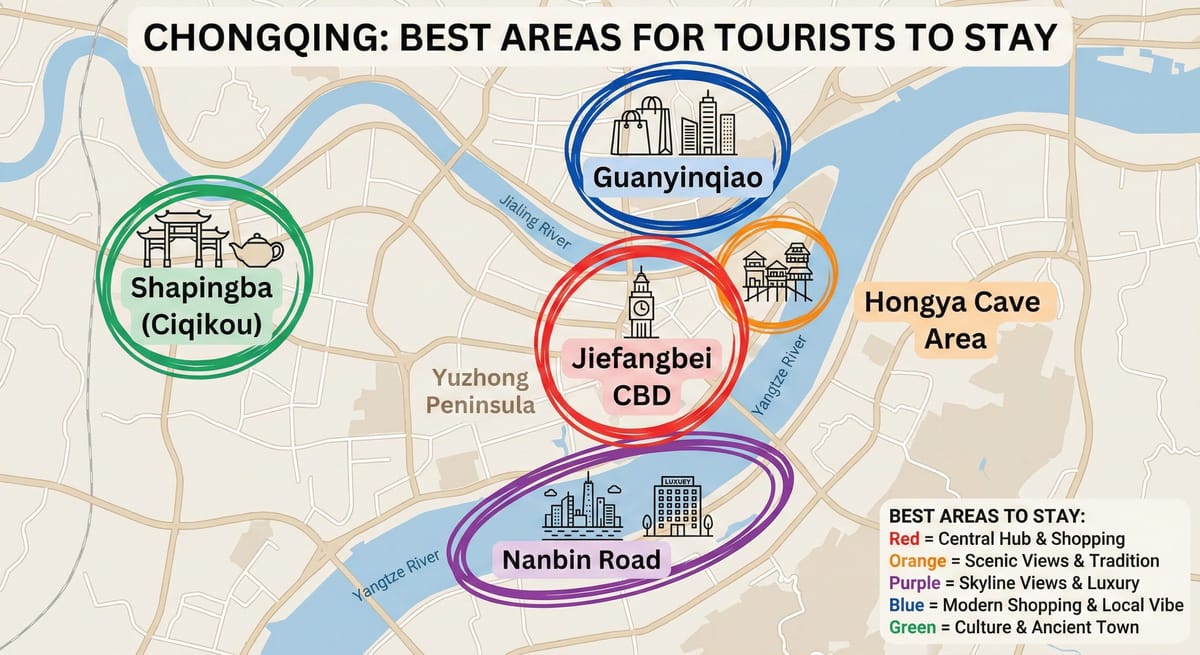
 Magda Sawyer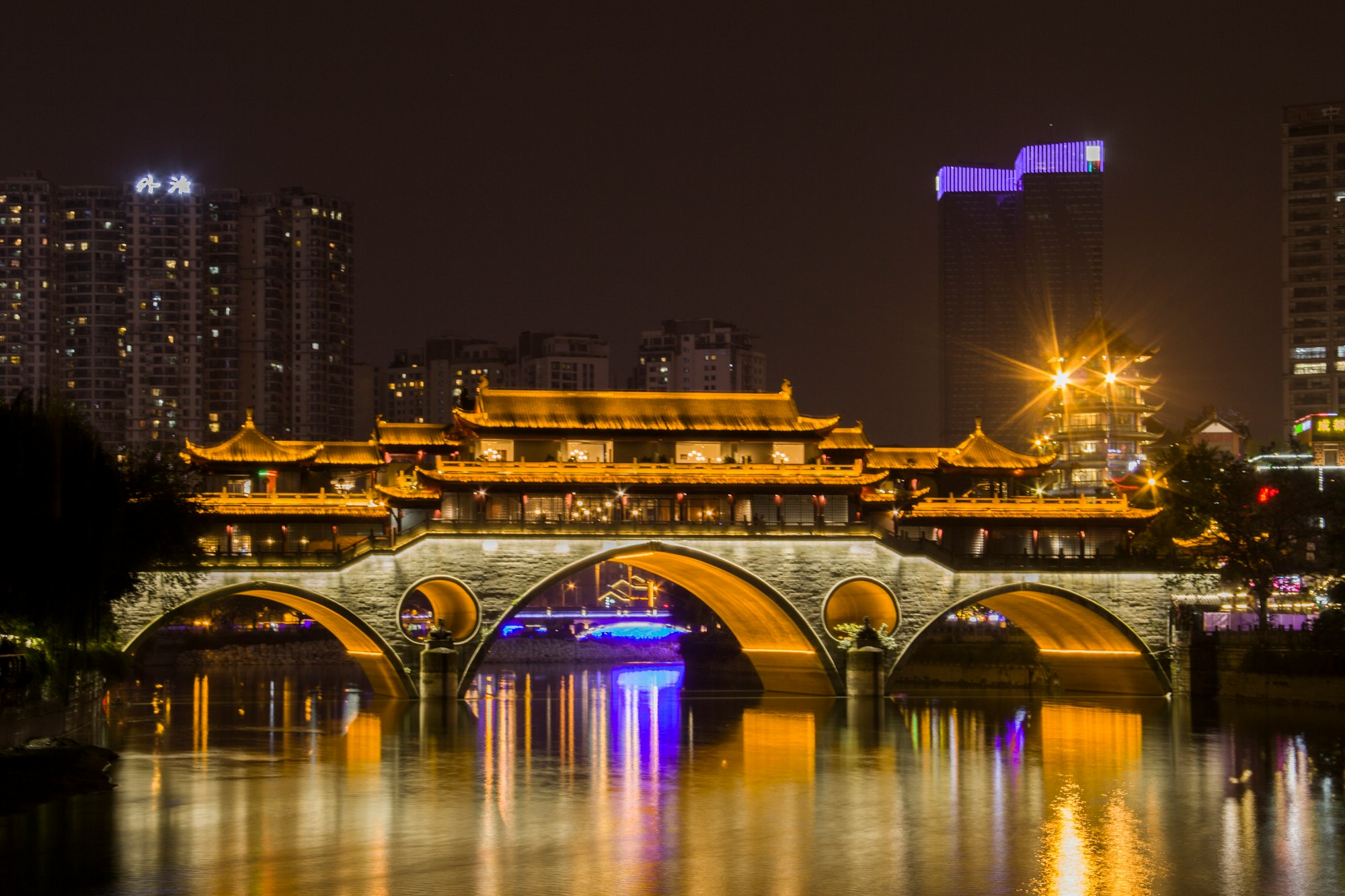
 Magda Sawyer
How to Pay in China
China is almost entirely cashless. AliPay and WeChat Pay are used for everything — from five-star hotel bills to $0.50 street food. Here's what you need to know:
AliPay is the easiest option for tourists. Download the app, link your international credit or debit card (we use a Wise card for the best exchange rates), and you're set. Setup takes about 10 minutes — do it before you arrive.
WeChat Pay now also accepts international cards, but AliPay has better coverage and is simpler to set up.
Cash is rarely needed but carry a small amount (¥200-500) for emergencies — some rural vendors, older shops, and occasional transport situations may not accept mobile payment.
Credit cards are almost never accepted at regular shops and restaurants. Don't rely on Visa or Mastercard for day-to-day spending.
Tipping is not expected or customary in China. Don't tip at restaurants, in taxis, or at hotels. The one exception: if you hire a tour guide, tipping ¥100-200/day for the guide and ¥50-100/day for the driver is appreciated.
 Magda Sawyer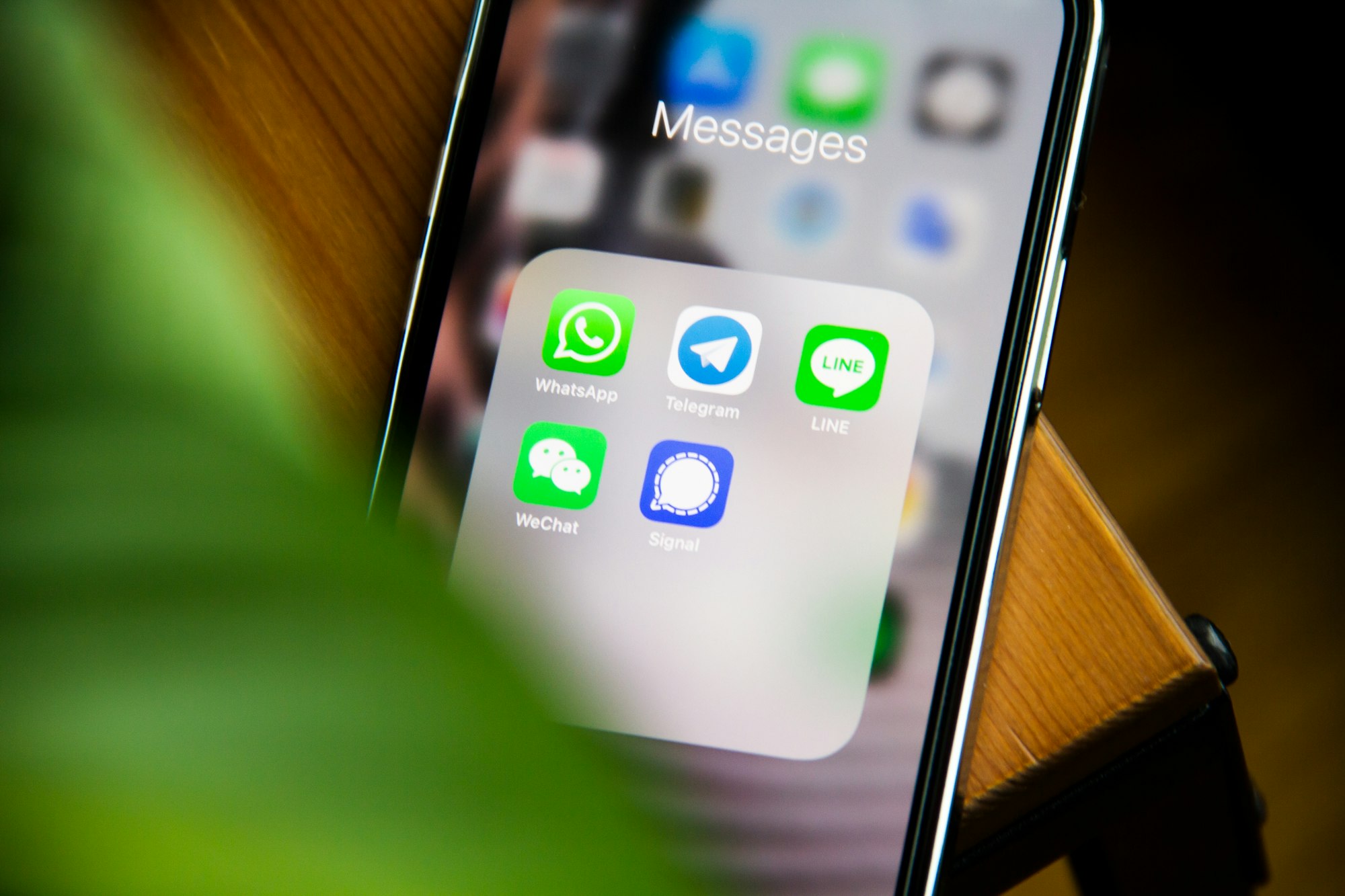
 Magda Sawyer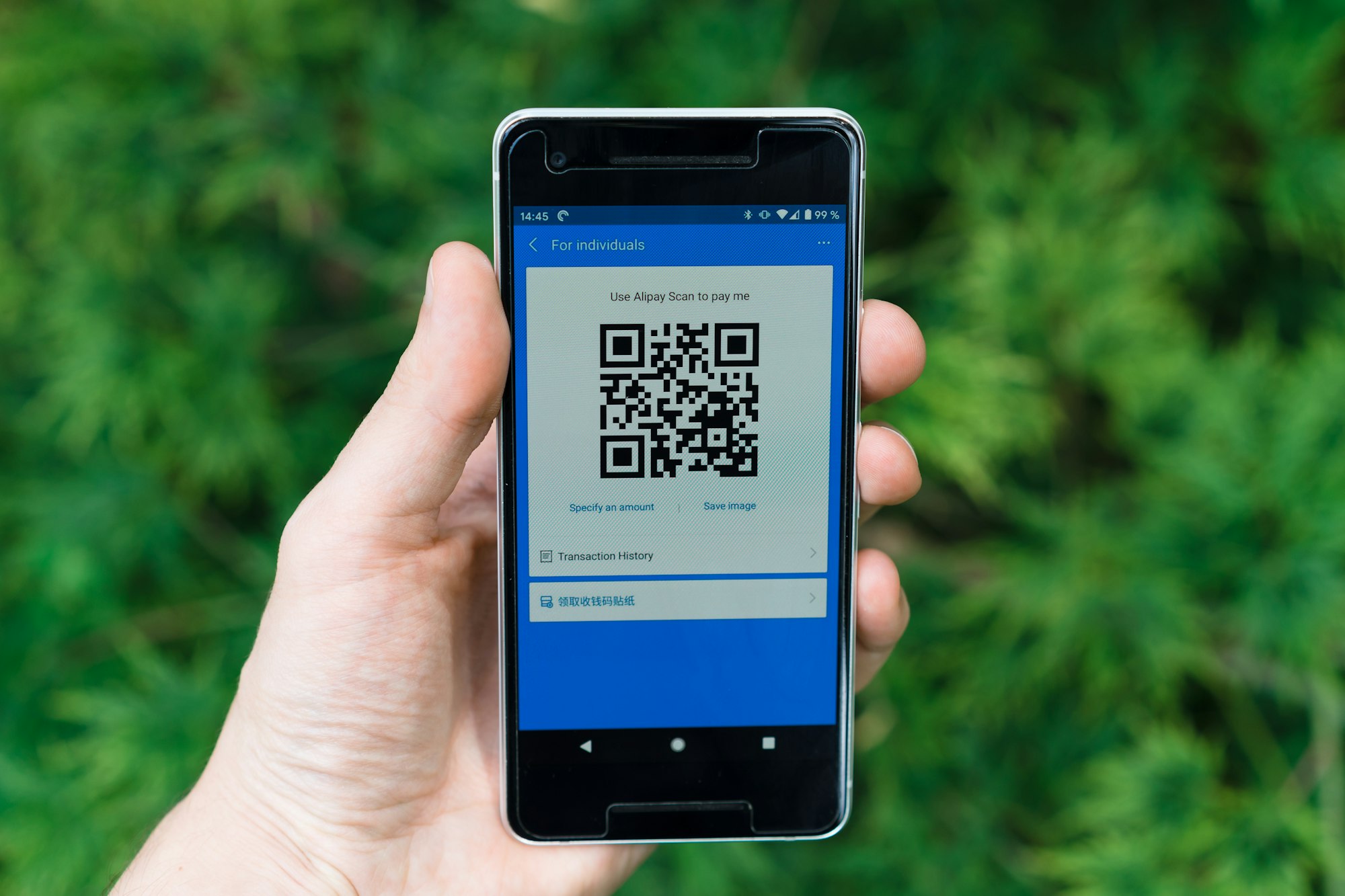
Is China Cheaper Than Japan & South Korea?
Yes — significantly. China is 30-40% cheaper than both for most travel categories.
| Category | China | Japan | South Korea |
|---|---|---|---|
| Daily budget (mid-range) | $75-160 | $130-190 | $100-150 |
| Street food meal | $1-3 | $3-5 | $3-6 |
| Restaurant meal | $3-7 | $7-12 | $6-10 |
| Metro ride | $0.30-0.80 | $1.10-1.70 | $1.00 |
| Bullet train per km | $0.06 | $0.18 | $0.18 |
| 4-star hotel | $30-80 | $100-200 | $80-150 |
China wins decisively on intercity transport — the Beijing–Shanghai G-train covers 1,300 km for ~$80, while Japan's shorter Tokyo–Osaka Shinkansen (515 km) costs ~$93. Per kilometer, China's high-speed rail is three times cheaper. China also dominates on accommodation value: a 4-star hotel in Chengdu or Xi'an runs $30-60/night, comparable to a basic business hotel in Tokyo.
Where China is NOT cheaper: Western food, imported goods, international hotel brands (which charge similar rates globally), and coffee from Western chains.
15 Tips to Save Money in China
- Eat local food exclusively. You'll eat better AND spend less. A bowl of hand-pulled noodles for $2 will be more memorable than a $15 burger. Western food is expensive and mediocre — save it for when you're home.
- Get your coffee at Luckin instead of Starbucks. Luckin Coffee (瑞幸咖啡) is everywhere, serves good coffee, and costs about half the price of Starbucks ($2-3 vs $5-6).
- Stay slightly outside the center, but near a metro station. Hotels 2-3 stops from the main tourist area can be 30-50% cheaper. Since China's metro systems are excellent, you lose maybe 10 minutes of commute time.
- Take slower trains for shorter routes. On routes under 500km, the non-G-train options are perfectly comfortable and cost 40-60% less. Chengdu to Chongqing on a slow train is $6 vs $13-22 on the G-train.
- Consider overnight sleeper trains. You save both a hotel night and travel time. The Beijing-Xi'an overnight sleeper is about $40 — cheaper than even a budget hotel.
- Travel visa-free. If your country is on the 50-country visa-free list, you save $150 per person. For a family of four, that's $600.
- Visit in shoulder or low season. March-May and September-November offer the best weather. Hotel prices during Golden Week (October 1-7) can triple — avoid it.
- Mix expensive and cheap cities. Combine Beijing or Shanghai with tier-2 cities like Chengdu, Changsha, or Xi'an where everything is 25-40% cheaper.
- Book attractions online in advance. This is not just about saving money — many sites (Forbidden City, popular museums) require online booking and sell out. But you'll also avoid marked-up ticket prices from tour operators.
- Use DiDi instead of negotiating with taxi drivers. DiDi (the Chinese Uber) gives you transparent, metered pricing through AliPay. No language barrier, no surprises.
- Take advantage of free activities. Walking the Bund in Shanghai, exploring hutongs in Beijing, hiking in national parks after paying the one-time entry fee, watching morning tai chi in any park — many of China's best experiences are free.
- Avoid shopping malls for souvenirs. Local markets and small shops offer the same items at a fraction of the price. Tea shops near tourist sites are often tourist traps — buy tea at supermarkets instead.
- Use the MobiMatter eSIM for the cheapest data. At $5.50 for 5GB/7 days, it's the cheapest reliable option. Or use data roaming from your home carrier if you have a good international plan.
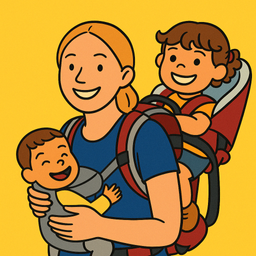
- Take kids under 6. This sounds funny, but if you're already planning a family trip to China — children under 6 travel free on trains (no seat), under 1.2m get free or half-price entry at most attractions, and most hotels allow young children to stay free in existing beds.
- Cook or buy supermarket food for some meals. If your hotel has a fridge, grab breakfast items from a convenience store (7-Eleven, FamilyMart) for ¥10-20 ($1.50-3) instead of a restaurant breakfast.
Family Travel: Extra Costs to Know
Traveling to China with kids is surprisingly affordable thanks to generous child discount policies. Here's what families should budget for.
Train travel: Children under 1.2 meter ride free (one per adult, no own seat). If you want them to have their own seat or are taller 1.2m, you pay extra.
Attractions: Many major attractions offer free entry for children under 1.2m.
Hotels: Most hotels allow one child under 12 to stay free in existing bedding. Family rooms or connecting rooms add $20-50/night depending on the hotel tier.
Food: Chinese portions are generous and meant for sharing. A family of four can eat well at a local restaurant for $10-15 total. Many restaurants will have high chairs in major cities — naturally you cannot expect the same at local eateries.
Strollers: China's cities are increasingly stroller-friendly, but expect to fold it frequently for metro escalators and older buildings. Taxis are cheap enough to use when stroller navigation gets tiring.
 Magda Sawyer
 Magda Sawyer
FAQs
Q: Is China expensive for tourists?
A: No — China is one of the most affordable travel destinations in Asia. A comfortable mid-range trip costs $75-160 per person per day including accommodation, food, transport and activities. It's significantly cheaper than Japan and South Korea for most categories, especially transport and food.
Q: How much money should I bring to China for 2 weeks?
A: For a mid-range trip, budget $1,000-2,300 per person for in-country costs (excluding flights). This covers good hotels, delicious food, intercity trains, and plenty of sightseeing. Budget travelers can manage on $650-1,050. You don't need much physical cash — AliPay handles 95%+ of payments.
Q: Can I use credit cards in China?
A: Rarely. Visa and Mastercard are not widely accepted at shops or restaurants. Set up AliPay on your phone before arriving — it accepts international cards and is used for virtually all payments in China. Carry ¥200-500 cash as backup.
Q: Is it cheaper to travel in China independently or with a tour?
A: Much cheaper independently. Organised group tours typically cost $150-300+ per day. Independent travel using trains, local restaurants, and self-booked hotels can be done for $55-170/day depending on comfort level. China is easier to navigate independently than most people expect — the train system is world-class, metro systems are simple, and translation apps bridge the language gap.
Q: What's the cheapest time to visit China?
A: November through February (excluding Chinese New Year, usually late January-February) offers the lowest prices on hotels and flights. Shoulder seasons (March-May, September-early October before Golden Week) combine good weather with moderate prices. Avoid Golden Week (October 1-7) and Chinese New Year when prices multiply.
Q: Do I need to tip in China?
A: No. Tipping is not customary and can cause confusion. The only exception is tour guides (¥100-200/day for the guide, ¥50-100/day for the driver). No tipping at restaurants, taxis, or hotels.
Q: Do children get discounts in China?
A: Yes, generous ones. Children under 6 ride trains free (no seat), and most attractions offer free entry for children under 1.2m or under 18. Many Beijing attractions (Badaling Great Wall, Temple of Heaven) are free for all visitors under 18. Hotels generally allow one young child to stay free in existing bedding.
Q: Is China cheaper than Japan?
A: Yes, approximately 30-40% cheaper for most travel categories. The biggest difference is transport — China's bullet trains cost about $0.06/km vs Japan's $0.18/km. Hotels also offer significantly better value, especially in tier-2 cities. Food prices are comparable at the street food level but China is cheaper for sit-down meals.
Related Guides: