First Time in China: How to Plan Your Perfect Itinerary

Last updated: March 2026
Quick Summary
🗺️ Country Size: Vast — 9.6 million km² (the size of Europe)
⏱️ Ideal First Trip: 2–3 weeks, covering 3–4 cities
💲 Budget Range: $50–$150 per day
🌡️ Best Time: April–May or September–October
🚅 Transport: High-speed trains connect major cities
🏠 Where to Start: Beijing or Shanghai
🆓 Visa: 50+ countries visa-free for up to 30 days
Planning your first trip to China comes down to two things: choosing 3–4 cities that show you different sides of the country, and giving yourself enough time in each to actually experience them — not just tick off attractions. Most first-timers try to see too much and end up exhausted; the best trips happen when you slow down, explore neighborhoods on foot, and leave room for the unplanned moments that make China unforgettable.
Having traveled to China six times now — with my family, independently, in every season — I still remember the anxiety of planning that first trip. Do I need a visa? Will I be able to access my email? Will WeChat work? The good news: it's all much easier than you think, especially now that citizens from 50+ countries can visit visa-free for up to 30 days.
But China is enormous, and trying to plan the perfect itinerary can feel overwhelming. Mountains, deserts, grasslands, beaches, vibrant megacities, cultural heritage sites... the FOMO is real.
So how do you actually go about it? Here's what I've learned — some of it the hard way.
As featured in the Lonely Planet 2025 China guidebook. I speak Mandarin and have spent months exploring China across multiple trips.
Table of Contents
- Our #1 Planning Rule (That Most Guides Get Wrong)
- How Many Days Do You Need in China?
- How to Choose Your Cities
- Cities vs. Countryside: An Honest Take
- Climate Considerations
- Transportation Strategy
- Connectivity & Tech Preparation
- Budget Planning
- Packing Smart for China
- Sample Itineraries by Duration
- Use Only the Latest Resources
- FAQs for First-Time China Travelers
Our #1 Planning Rule: Don't Pack Your Itinerary
Here's what every other China planning guide won't tell you: the must-see attractions are often the least memorable part of the trip.
Yes, the Forbidden City is impressive. Yes, the Terracotta Warriors are world-class. But these iconic sites are also mostly crowded, heavily managed, and feel more like checking boxes than discovering China. The experiences that stay with you are different — stumbling upon a neighborhood park where aunties are practicing dance every day, finding a tiny restaurant down a side street that serves the best dumplings you've ever had, or watching kids ride exercise bikes that blow bubbles and play music.
Our planning philosophy after six trips to China:
- Choose fewer cities, spend more time in each. Three to four cities in two weeks is ideal. Five is too many.
- Know the neighborhoods, not just the attractions. Research what each area of a city is known for — food streets, parks, art districts — and give yourself half-days to just wander.
- Visit parks. As many as you can. Parks are where real life happens in China. Chaoyang Park in Beijing, People's Park in Chengdu — these are the places where you see how people actually live.
- Leave blank space in your schedule. Some of the best things we've discovered happened because we had an unplanned afternoon.
🌟 Pro Tip: For your first trip, choose diverse locations to see different sides of China — but close enought so that you connect the trip by high speed train (trains are amazing!). If you're returning for a second trip, that's when it makes sense to go deep in a single region.
How Many Days Do You Need in China?
At minimum, plan for 10 days. Two to three weeks is the sweet spot for a first trip that feels satisfying rather than rushed. We love doing 3 week trips, especially with kids that gives everyone time to adjust.
Here's the city time breakdown we recommend:
- Major cities (Beijing, Shanghai, Chongqing, Shenzhen): 4–5 days minimum
- Historical/cultural cities (Xi'an, Changsha, Chengdu, Wuhan): 3–4 days
- Smaller cities and day-trip destinations: 2–3 full days
The biggest mistake we made on our first trip was not giving cities enough time. I told my husband I wasn't interested in cities — that they were just transition points and I wanted to see nature and "how people live." I didn't realize that life in the cities IS how people live. The energy, the food, the park culture, the architecture — Chinese cities have been by far the most interesting part of every trip.
Less is genuinely more. While two days in a city will get you nowhere, double it and you'll find the hidden gems, the incredible food spots, and the local rhythms that make each city unique. And you'll still probably wish you had more time.
How to Choose Your Cities
China is the size of Europe. Accept that you can't see it all, and build your trip around what genuinely interests you.
Match Cities to Your Interests
- History and heritage: Beijing, Xi'an, Nanjing
- Food: Chengdu, Chongqing, Guangzhou, Shanghai
- Modern China / innovation: Shanghai, Shenzhen, Hangzhou
- Off the beaten path: Changsha, Wuhan, Kunming — see our guide to China's most underrated cities
- Nature and landscapes: Zhangjiajie, Yunnan, Guilin, Tibet
Avoid These First-Timer Mistakes
- Overpacking the itinerary — most travelers underestimate travel times and fatigue
- Skimming through cities — rushing through a city in 1–2 days means you only see the tourist layer
- Following outdated advice — China changes at breakneck speed; a 2020 guide is ancient history
- Neglecting climate differences — conditions vary enormously between regions (more on this below)
Cities vs. Countryside: An Honest Take
I know many first-timers dream of escaping the cities to explore ancient villages and countryside. I was one of them. But here's what I've learned over six trips: for most independent travelers, Chinese cities offer a far more authentic and rewarding experience than the countryside.
Here's why:
Tourism in China is highly commercialized outside the cities. Many "ancient villages" and scenic areas have been rebuilt, polished, and turned into ticketed theme parks. The shops sell the same souvenirs, the food stalls serve tourist-menu items, and the experience can feel surprisingly similar from one village to the next. It feels like a theme park more than a village. And why I understand why they do it — they view tourism as an industry that can bring jobs and help elevate people out of poverty — it doesn‘t change the fact that it makes travelling to the country side less interesting.
Cities, by contrast, are where you see actual everyday life. Each Chinese city has its own distinct personality, dialect, cuisine, and culture. Chongqing feels nothing like Shanghai, which feels nothing like Changsha. The differences are enormous and fascinating.
Hiking and rural travel is harder to do independently. Most scenic areas in China are designed for guided groups, not solo hikers. If you really want off-the-beaten-path nature experiences, we'd recommend partnering with a local travel agent who understands independent travelers — we've had excellent experiences with Tibet Vista for exactly this kind of trip.
This doesn't mean you should skip nature entirely. Zhangjiajie is genuinely spectacular however you have to understand what you are signing up for. Yunnan is extraordinary. But if your time is limited, prioritize cities and use nature destinations as additions rather than the core of your itinerary.
Climate Considerations
China's climate varies as much as Europe's — from arctic conditions in Harbin to tropical beaches on Hainan. This has direct practical implications for your planning.
Our advice (that we don't always follow ourselves): try to limit yourself to places with similar temperatures, otherwise your backpack or suitcase simply cannot fit everything.
Climate Zones
- Northern China (Beijing, Harbin): Four distinct seasons, cold winters, dry climate
- Central China (Shanghai, Chengdu, Wuhan): Milder but hot and humid in summer
- Southern China (Guangzhou, Hong Kong, Shenzhen): Subtropical, hot and humid summers
- Western China (Tibet, Xinjiang): Extreme conditions, high altitude, dry summers
- Tropical South (Sanya/Hainan): Beach weather year-round
For a comprehensive month-by-month breakdown, read our guide to the best time to visit China.
🌟 Pro Tip: Spring (April–May) and autumn (September–October) offer the most comfortable temperatures across most of China. Avoid Golden Week (first week of October) when domestic travel peaks and prices surge. But to be honest, China is so huge that you can find a good place to visit for every season.
Transportation Strategy
China has one of the best high-speed rail networks in the world, and for trips between cities, trains beat flying almost every time. They're fast, comfortable, affordable, and run with Swiss-level punctuality.
More importantly, traveling by train lets you appreciate the ever-changing landscape and the sheer scale of the distances. Only overland travel gives you the sense of a real journey rather than hopping between airports.
We've taken dozens of trains across China and are yet to take a single domestic flight. With business-class seats available for the same price as economy flights, there's rarely a reason to fly.
For a detailed guide on navigating the system, read our complete guide to train travel in China.
Train Types
- G trains (Gaosu/高速): Fastest high-speed trains, 300+ km/h
- D trains (Dongche/动车): Slightly slower, 200–250 km/h, still very comfortable
- Z trains (Zhida/直达): Direct express, excellent for overnight trips
- K/T trains: Slower and more affordable — a different experience worth trying once
Key Routes for First-Timers
| Route | Duration (G train) | Cost (2nd class) |
|---|---|---|
| Beijing ↔ Shanghai | ~4.5 hours | ¥550–600 |
| Beijing ↔ Xi'an | ~4.5 hours | ¥500–550 |
| Shanghai ↔ Hangzhou | ~1 hour | ¥75 |
| Chengdu ↔ Chongqing | ~1.5 hours | ¥150 |
| Guangzhou ↔ Shenzhen | ~30 min | ¥75 |
💡 Book train tickets through Trip.com (English interface, easiest for foreigners) or 12306.cn (official Chinese site). For step-by-step booking instructions, see our guide to buying train tickets in China.

Connectivity & Tech Preparation
Getting set up with the right apps and connectivity before you land in China will make everything smoother from the moment you arrive.
Internet Access
China's "Great Firewall" blocks Google, Facebook, Instagram, WhatsApp, and many Western sites. But here's something many travel blogs (especially those earning VPN commissions) don't mention: if you use data roaming on your regular phone number, everything works normally. The firewall only applies to local Chinese networks.
You only need a VPN if you're using a local Chinese SIM card or WiFi. For a detailed breakdown of your options, read our honest guide to accessing Google in China.
Essential Apps
- WeChat — the super-app for messaging, payments, bookings, and more
- AliPay — mobile payments (link your Wise card for best exchange rates)
- Amap or Apple Maps — Google Maps doesn't work reliably in China
- DiDi — China's ride-hailing app
- Translation apps — essential for restaurants and navigation
- Trip.com — for train and hotel bookings
Download and set up all apps before arrival. For the full list, see our complete guide to must-have apps for China.
Budget Planning
China accommodates almost any budget, and you'll find that your money goes surprisingly far compared to Western Europe or North America.
For a detailed breakdown with real examples, read our full China travel budget guide.
Daily Budget Estimates (per person)
| Category | Budget ($30–70/day) | Mid-Range ($70–150/day) | Comfort ($150+/day) |
|---|---|---|---|
| Accommodation | Hostels, basic hotels | 3-star hotels | 4–5 star hotels |
| Food | Street food, local canteens | Mix of local & casual dining | Restaurants, some fine dining |
| Transport | Metro & buses | Metro + occasional taxi | Taxis & private transfers |
| Activities | Free parks, temples | Mix of free & ticketed | Skip-the-line, guided tours |
Money-Saving Tips
- Eat where locals eat — the best food is often the cheapest
- Use public transport — Chinese metro systems are excellent and cost pennies
- Book train tickets in advance through Trip.com
- Parks are often free and more interesting than ticketed attractions
- Golden Week (early October) and Chinese New Year drive prices up 50–100% — avoid if possible
Packing Smart for China
Flexibility is key. You'll need to adapt to both urban environments and potentially different climate zones.
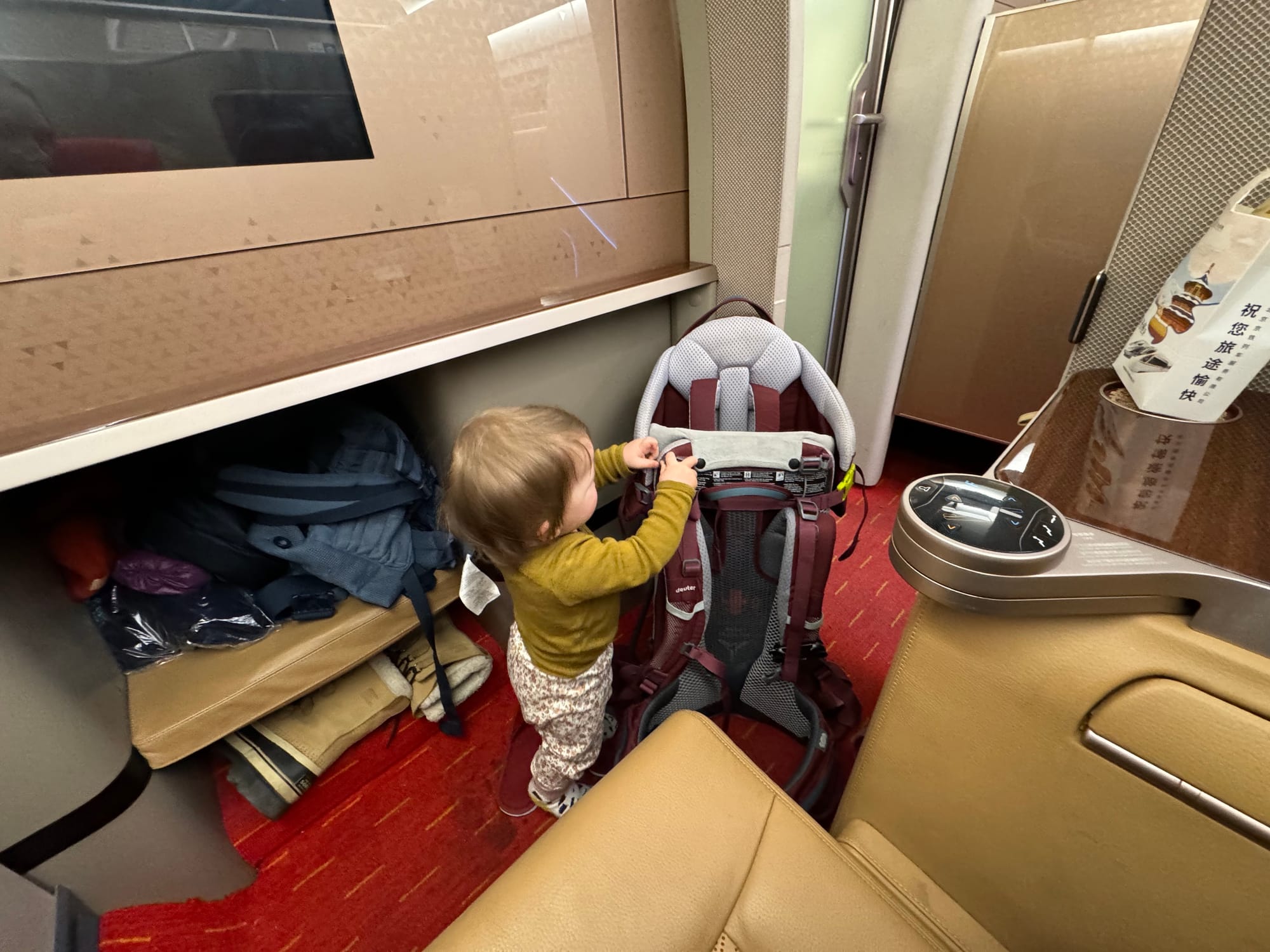
We're strong advocates for traveling with a backpack — read our backpack vs. suitcase comparison to decide what's right for you.
Essential Items
- E-sim package bought (can purchase on AliPay)
- VPN installed on your phone (if planning to use local WiFi)
- Power adapter (China uses Type A and Type I plugs)
- Comfortable walking shoes — Chinese cities involve a lot of steps
- Modest clothing for temple visits
- Hand sanitizer and tissues/toilet paper (not always available in public restrooms)
- Any prescription medication with documentation
🌟 Pro Tip: Pack light — Chinese cities have everything you might need at affordable prices if you forget something. We've bought everything from phone chargers to winter coats on arrival.
Sample Itineraries by Duration
These are frameworks to get you started — adapt them to your interests. For detailed day-by-day plans with hotel recommendations and restaurant picks, follow the links to our full itinerary guides.
Classic China: 10–14 Days (First-Timers)
The best first-time route showing you China's cultural depth and variety:
- Beijing (4–5 days) — Forbidden City, Great Wall, hutongs, Chaoyang Park, 798 Art District
→ Where to stay | Things to do | Day-by-day itinerary - Xi'an (3 days) — Terracotta Warriors, Muslim Quarter, City Wall
→ Where to stay - Shanghai (4 days) — The Bund, French Concession, Yu Garden, neighborhood exploration
→ Where to stay | Things to do
→ Read our complete 2-week China itinerary
Southwest China: 10–14 Days (Food & Culture)
China's most exciting food region and some of its most dramatic cityscapes:
- Chengdu (4 days) — Pandas, Sichuan cuisine, People's Park, tea houses
- Chongqing (3–4 days) — Night skyline, hotpot, Hongyadong, mountain city vibes
→ Where to stay - Changsha (3 days) — Wenheyou, Orange Island, street food capital
→ Where to stay
The Full Experience: 3 Weeks
Three weeks is our recommended duration for a first trip that doesn't feel rushed. It gives you time to mix big cities with a nature destination and still have breathing room.
→ Read our complete 3-week China itinerary for first-time visitors
Seasonal Itineraries
We've also created season-specific itineraries that account for weather and regional festivals:
- Spring China itinerary — cherry blossoms and comfortable temperatures
- Autumn China itinerary — best weather, stunning foliage in Southeast China
- Winter China itinerary — including the Harbin Ice Festival
Use Only the Latest Resources
China is changing at an incredible pace. Visiting made me realize what it means when a country's GDP grows by significant percentages year over year.
China in 2026 is not comparable to China in 2020, or even 2023. Payment systems, railway networks, visa policies, apps — everything evolves constantly. If you're relying on an old guidebook or blog posts from a few years ago, the practical information is almost certainly outdated.
We update our guides regularly based on our most recent trips — that's part of why our Start Here page exists, to give you a curated, current starting point.
FAQs for First-Time China Travelers
Q: Do I need a visa to visit China?
A: It depends on your nationality. As of 2026, citizens from 50+ countries can visit China visa-free for up to 30 days, including most of Europe, Australia, and Canada. US citizens can enter via the 10-day transit visa-free policy. Check our complete visa requirements guide for your country's specifics.
Q: Is China safe for tourists?
A: China is one of the safest countries we've traveled in. Violent crime against tourists is virtually unheard of, and petty crime is rare. The biggest challenges are language barriers and navigating cultural differences, not safety concerns.
Q: Can I travel China without speaking Chinese?
A: Yes, especially in major cities where there's English signage on metro systems and at tourist sites. A good translation app is essential for restaurants, taxis, and everyday interactions. Learning a few basic phrases (hello, thank you, how much) goes a long way and people genuinely appreciate the effort.
Q: How do I pay for things in China?
A: China runs almost entirely on mobile payments through WeChat Pay and AliPay, which foreigners can now set up with an international credit card. We recommend linking a Wise card for the best exchange rates. Carry some cash as backup for small vendors, but you'll use your phone for 95% of purchases.
Q: What's the best time of year to visit China?
A: Spring (April–May) and autumn (September–October) offer the most pleasant temperatures across most of China. Summer is hot and humid in many regions; winter is cold in the north but mild in the south. Read our month-by-month guide for detailed breakdowns by region.
Q: How many days do I need in China?
A: Plan at least 10 days, though 2–3 weeks is ideal for a first visit. Each major city needs 3–5 days to experience properly — not just the headline attractions, but the food, parks, and neighborhoods that make it unique. With 10 days, stick to 2–3 cities. With 3 weeks, you can comfortably cover 4–5.
Q: Should I book a tour or travel independently?
A: We always travel China independently and find it very manageable — trains are easy to book, cities have excellent public transport, and translation apps bridge the language gap. Tours make sense for specific experiences like Tibet (where a travel agent is required) or remote hiking areas. For cities and the main tourist route, independent travel is more flexible and often more rewarding.
Q: What's the best city to visit first in China?
A: Beijing is our recommendation for first-timers. It's the most historically rich of China's major cities, with an enormous range of experiences from ancient (Forbidden City, Great Wall) to contemporary (798 Art District, hutong café culture). If you prefer a more international, modern gateway, Shanghai is an excellent alternative.
Ready to Plan Your China Adventure?
Start with our destination guides for each city, then use our itineraries to connect them:
📋 Start Here — All China Travel Resources
🗺️ 3-Week China Itinerary | 2-Week Itinerary
🏨 How to Book Hotels in China
Book Your Trip:
✈️ Book flights
🏨 Find hotels on Trip.com
🚂 Reserve train tickets
🎫 Book activities on Klook
🚌 Browse tours on GetYourGuide